Fabric Cleaner for Car Seats
Use a foaming or spray fabric cleaner on fresh stains. Use a low-moisture extraction cleaner for set-in spills, and keep the treated area dry enough that the seat surface is typically ready in about 2 to 4 hours. Too much liquid can push soil deeper, leave rings, and trigger mildew or odor in the foam. This guide tells you which fabric cleaner format fits each stain type, how much moisture is safe, and what failure mode to avoid.
Top pick for most cloth seats
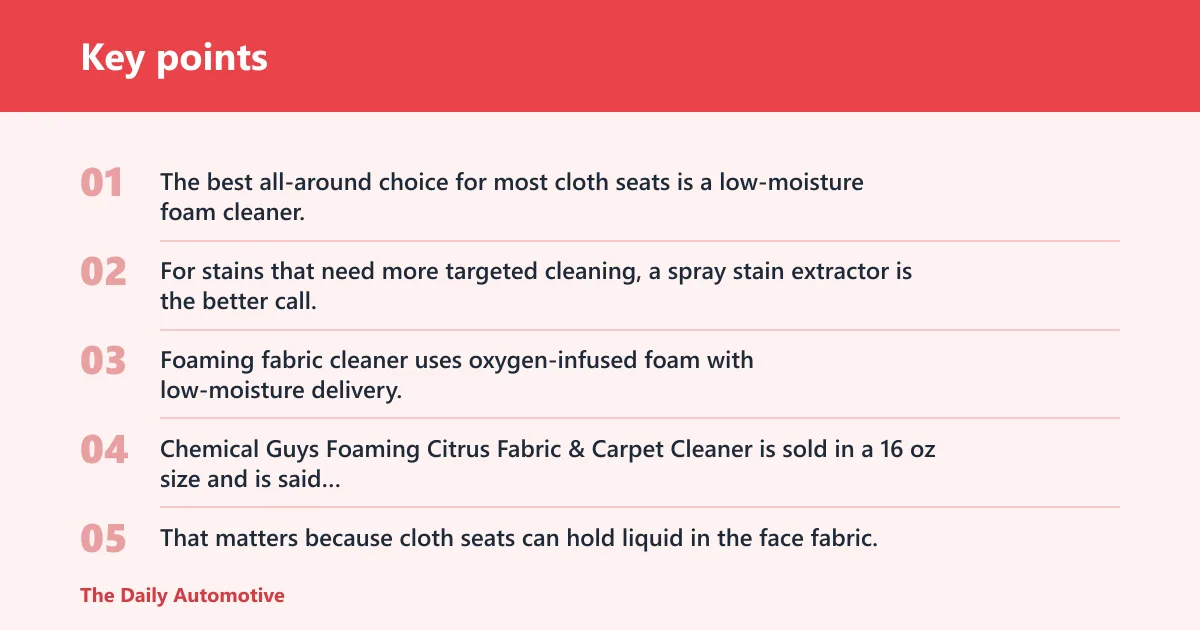


The best all-around choice for most cloth seats is a low-moisture foam cleaner, because it lifts everyday grime without soaking padding or seams. For stains that need more targeted cleaning, a spray stain extractor is the better call, while a drill brush kit only makes sense when the fabric needs heavier agitation.
Why low-moisture foam fits everyday grime
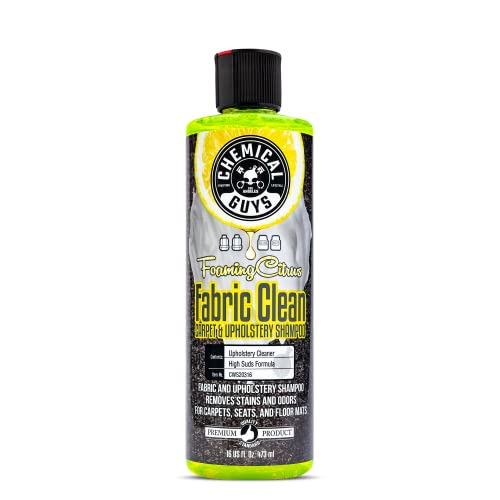
Foaming fabric cleaner uses oxygen-infused foam with low-moisture delivery, so it suits seats, carpets, and mats when you want to lift surface soil without flooding the fabric. Chemical Guys Foaming Citrus Fabric & Carpet Cleaner is sold in a 16 oz size and is said to work on synthetic and natural fibers.
That matters because cloth seats can hold liquid in the face fabric, the foam pad below it, and the seam lines between panels. Less liquid lowers the chance of residue, water rings, and wicking back to the surface after drying.
When a spray cleaner is the better call
Choose a stain extractor or spray cleaner when the problem is a coffee spill, food smear, grease spot, or pet mess that needs direct treatment and blotting. Chemical Guys Citrus Fabric & Upholstery Cleaner comes as a 16 oz ready-to-use spray, uses enzymes to neutralize odors, and is described as low-moisture and quick-drying.
A spray cleaner also makes more sense when you want to work one small area at a time. It is easier to control than pouring on foam or scrubbing a whole panel.
What to avoid on wet padding and seams
Do not keep re-soaking the same area. Car and Driver warns that excessive moisture can soak cloth-seat padding, and once the pad below the fabric gets wet, drying takes longer and spotting can return after the surface looks clean. (Caranddriver)
Also avoid saturating seam lines, perforations, and stitched edges. Those are common paths for liquid to migrate, then reappear as rings or streaks after the seat dries.
Quick picks by seat problem
Pick the cleaner by the stain first, not by the bottle shape. Fresh spills usually need blotting and a light spray or foam, set-in stains need a stronger spot treatment, odor-only complaints need odor neutralization, and heavy embedded dirt may need added brush agitation.
- Fresh spills: Spray cleaner or foaming cleaner, used lightly and blotted fast.
- Set-in stains: Stain extractor, often with repeat applications and brush agitation.
- Odor-first cleanup: Cleaner with odor neutralization, especially on older coffee, food, or pet messes.
- Heavy agitation needs: Drill brush kit when hand brushing is too slow and the fabric can handle powered scrubbing.
Fabric seat cleaner decision table
| Stain or problem | Recommended cleaner type | Why it fits | What not to do | Finish step |
|---|---|---|---|---|
| Coffee | Stain extractor spray | Targets liquid stains and can be blotted after spraying; repeat if the spill set in | Do not flood the seat or scrub so hard that the stain spreads outward | Blot with a microfiber towel and let the area dry fully |
| Food and dye stains | Foaming fabric cleaner or spray stain extractor | Foam clings to the spot, while a spray gives direct control on colored spills | Do not keep adding cleaner after the residue has already lifted | Brush lightly, then wipe residue with a microfiber towel |
| Grease | Stain extractor | Better for oily residue than a water-heavy soak, especially on cloth upholstery | Do not over-wet the pad under the fabric | Repeat as needed, then blot dry and check for a halo |
| Pet odor | Cleaner with odor neutralization | Helps with lingering smell after the visible mess is removed | Do not rely on perfume alone to cover the odor | Air out the cabin and dry the seat surface completely |
| Mud and general grime | Foaming fabric cleaner | Good for broad surface soil and light embedded dirt on seats, carpets, and mats | Do not saturate the panel trying to remove every mark at once | Vacuum after drying to lift loosened debris |
| Water-ring prevention | Low-moisture foam or quick-drying spray | Reduces the chance of wicking and edge marks after spot cleaning | Do not leave a wet center with dry edges around it | Feather the edges, then dry with airflow and a clean towel |
Which cleaner works for fresh spills?
For fresh spills, use a foaming or spray fabric cleaner that can lift the spill while you blot it up. The goal is to remove liquid before it moves deeper into the fabric, so the right move is light application, quick blotting, and stopping once the towel is picking up only faint residue.
Best format for blotting and lift-off
A spray stain extractor is often a clean choice for a fresh coffee or food spill because it places cleaner where the stain landed. Foaming fabric cleaner also works well if the spill sits on the surface and the fabric needs a bit of dwell time before brushing.
How much product to use
Use enough to moisten the top fibers, not enough to soak the cushion. Keep the treated area damp, not dripping. If liquid starts pooling or running into the seam, you have already used too much.
When to stop and dry
Stop as soon as the stain lifts and the towel no longer pulls up much color or soil. Then dry the area with a clean microfiber towel and airflow. If a spot still looks darker at the edge, feather the clean area outward rather than adding more cleaner to the center.
How do you clean cloth seats by hand?
Hand cleaning cloth seats means vacuuming loose grit first, applying a light spray or foam, brushing the stain just enough to loosen it, and blotting dry with a microfiber towel. That sequence gives you control without a machine and cuts the chance of residue, water rings, or soaked foam padding.
Vacuum first
Start by vacuuming crumbs, sand, and dry dirt from the seat surface and creases. Car and Driver notes that vacuum attachments help reach creases and crevices, which matters because loose grit turns into mud once cleaner hits it.
Apply foam or spray
Apply the cleaner directly to the stain or the lightly soiled section. On cloth upholstery, a low-moisture foam is useful for broader areas, while a spray stain extractor is better when you need exact placement on a coffee spot, grease mark, or pet mess.
Agitate with a brush
Brush agitation helps lift embedded dirt from the fibers after spraying or foaming. Use short, controlled strokes. Work the cleaner into the stain, and do not scrub the fabric flat or drive liquid farther into the seat.
Blot with a microfiber towel
Finish by blotting with a microfiber towel. That towel helps remove loosened soil and leftover cleaner, which reduces residue buildup. If the towel comes away dirty, switch to a clean section instead of rubbing the same damp area again.
Suppose a driver spills iced coffee on the outer bolster of a front seat and waits an hour before cleaning. A light spray, a few passes with a brush, and repeated blotting are safer than a saturated soak, because the stain is already setting and the foam below can hold moisture.
What should you use for set-in stains?
Set-in stains often need a stain extractor rather than a general interior cleaner, because the stain has already bonded with the fabric. Use a product that can be sprayed on, worked with brush agitation, and blotted out in rounds if the first pass does not fully lift the mark.
When a stain extractor helps
A stain extractor is often a better call for coffee, food, grease, and some pet messes that have dried into the seat. Chemical Guys Citrus Fabric & Upholstery Cleaner is a spray format with enzyme odor neutralization, which helps when the visible stain and the smell both remain.
Why brush agitation matters
Brush agitation breaks up the bond between the stain and the fiber. It is especially useful on older spots where the cleaner sits on top but does not move the discoloration out of the weave. Keep the brushing controlled so the fabric does not fuzz or pill.
When a drill brush kit is worth it
A drill brush kit makes sense when the stain is large, the fabric is durable, and hand brushing is too slow. Chemical Guys Foaming Citrus Fabric Clean Drill Brush Kit requires a drill or powered tool for maximum effect, so it is a better fit for heavier agitation on larger panels than for delicate spot work.
A common first-timer mistake is to add more liquid instead of more control. That can turn a small stain into a wider damp patch, which often dries with a ring around the edges and a darker center where the fabric stayed wet longest.
Choose by moisture control, fabric type, odor needs, and how much agitation the stain requires. If the stain is fresh, a light spray or foam usually beats a heavier cleaner. If the stain is old or oily, a targeted extractor usually works better. For odor-only problems, prioritize odor neutralization over stronger scrubbing.
Moisture control and drying time
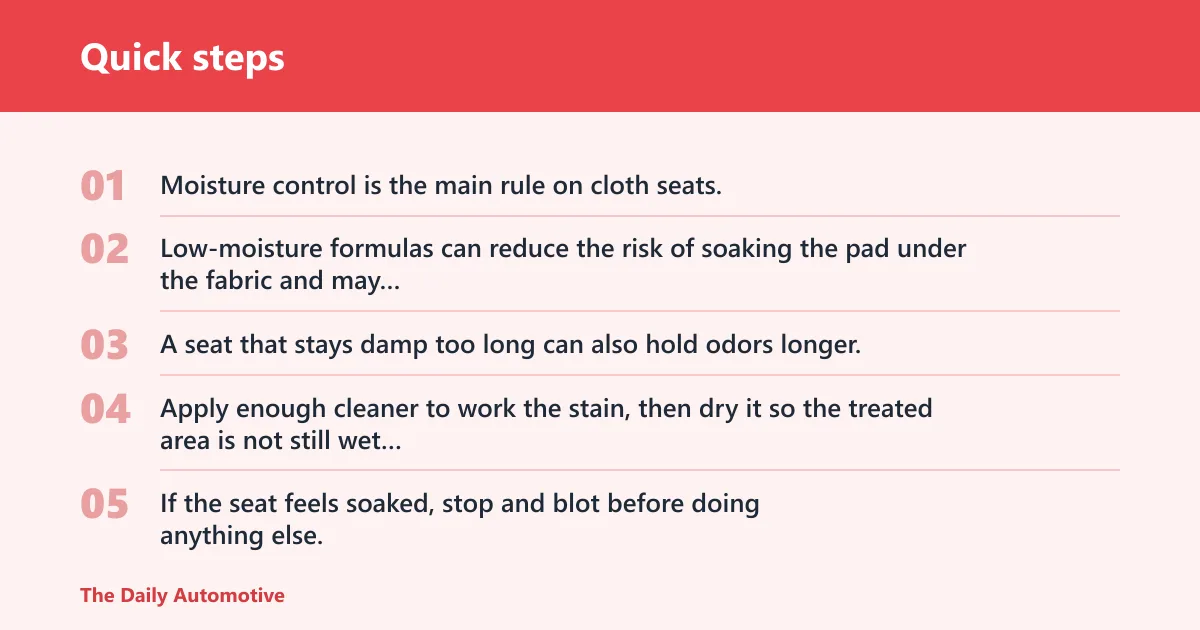
Moisture control is the main rule on cloth seats. Low-moisture formulas can reduce the risk of soaking the pad under the fabric and may help limit water rings. A seat that stays damp too long can also hold odors longer, especially if the spill reached the foam.
Apply enough cleaner to work the stain, then dry it so the treated area is not still wet hours later. If the seat feels soaked, stop and blot before doing anything else.
Fabric compatibility on cloth, carpets, and mats
Many fabric cleaners are positioned for cloth upholstery, carpets, and mats, but that does not mean every cleaner suits every seat material. Chemical Guys Foaming Citrus Fabric & Carpet Cleaner is said to work on synthetic and natural fibers, while delicate or specialty fabrics still need the vehicle and product manual first.
Odor neutralization versus stain removal
Stain removal and odor neutralization are related but not the same. A stain can disappear while the smell remains, especially with food, coffee, or pet messes. Chemical Guys Citrus Fabric & Upholstery Cleaner uses enzymes to neutralize odors, which makes it a better choice when smell matters as much as appearance.
When a general interior cleaner is enough
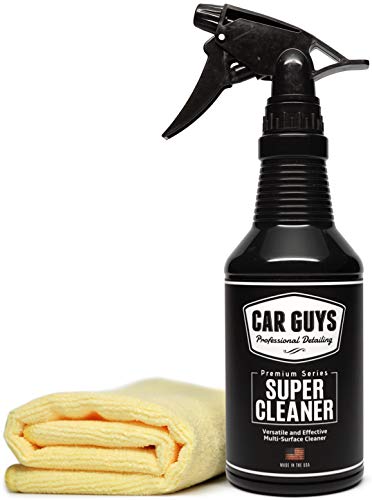
Use a general interior cleaner when the seat needs light cleanup, surface dust removal, or a one-bottle product for several surfaces. CAR GUYS Super Cleaner is presented as a one-bottle solution for several surfaces and is made in the USA, which makes it a practical pick when the problem is broader than one fabric stain.
Picture a beige cloth rear seat with a dried juice ring near the buckle and no active spill. A stain extractor can treat the ring, but if the seat is also dusty and the door panels need attention, a general interior cleaner may be the better first step for the whole area.
Frequently asked questions
What’s the best fabric cleaner for car seats?
For most cloth seats, a low-moisture foaming fabric cleaner is the safest starting point because it cleans without soaking the padding. If the stain is set in, move to a spray stain extractor. If odor is the bigger problem, choose a cleaner with odor neutralization rather than a plain surface cleaner.
How do I clean fabric car seats by hand?
Vacuum the seat first, spray or foam the stain lightly, brush the fibers with controlled strokes, and blot with a microfiber towel. Work in small sections so the cleaner does not dry before you can lift the soil. Finish with airflow so the fabric dries instead of staying damp.
How do I clean cloth car seats without a machine?
Use a handheld routine: vacuum, spot spray, brush, blot, and dry. A machine is not required for most fresh spills or light stains. The key is moisture control, because a hand method can still over-wet the seat if you keep reapplying cleaner to the same spot.
How do I clean fabric car seats stains?
Match the cleaner to the stain type. Coffee, food, and grease usually respond best to a spray stain extractor. Mud and general grime often do better with foam. For old stains, repeat light applications instead of one heavy soak, and finish by blotting until the towel pulls little residue.
How do I clean fabric car seats without leaving water stains?
Use a low-moisture product, apply it lightly, and dry the edges as well as the center. Water rings usually form when the outer edge dries differently from the middle. Avoid soaking the seat, and do not leave the fabric damp long enough for soil to wick back up.
What do you clean fabric car seats with?
Use a fabric cleaner matched to the job: foaming cleaner for general cloth-seat grime, spray extractor for stains, microfiber towel for residue removal, and a brush for agitation. If the stain is stubborn, a drill brush kit can help, but only when the fabric can handle powered scrubbing.
Products related to this article
Sponsored / affiliate links. As an Amazon Associate I earn from qualifying purchases. I may earn additional commission from eligible campaigns.