Can Any Car Use a Tesla Charging Station? 2026 NACS Guide
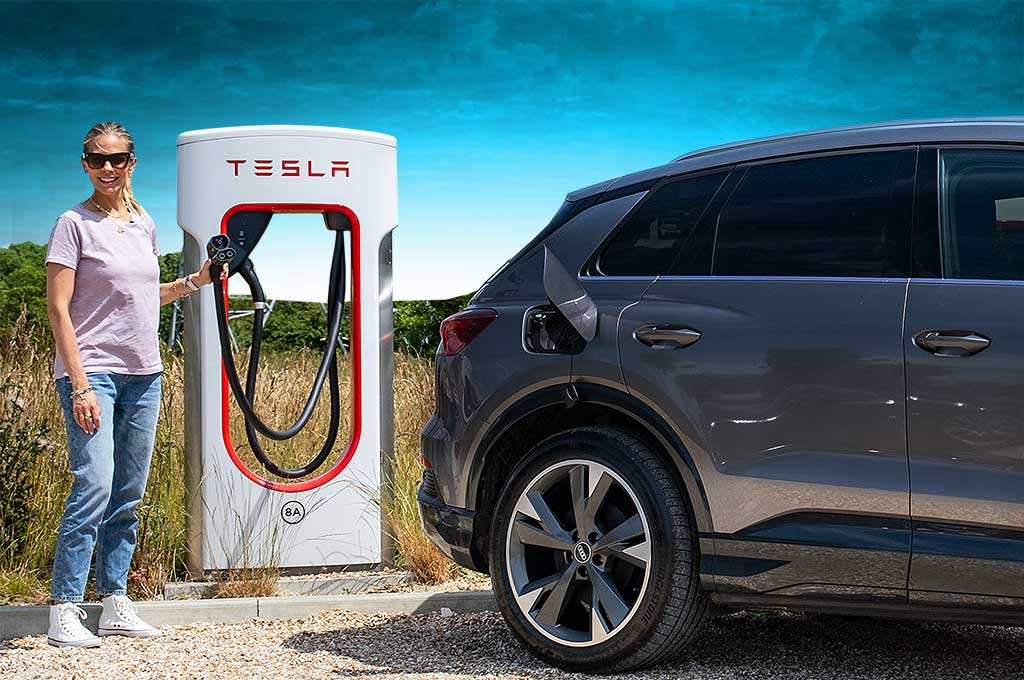
No, not literally any car — but as of 2026 the honest answer is “probably yes, if it is an EV.” Most new electric vehicles sold in the US can now plug into a Tesla Supercharger or Tesla Wall Connector, either with a factory-built NACS port or a low-cost adapter. Gas-powered cars still cannot use any electric charging station at all, Tesla or otherwise.
That was not true even two years ago. Tesla charging stations used to mean Tesla cars, full stop. Then Tesla opened its connector design as the North American Charging Standard (NACS), the standard was formally adopted by the SAE as J3400, and nearly every major automaker signed on to build it into future EVs. Ford, GM, Rivian, Hyundai, Kia, Honda, Nissan, BMW, Mercedes-Benz, Toyota, Volvo, Polestar, and Lucid have all announced or already shipped NACS-equipped models in the US.
The catch is that “opened up” does not mean identical for every car. Whether your specific vehicle can plug in without an adapter, what it costs you compared to a Tesla owner, and whether Superchargers and Tesla’s slower Destination Chargers even work the same way are three separate questions. This guide walks through all three with current 2026 numbers, plus what genuinely still will not work.
Do You Need an Adapter to Charge at a Tesla Station?
It depends on when your car was built and by whom. Split it into three groups.
- Native NACS cars need no adapter. Any EV built with a factory NACS port — Tesla, plus newer Rivians, Fords, GM EVs, Hondas, Hyundais, Kias, and others — plugs straight into a Supercharger just like a Tesla does.
- Older CCS1 cars need a DC adapter for Superchargers. Most EVs sold in the US before roughly 2025 use the CCS1 connector for DC fast charging. Some of Tesla’s Supercharger stalls (the “Magic Dock” locations) have a built-in CCS1 adapter cable right at the stall. Everywhere else, the automaker’s own branded NACS adapter is required — Tesla does not sell a universal one for this.
- Any J1772 car needs an AC adapter for Tesla Wall Connectors and Destination Chargers. These are Tesla’s slower Level 2 chargers, common at hotels and shopping centers. Most of them use Tesla’s proprietary plug (the same shape as NACS), so a non-Tesla EV with a standard J1772 port needs a J1772-to-NACS adapter to use them.
The DC fast-charging adapters are not universal, cheap accessories — they are automaker-specific and software-locked for safety, so you buy them through the automaker, not a third party. GM charges roughly $225 for its official adapter through the myChevrolet, myGMC, or myCadillac app. Rivian charged the same after its earlier complimentary program ended. Ford ran a free-adapter program that closed to new orders in mid-2025, after which its adapter also became a paid accessory.
The Level 2 AC adapters (NACS to J1772, or the reverse) are a different story — those are genuinely universal, sold by third-party brands, and typically run $40 to $160 depending on amperage. They are the one piece of this puzzle a non-Tesla EV owner can just buy directly.
IF YOUR EV USES A J1772 PORT
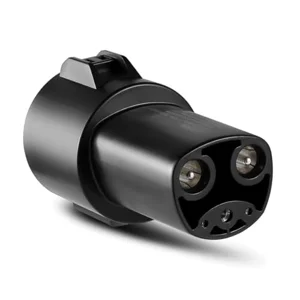 |
Lectron J1772 to NACS Adapter – $39.99 As explained above, most J1772-equipped EVs need an adapter like this to plug into a Tesla Wall Connector or Destination Charger — this is the piece that closes that gap.
|
What “Any Car” Actually Means Here
It is worth stating plainly: a gasoline or diesel car cannot use a Tesla charging station, or any EV charging station, under any circumstances. There is no adapter that turns an electric plug into fuel for an internal combustion engine. Hybrids that never plug in (a standard Toyota Prius, for example) are in the same boat — they charge their small battery from the engine and regenerative braking, not from a wall or a charger.
Plug-in hybrids (PHEVs) are the exception worth knowing. A PHEV with a J1772 or NACS charge port can use the same Level 2 Tesla Wall Connectors and Destination Chargers as a full EV, subject to the same adapter rules above. Most PHEVs cannot DC fast charge at all, though, so Superchargers are not relevant to them either way.
Automaker-by-Automaker: Who Has Native NACS Access in 2026
This changes every few months as new model years roll out, but here is where the major automakers stand as of 2026. Always double-check your specific model year and trim, since a brand can offer native NACS on one model while its other EVs still ship with CCS1.
| Automaker | Native NACS Status (2026) | Adapter for Older/CCS1 Models |
|---|---|---|
| Tesla | Native since inception | Not applicable |
| Ford | Native on current EVs | Free program closed mid-2025; now a paid accessory |
| Rivian | Native on current models | Roughly $225 through Rivian Gear Shop |
| GM (Chevrolet, GMC, Cadillac) | Rolling out model by model (e.g., Cadillac Optiq) | Roughly $225 via the myChevrolet/myGMC/myCadillac app |
| Hyundai / Kia | Native on newer EVs, phasing in across the lineup | Automaker-issued adapter for older CCS1 models |
| Honda / Acura | Native on newer EVs | Automaker-issued adapter for earlier models |
| BMW / Mercedes-Benz | Committed to NACS, phasing in on new models | Automaker-issued adapter in the interim |
| Toyota / Lexus | Committed to NACS, phasing in on new EVs | Automaker-issued adapter for earlier CCS1 models |
| Volvo / Polestar | Native on current EVs | Automaker-issued adapter for earlier models |
| Lucid | Native starting with the Gravity SUV | Adapter available for earlier Air models |
Nissan has also committed to NACS, and most Stellantis EV brands (Jeep, Chrysler) sold in the US have announced the same plan. If your car is not listed here, check the automaker’s own EV support page — “NACS adapter” plus your model year is the fastest way to get a current answer.
Supercharger vs Destination Charger vs Home Wall Connector
“Tesla charging station” actually covers three different things, and they do not all treat non-Tesla cars the same way.
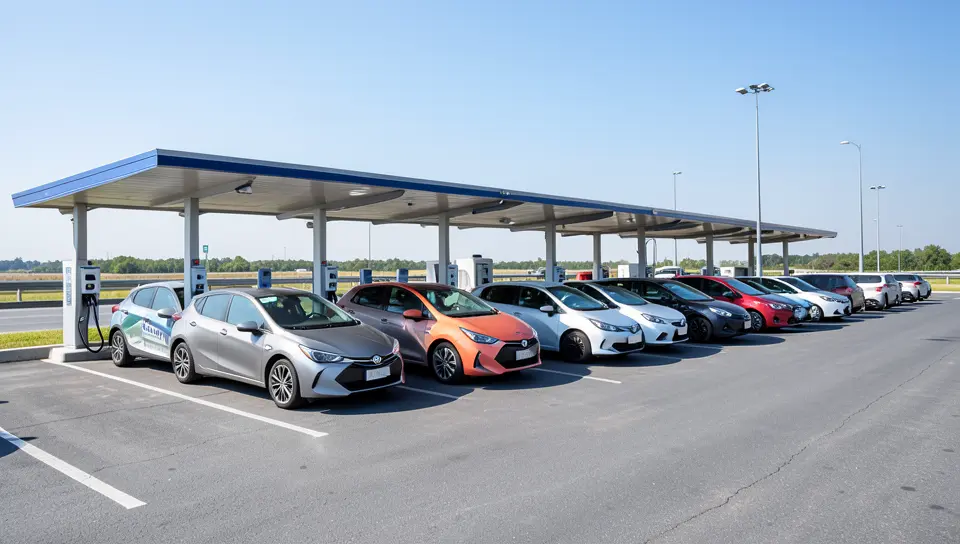
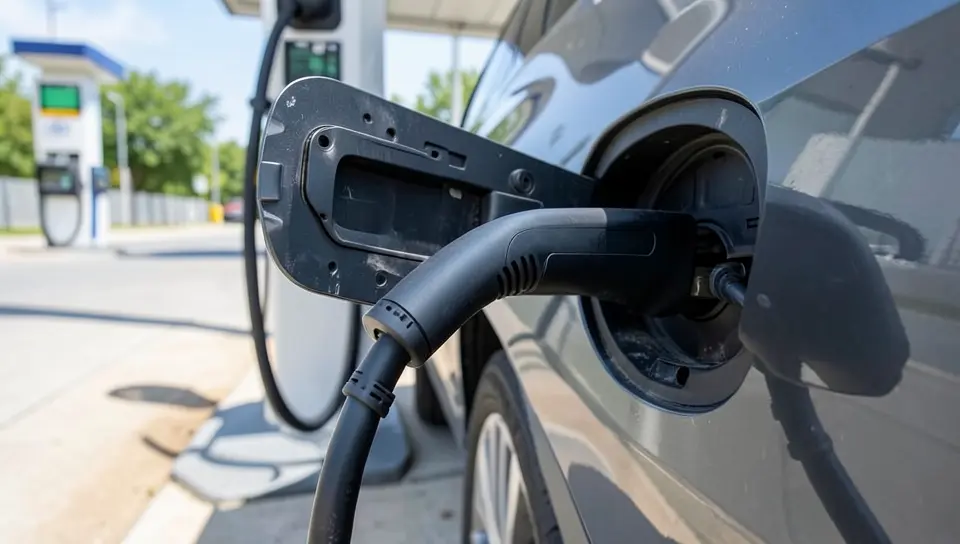
- Superchargers are Tesla’s DC fast-charging network — the ones along highways designed for road trips. As of 2026, Tesla operates roughly 3,000-plus stations in the US with more than 37,000 individual charging stalls, making it the largest single fast-charging network in the country. These require either a native NACS port, a Magic Dock stall with a built-in CCS1 adapter, or your automaker’s paid NACS adapter.
- Destination Chargers are the slower Level 2 units Tesla places at hotels, restaurants, and shopping centers through partnerships with the property owner. They use Tesla’s plug shape, so a J1772 car needs the AC adapter covered above to use them.
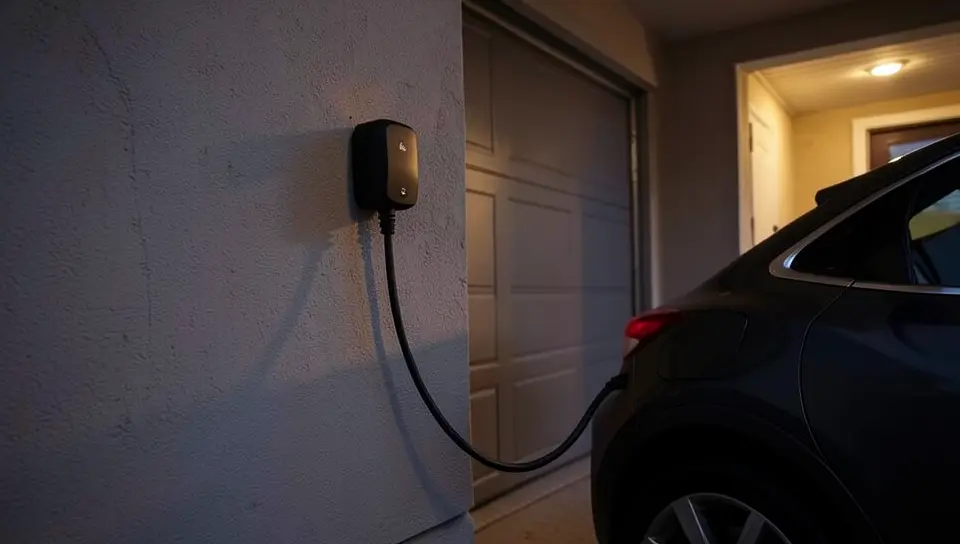
- Tesla Wall Connectors are the home charging units Tesla sells to individual owners. Tesla’s newer “Universal Wall Connector” ships with an integrated J1772 adapter built in, so it charges either a Tesla or a non-Tesla EV out of the box. Older Wall Connector models do not include this and need the separate adapter.
What It Costs a Non-Tesla Driver to Charge at a Tesla Station
Getting plugged in is only half the question — pricing is not identical for Tesla and non-Tesla drivers. In 2026, Tesla still charges non-Tesla EVs a premium at Superchargers, typically 30 to 40 percent more than a Tesla owner pays at the same stall during peak hours, with the gap narrowing somewhat off-peak.
Tesla’s Supercharging Membership closes that gap. For $12.99 a month, non-Tesla drivers get the same per-kWh rate as Tesla owners. Most drivers who fast-charge more than roughly 80 to 100 kWh a month (a few charging sessions) come out ahead with the membership rather than paying the non-member rate each time.
General Supercharger pricing for 2026 falls roughly in the $0.30 to $0.45 per kWh range at most US stations, with higher-cost markets like California or peak-demand hours sometimes running $0.50 to $0.60 or more. Idle fees also apply if you leave your car plugged in after it finishes charging — the fee kicks in to free up the stall for the next driver, Tesla or not.
Limitations, Safety Notes, and What Still Will Not Work
Even with an adapter in hand, a few real limitations remain. Only use an adapter designed and certified for your specific charger type and your car’s port — a mismatched or off-brand DC adapter is a genuine fire and equipment-damage risk, which is exactly why automakers software-lock their own DC fast-charging adapters instead of letting any third party sell one.
Not every Supercharger stall supports non-Tesla vehicles, even with the right adapter — Tesla enables non-Tesla access location by location, not networkwide, so a station near you may still be Tesla-only. Always check Tesla’s own app or website for a station’s compatibility before counting on it for a trip. And charging speed on an adapter is not always identical to a native NACS connection; some non-Tesla EVs charge a bit slower through the adapter path due to how their onboard charging system communicates with the stall.
Alternatives If Your Car Cannot Charge at a Tesla Station
If your EV cannot yet access Tesla’s network, or you would simply rather not deal with adapters, several large public networks still run their own CCS1 and CHAdeMO fast chargers. Electrify America, ChargePoint, and EVgo are the three biggest in the US, with thousands of DC fast-charging stalls between them that work with any CCS1-equipped EV, no Tesla adapter required.
Home charging remains the most reliable option regardless of which public network your car can use. A Level 1 charger plugs into a standard household outlet and is slow but works with every EV. A Level 2 home charger, installed on a dedicated 240V circuit, charges far faster overnight and is the setup most EV owners end up relying on day to day, independent of any public charging drama at all.
Frequently Asked Questions
Can Any Car Use a Tesla Supercharger?
No. Gas cars cannot use any EV charger. Among EVs, a car needs either a native NACS port, a Magic Dock CCS1 stall, or an automaker-issued NACS adapter to use a Supercharger, and not every Supercharger location allows non-Tesla vehicles even then.
Do I Need an Adapter to Charge at a Tesla Station?
Only if your car does not already have a native NACS port. Cars built with NACS from the factory plug straight in. Older CCS1 cars need a DC adapter for Superchargers, and J1772 cars need a separate AC adapter for Tesla Wall Connectors and Destination Chargers.
Can a Gas Car Use a Tesla Charging Station?
No. Tesla charging stations, like all EV chargers, deliver electricity to a battery. There is no way to adapt a gasoline or diesel engine to run on that power, and no adapter exists that changes this.
Is It More Expensive for a Non-Tesla EV to Charge at a Supercharger?
Usually yes, without a membership. Non-Tesla drivers typically pay roughly 30 to 40 percent more per kWh than Tesla owners at peak hours. Tesla’s $12.99-a-month Supercharging Membership removes that premium and matches Tesla owner pricing.
Can I Use a Tesla Destination Charger With a Non-Tesla EV?
Yes, if your car has a J1772 port, you can use it with a J1772-to-NACS adapter, since most Destination Chargers use Tesla’s proprietary plug shape. Cars with a native NACS port can plug in directly with no adapter at all.
Will Every EV Eventually Have Native Access to Tesla Superchargers?
Most major automakers selling EVs in the US have committed to NACS, so native access is becoming the norm rather than the exception. Older cars already on the road will still rely on adapters, since a charging port cannot be retrofitted after the vehicle is built.
Conclusion
“Can any car use a Tesla charging station” has a much more open answer in 2026 than it did just a couple of years ago, but it is still not a blanket yes. Gas cars are out entirely. Most EVs are in, either natively through NACS or with an adapter, though the exact adapter, its cost, and the pricing you pay once plugged in all depend on your specific car and automaker.
Before a road trip, check your automaker’s current NACS status, confirm you have the right adapter on hand if you need one, and use Tesla’s app to verify a given Supercharger actually allows non-Tesla vehicles. If your car cannot use Tesla’s network at all yet, Electrify America, ChargePoint, and EVgo remain solid nationwide backups, and a home Level 2 charger covers the rest of your day-to-day charging regardless of which public network your car supports.
Products related to this article
Sponsored / affiliate links. As an Amazon Associate I earn from qualifying purchases. I may earn additional commission from eligible campaigns.