Can I Leave My Car Running For An Hour? Essential Guide
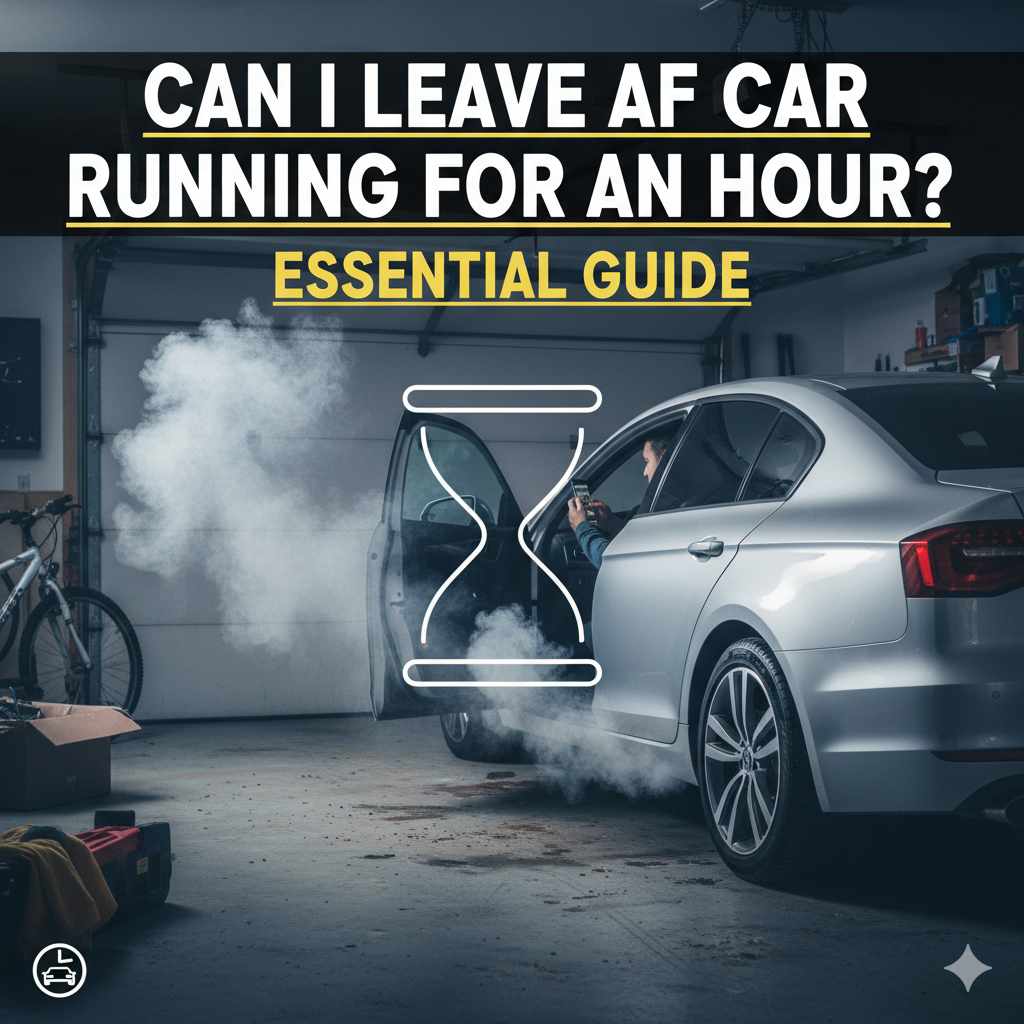
Leaving a car running for an hour is generally not recommended due to potential risks like fuel inefficiency, excessive wear on engine components, and environmental concerns. While occasional short periods might be harmless, prolonged idling can lead to costly problems. This guide explains when it might be necessary, the downsides, safer alternatives, and how to assess your vehicle’s needs.
Ever found yourself wondering if it’s okay to just let your car idle for a while? Maybe you’re waiting for someone, or perhaps it’s a chilly morning and you want the cabin warm. The question, “Can I leave my car running for an hour?” pops up for many drivers. It seems simple enough – the engine is running, so it’s just… running, right?
But the reality is a little more complex. Letting your car idle for extended periods, especially an entire hour, can have consequences you might not expect. It’s not always about whether your car can do it, but whether it should. This guide is here to break down the whys and hows, helping you make the best decision for your car’s health and your wallet. We’ll explore the risks, the rare exceptions, and what you can do instead.
Understanding Your Car’s Idling Behavior
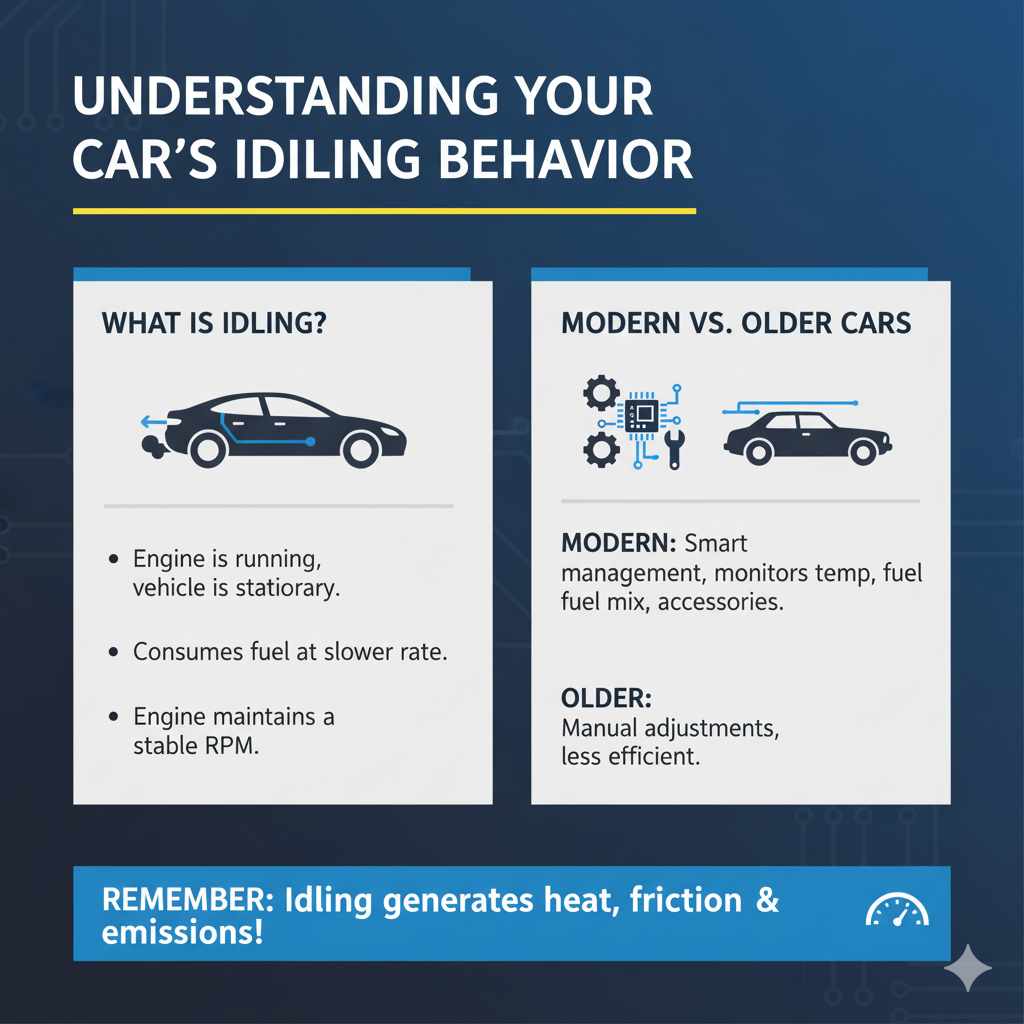
When your car is “idling,” it means the engine is running, but the vehicle isn’t moving. The engine is still consuming fuel, though at a slower rate than when you’re driving. In modern cars, the engine management system constantly monitors various factors like engine temperature, air-fuel mixture, and accessory loads (like your air conditioning or heater) to maintain a stable idle speed.
Older vehicles might have different idling characteristics, sometimes requiring manual adjustments. However, the fundamental principle remains: the engine is working, albeit at a reduced capacity. This continuous operation, even without movement, generates heat, friction, and exhaust emissions.
The Downsides of Prolonged Idling
While a minute two of idling to clear the windshield or let the engine warm slightly might not cause much harm, letting your car run for an hour can lead to several issues. These range from minor inconveniences to potentially expensive repairs.
1. Fuel Inefficiency and Wasted Money
This is one of the most immediate and noticeable downsides. Even at idle, your engine burns fuel. While it uses less fuel than when driving, over an hour, this consumption adds up. Consider this: a typical car can burn between 0.15 to 0.30 gallons of fuel per hour while idling. Over a year, this can translate into significant wasted money. For instance, at $4 per gallon, idling for one hour a day, five days a week, for 50 weeks a year, could cost you between $300 and $600 annually, just in wasted fuel.
You’re essentially paying to pollute without going anywhere. It’s always more fuel-efficient to turn off your engine if you expect to be stopped for more than 30-60 seconds, especially in warmer weather.
2. Increased Engine Wear and Tear
Most car engines are designed for driving, not for prolonged idling. When an engine idles, it doesn’t operate at its optimal temperature range. This can lead to:
- Incomplete Combustion: At lower operating temperatures, fuel might not burn as efficiently, leading to carbon buildup on engine parts like valves and spark plugs. This buildup can affect performance and fuel economy over time.
- Dilution of Engine Oil: Unburnt fuel can seep past piston rings and mix with the engine oil. This dilutes the oil’s lubricating properties, reducing its effectiveness in protecting engine components from friction and wear.
- Increased Stress on Certain Components: While the engine isn’t under heavy load, continuous running without sufficient airflow (especially if parked) can put stress on components like exhaust systems and catalytic converters, which rely on heat dissipation and exhaust flow.
For example, a study often cited by the U.S. Department of Energy suggests that turning off your engine if you expect to idle for more than 10 seconds is often more fuel-efficient than leaving it running. This implies that prolonged idling, much longer than 10 seconds, is not ideal for engine longevity.
3. Environmental Impact and Emissions
When your car’s engine is running, it’s producing exhaust gases, including carbon dioxide (CO2), a greenhouse gas, and other pollutants like nitrogen oxides and particulate matter. Leaving your car running for an hour contributes unnecessarily to air pollution.
In many places, there are anti-idling ordinances in effect to combat air pollution and reduce the carbon footprint of vehicles. These laws often prohibit idling for more than a certain period, typically a few minutes. Violating these ordinances can result in fines. According to the U.S. Environmental Protection Agency (EPA), reducing idling can have significant positive impacts on air quality and public health.
4. Risk of Carbon Monoxide Poisoning
This is a critical safety concern. Car exhaust contains carbon monoxide (CO), a colorless, odorless, and dangerous gas. If your car is running in an enclosed or poorly ventilated space, such as a garage, the CO can build up to lethal levels very quickly. Even if your garage door is open, the concentration of CO can still be harmful, particularly if the exhaust is directed towards an occupied area.
Always ensure that if your car is running (even for a short period), it is in a well-ventilated area, and never in a closed garage or attached structure. The National Highway Traffic Safety Administration (NHTSA) strongly advises against running a vehicle in a garage to prevent CO poisoning.
5. Clogging the Catalytic Converter
Catalytic converters are vital components that reduce harmful emissions by converting toxic gases into less harmful ones. They work most efficiently at higher operating temperatures. Prolonged idling, especially in colder weather, can prevent the catalytic converter from reaching its optimal working temperature. This can lead to unburned fuel accumulating in the converter, potentially causing it to overheat and become damaged, eventually leading to a costly replacement.
6. Potential for Battery Issues
While the alternator is designed to keep the battery charged while the engine is running, excessive idling can sometimes strain the electrical system. If you have many accessories running (lights, radio, heated seats, AC), the alternator has to work harder. In some older vehicles, or if the battery and alternator aren’t in peak condition, prolonged idling might not provide enough power to fully keep up with the demand, potentially leading to a drained battery. This is less common in modern vehicles but still a possibility.
When Might Idling for an Hour Seem Necessary (and Safer Alternatives)?
There are a few rare scenarios where you might consider letting your car run for an extended period. However, even in these situations, there are often safer and more efficient alternatives.
1. Extreme Cold Weather
In very cold climates, some people prefer to leave their cars running periodically to prevent the engine oil from thickening too much and to keep the battery charged. However, for modern vehicles, it’s generally recommended not to idle for excessively long periods, even in the cold.
Safer Alternative: Instead of idling for an hour, consider starting your car for 5-10 minutes, letting the engine and cabin warm up slightly, and then turning it off. For crucial pre-winter preparation, consider investing in a battery warmer or a block heater, which warms the engine coolant and oil, making starting easier and reducing wear without continuous idling. Many sources, like the HowStuffWorks, discuss the nuances of idling in various weather conditions, often recommending against prolonged idling even in extreme cold.
2. Waiting for Someone
If you’re waiting for a passenger and expect to be there for a while, the temptation to keep the engine running is strong, especially if you want to keep the AC or heater on.
Safer Alternative: If you’ll be stopped for more than a minute or two, turn off the engine and use the car’s stored power for the climate control. Many modern cars can maintain cabin temperature for a surprisingly long time with the engine off. If you have a hybrid vehicle, this is even more straightforward, as they are designed to run on battery power alone when stopped. If your car is older and you’re worried about battery drain, you can run the engine for a few minutes every 15-20 minutes to recharge, rather than continuously for an hour.
3. Defrosting the Windshield
In icy conditions, you need to clear your windows to see.
Safer Alternative: While letting the engine run for 5-10 minutes can help, you can speed up the process. Pouring warm (not hot!) water over the windshield can quickly melt ice. Using a high-quality ice scraper is also very effective. Turning on the defroster to its highest setting and recirculating the interior air can also quickly clear the glass. If you consistently face this issue, consider a windshield cover for overnight use.
4. Charging the Battery (Intermittent Use)
If you’ve noticed your battery is low or you’re concerned about it, you might think idling is a good way to charge it.
Safer Alternative & Better Solution: Driving your car for at least 20-30 minutes at regular speeds allows the alternator to effectively charge the battery. Constant idling is not an efficient way to charge a battery. If you suspect battery issues, it’s best to have it tested at an auto shop and potentially replaced. You can learn more about battery maintenance from resources like Batteries Plus Bulbs.
How to Idling Safely If Absolutely Necessary (for short durations)
There are rare emergencies or specific situations where minimal idling might seem unavoidable. For instance, keeping a medical device powered or waiting in extreme conditions. If you must idle, follow these safety tips:
- Ensure Ventilation: NEVER idle your car in an enclosed space like a garage. Always be in a well-ventilated outdoor area. If sitting in the car, open a window slightly.
- Monitor Fuel Levels: Keep an eye on your fuel gauge. Idling uses fuel, and you don’t want to get stranded.
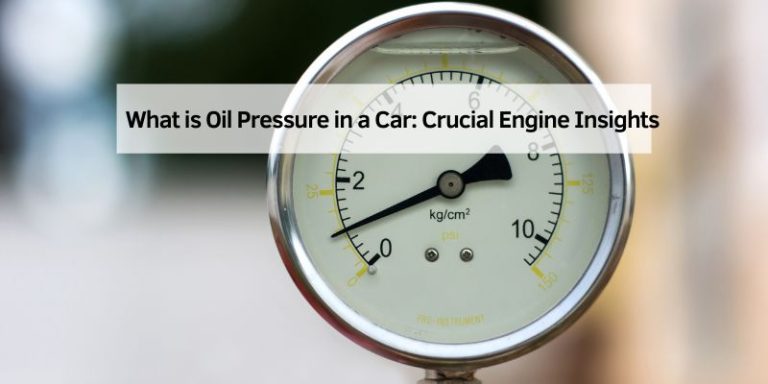
- Check Gauges Regularly: Monitor your engine temperature and oil pressure gauges to ensure the engine is running within normal parameters.
- Avoid Excessive Accessories: Turn off non-essential electronics and accessories (like powerful stereos or extra lights) to reduce the load on the alternator.
- Keep it Brief: Even if you deem it necessary, aim to keep idling to the absolute minimum time required.
Idling Time vs. Driving Time
A common benchmark is that driving your car for 10 minutes can more effectively warm up the engine, clear out condensation from the oil, and ensure the catalytic converter is operating optimally than idling for that same amount of time. For any period longer than what it takes to clear your windows or start moving, driving is generally better.
The U.S. Department of Energy often provides figures comparing the fuel consumed by idling versus driving. A general rule of thumb often cited is that idling uses more fuel than driving at speeds up to 15 mph. This underscores that even short drives are more beneficial than extended idling.
Specific Engine Types and Idling
Your car’s engine type can influence how it handles idling.
1. Gasoline Engines
Most gasoline engines are relatively robust and can handle short periods of idling. However, as discussed, prolonged idling leads to carbon buildup and oil dilution. Direct-injection gasoline engines can be particularly susceptible to carbon buildup on intake valves from excessive idling.
2. Diesel Engines
Diesel engines are often more tolerant of idling than gasoline engines. They operate at higher compression ratios and don’t typically suffer from the same degree of fuel dilution. However, prolonged idling can still lead to issues, especially with modern diesel particulate filters (DPFs). DPFs rely on high exhaust temperatures to regenerate (burn off collected soot). Excessive idling can prevent the DPF from reaching regeneration temperatures, potentially leading to clogging. Diesel Power Products often discusses safe idling practices for truckers and diesel owners.
3. Hybrid Vehicles
Hybrid vehicles are designed to manage engine operation efficiently. They often shut off the gasoline engine entirely when stopped or at low speeds, running on electric power. Leaving a hybrid idling is usually unnecessary and less efficient than simply letting the system manage itself. In fact, many hybrids will automatically shut off the gasoline engine when stopped for more than a few seconds.
4. Electric Vehicles (EVs)
Electric vehicles don’t have an internal combustion engine and therefore do not idle in the traditional sense. They use battery power to run accessories and climate control when stationary. Leaving an EV “on” with the climate control running will drain the battery, but it poses none of the risks associated with idling an internal combustion engine.
Table: Idling vs. Short Drive Comparison
Here’s a quick look at what happens to your car and your wallet during different scenarios:
| Scenario | Fuel Consumption (approx.) | Engine Wear Risk | Environmental Impact | Cost Factor (Fuel) |
|---|---|---|---|---|
| Idling for 1 Hour | 0.15 – 0.30 gallons | Moderate (carbon buildup, oil dilution) | High (CO2, pollutants emitted) | Significant |
| Driving for 1 Hour (average commute) | Varies widely (e.g., 2-4 gallons) | Low (engine operating optimally) | High (depending on distance/efficiency) | Higher than idle, but productive |
| Idling for 5 Minutes | ~0.01 – 0.02 gallons | Very Low | Low | Negligible |
| Driving for 5 Minutes (to a nearby store) | ~0.07 – 0.13 gallons | Low | Low | Small |
When to Consult Your Owner’s Manual
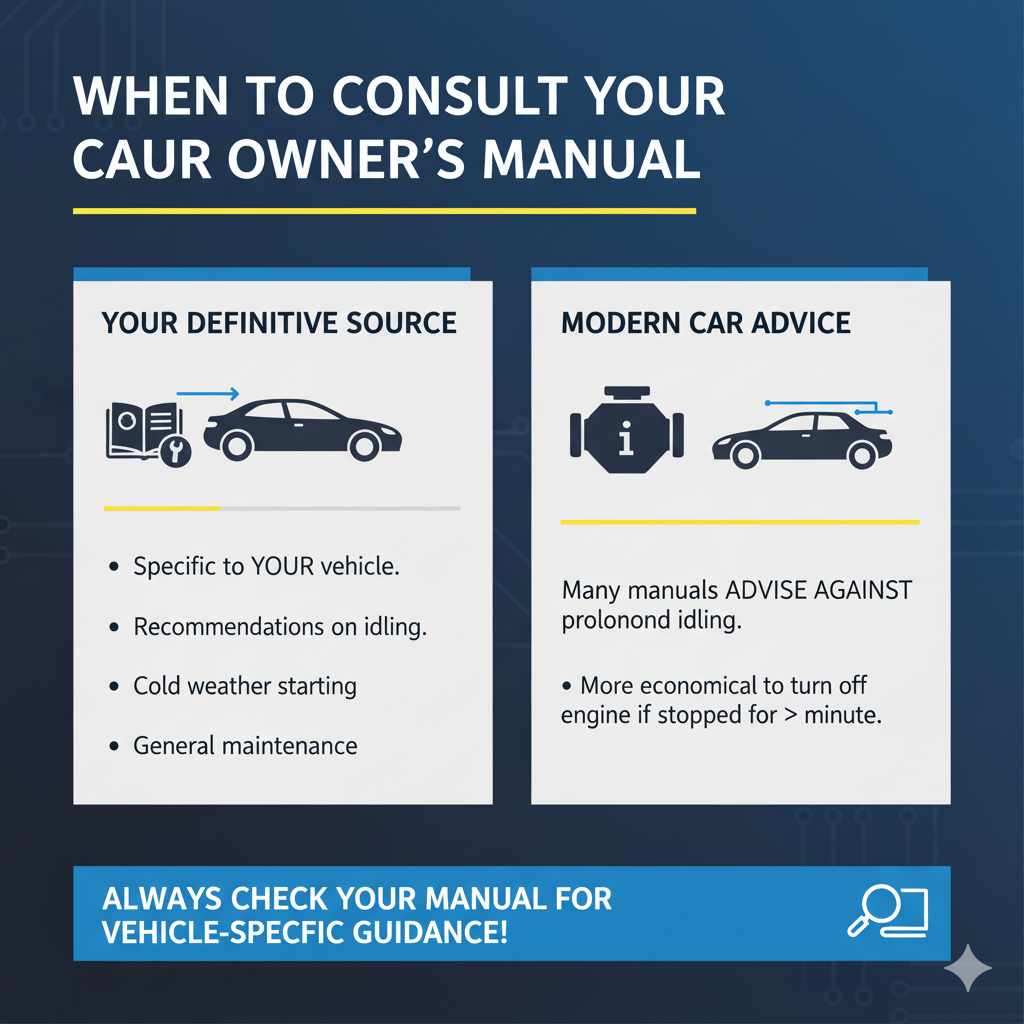
Your car’s owner’s manual is the definitive source of information for your specific vehicle. It often contains recommendations regarding idling times, cold weather starting procedures, and general maintenance. If you’re unsure about your vehicle’s requirements, give your owner’s manual a quick look.
For example, many owner’s manuals for modern fuel-efficient cars explicitly advise against prolonged idling, stating that it’s more economical to turn off the engine if you will be stopped for more than a minute.
Frequently Asked Questions (FAQ)
Q1: Is it bad to let my car idle for 30 minutes?
Yes, letting your car idle for 30 minutes is generally not recommended. While not as long as an hour, it still leads to wasted fuel, potential carbon buildup, and increased wear on engine components. It’s usually more efficient and better for your car to turn off the engine if you expect to be stopped for more than a minute or two.
Q2: Can I leave my car running in the winter to keep it warm?
While the temptation is strong, prolonged idling in winter for warmth can still cause issues like carbon buildup and inefficient fuel use. For modern cars, it’s better to let them run for a short period (5-10 minutes) to take the edge off the cold and then turn them off or get driving. If extreme cold is a constant concern, consider a block heater.
Q3: How long can I safely idle my car?
For most modern cars, idling for more than 30-60 seconds is often less fuel-efficient than turning off the engine. For short durations, like defrosting a windshield or clearing fog, 5-10 minutes might be acceptable. However, for any period longer than that, it’s best to shut off the engine to save fuel and reduce wear.