Can You Co Own A Car? Essential Guide
Yes, you can absolutely co-own a car! This essential guide breaks down how co-ownership works, the benefits, potential challenges, and everything beginners need to know to share a vehicle smoothly and legally.
Sharing a car might sound like a great idea, especially if you or someone you know needs a vehicle but can’t manage the full cost alone. But how does it actually work? Many people wonder, “Can you co own a car?” The answer is a resounding yes, but it’s not as simple as just splitting the gas money. Proper planning and understanding the legalities are super important to avoid headaches down the road. This guide will walk you through everything you need to know, making co-owning a car a breeze.
Understanding Car Co-Ownership
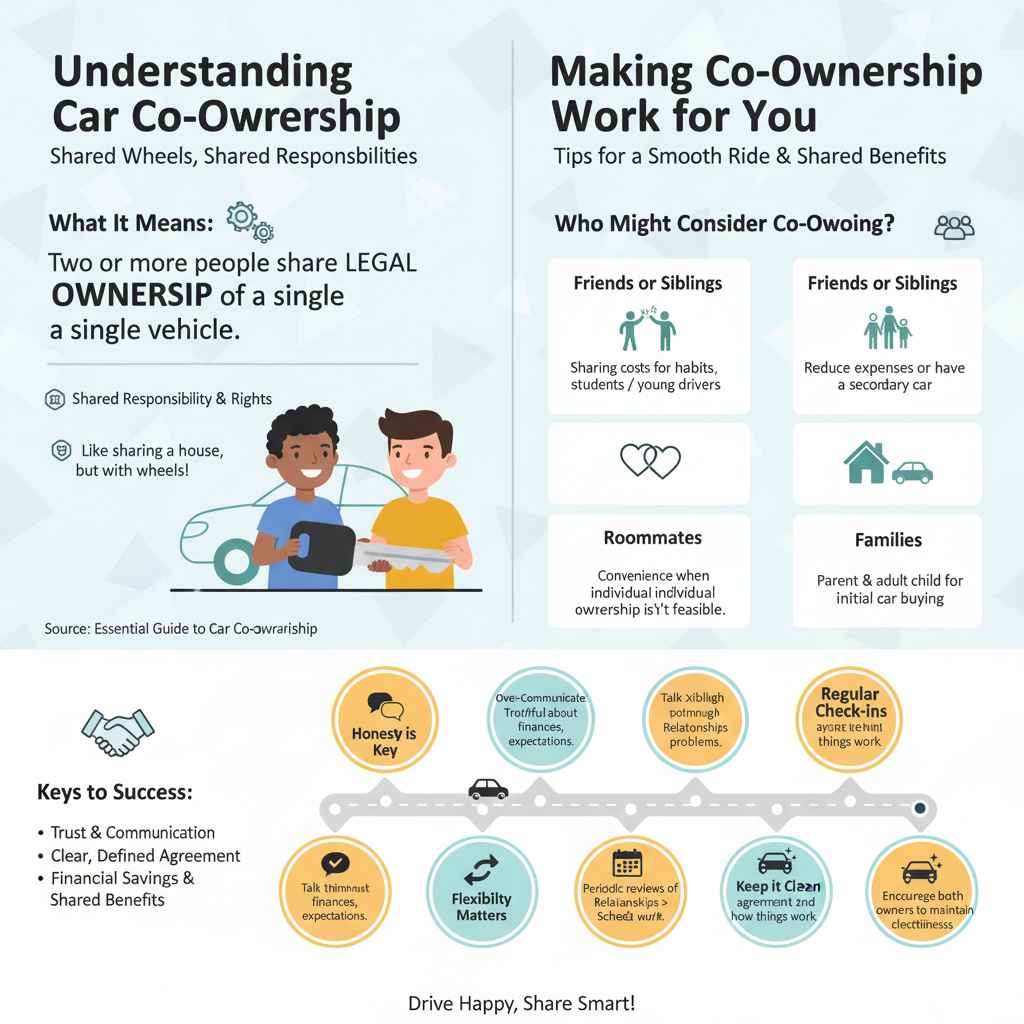
Co-owning a car means two or more people share legal ownership of a single vehicle. This isn’t just about who drives it more or who paid for the tires; it’s about shared responsibility and shared rights regarding the car. Think of it like sharing a house, but with wheels!
Who Might Consider Co-Owning a Car?
- Friends or Siblings: Sharing the cost of a car for a student or young driver.
- Couples: Partners who want to reduce expenses or have a secondary car.
- Roommates: Sharing a vehicle for convenience when individual car ownership isn’t feasible.
- Families: A parent and adult child sharing a vehicle, especially for initial car buying experiences.
The Perks of Sharing: Benefits of Co-Owning a Car
Co-owning a car can unlock some fantastic advantages, making car ownership more accessible and affordable. Here are some of the big wins:
- Reduced Costs: This is usually the biggest draw! Splitting the purchase price, insurance premiums, registration fees, and even maintenance costs means less financial burden for everyone involved. Imagine getting that slightly nicer car you’ve been eyeing because the cost is shared!
- Increased Access: If one co-owner needs the car for work or a long trip, the other might still have access to alternative transportation or be able to use it when it’s available. It offers more flexibility than relying on a single vehicle.
- Shared Responsibility: Tasks like remembering registration renewals, scheduling maintenance, or dealing with minor repairs can be divided, making it feel less like a solo chore.
- Learning Opportunity: For younger or less experienced drivers, co-owning with a more experienced individual can be a great way to learn about car care, responsible driving, and the financial side of vehicle ownership.
- Environmental Friendliness: Fewer cars on the road means less pollution. Co-ownership is a practical way to reduce your carbon footprint.
Navigating the Roadblocks: Challenges of Co-Owning a Car
While the idea is appealing, co-ownership isn’t always smooth sailing. It’s vital to be aware of the potential bumps in the road to steer clear of them.
- Decision-Making Conflicts: Who gets to decide on the car color? What type of insurance is best? What happens if one person wants to sell immediately and the other doesn’t? Disagreements about car usage, maintenance, and modifications can arise.
- Financial Disagreements: What if one owner consistently uses more gas, incurs more wear and tear, or misses a payment? Establishing clear financial contributions and tracking usage can be tricky.
- Insurance Complications: Insuring a co-owned vehicle often requires all owners to be listed on the policy, which can sometimes complicate things or affect premiums.
- Legal and Liability Issues: In the event of an accident, determining fault and responsibility, especially if one owner was driving without the other’s express permission or if there’s a dispute, can be complex.
- Disputes Over Repairs and Maintenance: If one owner doesn’t want to pay for a necessary repair, or if there’s a disagreement about the best course of action for maintenance, it can lead to strain on the relationship.
- End of the Agreement: What happens if one co-owner wants out? Selling a co-owned car involves agreement from all parties, which can be difficult to achieve.
Setting the Rules: How to Co-Own a Car Legally and Smoothly
“Can you co own a car?” is just the first question. The next, and most crucial, is “How do you do it right?” The key to successful co-ownership is a solid, written agreement. This document acts as your roadmap and your rulebook.
Step 1: Have the “Big Talk”
Before you even look at car dealerships or browse online listings, sit down and have an open, honest conversation. Discuss:
- Budget: Who pays what for the initial purchase, down payment, and financing?
- Usage: How will the car be used? Daily commute? Weekend trips? Who gets priority if schedules clash?
- Financial Contributions: How will ongoing costs like gas, insurance, maintenance, and repairs be split?
- Decision Making: Who has the final say on major decisions (e.g., repairs, selling, modifications)?
- Dispute Resolution: What will you do if you disagree?
- Exit Strategy: What happens if one person wants to sell their share or the entire car?
Step 2: Draft a Co-Ownership Agreement
This is where you put everything from your “big talk” into writing. This agreement should be as detailed as possible. While it might seem unromantic, a written contract is essential for clarity and protection. You can find templates online, or it’s wise to consult with a legal professional, especially if a significant amount of money is involved.
Key Components of Your Agreement:
- Names and Contact Information of all co-owners.
- Vehicle Details: Make, model, year, VIN (Vehicle Identification Number).
- Ownership Percentage: Clearly state who owns what percentage of the vehicle (e.g., 50/50, 60/40). This affects decision-making and what happens if the car is sold.
- Financial Responsibilities: A breakdown of who pays for what (initial purchase, loan payments, insurance, registration, taxes, fuel, maintenance, repairs, parking tickets, fines).
- Usage Rules: How the car will be shared, any restrictions on who can drive it, and procedures for scheduling.
- Maintenance and Repair Procedures: Who is responsible for scheduling and paying for routine maintenance and unexpected repairs.
- Insurance Information: How the insurance policy will be handled and who is responsible for paying the premiums.
- Dispute Resolution Clause: A plan for resolving disagreements amicably.
- Termination Clause: How the co-ownership agreement can be ended, including procedures for selling the car or one owner buying out the other.
Consider consulting a legal expert to ensure your agreement is sound and enforceable. Resources like the U.S. Government’s official website can offer general information on consumer laws even if it doesn’t provide specific co-ownership templates.
Step 3: Handle the Legal and Financial Paperwork
This is where you make it official with the DMV and your insurance company.
Vehicle Registration and Title
When you purchase a car, the title is the legal document proving ownership. With co-ownership, the title will list all owners. The exact process varies by state, but generally:
- The Title: You’ll need to decide how the names appear on the title. It could be “John Doe AND Jane Smith” (meaning both must agree to sell) or “John Doe OR Jane Smith” (either can act). “AND” is generally safer for shared ownership to ensure mutual agreement.
- Registration: You’ll register the vehicle with the state’s Department of Motor Vehicles (DMV). It’s essential to understand your state’s specific requirements for co-titled vehicles. You can usually find this information on your state’s official DMV website.
Financing (If Applicable)
If you’re taking out a loan for the car, both (or all) co-owners will likely need to be on the loan application and be listed as borrowers. This means both parties are legally responsible for repaying the loan.
Insurance
This is a critical step. You’ll need to inform your insurance provider that there are multiple owners. Most insurers will require all owners to be listed on the policy.
- Informing the Insurer: Be upfront about all co-owners. Failing to do so could void your insurance.
- Policy Details: Discuss who will be the primary policyholder. This person usually handles payments and communications, but all listed owners are covered.
- Cost Sharing: Figure out how you’ll split the insurance premium based on your agreement.
For more information on car insurance, the Insurance Information Institute offers a wealth of unbiased information.
Step 4: Establish a System for Day-to-Day Management
Once the paperwork is done and the car is in your driveway, regular communication and a clear system are vital.
Tracking Expenses
Use a shared spreadsheet, a budgeting app, or even a simple notebook to track all car-related expenses. Record who paid for what and when. This helps maintain fairness and transparency.
Scheduling Usage
If the car is used frequently by both parties, a shared calendar (like Google Calendar) can be incredibly useful for scheduling. Block out times when each person needs the car.
Maintenance and Repairs
Designate one person to be the primary point of contact for mechanic visits, or agree on a process for deciding on repairs and scheduling them. Some people opt to set up a joint bank account specifically for car expenses to simplify payments.
Tools and Resources for Co-Ownership Success
To make co-owning a car as seamless as possible, consider these tools and resources:
Essential Documents:
- Co-Ownership Agreement: A legally sound document outlining all terms.
- Vehicle Title and Registration: Proof of legal ownership and registration.
- Insurance Policy Documents: Details of your coverage.
- Maintenance Records: Keep a log of all services and repairs.
Helpful Apps & Tools:
- Shared Calendars (e.g., Google Calendar): For scheduling car usage.
- Budgeting Apps (e.g., Splitwise, Mint): To track shared expenses and payments.
- Cloud Storage (e.g., Google Drive, Dropbox): To keep digital copies of all important documents accessible to everyone.
When Things Get Tricky: Legal Advice
If disputes arise or questions about the agreement surface, consulting a lawyer specializing in contract law or property law can provide clarity and solutions.
Co-Ownership vs. Other Sharing Models
It’s helpful to understand how co-ownership differs from other ways people share access to vehicles.
| Feature | Car Co-Ownership | Car Sharing Services (e.g., Zipcar, Turo) | Family Sharing (one owner, multiple authorized drivers) |
|---|---|---|---|
| Legal Ownership | Shared legal title and responsibility. | No legal ownership for users; you lease/rent. | One primary owner; others are authorized drivers. |
| Cost Structure | Shared purchase costs, insurance, maintenance, etc. | Pay-per-use (hourly, daily) plus membership fees. | Primary owner bears all costs, may get reimbursement. |
| Flexibility | High, car is always available to owners (as scheduled). | Variable; cars may not be available when needed. | Subject to owner’s permission and availability. |
| Responsibility | Shared for maintenance, insurance, payments. | User responsible for rules, gas, minor damage during use. | Owner responsible for all legal and financial aspects. |
| Ideal For | Long-term shared vehicle for close parties. | Occasional drivers, needing cars sporadically. | Families where one person manages the vehicle. |
Making Co-Ownership Work for You
The success of co-owning a car hinges on trust, communication, and a clear, well-defined agreement. It’s not for everyone, and it requires more effort upfront than owning a car alone. However, for many, the financial savings and shared benefits make it a smart and practical choice.
Tips for a Smooth Ride:
- Honesty is Key: Be truthful about your driving habits, financial situation, and expectations.
- Over-Communicate: Don’t assume anything. Talk through potential issues before they become problems.
- Flexibility Matters: Be willing to compromise. Relationships are more important than who gets the car on a specific Tuesday.
- Regular Check-ins: Schedule periodic reviews of your co-ownership agreement and how things are working.
- Keep it Clean: Encourage both owners to keep the car clean and well-maintained.

FAQ: Your Co-Ownership Questions Answered
Q1: Can two people be on a car title?
A: Yes, absolutely. Most states allow for multiple individuals to be listed on a vehicle’s title. You’ll typically see options like “AND” or “OR” between names, with “AND” usually requiring both parties’ consent for major actions like selling the car, which is often preferred in co-ownership situations.
Q2: Who is responsible if a co-owned car gets a ticket?
A: This should be clearly defined in your co-ownership agreement. Typically, the person driving the car when the ticket was issued is responsible for paying it. If the agreement doesn’t specify, it can become a point of contention, so it’s best to address this upfront.
Q3: What happens if one co-owner stops paying their share?
A: This is a common challenge. Your co-ownership agreement should outline a process. This might involve a grace period, a discussion, or a procedure for the other owner to buy out the non-paying party’s share, or even forcing the sale of the vehicle if payments are severely delinquent.
Q4: Can I co-own a car with someone who doesn’t live with me?
A: Yes, you can co-own a car with anyone, regardless of where they live, as long as you both agree to the terms and can manage the practicalities. However, distance can add complexity to communication and shared responsibilities.
Q5: How does insurance work for a co-owned car?
A: Generally, all named co-owners must be listed on the auto insurance policy. This ensures that everyone driving the car is covered by the policy. The insurance company will need to be informed of all owners to avoid any issues with coverage in the event of a claim.
Q6: What if we disagree on major repairs?
A: This is why having a dispute resolution clause in your co-ownership agreement is crucial. It could stipulate that a neutral third party mediates, or that a majority vote (if more than two owners) decides, or that if agreement can’t be reached, the car must be sold.
Q7: Can one person buy out the other’s share?
A: Yes, this is a common way to end a co-ownership agreement. The process for determining the buyout price and the timeline for the transaction should be detailed in your co-ownership agreement.
Conclusion
So, “Can you co own a car?” The answer is a definite yes, and with the right approach, it can be a fantastic way to share the benefits of vehicle ownership while managing costs. The most crucial element is a thorough, written co-ownership agreement that covers everything from monthly payments and usage schedules to what happens if someone wants out. By having clear expectations, open communication, and a solid plan in place, you and your co-owner(s) can enjoy the convenience and savings of a shared vehicle for years to come. Remember, a little upfront effort in planning can prevent a lot of headaches on the road.