Can You Jump a BMW Battery? Use the Terminal, Not the Battery
Yes, you can jump a BMW battery — but connect the cables to the engine bay’s jump-start terminal, not the battery, since the 3, 5, and 7 Series keep their battery in the trunk. Connecting directly can blind the Intelligent Battery Sensor (IBS) and trigger a $200–$600 repair. This guide covers finding the terminal, the correct connection order, and how to avoid the IBS mistake.
Insert your Affiliate Disclosure reusable block here.
Quick Answer
You can jump-start a BMW, but never clamp the red cable straight onto the battery post — use the red-capped positive jump terminal in the engine bay instead. Many BMWs (3, 5, 7 Series) keep the actual battery in the trunk, and connecting there directly can bypass the car’s Intelligent Battery Sensor and confuse its power management system.
What You’ll Need to Jump-Start a BMW
- A set of heavy-duty jumper cables (or a portable jump starter/booster pack)
- A donor vehicle with a charged 12V battery (if not using a portable jump starter)
- Your BMW’s owner’s manual, to confirm the exact jump terminal location for your model
- Safety glasses and gloves (battery terminals can spark or leak acid)
Best Jump Starter Pick
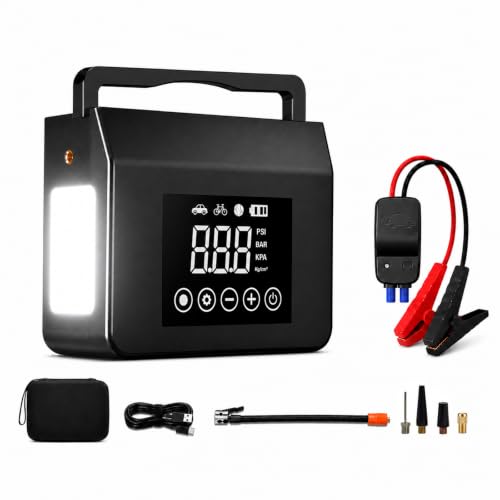
NOCO Boost GB40 12V 1000A UltraSafe Portable Lithium Jump Starter
A compact lithium booster pack that lets you jump-start your BMW alone, at the correct engine-bay terminal, without flagging down a donor car.
- Best for: jump-starting solo, without a second vehicle
- Why we picked it: reverse-polarity and spark protection reduce the risk of a bad connection at the jump terminal
- Main drawback: 1000A peak is enough for most BMW 4-cylinder and 6-cylinder engines, but larger V8 models may need a higher-amp unit
Compare more jump-starting options
 Option 1 TOPDC 0 Gauge 20-Foot 1000A Jumper Cables
|
 Option 2 GOOLOO A3 12V 3000A Jump Starter
|
 Option 3 Energizer Heavy Duty Jumper Cables
|
As an Amazon Associate we earn from qualifying purchases.
Why Might You Need to Jump-Start Your BMW Battery?
A dead battery usually shows up at the worst possible time — you turn the key (or push the start button) and get nothing but silence. Jump-starting is the fastest way back on the road, as long as you use the correct BMW procedure covered below.
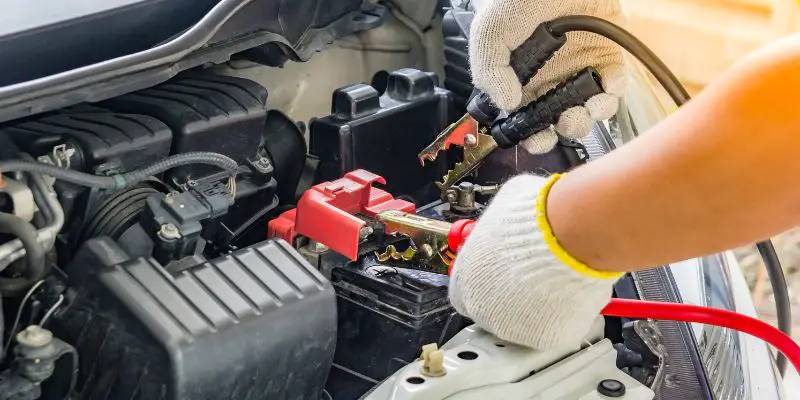
Symptoms of a Dead Battery
So how do you determine if your BMW battery is dead? Look out for these telltale signs:
- No power: When you try to start your BMW, the dashboard lights do not turn on, and you don’t hear any clicking noises.
- Dim lights: If your headlights are noticeably dim or seem to flicker, it could be a sign of a weak or dying battery.
- Slow engine crank: When you turn the key, the engine turns over very slowly, or it takes multiple attempts to start.
- Frequent jump-starts: If you find yourself needing to jump-start your BMW more often, it’s a sign that your battery is losing its ability to hold a charge.
- Electrical issues: A dead battery can also cause electrical problems, such as malfunctioning power windows, unresponsive radio, or issues with the vehicle’s computer system.
Reasons for a Dead Battery
Understanding why your BMW battery might die is essential in preventing future occurrences. Here are some common reasons why your battery might lose its charge:
- Old age: Over time, the battery’s performance naturally declines, and it may eventually need to be replaced.
- Extreme weather conditions: Both hot and cold weather can put excessive strain on the battery, causing it to lose charge more quickly.
- Parasitic drain: Certain electrical components or accessories that are left on when the engine is off can slowly drain the battery’s power.
- Faulty charging system: Issues with the alternator, voltage regulator, or other charging components can prevent the battery from charging properly.
- Short trips: If you frequently take short trips without giving the battery enough time to fully charge, it may become drained over time.
By being aware of these signs and reasons, you can take precautions and avoid the stress of a car that won’t start. But if you do find yourself stranded, knowing the correct BMW jump-start procedure — not the generic one — is what keeps the fix from becoming a second problem.
Can You Jump-Start a BMW Battery? Use the Terminal, Not the Battery
Yes — in most cases you can jump-start a BMW battery just like any other 12V car battery. The difference is where you connect the cables. BMW builds a dedicated jump-start connection into the engine bay specifically so you never have to clamp onto the battery itself.
Understand BMW Battery Specifications
BMW batteries, like those found in many luxury vehicles, are slightly different from standard car batteries. They typically have higher cold-cranking amps (CCA) and are designed to power the advanced electrical systems found in BMWs.
- Voltage: BMW batteries typically run at 12 volts, the standard for most vehicles.
- Capacity: BMW batteries usually have a higher capacity than a regular car battery, due to the power demands of BMW’s electrical systems.
- CCA (Cold Cranking Amps): CCA measures a battery’s ability to start an engine in cold temperatures. BMW batteries often have a higher CCA to ensure reliable starting even in freezing conditions.
Why You Shouldn’t Connect Jumper Cables Directly to a BMW Battery
Most generic jump-start guides tell you to clamp the red cable onto the battery’s positive post. On a BMW, that’s the mistake that causes real damage. Here’s why:
- The battery often isn’t under the hood. On the 3 Series, 5 Series, and 7 Series, the battery is typically mounted in the trunk (or under the rear seat) to improve weight distribution — it’s simply not practical, or safe, to run cables all the way back there.
- Connecting directly can blind the Intelligent Battery Sensor (IBS). The IBS sits on the negative terminal and monitors charge, temperature, and current for BMW’s power management system. Clamping a jumper cable straight onto that terminal bypasses the sensor and can confuse the whole system, sometimes triggering dashboard warning lights or charging faults.
- The fix isn’t cheap. A damaged or bypassed IBS sensor often means a shop visit just to clear the confusion it causes.
📊 Replacing a BMW’s Intelligent Battery Sensor after it’s damaged typically costs $200–$600 (roughly $150–$250 for the part plus labor) — Source: BMW repair-cost research aggregated across independent BMW repair shops, 2026.
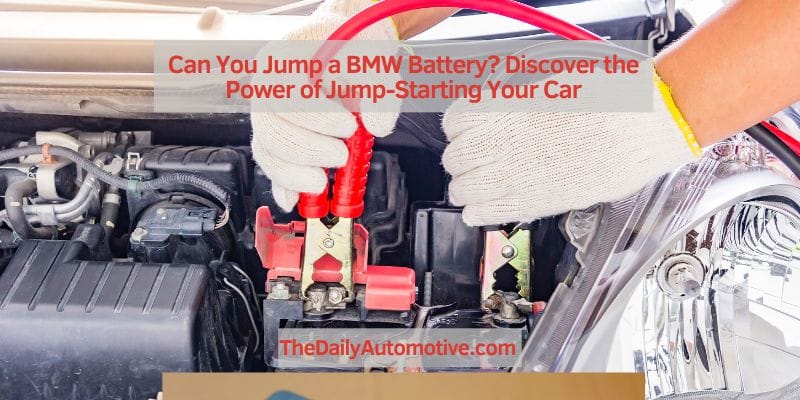
Instead, BMW builds a dedicated jump-start terminal into the engine bay — usually under a red plastic cover marked with a plus (+) sign, even on models where the actual battery lives in the trunk. Some models also provide a marked ground point for the black cable, separate from the battery’s negative post. Check your owner’s manual for the exact location on your model and year, since it varies by generation.
“Attach one terminal clamp of the plus/+ jumper cable to the positive terminal of the battery or a starting-aid terminal of the vehicle providing assistance.”
Which BMW Models Keep the Battery in the Trunk?
Battery placement varies by model and generation, so always confirm with your owner’s manual — but these are the general patterns:
| Model | Typical Battery Location | Where to Connect Jumper Cables |
|---|---|---|
| 3 Series (F30/G20 and similar) | Trunk, right side under a panel | Engine bay jump terminal |
| 5 Series | Trunk, rear right | Engine bay jump terminal |
| 7 Series | Trunk | Engine bay jump terminal |
| 1 Series, X1, and other compact models | Often engine bay | Battery terminal or jump terminal — check manual |
How to Safely Jump-Start Your BMW Battery
Follow these steps every time, whether you’re using a donor vehicle or a portable jump starter:
- Position the vehicles: Park the donor vehicle facing your BMW, close enough for the cables to reach without the cars touching. Turn both engines off and set the parking brakes.
- Locate the jump-start terminal: Open the hood and find the red-capped positive (+) jump terminal in the engine bay. Don’t try to reach the actual battery if your model stores it in the trunk.
- Connect the red cable: Attach one end to the BMW’s positive jump terminal, and the other end to the positive terminal of the donor battery (or the jump starter’s positive clamp).
- Connect the black cable: Attach one end to the negative terminal of the donor battery (or the jump starter), and the other end to a bare, unpainted metal ground point in the BMW’s engine bay — never to the negative battery terminal itself.
- Start the donor vehicle, then the BMW: Let the donor idle for a couple of minutes, then try starting your BMW. If it doesn’t start, wait a few minutes and try again before calling a mechanic.
- Disconnect and drive: Remove the cables in the reverse order you connected them, then drive for at least 30 minutes so the alternator can recharge the battery.
While jump-starting a BMW battery is possible, it’s always worth having your battery inspected by a professional if you experience recurrent dead-battery issues. Consult your BMW owner’s manual for any jump-start specifics for your exact model.
BMW Jump-Start Safety Tips
Jump-starting your BMW is straightforward once you know where the terminal is, but a few precautions keep both you and the car’s electronics safe.
Using Jumper Cables Safely
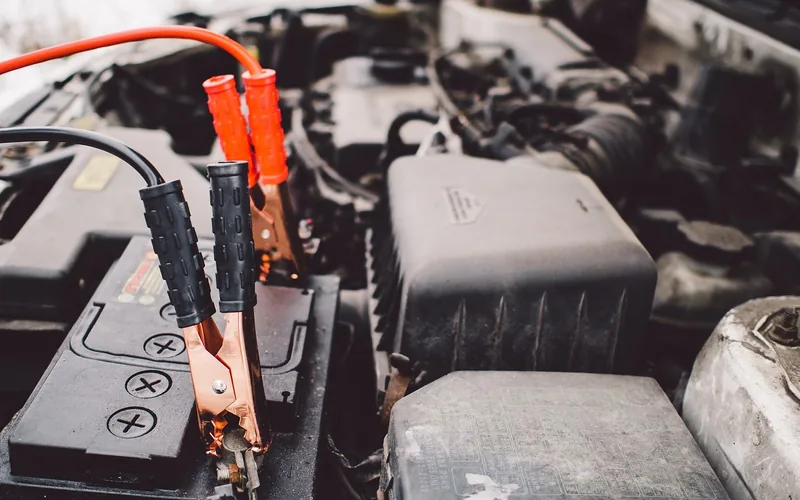
- Wear eye protection. Battery terminals can spark or, in rare cases, leak corrosive acid.
- Inspect both batteries first. Don’t attempt a jump on a battery that’s visibly cracked, swollen, or leaking — call a tow instead.
- Never let the clamps touch. Touching the red and black clamps together while connected can cause a dangerous spark near battery vents.
- Keep the cables’ polarity straight. Positive to positive, negative to a ground point — reversing polarity can blow fuses or damage electronics on either car.
- Consider a portable jump starter. A lithium booster pack (like the option above) lets you jump-start your BMW alone, without needing a donor vehicle, and most connect at the same engine-bay terminal.
Preventing Future Battery Problems
Jump-starting your BMW is a useful skill, but it’s even better to prevent a dead battery in the first place:
1. Regularly Check Your Battery
Keep an eye on your battery’s condition. Check for signs of corrosion, leaking, or damage. If you notice any issues, have your battery inspected or replaced by a professional.
2. Drive Your BMW Regularly
If your car sits idle for long periods, the battery may drain. Try to drive your BMW regularly to keep the battery charged. If you plan on not using your vehicle for an extended period, consider a battery maintenance charger instead.
3. Limit Accessory Usage
Using accessories such as lights, radios, or air conditioning while the engine is off can drain the battery. Limit accessory usage when the engine is not running to conserve battery power.
Following these preventive tips reduces the risk of a dead battery, and the need for a jump-start, altogether. For more on keeping your BMW’s electrical system healthy, see our guides on the best portable jump starters and how to jump-start any car.
Frequently Asked Questions
Can you jump-start a BMW like a regular car?
Not exactly. A BMW’s 12V system works the same way as any other car’s, but you should connect the red jumper cable to the dedicated jump-start terminal in the engine bay instead of the battery post itself, since many BMW models store the actual battery in the trunk.
Where is the jump-start terminal on a BMW?
On most BMWs, it’s in the engine bay under a red plastic cover marked with a plus (+) sign. The exact location varies by model and generation, so check your owner’s manual if you can’t find it right away.
Why do some BMW models keep the battery in the trunk?
BMW moves the battery to the trunk on models like the 3, 5, and 7 Series to improve front-to-rear weight distribution and free up space in the engine bay. The jump-start terminal under the hood exists specifically so you don’t need to access it there.
What happens if you connect jumper cables directly to a BMW battery?
Clamping directly onto the battery’s negative terminal can bypass and blind the Intelligent Battery Sensor (IBS), which confuses the car’s power management system. This can trigger dashboard warning lights, charging problems, or a repair in the $200–$600 range to fix the sensor.
How long should you drive after jump-starting a BMW?
Drive for at least 30 minutes after a successful jump-start so the alternator has enough time to recharge the battery. If the battery dies again shortly after, have it tested — it likely needs to be replaced rather than jumped again.
Can you use a portable jump starter on a BMW?
Yes. A portable jump starter works the same way as a donor vehicle — connect its positive clamp to the BMW’s jump-start terminal and its negative clamp to a bare metal ground point, following the same rule of never clamping directly to the battery.
Conclusion
Jumping a BMW battery is a viable fix, but the safe way to do it is different from a generic car: connect at the engine bay’s jump-start terminal, not the battery post, especially on models that store the battery in the trunk. Follow the correct steps and safety precautions above, consult your BMW’s manual for model-specific instructions, and seek professional help if you’re ever unsure.
By understanding the process and using the right connection point, you can jump-start your BMW battery without turning a dead battery into a much more expensive electrical problem.
Products related to this article
Sponsored / affiliate links. As an Amazon Associate I earn from qualifying purchases. I may earn additional commission from eligible campaigns.