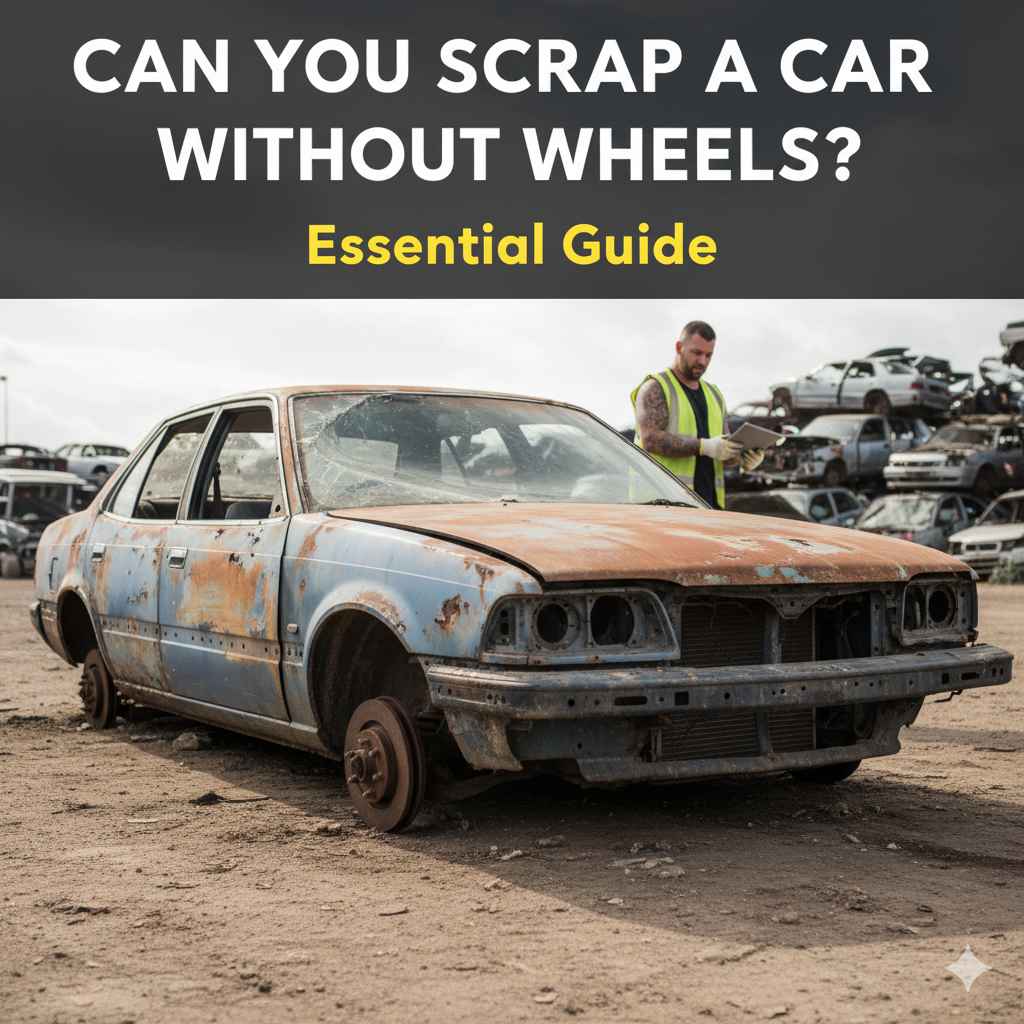
Can You Scrap A Car Without Wheels? Essential Guide
Yes, you absolutely can scrap a car without wheels! The absence of wheels doesn’t prevent a car from being scrapped. Junkyards and scrap metal recyclers are equipped to handle vehicles in various states of disrepair, including those missing tires or entire wheel assemblies. The process might involve additional steps for transport, but it’s entirely feasible.
Got a vehicle that’s seen better days and is ready for the scrap heap, but noticed it’s missing its wheels? Don’t let that stop you from getting rid of it! Many people worry that a car without wheels is a lost cause for recycling, but that’s simply not true. Scrap yards are built to handle all sorts of car conditions. We’re here to walk you through exactly how you can scrap a car without its wheels, making the process as smooth as possible. We’ll cover everything from understanding why it’s possible to the practical steps involved, ensuring you feel confident in taking this step.
Why It’s Possible to Scrap a Car Without Wheels
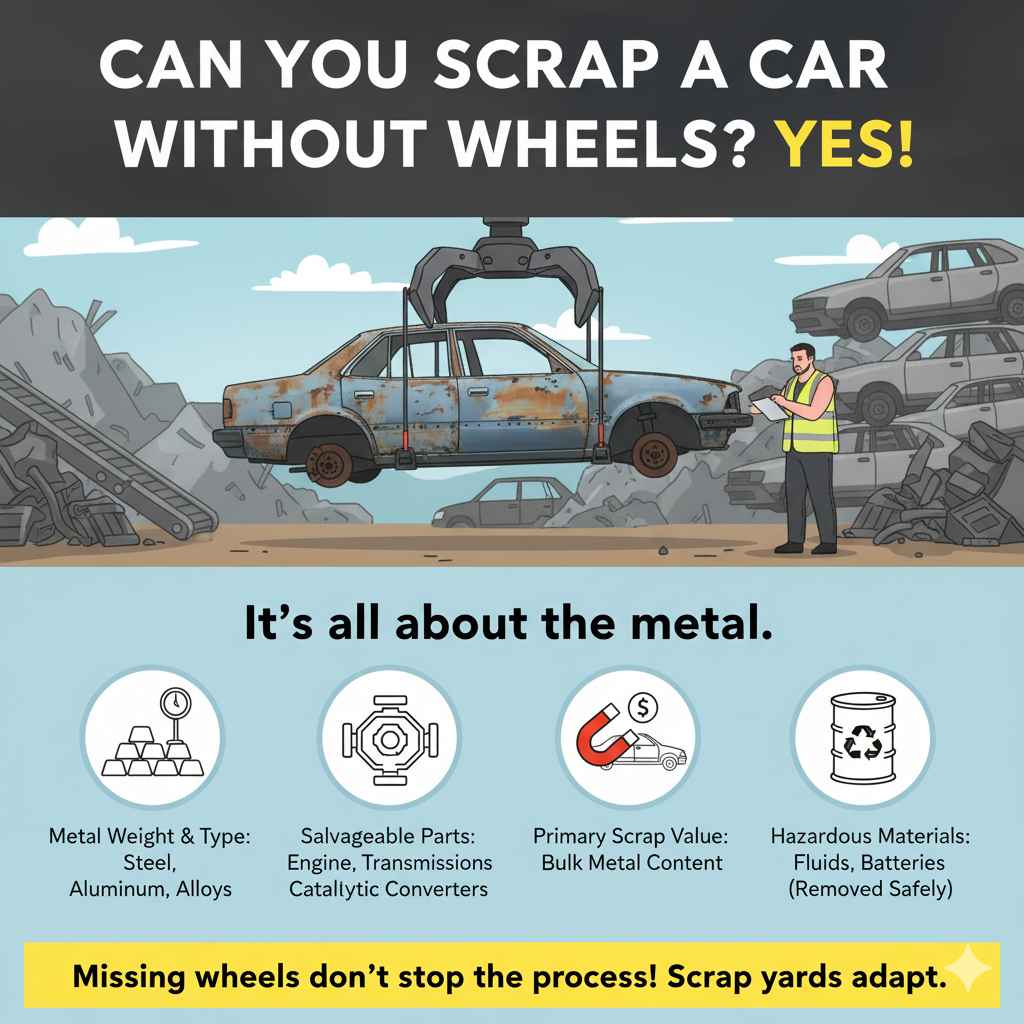
The core value of a vehicle for scrapping lies in its metal content and, to some extent, other salvageable parts. Wheels are important for a car’s function, but they aren’t the defining factor for its scrap value. Most scrap yards are primarily interested in the bulk metal – steel, aluminum, and other alloys – that make up the car’s chassis, body panels, and engine. These can be recovered and recycled, which is the main goal of the scrapping process.
Think of it this way: a scrap yard’s business is recycling, not necessarily restoring cars to driving condition. They have specialized equipment to move, process, and break down vehicles. Whether a car rolls in or needs to be rolled onto a flatbed, they have ways to manage it. The wheels are just one component. If they’re missing, the scrap yard will simply adjust how they handle the vehicle’s transport and processing.
What Scrap Yards Look For
- Metal Weight: The primary driver of scrap value is the sheer amount of metal in the car. Heavier cars generally yield more valuable scrap.
- Type of Metals: Different metals fetch different prices. Steel is common, while aluminum in parts like the engine block or wheels can add extra value.
- Salvageable Parts: Sometimes, specific components like the engine, transmission, catalytic converter (though this is often removed by the owner beforehand), or even certain electronic modules have value and can be removed and sold separately before the car is crushed.
- Hazardous Materials: Fluids like oil, coolant, and brake fluid, as well as batteries, are often removed due to environmental regulations and can sometimes incur a small fee or a slight reduction in the payout, but they don’t stop the scrapping process itself.
Missing wheels don’t fundamentally change the scrap metal content or the presence of salvageable parts that a junkyard is interested in. The scrap value is calculated based on the remaining components and their materials.
How to Prepare Your Wheel-less Car for Scrapping
Even without wheels, there are a few preparatory steps you can take to make the process smoother for both you and the scrap yard. It’s about minimizing hassle and potentially maximizing any return you might get.
1. Remove Valuables and Personal Items
This is a crucial first step for any car you’re scrapping, wheels or no wheels. Empty the
car completely. This includes checking the glove compartment, under the seats, inside
the trunk, and any storage compartments. Don’t forget hidden spots like the sun visor
vanity mirrors or door pockets. You’d be surprised what people leave behind!
2. Remove the Battery
Car batteries contain lead and acid, which are hazardous materials. While scrap yards will typically remove them, doing it yourself can sometimes streamline the process and ensure you’re meeting local disposal guidelines. Look for the battery under the hood. It’s usually a rectangular box with two terminals (positive and negative). You’ll need a wrench (often 10mm or 13mm) to loosen the clamps holding it in place. Remember to disconnect the negative terminal first, then the positive. Batteries contain significant lead, which has recycling value, but also environmental risks if not handled properly. You can often take old batteries to auto parts stores for recycling, and some may even offer a small credit.
3. Drain Fluids (If Possible and Safe)
Scrap yards are required to properly dispose of automotive fluids. If you feel comfortable and have the right equipment, draining key fluids like engine oil, coolant, and gasoline can be helpful. However, if you’re not experienced with this, it’s best to leave it to the professionals at the scrap yard. Improper draining or disposal of these fluids can be dangerous and harmful to the environment. For a beginner, it is often easier and safer to let the scrap yard handle this. They have specific procedures for managing these materials.
4. Remove the Catalytic Converter (Optional but Recommended)
Catalytic converters contain precious metals like platinum, palladium, and rhodium. They are valuable enough that they are often stolen from cars. If your car still has its catalytic converter, removing it before sending the car to scrap can provide you with an additional source of income. This is a component that thieves often target, so if it’s still attached to your wheel-less car, it might be a prime target if left unsecured. Removing it requires specific tools, such as a socket set and possibly a reciprocating saw or angle grinder for stubborn bolts and pipes. If you’re not mechanically inclined or lack the tools, many auto repair shops can remove it for a fee, or you can sell it separately.
According to the U.S. Environmental Protection Agency (EPA), catalytic converter theft is a significant problem, and understanding their value is key for vehicle owners.
5. Gather Your Paperwork
You’ll need proof of ownership for the vehicle. This typically includes the car’s title. If you’ve lost the title, you may need to contact your local Department of Motor Vehicles (DMV) or equivalent agency to get a replacement. You may also need your driver’s license or other identification. Some scrap yards will also require a bill of sale, even if you are selling it for scrap. It’s always best to check with your chosen scrap yard beforehand about their specific documentation requirements.
How to Transport a Car Without Wheels
This is where the missing wheels present the biggest logistical challenge. You can’t simply drive a car without wheels, and it won’t roll easily onto a standard tow truck without some assistance. Here are the common methods for transporting a wheel-less vehicle:
Option 1: Flatbed Tow Truck
This is often the most straightforward solution. A flatbed tow truck can lift the entire vehicle and place it securely on the truck’s platform. If the car is missing wheels, the tow truck driver will use a winch to pull it safely onto the bed. They might use dollies or skids under the car’s frame or suspension points to help it slide smoothly onto the truck. This method ensures the car is transported safely and securely.
Pros:
- Very safe for the vehicle and the transport crew.
- Suitable for any car condition, including missing wheels.
- Minimizes further damage to the car’s undercarriage.
Cons:
- Can be more expensive than other towing methods.
Option 2: Specialised Car Carriers or Container Transport
For larger quantities of cars or for vehicles in very challenging states, specialized carriers or even shipping containers might be used, especially if the car needs to be transported a long distance to a large recycling facility. These methods are generally managed by the scrap yard or a third-party transport company they contract with.
Option 3: Using Dollies or Sliding Skids
If you have access to heavy-duty hydraulic jack stands, or specialized car dollies and sliding skids, you might be able to maneuver the car onto a trailer yourself or with help. The car would be jacked up, and the dollies or skids placed under the suspension or frame. This allows the car to be dragged or pushed onto a trailer. However, this requires significant strength, the right equipment, and careful planning to avoid injury or damage. It’s often more practical to let the professionals handle the transport.
Table: Transport Options Comparison
| Transport Method | Ease of Use (for missing wheels) | Cost (General Estimate) | Best For |
|---|---|---|---|
| Flatbed Tow Truck | High | $$$ | Most common, safest option for cars missing wheels. |
| Specialised Carriers/Container | High (managed by professionals) | $$$$ | Long-distance transport, large quantities. |
| Dollies/Sliding Skids & Trailer | Medium-Low (requires significant effort) | $$ + cost of trailer rental | DIYers with equipment and help, short distances. |
Finding a Scrap Yard That Accepts Cars Without Wheels
Most reputable scrap yards and auto recyclers are fully equipped to handle vehicles without wheels. The key is to find one that offers vehicle pickup services, especially since you won’t be able to drive the car to them.
How to Find a Scrap Yard:
- Online Search: Use search terms like “car scrap yard near me,” “auto salvage yard pickup,” or “junk car removal.”
- Online Directories: Websites like Yelp, Google Maps, or specialized auto recycling directories can list local businesses.
- Ask Local Mechanics: Your trusted mechanic might have recommendations for reputable local scrap yards.
- Check with Manufacturers/Dealers: Some car manufacturers or dealerships may have programs or partnerships with recyclers for end-of-life vehicles.
What to Ask Potential Scrap Yards:
- Do you accept cars without wheels? (Confirming the main concern.)
- Do you offer pickup services?
- What information do you need from me? (Title, ID, etc.)
- How is the value determined? (By weight, specific parts, etc.)
- What payment methods do you use? (Cash, check, etc.)
- Do you handle fluid disposal?
- What are your operating hours for pickup?
When you contact them, be upfront about the car’s condition, especially that it doesn’t have wheels. This helps them arrange the correct type of transport. For example, the EPA provides guidance on responsible vehicle recycling, and reputable yards adhere to these standards.
The Scrap Value: What to Expect
The amount you receive for scrapping a car is rarely a fixed figure. It fluctuates based on several factors:
Factors Affecting Scrap Value:
- Market Prices for Scrap Metal: The global demand for steel and other metals directly impacts what scrap yards can pay. Prices can change daily.
- Vehicle Weight: Generally, the heavier the car, the more metal it contains, and thus, the higher its scrap value. A small sedan will be worth less than a large SUV.
- Year, Make, and Model: While less critical for basic metal value, some older or rarer models might have desirable parts that could slightly increase the offer.
- Presence of Valuable Parts: As mentioned, a catalytic converter, the engine block (often aluminum), or transmissions can contain valuable materials. If these are still present, they contribute to the overall value.
- Location: Prices can vary geographically due to competition and local demand.
- Scrap Yard Policies: Some yards charge a fee for pickup or fluid disposal, which will reduce your payout. Others might offer a slightly better rate if you forgo pickup and can tow it yourself.
For a car missing wheels, the scrap value will likely be based on its overall weight and the remaining metal content. The transport cost for a wheel-less vehicle might also be factored in, potentially leading to a slightly lower offer compared to a drivable car, simply to cover the specialized transport needed.
It’s a good idea to get quotes from a few different scrap yards to compare offers. Be wary of any yard offering an unusually high price, as they might be trying to cut corners on proper disposal or payment. Always ensure they are a licensed and reputable recycler.
Table: Sample Scrap Value Estimates (Illustrative Only)
| Vehicle Type | Approximate Weight (lbs) | Estimated Scrap Value (per lb of metal) | Total Estimated Scrap Value (Before Deductions) |
|---|---|---|---|
| Small Sedan (e.g., Honda Civic) | 2,800 – 3,200 | $0.10 – $0.25 | $280 – $800 |
| Mid-size Sedan (e.g., Toyota Camry) | 3,200 – 3,600 | $0.10 – $0.25 | $320 – $900 |
| SUV (e.g., Ford Explorer) | 4,000 – 5,000 | $0.10 – $0.25 | $400 – $1,250 |
Note: These are rough estimates and can vary significantly. The “Estimated Scrap Value (per lb of metal)” reflects fluctuating market conditions and the alloy composition of vehicles. Actual offers will reflect the yard’s assessment and potential transport costs. Missing wheels can sometimes affect the ease/cost of transport, impacting the final offer.
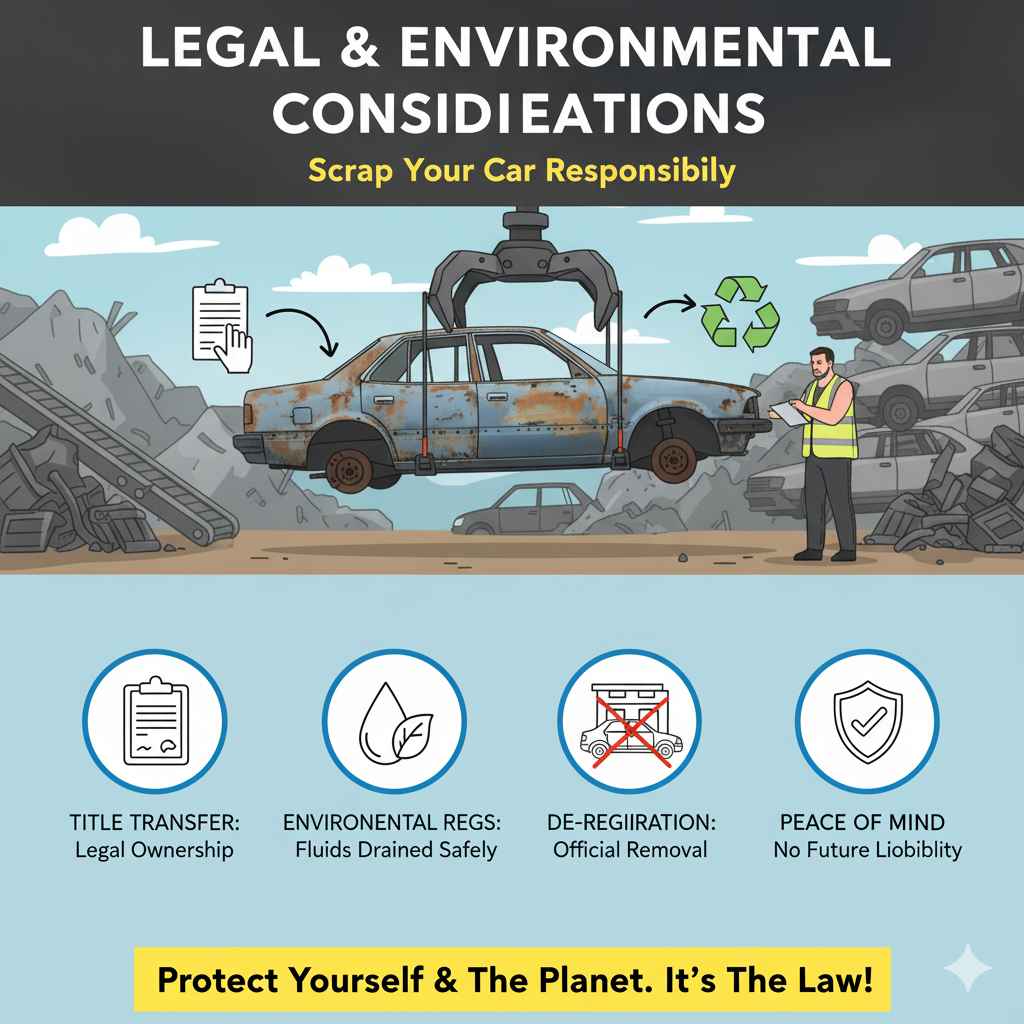
Legal and Environmental Considerations
Scrapping a car responsibly involves adhering to some legal and environmental guidelines. Reputable scrap yards will handle this for you, but it’s good to be aware.
- Title Transfer: You must legally transfer ownership of the vehicle to the scrap yard. This is usually done with the title. If you no longer have the title, you’ll need to follow your state’s procedures for obtaining a duplicate or a non-transferable title for scrap. This ensures the car is no longer legally yours and prevents potential issues down the line.
- Environmental Regulations: Cars contain fluids and materials that can be hazardous if not disposed of properly. Regulations typically require scrap yards to drain all fluids (oil, coolant, freon from AC systems if applicable, gasoline) and remove batteries before crushing or shredding the vehicle. Responsible recyclers have permits and follow strict protocols for handling these. You can learn more about vehicle recycling standards from organizations like the EPA.
- De-registration: After selling your car for scrap, it’s a good practice to de-register it with your local DMV or licensing authority. This officially removes the vehicle from your name and ensures you are no longer responsible for it, especially if it’s not immediately crushed and might sit at the yard for a while.
Frequently Asked Questions (FAQ)
Q1: Can I sell a car without any tires for scrap?
A1: Yes. While tires are part of a car, their absence doesn’t prevent it from being scrapped. Scrap yards primarily value the metal content. They can still transport and process a car without wheels.
Q2: How will a car without wheels be transported?
A2: It will typically be transported on a flatbed tow truck. The truck will use a winch to pull the car onto the platform, often using dollies or skids underneath to help it slide.
Q3: Does a car without wheels have less scrap value?
A3: The reduction in value is usually minimal and primarily relates to the scrap value of the missing wheels themselves (which are primarily rubber and metal). The bulk of the scrap value comes from the car’s frame and body, which remain unaffected. Transport costs might be slightly higher for a wheel-less car, which could be factored into the offer.