Can You Use an Air Compressor to Inflate Car Tires? Quick Guide
Yes, you can inflate car tires with an air compressor if it can reach the tire’s target pressure and move enough air to fill the tire at a useful pace; a 12V portable compressor works for top-offs, while a small shop compressor usually needs at least 90–120 psi capability and enough tank pressure to keep running. Underinflation raises fuel use and speeds tire wear, while overinflation can cut grip and raise the chance of damage. This quick guide shows how to judge your compressor, when to stop, and how to check the final pressure.
What you’ll need


- Air compressor or tire inflator with enough PSI for the tire and enough airflow to avoid painfully slow filling.
- Tire pressure gauge, digital or analog, to verify the final pressure.
- Air chuck or inflation hose that fits a Schrader valve, either clip-on or screw-on.
- Valve stem cap for dust protection after inflation.
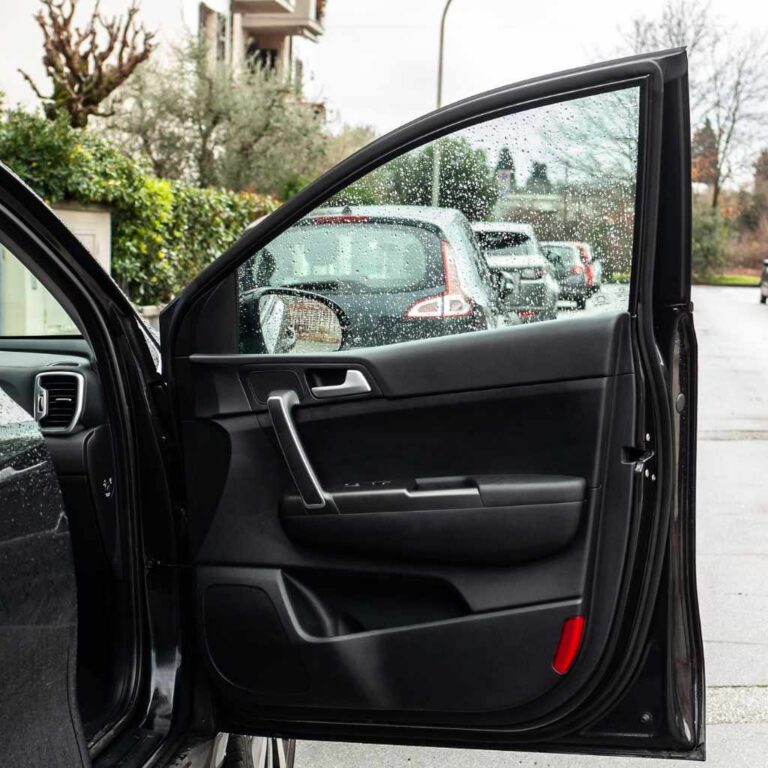
- Vehicle door-jamb tire placard for the manufacturer’s front and rear cold-pressure numbers.
Can you use an air compressor to inflate car tires?
Yes, if the compressor can reach the placard PSI and move enough air to fill the tire without stalling constantly. A garage compressor with 90–120 psi capability is usually suitable for passenger tires, and a 12V unit is often enough for topping off. PSI alone does not tell the full story. Airflow, tank size, and duty cycle decide how practical it feels.
When it is enough
A compressor is suitable when it can connect to a Schrader valve, reach the tire’s recommended cold PSI, and keep pressure moving long enough to add air in a few short bursts. Passenger-car tires, compact SUVs, and motorcycles often fit this use case. A battery-powered inflator can also work for periodic top-offs.
When it is too weak or too slow
If the unit cannot rise above the tire’s target PSI, or it fills only a few pounds per minute, it is the wrong tool for that job. Fully flat tires, larger SUV or truck tires, and repeated low-pressure repairs can overwhelm weak 12V units. In those cases, a gas station compressor, shop compressor, or roadside help is a better next step.
Why PSI and airflow both matter
PSI tells you the maximum pressure the compressor can create. CFM, tank size, and recharge time tell you how quickly it can keep delivering air. A compressor may list a high PSI rating yet still feel slow because it cannot move enough air continuously. That is the difference between “can inflate” and “can inflate conveniently.”
Find the correct tire pressure
Use the driver-side door-jamb placard as the target, and treat the listed pressure as a cold-tire number. Most passenger vehicles list separate front and rear values, and they can differ. Do not guess from the tire sidewall; that number is the tire’s maximum, not the vehicle’s recommended pressure.
Use the door-jamb placard
The placard is the manufacturer’s reference for the exact PSI your vehicle wants. Check the driver-side door frame or door edge. Some vehicles also list a spare-tire pressure there. If front and rear numbers differ, follow them separately rather than filling all four tires to the same value.
Check tires when they are cold
Cold means the car has been parked long enough that the tires are near ambient temperature. Driving warms the air inside and raises the reading, so a hot tire can read several PSI higher than its true resting pressure. Set pressure to the placard number on a cold tire, not a warmed one.
Why separate front and rear numbers matter
Front tires often carry more load than rears, or the reverse on some vehicles with rear-biased recommendations. Use the exact numbers printed on the placard, especially on minivans, SUVs, and towing setups. Example: if the placard says 35 psi front and 33 psi rear, do not round both to 35 without checking the actual labels.
How to inflate a tire
Remove the valve cap, attach the chuck securely to the Schrader valve, and add air in short bursts while checking pressure with a separate gauge. Stop at the placard PSI, then reinstall the cap. Do not rely on the compressor’s built-in gauge alone, because hose loss and gauge error can leave the tire off target.
- Park on level ground and read the placard. Confirm front, rear, and spare pressure targets before you start.
- Remove the valve stem cap. Keep it clean so dust does not enter the valve core.
- Attach the air chuck firmly to the Schrader valve. A clip-on chuck should lock in place; a screw-on style should thread on without cross-threading.
- Add air for 5 to 10 seconds. Short bursts reduce the chance of overshooting the target.
- Check with a separate tire gauge. Recheck after each burst until you reach the placard PSI.
- Stop at the target pressure. If you overshoot, bleed air in short taps until the gauge matches the placard.
- Reinstall the valve cap. Tighten it hand-snug to keep out dirt and moisture.
Suppose a tire is at 28 psi and the placard calls for 35 psi. Add air in short bursts, then verify each time with a separate gauge. That way, you avoid jumping past the target by several PSI, which is easy to do with a fast garage compressor.
What size air compressor do you need for car tires?
For ordinary passenger-car tires, a compressor that can reach at least the placard PSI and provide enough airflow for steady top-offs is usually enough. A 12V DC portable unit works for emergencies and routine maintenance. A 120V AC garage compressor is faster and better for repeated use, while battery-powered inflators trade runtime for portability.
12V DC portable compressors
These plug into the vehicle’s power outlet or battery and are common in tire inflator emergency kits. They are practical for top-offs, but many are slow on large tires or fully flat tires. Look for a model that clearly states maximum PSI and continuous runtime, not only a generic “fits most tires” claim.
120V AC garage compressors
These are better when you want faster fill speed and repeated use across multiple tires. A tanked unit in the 90–120 psi range is generally enough for car tires, but CFM and tank size decide how long it can keep inflating before pausing. Bigger tanks usually make the job easier.
Battery-powered units
Battery inflators are convenient for roadside use and short top-offs. Their limits are usually runtime and airflow, not raw PSI. They can be a good fit for one sedan tire that is a few PSI low, but they may struggle with a fully flat tire or a large light-truck tire.
Tire compressor decision table
| Compressor spec | Minimum PSI needed | Realistic fill speed | Suitable tire types | Red-flag scenario |
|---|---|---|---|---|
| 12V portable, small motor | At least 40 psi, ideally 100+ psi max rating | Slow top-off; several minutes for a few PSI | Passenger-car tires for minor correction | Fully flat tire or repeated use on all four tires |
| Battery-powered inflator | Enough to exceed placard PSI by a few pounds | Moderate top-off; runtime may stop before large fills | Sedans, crossovers, emergency kit use | Large SUV tire, low charge, or bead-unseated tire |
| 120V garage compressor, small tank | 90–120 psi | Faster than portable units; pauses when tank recovers | Most passenger cars and light SUVs | Airflow too low to keep up, especially with multiple tires |
| 120V garage compressor, larger tank | 90–120 psi | Fast and steady for several tires | Passenger cars, SUVs, light trucks | Still not a fix for damaged sidewalls or separated beads |
Common mistakes
These are the errors that usually turn a simple top-off into a problem. The fix is straightforward, but each one changes the reading or the result enough to matter.
- Relying on the built-in gauge. Use it as a rough guide only, then verify with a separate tire gauge.
- Inflating hot tires to the placard number. Hot tires read higher; wait until they cool, or expect the reading to drop after driving stops.
- Ignoring a slow leak. If pressure keeps falling after a proper fill, inspect the valve core, tread, and sidewall before adding more air.
- Overfilling and bleeding air blindly. Remove air in short taps and recheck, instead of guessing and overcorrecting.
- Trying to save a fully flat or damaged tire with air alone. If the tire will not hold pressure or the bead is unseated, a compressor is not enough.
A common first-timer mistake is filling a tire to 38 psi because the compressor’s gauge reads low, then checking with a hand gauge that shows 35 psi after the hose is removed. That is why the final check should happen with a separate gauge at the valve stem, not only on the hose.
When to stop and get help
Stop using the compressor if the tire will not rise above a safe holding pressure, the bead appears unseated, or the tire is visibly damaged. A gas station compressor, tire shop, or roadside service is the right next step when the unit is too weak, the tire is fully flat, or the fill takes so long that heat builds in the compressor.
If that did not work, try this order: first, verify the valve core is not leaking by rechecking the stem with your gauge; second, inspect for punctures, bulges, or sidewall damage; third, move to a stronger compressor or professional help. For a tire inflator emergency kit, remember that sealant and air are different tools, and sealant is not a cure for bead damage or a torn sidewall.
Frequently asked questions
What PSI should car tires be inflated to?
Use the number on the driver-side door-jamb placard, not the tire sidewall. Most passenger vehicles fall somewhere in the low-to-mid 30s psi, though the exact figure varies. Front and rear targets can differ, so check both before filling.
Do I need a tire gauge when using an air compressor?
Yes. Use the compressor only to add air, then verify the final number with a separate digital or analog tire gauge at the valve stem. Built-in compressor gauges are useful for rough checks, but they are not the best final reference.
Can you inflate a flat tire with a compressor?
Sometimes, but not always. If the tire is only low, a compressor can bring it back to pressure. If it is fully flat, the bead may have unseated, or the tire may be damaged enough that air will not hold. In that case, use roadside help or a tire shop.
What happens if my compressor does not reach the tire PSI?
You will get a slow fill or no useful fill at all. If the compressor cannot exceed the target pressure, stop and use a stronger unit. A weak 12V model may still top off a tire a few psi, but it is not the right answer for a fully flat tire.
Should you inflate tires when they are cold or hot?
Cold is the correct reference. Driving heats the air inside the tire and can raise the reading, so a hot tire may look properly inflated when it is not. Check and set pressure after the vehicle has sat long enough to cool, then verify again with a separate gauge.
Products related to this article
Sponsored / affiliate links. As an Amazon Associate I earn from qualifying purchases. I may earn additional commission from eligible campaigns.