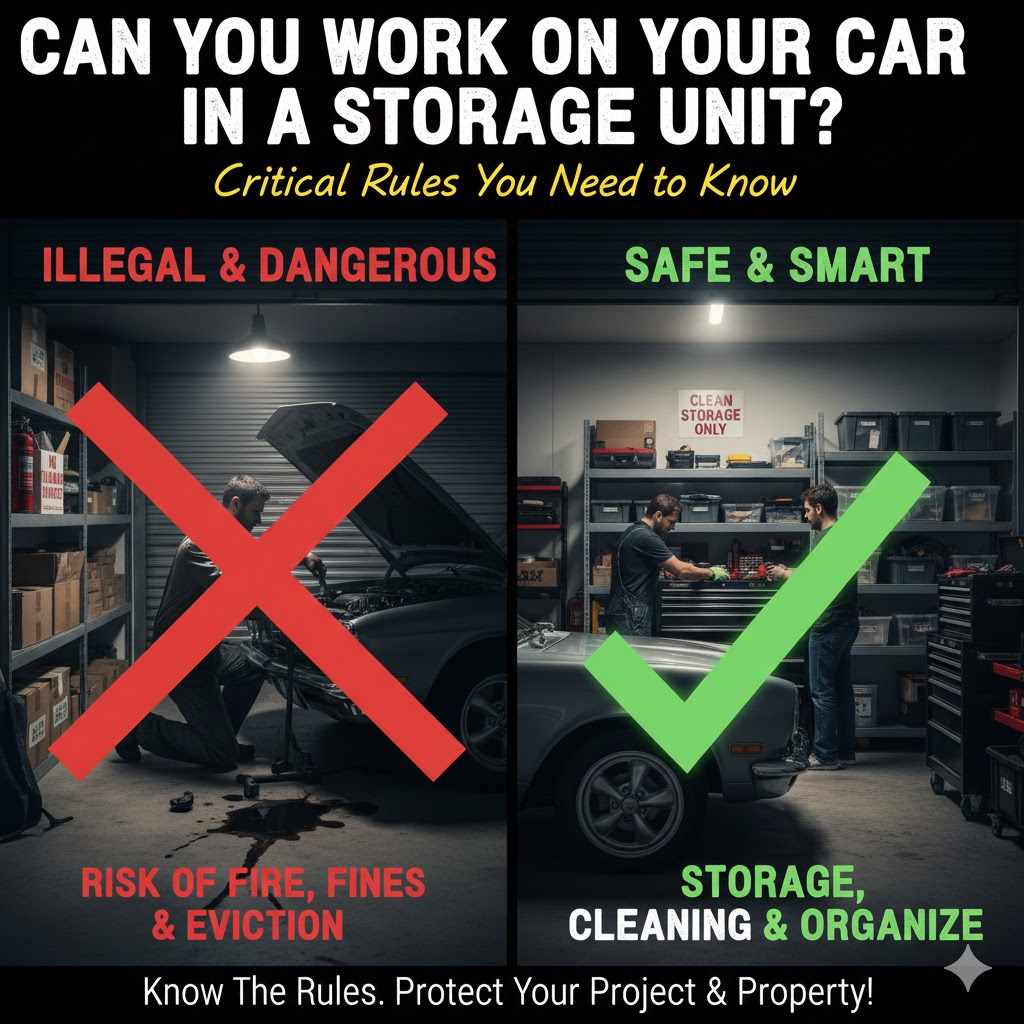
Can You Work On Your Car In A Storage Unit? Critical Rules You Need to Know
Generally, no. Most storage unit facilities strictly prohibit working on vehicles due to safety risks, liability issues, and lease agreement rules. Prohibited activities often include fluid changes, welding, and major repairs. Always read your contract and ask the manager directly, as breaking these rules can lead to eviction and fines.
Living in an apartment or a house without a garage can be tough for car enthusiasts. When your car needs a little TLC, you might look at a storage unit and think, “Perfect! It’s a private, covered space.” It seems like a great solution, but it’s not that simple. Many drivers get into trouble by assuming it’s okay.
Don’t worry, I’m here to clear things up. We’ll walk through the critical rules together, so you know what you can and can’t do. I’ll show you exactly what to look for in your rental agreement and what questions to ask. Let’s make sure you can care for your car without risking your rental space.
Why a Storage Unit Seems Like the Perfect DIY Garage
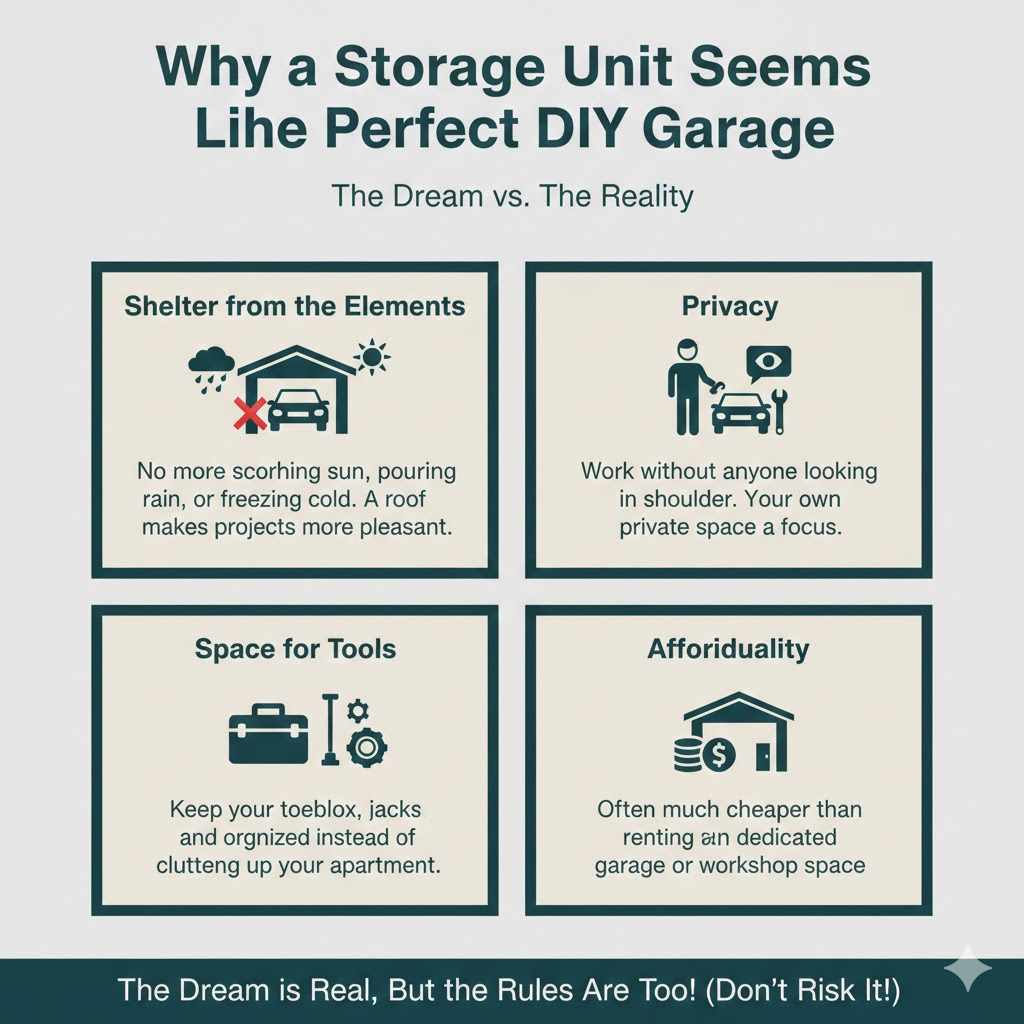
It’s easy to see the appeal. You get a space that’s out of the rain, away from nosy neighbors, and big enough to store your car and your tools. For anyone without a dedicated garage, a storage unit can feel like the perfect workshop. Here’s why so many people consider it:
- Shelter from the Elements: No more working in the scorching sun, pouring rain, or freezing cold. A roof over your head makes any car project more pleasant.
- Privacy: You can work without anyone looking over your shoulder. It’s your own private space to focus on your vehicle.
- Space for Tools: Finally, a place to keep your toolbox, jacks, and parts organized instead of cluttering up your apartment.
- Affordability: Renting a storage unit is often much cheaper than renting a dedicated garage or workshop space.
While these benefits are real, they unfortunately don’t tell the whole story. The reality of storage unit rules can quickly turn this dream into a problem.
The Hard Truth: Why Most Facilities Say “No”
The number one reason you can’t work on your car in a storage unit is simple: liability. Storage facilities are in the business of storing items, not hosting workshops. They have strict rules in place to protect themselves, their property, and their other tenants from potential disasters.
It’s All About Safety and Liability
Car repair involves risks. Think about it from the facility owner’s perspective. What if you accidentally start a fire while working on your fuel line? What if you spill oil and it seeps under the wall into someone else’s unit, ruining their priceless antiques? Who pays for that damage?
The facility’s insurance almost certainly does not cover accidents caused by tenants performing mechanical work. To avoid these catastrophic risks, they simply ban the activity altogether. It’s the easiest and safest policy for them to enforce.
The Lease Agreement is King
When you rent a storage unit, you sign a legally binding contract. Buried in the fine print of that document is almost always a clause that specifically prohibits “working on vehicles,” “performing maintenance,” or using the unit as a “workshop.” By signing, you agree to these terms. Breaking them means you are in breach of your contract, which can have serious consequences.
The 5 Critical Rules You Can’t Ignore
Before you even think about turning a wrench in a storage unit, you need to understand the foundational rules that govern these spaces. Ignoring them is a recipe for trouble.
Rule #1: Read Every Word of Your Contract
I cannot stress this enough. Your lease agreement is your guide. Don’t just skim it—read it carefully. Look for specific keywords like:
- Prohibited Uses
- Workshop
- Automotive Repair
- Maintenance
- Flammable Materials
- Hazardous Waste
This document will clearly state what you are and are not allowed to do. If the contract says “no automotive work,” that’s the final word. Pleading ignorance won’t help you if you get caught.
Rule #2: Understand Prohibited Activities (A Detailed Breakdown)
Most storage facilities have a long list of things you cannot do. When it comes to cars, the prohibitions are usually extensive. Any activity that involves fluids, sparks, fumes, or major disassembly is almost certainly banned.
Here is a table that breaks down what is typically forbidden versus what might be overlooked (but you should still ask about!).
| Almost Always Prohibited Activities | Why It’s Banned |
|---|---|
| Changing Oil, Coolant, or Other Fluids | High risk of spills, which can cause environmental damage and ruin the concrete floor and other tenants’ property. Used fluids are considered hazardous waste. |
| Welding, Grinding, or Cutting Metal | Extreme fire hazard. Sparks can easily ignite fuel vapors, oily rags, or other stored items. |
| Painting or Bodywork | Fumes are toxic, flammable, and can bother other tenants. Overspray can damage the facility’s property and other units. |
| Major Engine or Transmission Work | These are complex, messy jobs that create noise and often require storing a disabled vehicle for long periods, which is usually against the rules. |
| Fuel System Repairs | Working with gasoline is incredibly dangerous in an enclosed, poorly ventilated space. The risk of fire or explosion is too high. |
Rule #3: Flammable Materials are a Major Hazard
Storage units are not designed for storing volatile chemicals. Gasoline, oil, propane, paint thinner, and other flammable liquids create a massive fire risk. A small spark from a tool or a short in a battery charger could ignite fumes in a small, enclosed unit.
The National Fire Protection Association (NFPA) highlights how easily fires can start from mechanical or electrical failures, and a storage unit full of flammable car parts is a high-risk environment. This is why facilities have a zero-tolerance policy for storing these kinds of materials, let alone using them for repairs.
Rule #4: Know the Insurance and Liability Limits
Your renter’s insurance for the storage unit likely will not cover damage caused by you performing prohibited activities. If your work starts a fire that damages other units, you could be held personally liable for all the damages. That could mean hundreds of thousands of dollars in costs—a life-altering financial disaster.
The facility’s insurance is there to protect the facility, not you. They will seek to recover any losses from the person responsible, and if you were breaking your lease, that person is you.
Rule #5: Be a Good Neighbor (Noise and Mess)
Even if you avoid a major disaster, you can still get in trouble for being a nuisance. Running power tools, playing loud music, or leaving a mess outside your unit will quickly attract the attention of the facility manager. Storage units are shared spaces, and tenants expect a quiet, clean environment. Treating your unit like a personal workshop often violates the “good neighbor” policies that are part of your agreement.
So, What Can You Do in a Storage Unit? (Maybe)
After all those warnings, you might be wondering if you can do anything with your car in a storage unit. The answer is: maybe a few very small things. But first, you must always ask the facility manager for permission.
Some managers might be okay with simple, clean, and quiet tasks. These activities pose minimal risk and are less likely to violate your lease. Examples include:
- Detailing and Cleaning the Interior: Wiping down surfaces, vacuuming carpets, and organizing the glove box are harmless.
- Replacing Wiper Blades: This is a quick, clean job that requires no tools or fluids.
- Changing an Air Filter: Another simple task that is clean and creates no mess.
- Organizing Your Tools: You can certainly use your unit to store and organize your tools and parts, as long as they are clean and free of flammable liquids.
- Swapping Tires (If Allowed): Some facilities might allow you to swap your summer and winter tires, as long as you don’t leave a mess and do it quietly. Ask first!
Here’s a helpful comparison to guide you:
| Low-Risk Tasks (Ask First!) | High-Risk Tasks (Almost Always Banned) |
|---|---|
| Waxing and polishing the exterior | Oil changes |
| Replacing a dome light bulb | Brake fluid flushes |
| Installing seat covers | Welding or grinding |
| Checking tire pressure | Engine repair or removal |
| Sorting and labeling parts | Any work involving gasoline |
The Serious Consequences of Breaking the Rules
Getting caught working on your car in a storage unit is not a minor issue. Facility managers take this very seriously, and the consequences can be swift and severe.
- Immediate Eviction: This is the most common outcome. You’ll be given a notice to vacate immediately, usually within 24 to 48 hours. You’ll have to find a way to move your car (which may be in pieces) and all your belongings on short notice.
- Fines and Fees: Your lease agreement likely includes penalties for violating the rules. This could include cleaning fees for oil spills or fines for prohibited activities.
- Loss of Security Deposit: You can say goodbye to your security deposit. The facility will keep it to cover any potential cleaning or damages.
- Being Banned from the Company: If you’re renting from a large national chain, you could be blacklisted from renting at any of their locations in the future.
- Full Liability for Damages: As mentioned before, if your actions cause a fire or other damage, you will be on the hook for the full cost of repairs, which can be financially devastating.
How to Find a “Mechanic-Friendly” Workspace
If you’ve concluded that a standard storage unit isn’t the right fit, don’t lose hope! There are other options specifically designed for people like you. You just need to know where to look.
Searching for Garage Condos or Hobby Shops
A growing trend is the rise of “garage condos” or “hobby shops.” These are facilities that rent out individual garage spaces designed to be used as workshops. They often come with amenities that a standard storage unit lacks, such as:
- Electrical outlets for power tools
- Bright lighting
- Better ventilation
- Access to restrooms
- Higher security
These spaces are more expensive than a storage unit, but they are a legal, safe, and purpose-built solution for your car projects.
Key Questions to Ask the Facility Manager
If you find a facility that seems open to car work, or if you want to test the waters with a standard facility, you need to ask direct questions. Don’t be vague. Being upfront shows respect and can save you a lot of trouble.
Here’s what to ask:
- I am looking for a space to work on my classic car. Is automotive repair allowed in your units?”
- What are your specific rules regarding fluid changes, like oil or coolant?
- “Are there electrical outlets available in or near the units?”
- “What are your policies on noise from power tools?”
- “Do you have any restrictions on storing items like a floor jack, engine hoist, or welder?”
- “Can you show me the exact clause in the lease agreement that covers vehicle maintenance?”
The manager’s answers will tell you everything you need to know. A reputable manager will be direct and honest about their policies.
Safer and Better Alternatives for Your Car Project
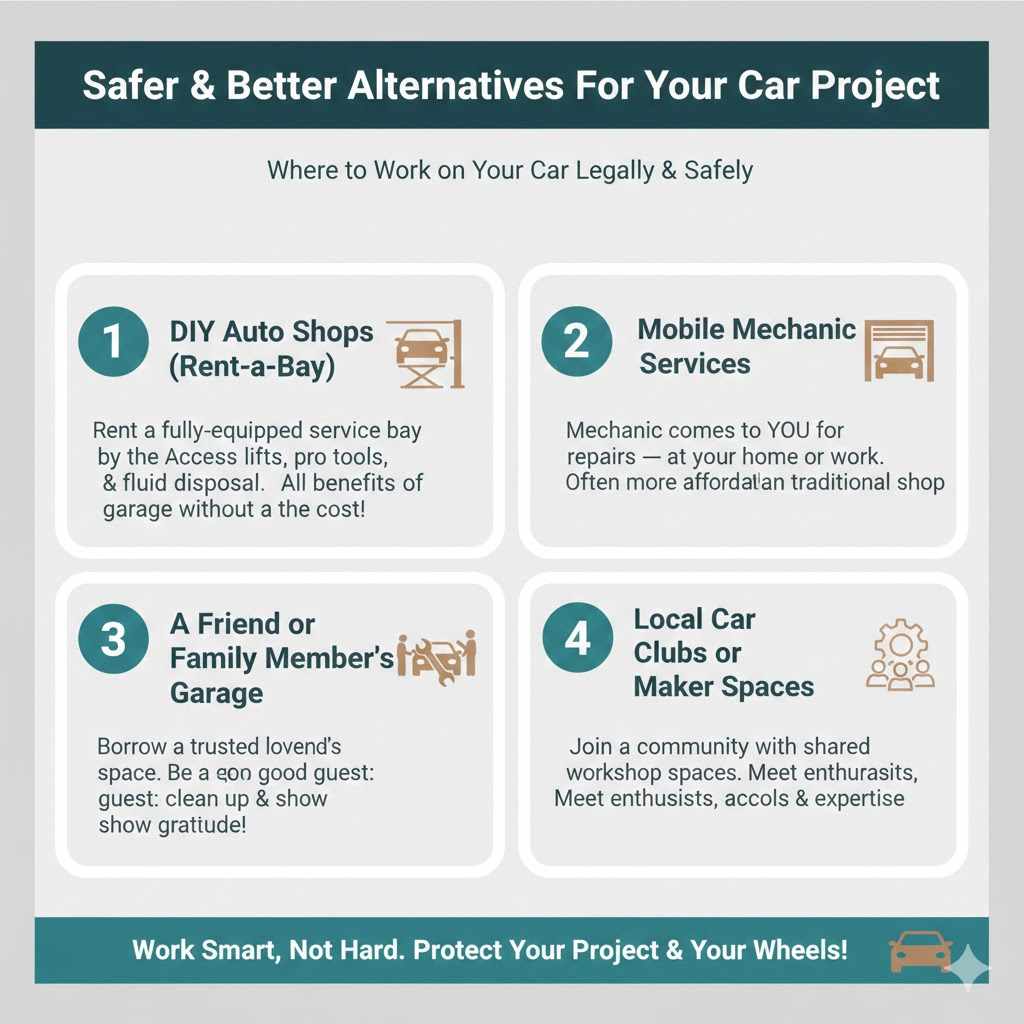
Instead of trying to bend the rules at a storage facility, consider one of these much better and safer alternatives.
1. DIY Auto Shops (Rent-a-Bay)
These are fantastic resources for the home mechanic. A DIY auto shop lets you rent a fully equipped service bay by the hour. You get access to a vehicle lift, professional-grade tools, air compressors, and a safe place to dispose of used fluids. You get all the benefits of a professional garage without the huge cost.
2. Mobile Mechanic Services
If you’re facing a specific repair that’s beyond a simple fix, a mobile mechanic can be a lifesaver. They come to your car’s location—whether it’s at your apartment complex’s parking lot (check rules first!) or your workplace—and perform the repair on-site. It’s often more affordable than a traditional shop and saves you the trouble of finding a workspace.
3. A Friend or Family Member’s Garage
This is a classic for a reason. If you have a trusted friend or family member with a garage, ask if you can use their space for a weekend. Be a good guest: agree on the rules, protect their floor from spills, clean up thoroughly when you’re done, and show your gratitude with a nice dinner or a gift card.
4. Local Car Clubs or Maker Spaces
Check if there are any local car clubs or community “maker spaces” in your area. These organizations sometimes have shared workshop spaces available to members. It’s a great way to meet fellow enthusiasts and get access to tools and expertise.
Frequently Asked Questions (FAQ)
1. Can I change my oil in a storage unit?
Almost certainly not. Changing oil is one of the most commonly prohibited activities due to the high risk of spills, which can cause permanent damage to the concrete and are considered a biohazard. This is a fireable offense at nearly all storage facilities.
2. What happens if I get caught working on my car?
If you get caught, you will likely face immediate eviction from the unit. You may also be charged fines for breaking the lease agreement, lose your security deposit, and be held liable for any cleanup costs or damages.
3. Are there any storage units that allow car repairs?
Standard self-storage facilities generally do not. However, there are specialized facilities often called “garage condos,” “hobby shops,” or “personal warehouses” that are designed and zoned for use as workshops. These are the proper, legal places to rent for car projects.
4. Can I at least store my car parts and tools in a storage unit?
Yes, usually. Storing car parts (like a spare engine, tires, or body panels) and tools is typically allowed, as long as they are clean and do not contain flammable fluids. For example, you cannot store a gas tank that still has fuel in it.
5. Is it illegal to work on a car in a storage unit?
While it may not be “illegal” in the criminal sense (you won’t go to jail), it is a direct violation of a civil contract—your lease agreement. The consequences are civil, such as eviction and financial penalties. However, if your work causes a fire or environmental contamination from a spill, you could face legal charges.
6. What about just washing or detailing my car inside the unit?
This is a gray area. A waterless wash or interior detailing is probably fine, as it creates no mess or hazard. However, a traditional wash with water is not, as there is no drainage system in a storage unit and the runoff could damage other units. Always ask the manager first.
7. Do I need special insurance to work on my car?
If you’re working in a proper space like a DIY garage, they have their own liability insurance. If you work at a friend’s house, their homeowner’s policy may not cover you if you cause damage. It’s always wise to have your own personal liability coverage and to understand what your auto insurance covers during repairs.
Conclusion: Stay Safe and Work Smart
The dream of using a storage unit as a secret, affordable garage is tempting, but the reality is that it’s a risky idea that almost always violates your rental agreement. The rules against it are there for very good reasons: to prevent fires, protect property, and ensure everyone’s safety. Breaking them can lead to eviction, hefty fines, and even financial ruin if a serious accident occurs.
Instead of taking that risk, the smart move is to explore the safer, legal alternatives. A DIY rent-a-bay garage gives you access to professional tools and a safe environment. A mobile mechanic can handle the job for you. Even a friend’s garage is a better option.
Your passion for working on your car is a great thing. Just make sure you channel it in a space that is meant for the job. By respecting the rules and choosing the right location, you can enjoy your hobby without worry, keeping yourself, your car, and your wallet safe.