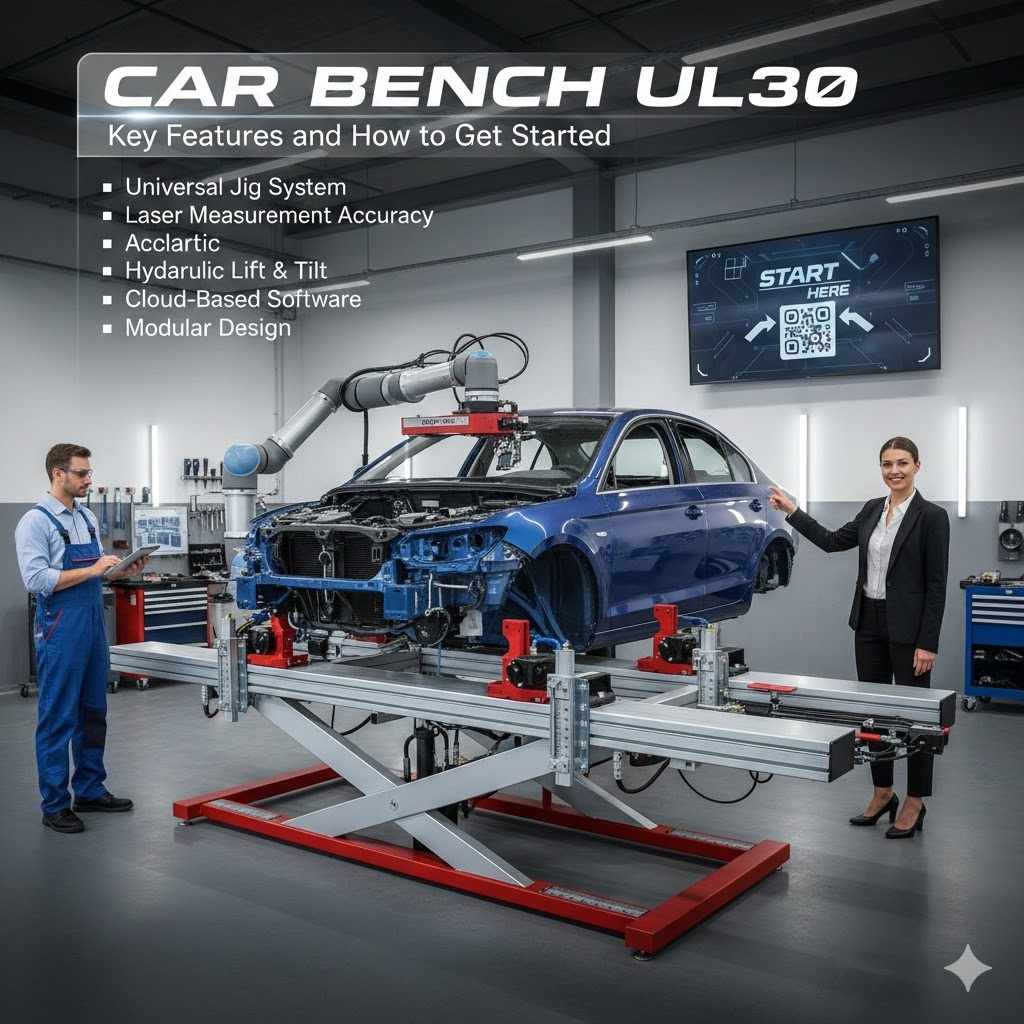
CAR BENCH UL300: Key Features and How to Get Started
Getting started with the CAR BENCH UL300: Key Features & Guide can feel tricky. There’s often a lot of technical stuff, and it can be hard to know where to begin. But don’t worry! This guide is here to break it all down in simple terms. We’ll explore the basics and show you exactly what you need to know, step by step. We’ll start with what the CAR BENCH UL300: Key Features & Guide is and the main things it does. Then, we will dig deeper into its components and capabilities.
What Is the CAR BENCH UL300?
The CAR BENCH UL300: Key Features & Guide is a tool designed for automotive professionals and enthusiasts. It’s often used for diagnosing and repairing car systems. Think of it as a super-powered toolkit that lets you see how a car’s computer works. It can read codes, identify problems, and even change settings. These tools help mechanics keep cars running smoothly and efficiently. Understanding the CAR BENCH UL300: Key Features & Guide is useful, even if you are just curious.
Key Features of the UL300
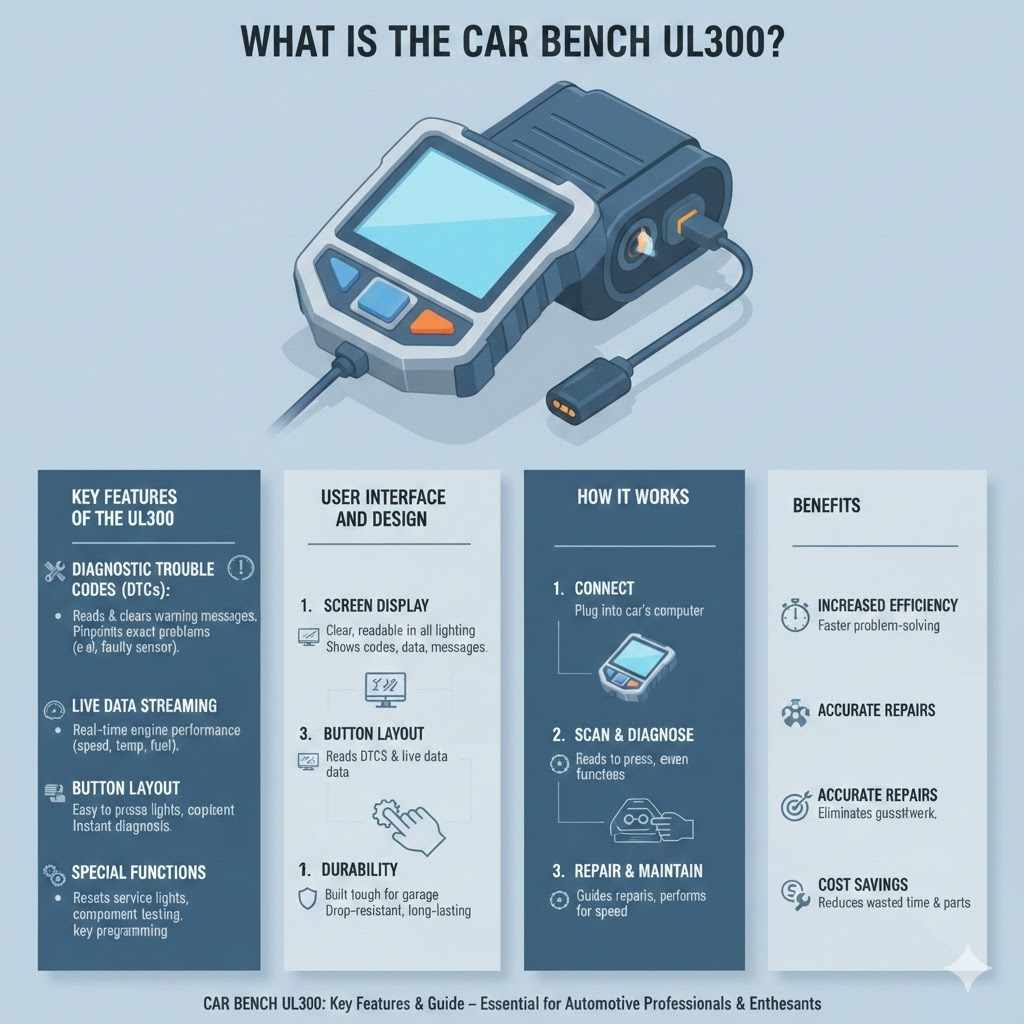
The UL300 boasts several key features that make it a useful tool for automotive repair. These features include the ability to read and clear diagnostic trouble codes (DTCs), live data streaming, and the option for special functions. They provide mechanics with the information to diagnose and fix a wide range of car issues. The user-friendly interface makes it easy to explore the vehicle’s systems.
Diagnostic Trouble Codes (DTCs): DTCs are like warning messages from your car’s computer. The UL300 reads these codes, telling you what’s wrong. For example, if your check engine light is on, the UL300 can tell you the exact cause, such as a faulty sensor or engine misfire.
DTCs provide useful info to quickly pinpoint problems. Without the right diagnostic equipment, finding the root cause is difficult, leading to guesswork and wasted time.
Live Data Streaming: This lets you watch real-time data from your car. Imagine seeing how fast your engine is running, how hot it is, and how much fuel it’s using, all at once.
Live data streaming is like a live performance review for your car’s engine. It provides critical data on the spot, allowing technicians to diagnose and repair car problems without any delays.
Special Functions: The UL300 can do more than just read codes. It can also perform special functions like resetting service lights, testing components, and even programming new keys.
Special functions open up a range of capabilities, allowing professionals to deal with all kinds of maintenance and repair tasks. This includes resetting maintenance reminders, as well as testing or programming a variety of components.
User Interface and Design
The design of the UL300 is meant to be user-friendly. It has a clear screen that displays information. The buttons are easy to press, even if you are wearing gloves. The tool is also built to handle the conditions of a garage, and it’s built to last. The interface makes it simple to navigate menus, read codes, and view live data. This design allows users to complete tasks quickly and efficiently.
Screen Display: A clear screen is key for quickly seeing what’s happening. The screen is made to be readable in all lighting conditions, from bright sunlight to a dimly lit garage.
A good display is key because it presents all the required info. This includes the car codes, live data, and any diagnostic messages. A simple screen makes it fast and easy to understand.
Button Layout: The buttons are designed for ease of use. They are placed strategically so you don’t have to fumble around to find what you need.
The easy button layout makes sure that you can operate the tool, even if your hands are covered in oil. This increases the speed and efficiency of the maintenance process.
Durability: The UL300 is built tough. It can handle being dropped, bumped, and used in a busy garage. It is built to endure the tough conditions of a garage or repair shop.
Durable design means that the device lasts for a longer time, reducing the need for costly
Getting Started with Your CAR BENCH UL300
Getting started with the CAR BENCH UL300: Key Features & Guide involves some important steps. You’ll need to connect it to your car, understand how to find the right information, and know how to operate the different features. We’ll look at the basics: how to connect the tool, find the diagnostic port, and start checking codes. Mastering these steps helps you make the most of the tool’s features.
Connecting to Your Vehicle
Connecting the UL300 to your car is simple. Find the diagnostic port, which is usually found under the dashboard, and plug in the tool. Once connected, the tool will power up and begin communicating with the car’s computer. Correctly connecting the tool is the first step in properly diagnosing and repairing the vehicle.
Locating the OBD-II Port: The OBD-II port (On-Board Diagnostics II) is the place where you connect the UL300. This port is usually located under the dashboard on the driver’s side. You can typically find it by looking for a small, trapezoid-shaped connector.
Locating the OBD-II port is the first step toward using the diagnostic tool. Knowing the port’s location helps speed up the diagnostic procedure and lets users quickly start reading the data.
Plug and Play: Once you find the port, just plug in the connector from the UL300. The tool gets power from the car, so there’s no need for batteries.
The simplicity of the plug-and-play setup lowers the amount of time it takes to get started with diagnostics. This saves technicians time and ensures they can quickly begin diagnosing problems.
Power Up: The UL300 will turn on automatically when connected to the car. You’ll see the screen light up, showing it’s ready to go.
The automatic power-up function is handy. It ensures that the device is ready to go, removing the need for any complex startup procedures. The diagnostic process becomes quick and straightforward.
Navigating the Menu
The UL300 has a menu to get information. You’ll use the buttons to move through the options. You can easily find the tools you need. It’s designed to be simple, with clear categories for things like reading codes or seeing live data. Practice with the menu to get used to the tool’s functions.
Main Menu Structure: The main menu usually includes options like ‘Read Codes,’ ‘Live Data,’ ‘Special Functions,’ and ‘Vehicle Information.’
A well-organized menu simplifies navigation. It lets you easily select the function that is needed. It also lets users quickly access functions for efficient troubleshooting.
Button Functions: The buttons on the UL300 are made for easy movement. These buttons let you navigate through the menu, select options, and confirm your choices.
These button features make the diagnostic procedure faster. It ensures that you can move through the menu with ease. This design simplifies the user experience, saving valuable time.
Submenus and Options: Each main menu option will lead you to submenus with more specific options. For example, under ‘Read Codes,’ you might see options to read all codes or specific codes.
Submenus allow users to find information in an organized way. This allows technicians to hone in on the exact data they require, speeding up the diagnostic process.
CAR BENCH UL300 Features for Diagnosing Problems
The CAR BENCH UL300: Key Features & Guide is useful for diagnosing problems. It reads the trouble codes, sees live data in real time, and helps identify issues in a car’s computer system. The UL300 is like having a car doctor. You can look at all the systems, from the engine to the transmission.
Reading and Interpreting Diagnostic Trouble Codes (DTCs)
Reading DTCs is the first step in figuring out what’s wrong with a car. The UL300 will show you these codes, and the next step is to understand what each one means. It involves looking up the code in a manual or database. Each code tells you about a specific problem with the vehicle. Knowing the codes helps you understand how to approach the repair.
Code Retrieval Process: Select the ‘Read Codes’ function from the main menu. The UL300 will communicate with the car’s computer and display any stored DTCs.
This process is very important for vehicle diagnosis. It ensures technicians can access data with no problems. It helps identify any issues, laying the foundation for an effective diagnostic method.
Code Decoding: DTCs are made up of letters and numbers. For example, P0301 means a misfire in cylinder 1. Use the code with its description.
Code decoding involves converting technical codes into easy-to-understand info. Knowing the code meanings, you can find the root of the problem. This saves time and aids in effective problem-solving.
Troubleshooting Based on Codes: Once you know the code, you can start the repair. The UL300 doesn’t fix the car, but it gives you a starting point for doing repairs.
Using the DTC info to troubleshoot problems is important. This step helps in pinpointing the origin of the problem and in creating a suitable repair plan. This approach reduces unnecessary work and optimizes the repair.
Real-Time Data Analysis with the UL300
Real-time data lets you see how your car’s systems are working right now. You can check the engine’s speed, temperature, and fuel consumption. This helps you figure out problems and make informed decisions. Real-time data can show problems that aren’t obvious and helps you understand how the systems work.
Data Parameters: The UL300 displays a range of data parameters, such as engine RPM, coolant temperature, oxygen sensor readings, and transmission data.
The range of parameters being displayed offers comprehensive views of the car’s function. The technicians gain insight into the operation of all systems. This is useful when identifying performance anomalies.
Graphing Capabilities: Some UL300 models have graphing functions. This allows you to track data over time and spot trends.
Graphing capabilities show data visually. This allows users to easily recognize patterns or changes. It makes it easier to track the operation of parts, as well as to identify any issues.
Data Interpretation: Learn to see what the numbers mean. For example, if the oxygen sensor is showing the wrong value, there might be a problem with the fuel mixture.
Data interpretation is critical in understanding system performance. It requires expertise and using the data to make the right decisions. This allows technicians to correctly diagnose the problem.
CAR BENCH UL300 Repair and Maintenance Guide
The CAR BENCH UL300: Key Features & Guide does more than just diagnose problems; it can also help with car repairs and maintenance. You can use it to reset maintenance reminders, test parts, and check various systems. These actions ensure that the car stays safe and runs efficiently. If you follow the correct procedures, it is possible to maintain the good running order of your car.
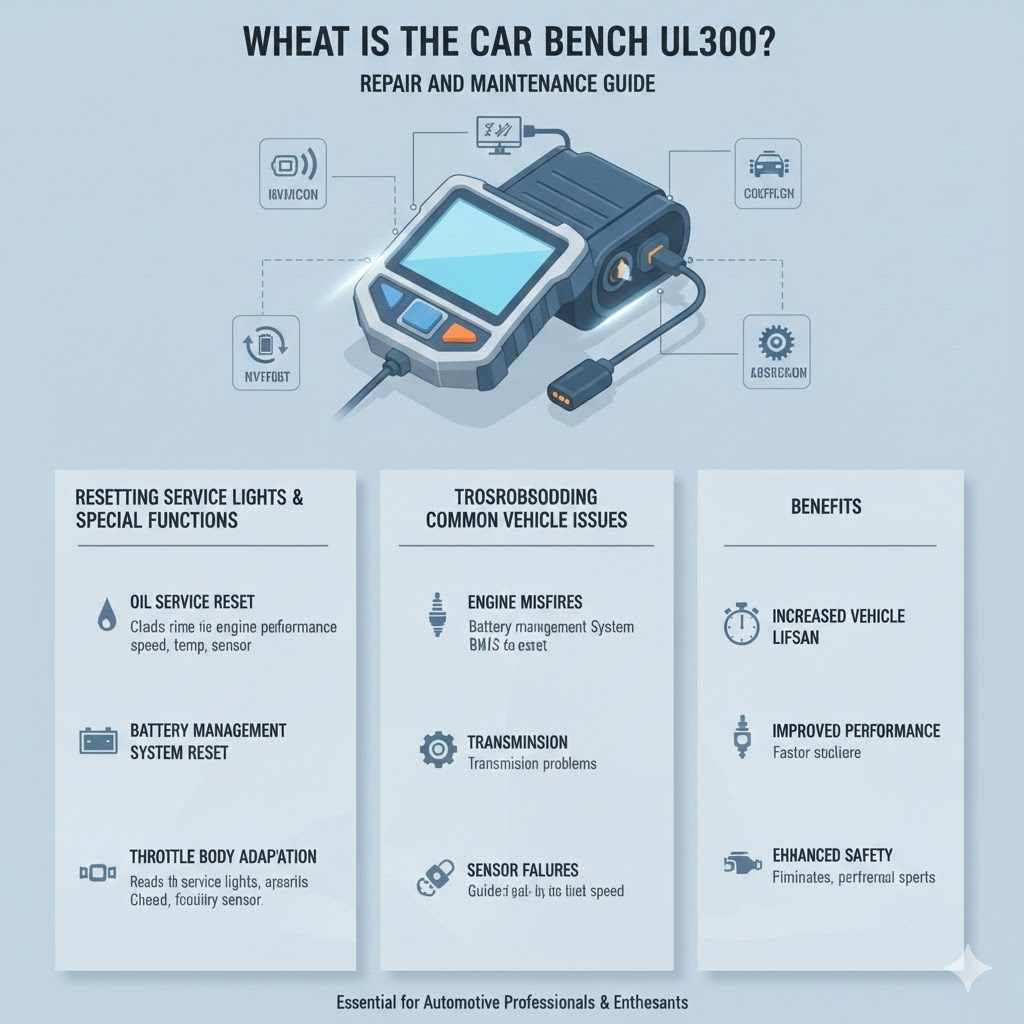
Resetting Service Lights and Performing Special Functions
The UL300 is also used for performing special functions. This is useful for resetting service lights, such as the oil change reminder, and adjusting certain vehicle settings. This feature is really useful for routine maintenance and to get everything to reset properly after work is done. It helps keep your car up-to-date.
Oil Service Reset: After an oil change, the UL300 can reset the service reminder, letting the car know that the maintenance is complete.
This procedure confirms that routine maintenance has been completed. It ensures that the car’s systems align with maintenance schedules, so the owner gets the right notifications.
Battery Management System (BMS) Reset: Some cars need a reset after a new battery is installed. The UL300 can perform this function, optimizing the car’s charging system.
Resetting the Battery Management System (BMS) optimizes the car’s electrical performance. It ensures efficient operation and extends the battery life.
Throttle Body Adaptation: The UL300 can perform throttle body adaptation, which is important for the car’s fuel and air control systems.
Throttle body adaptation ensures the fuel and air systems are calibrated correctly. The function improves engine performance. It optimizes fuel efficiency and responsiveness.
Troubleshooting Common Vehicle Issues
The UL300 can help with many of the issues that come up. Whether it’s a problem with the engine or the transmission, the UL300 can give you a better idea of what is happening. By reading codes and seeing live data, you can often find the cause of the problem. This will help you know what to do next. It is also a good idea to know the parts of your car and how they work together.
Engine Misfires: If the engine is misfiring, the UL300 can tell you which cylinder is affected.
Identifying the misfiring cylinder enables you to quickly address the problem. This can be done by looking at spark plugs or coils. Addressing the problem enhances the car’s performance.
Transmission Problems: The UL300 can help diagnose issues with the transmission.
Diagnosing transmission issues allows for early detection of issues before they worsen. It can identify transmission-related codes and help determine the causes.
Sensor Failures: Many sensors in your car can fail. The UL300 can help you find out which sensor is bad.
Identifying sensor issues is very important for the performance of a car. When the sensor fails, it is possible to determine the cause of the issue and fix the sensor or its wiring.
Frequently Asked Questions
Question: Can the CAR BENCH UL300 work on all cars?
Answer: The UL300 is designed to work with most cars that use the OBD-II standard, which started in the mid-1990s. Always check your car’s compatibility before use.
Question: Is the CAR BENCH UL300 difficult to learn?
Answer: It might seem complicated at first, but the UL300 is made to be user-friendly. With practice, you’ll become more comfortable using its features and navigating its functions.
Question: Can the UL300 damage my car?
Answer: When used properly, the UL300 will not damage your car. Always follow the instructions and don’t make changes to the settings unless you know what you are doing.
Question: What if the code isn’t in my manual?
Answer: There are many online databases and resources with definitions for DTCs. You can search the code on the internet. You can also consult car repair forums.
Question: How often should I update the CAR BENCH UL300?
Answer: Check for updates regularly to ensure that the tool is compatible with the latest car models. The manufacturer usually provides instructions on how to do this.
Final Thoughts
The CAR BENCH UL300: Key Features & Guide is a valuable tool for anyone working on cars. It lets you get info from your car’s computer. It is very useful for diagnosing and repairing cars. By learning how to use it, you can pinpoint issues, fix problems, and keep your car in top shape. You can read codes, see live data, and do special functions. Keep practicing. You will get more comfortable with it. By using the UL300, you can keep your car running well. You’ll gain skills and experience. Start exploring the world of car diagnostics. Good luck.