Winter Tire Cost: How Much You’ll Really Pay
A set of winter tires often costs about $400 to $1,200 for mainstream cars, plus about $80 to $200 per season for mounting and balancing; if steel wheels are needed, budget roughly another $300 to $800. Skip the full budget, and the total can exceed what all-weather tires would have cost over a few winters. This guide breaks down tire prices, installation fees, wheel-set math, and when all-weather tires are the cheaper move.
Winter tire cost at a glance
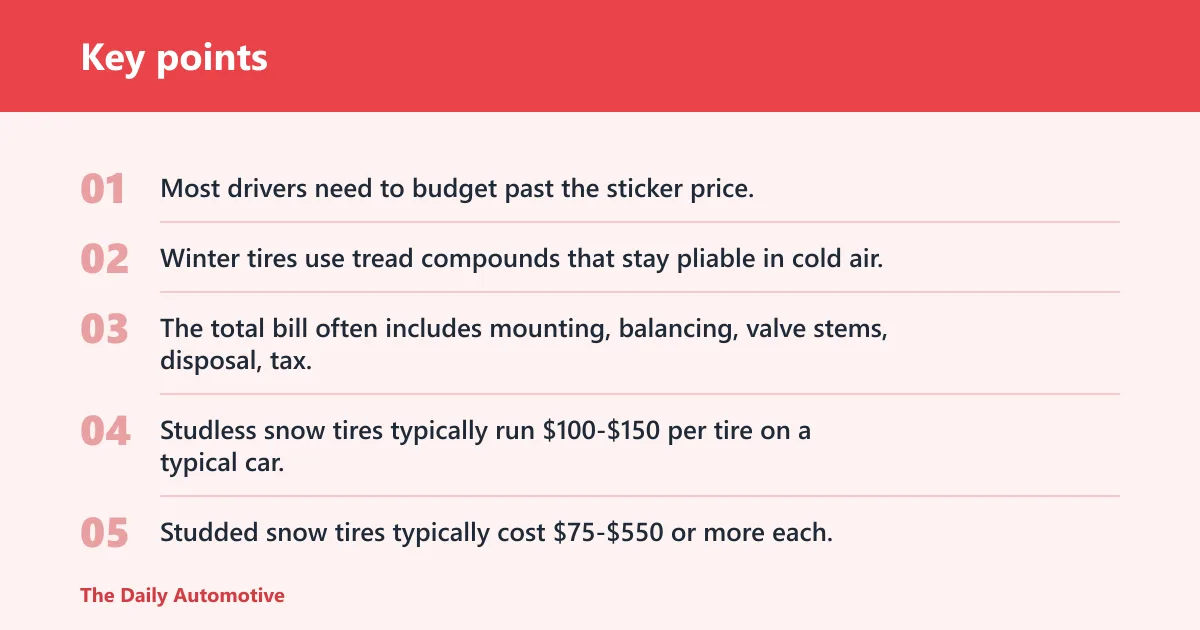


Most drivers need to budget past the sticker price. Winter tires use tread compounds that stay pliable in cold air, which helps the tread conform to snow and ice and improves braking and traction. The total bill often includes mounting, balancing, valve stems, disposal, tax, TPMS sensors, and sometimes a second wheel set.
Typical price ranges by tire type
Studless snow tires typically run $100-$150 per tire on a typical car, or $250-$600 for a set of four. Studded snow tires typically cost $75-$550 or more each, and winter performance tires typically cost $100-$500 each. Those ranges move with size, brand, and vehicle fitment.
Why tire size changes the bill
Passenger winter tires commonly fit 15-inch to 20-inch wheels, though some run 14-inch or 22-inch and beyond. Larger wheels and less common fitments usually cost more because fewer models are built for them, the tire casing is larger, and the available choices shrink. If you drive a common sedan size, you will usually have more low-cost choices.
What makes the out-the-door number higher
The tire price is the starting point, not the final total. A shop quote may also include mounting and balancing, valve stems, disposal fees, sales tax, and TPMS sensors. If you switch tires twice a year on the same wheels, that seasonal labor adds up quickly.
What you actually pay to install winter tires
Installation can move the budget as much as the tires themselves. A semi-annual tire swap typically costs about $40-$80 each time for re-mounting and re-balancing four tires, and that is before disposal fees, valve stems, or new sensors. A second wheel set can cut that recurring labor.
Mounting and balancing
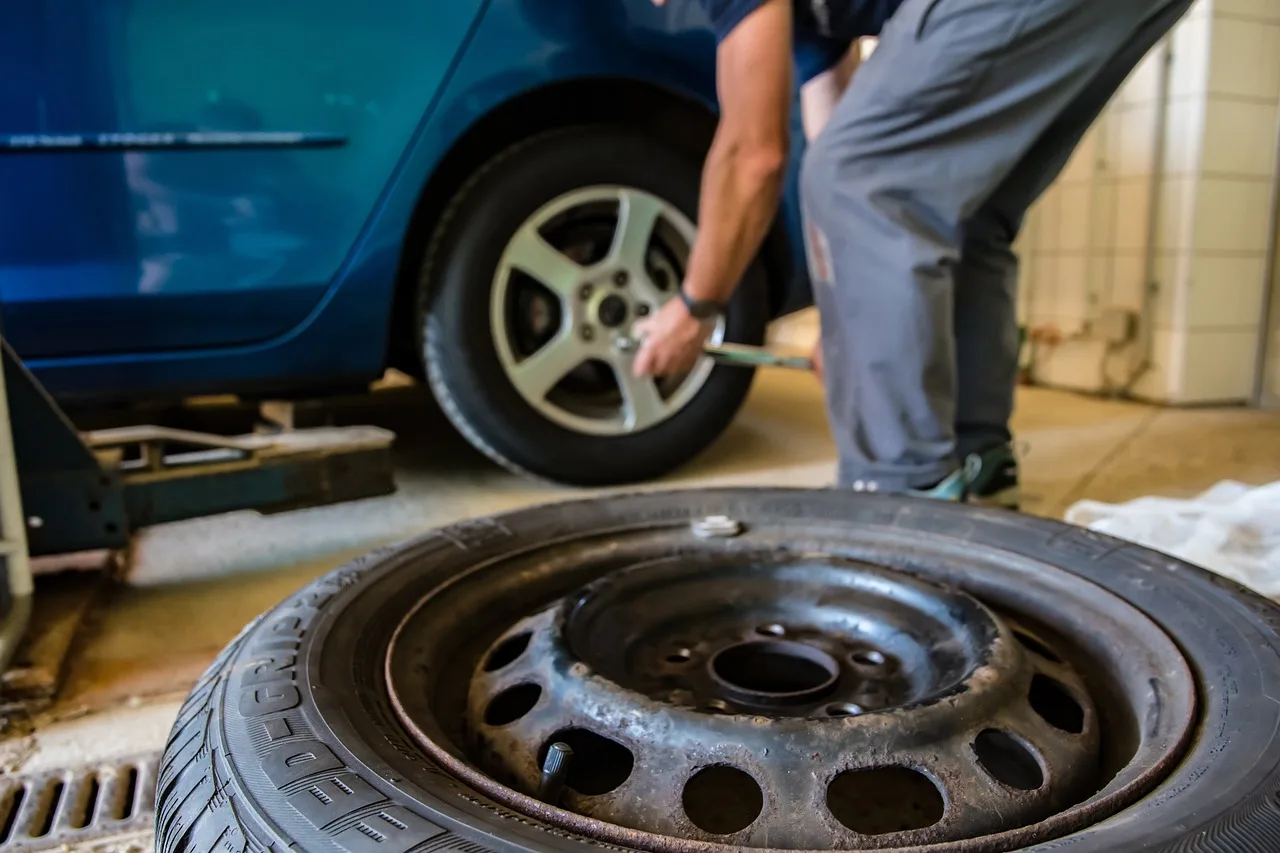
Mounting seats the tire on the wheel. Balancing corrects weight differences so the assembly spins smoothly. If the quote does not show both, ask for the out-the-door total, not a base price that leaves out labor.
Valve stems, disposal, and taxes
Some shops charge extra for valve stems, especially if the originals are aged or damaged. Disposal fees can apply when the old set comes off. Tax changes the final number too, so compare final quotes line by line.
Semiannual swap fees versus a second wheel set
If you keep winter tires on their own wheels, the swap is usually faster and may cost less over time than remounting tires twice a year. Used wheels can be as low as $40-$80 for a set of four, while a new set of wheels can cost $120-$500 or more for four.
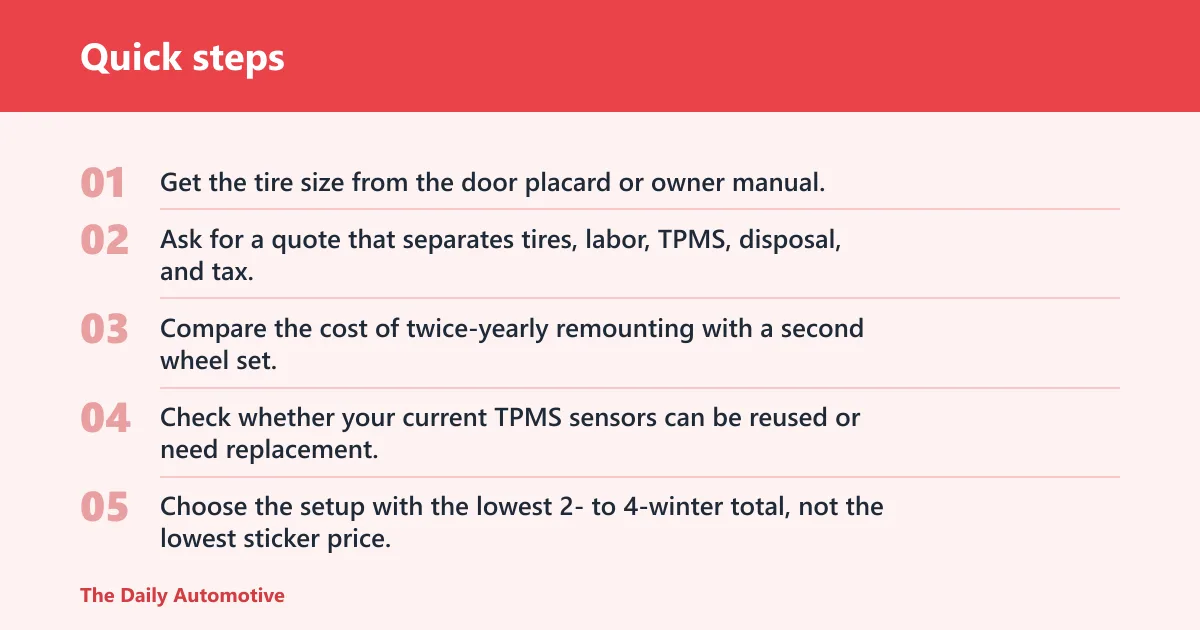
- Get the tire size from the door placard or owner manual.
- Ask for a quote that separates tires, labor, TPMS, disposal, and tax.
- Compare the cost of twice-yearly remounting with a second wheel set.
- Check whether your current TPMS sensors can be reused or need replacement.
- Choose the setup with the lowest 2- to 4-winter total, not the lowest sticker price.
Winter tire budget table
This table shows what a common winter-ready budget can look like. The tire-only line uses the sourced price bands, while the other lines show the added costs that often get missed. Annual swap cost reflects one seasonal change per year after the set is on wheels.
| Scenario | Tire-only | Mounting and balancing | Disposal | TPMS | Second wheel set | Annual swap cost |
|---|---|---|---|---|---|---|
| Budget commuter | $400-$600 | $80-$160 | $20-$40 | $0-$250 | $40-$500 | $40-$80 |
| Mid-size sedan | $500-$800 | $80-$160 | $20-$40 | $0-$500 | $120-$500+ | $40-$80 |
| SUV | $800-$2,000+ | $80-$160 | $20-$40 | $0-$500+ | $120-$500+ | $40-$80 |
How much do winter tires cost by size?
For common 15-inch to 20-inch passenger fitments, winter tire pricing often tracks the same broad bands already listed, but size can push one car far above another. A common 16-inch or 17-inch sedan fitment usually has more choices than a larger SUV or a rare performance size. That choice gap is where the budget changes.
15-inch to 20-inch common fitments
Smaller common sizes often sit near the lower end of the range because they are built in higher volume. As wheel diameter climbs, the tire casing usually gets more expensive, and the set price rises with it. A larger rim can also mean a pricier wheel if you buy a second set.
Why larger sizes often cost more
Larger sizes may need more material, and the supply of winter models shrinks as fitment gets less common. Winter performance tires can also land high in the range because they target sharper dry-road manners while still adding winter traction. That tradeoff usually costs more than a simple studless set.
When a rare size narrows your choices
A rare fitment can cut out budget options and leave only premium brands or limited inventories. Picture a crossover owner who needs a 22-inch winter fitment. The tire choices may be thin enough that a second wheel set in a smaller diameter, if approved for the vehicle, can lower the long-term bill.
Are winter tires worth it?
Yes, for drivers who face real snow, ice, or long stretches below freezing. Winter tires use softer rubber compounds that stay pliable below 45°F / 7°C, which helps the tread grip cold pavement, snow, and ice better than all-season, summer, or performance tires. In mild winters, all-weather tires may be the lower-cost choice.
Cold-weather rubber and braking distance
The point is not only getting moving. Better cold-weather grip helps the vehicle slow and turn more predictably when the pavement is cold and slick. That benefit matters on untreated roads, shaded curves, and packed snow.
Severe snow and ice versus mild winter climates
For frequent snow, frozen slush, or steep hills, winter tires are the stronger choice. For a place that gets only brief cold snaps and light snow, all-weather tires can make sense because they stay on the car year-round. They are still a compromise, not a full substitute in severe winter conditions.
When all-weather tires may be the lower-cost choice
If your winters are short and road crews clear fast, all-weather tires can save you the seasonal swap cost, the second wheel set, and the storage hassle. That does not make them equal to winter tires on snow and ice. It means the lower total bill may fit a mild climate better.
Wheel sets, TPMS, and studded tire costs
Extra hardware can move the total well beyond the tire set itself. TPMS sensors can cost $50-$125 per tire, and a set of wheels can cost $120-$500 or more new for four. Fitment matters, because the wrong sensor or wheel offset can create compatibility problems.
Second wheel set pricing
A second wheel set is often the cleanest way to avoid repeated remounting. Used wheels can be as low as $40-$80 for a set of four, but check condition carefully before buying. Steel wheels are common for winter duty because they are often cheaper than alloys.
TPMS sensor compatibility and cost
Some vehicles need a second set of sensors, while others can relearn a wheel swap or reuse existing hardware depending on the setup. Either way, the compatibility question matters more than the price tag alone. A cheap wheel set becomes less cheap if the sensors do not match.
Studded tires and legal restrictions
Studded snow tires can help on extreme ice, but they are not legal everywhere. Some studless snow tires also allow optional metal studs for about $15-$25 per tire. If your area restricts studs, the tire choice may be made for you.
Buying winter tires without overspending
Focus on the full quote. A low tire price can hide labor, sensors, disposal, and tax. The best comparison is the out-the-door number for the exact size and vehicle, not a generic ad price.
Comparing out-the-door quotes
Ask each seller for the same line items: tire brand and size, mounting and balancing, valve stems, TPMS sensors, disposal, tax, and whether the price includes road-force balancing if needed. That makes it easier to compare a tire shop quote with a big-box store quote or an online order.
Where to buy: tire shops, big-box stores, and online
Tire shops can package the install, big-box stores may run seasonal discounts, and online retailers can help with inventory and size selection. Any of them can be the right choice if the final price is clear and the tires fit the vehicle correctly.
Used winter tire checks: age, tread depth, and damage
Used winter tires are only worth considering if the tread is still deep, the sidewalls are clean, and the age is not excessive. Age matters because winter rubber hardens over time, and shallow tread weakens snow bite. A cheap used set can turn expensive if it needs early replacement.
Suppose a buyer finds used 17-inch winter tires at a low price, but two tires are older than the rest and one has visible sidewall cracking. That set is not a bargain. It is a risk, because winter grip depends on usable rubber, matched wear, and intact carcasses.
What happens if you only buy two winter tires?
Two winter tires are not a proper winter setup. Winter tires should be installed on all four wheels so the car brakes, turns, and accelerates with similar grip at both ends. Mixing only two winter tires can create handling problems, especially in braking and cornering.
Why four matching tires matter
With only two winter tires, the axle pair with better grip can pull the car into unstable behavior when the other pair loses traction. That can be worse than a full set with slightly older tread. Four matching tires keep the balance more predictable.
Mismatch risks with size or wear
Different sizes can confuse the vehicle’s systems and may affect speedometer accuracy, ABS behavior, or traction control. Different tread depths can also change how each axle reacts in snow. The result is not a small comfort issue. It is a control issue.
Safer alternatives when budget is tight
If four new winter tires are out of reach, consider a smaller wheel diameter if the vehicle allows it, a used wheel set in good condition, or all-weather tires for a mild climate. A common first-timer mistake is buying two tires now and planning to “finish the set later.” That is the wrong order for winter safety.
Frequently asked questions
How much do winter tires cost?
For mainstream cars, winter tires often cost $400 to $1,200 for a set of four before installation, and more for larger or less common sizes. If you add mounting, balancing, TPMS, disposal, and a second wheel set, the total can move well past the tire sticker price.
How much to change winter tires
A semi-annual tire swap typically costs about $40-$80 each time for re-mounting and re-balancing four tires. If the tires stay on their own wheels, the seasonal bill may be lower. Ask for the total with tax, valve stems, and disposal so the quote is complete.
How much do all weather tires cost?
All-weather tire prices vary by size and vehicle, but the bigger question is total cost over time. They can be cheaper than winter tires plus seasonal swaps because they stay on the car year-round. In severe snow and ice, though, they do not replace winter tires.
Are winter tires worth it: they are worth?
They are worth it for drivers who see regular snow, ice, or long cold periods. Winter tires use softer rubber that stays pliable below 45°F / 7°C, and that improves traction and braking. For mild winters, all-weather tires can be the lower-cost choice.
Where to buy cheap winter tires
Cheap winter tires are often found at tire shops, big-box stores, and online retailers. The real test is the out-the-door quote, not the advertised tire price. Compare the full line items, including mounting, balancing, TPMS, disposal, and tax, before deciding.
Why do tires cost so much?
Winter tires cost more because size, compound, tread design, and fitment all matter. Common passenger fitments are cheaper than rare ones, and larger wheels usually raise the bill. Once you add installation, sensors, and wheels, the total can climb quickly.
Products related to this article
Sponsored / affiliate links. As an Amazon Associate I earn from qualifying purchases. I may earn additional commission from eligible campaigns.