Car Key Cutting Cost: How Much It Really Costs
Car key cutting often costs about $10 to $50 for a basic metal duplicate, about $50 to $150 for a chip key copy, and about $150 to $450 for lost-all-keys replacement. Pay too little for the wrong job, and you can leave with a cut key that won’t start the car. This guide breaks down cutting, transponder programming, and full replacement by scenario so you can estimate the real bill before calling a locksmith or dealer.
Typical cost range
The cut-only part is usually the cheapest part of the job. A plain mechanical car key often costs $10 to $30 to cut and duplicate, while the full bill climbs once a chip, remote buttons, or smart-entry electronics enter the picture. Your vehicle make, model, year, and key type set the price band.
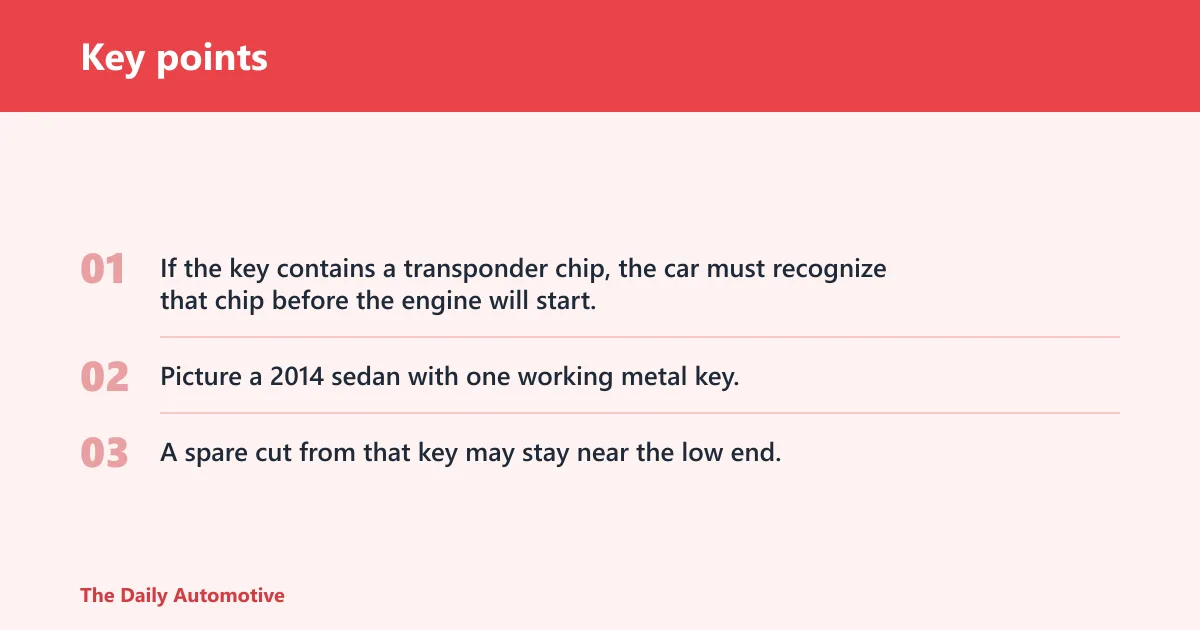
A cut key is only part of the answer. If the key contains a transponder chip, the car must recognize that chip before the engine will start. If the key is a remote-head or smart fob, the bill often includes both cutting and programming, plus possible service or dispatch fees.
Car key price matrix
| Scenario | Likely cost components | What is included | What is excluded | Most common hidden fee |
|---|---|---|---|---|
| Plain metal duplicate | Blade cut only; blank key; small service fee | Cutting a mechanical blade from a working key | Programming, remote buttons, immobilizer work | Minimum shop or call-out charge |
| Transponder duplicate | Cut blade; chip programming; blank transponder key | Duplicate key that starts the car | Lost-key recovery, towing, remote shell replacement | Programming fee |
| Remote-head duplicate | Cut blade; button shell; chip programming; battery if needed | Key blade plus remote functions and start authorization | Emergency service, towing, replacement of worn locks | Remote programming fee |
| Smart fob replacement | Fob hardware; pairing; security verification | Push-to-start access and start authorization | Cut blade work, if the fob has a hidden emergency blade only | VIN or security verification fee |
| Lost-all-keys service | New key or fob; programming; vehicle access; labor | A working replacement when no key remains | Simple duplication pricing, since there is no original to copy | Mobile dispatch or recovery fee |
| Emergency after-hours call | Service call; labor; cut or program work; premium timing charge | Late-night or weekend response | Standard daytime pricing | After-hours premium |
Picture a 2014 sedan with one working metal key. A spare cut from that key may stay near the low end. Swap that same car for a transponder key, and the bill rises because the chip has to be programmed to the immobilizer before the engine will run.
Say the only key for a 2022 SUV is gone. The quote can jump again because the job is no longer duplication; it is lost-all-keys recovery, often with proof-of-ownership checks, programming, and a service call to the vehicle.
What affects the final price?
The biggest pricing driver is the vehicle itself. Year matters because newer cars usually use more secure key systems. Make and model matter because some brands require specialized software, while trim level can change whether the key is a simple blade, a transponder, a remote-head unit, or a proximity fob.
Service method also changes the total. A mobile auto locksmith may come to the vehicle and quote a lower total than a dealer, but the bill can include dispatch, travel, or after-hours charges. A dealer may charge more, especially for advanced systems that require parts ordering or vehicle access at the service bay.
Key type and security system
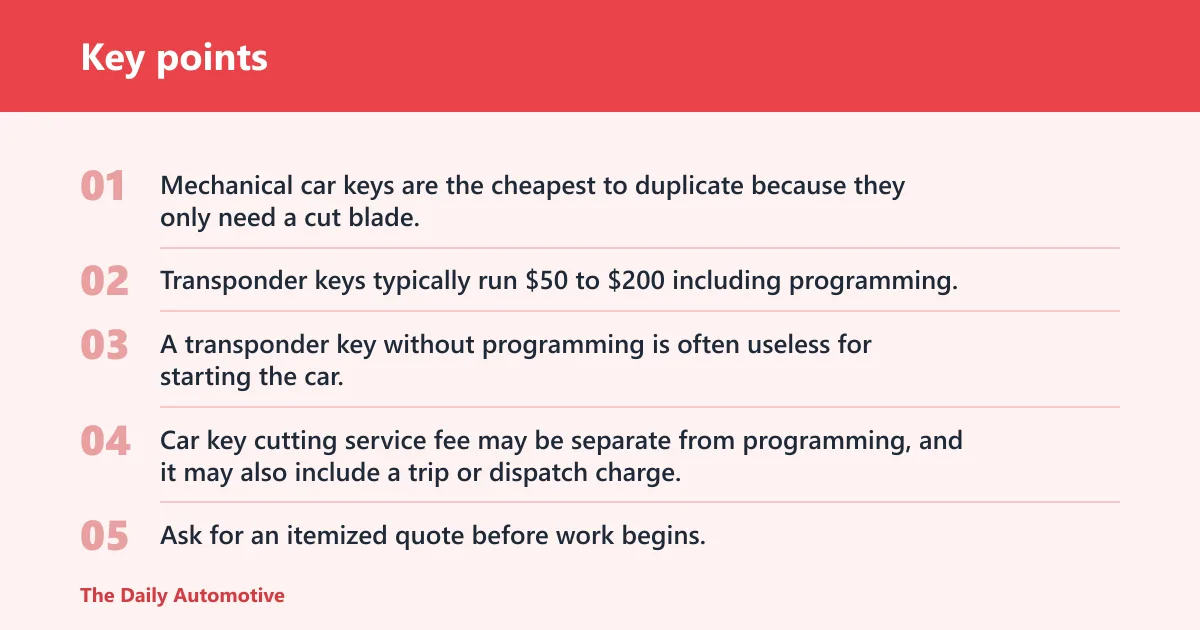
Mechanical car keys are the cheapest to duplicate because they only need a cut blade. Transponder keys typically run $50 to $200 including programming. Remote head or flip keys usually land around $90 to $250, and smart or proximity fobs commonly cost $200 to $500 or more.
That spread reflects hardware and programming, not only the blade cut. A transponder key without programming is often useless for starting the car. A smart fob can cost more because it communicates with the vehicle’s security system rather than simply turning a lock cylinder.
Mobile service, dispatch, and after-hours fees
Car key cutting service fee may be separate from programming, and it may also include a trip or dispatch charge. Ask for an itemized quote before work begins. Hidden charges often show up as emergency call-out premiums, night or weekend fees, VIN or security verification, and extra labor for a locked vehicle.
The average auto locksmith cost in the United States ranges from $75 to $500+, and most drivers pay between $150 and $350 for common locksmith services. Car lockout service averages $90, with a $60 to $150 range. Those numbers help explain why a simple cut job and a lost-key emergency can land in very different places.
How much does a locksmith charge?
A mobile auto locksmith often costs less than a dealer for duplication, lockout help, and many common replacement jobs. That said, the total can climb quickly if the call happens after hours, if the key is lost rather than copied, or if the vehicle needs special programming equipment on site.
For many common jobs, locksmith pricing is the better baseline. Standard car key duplication averages $25, with a $10 to $60 range. Transponder key replacement averages $180, with a $120 to $350 range. Key fob programming averages $125, with a $75 to $250 range.
When a locksmith usually costs less
- Check the key type first. If the car uses a mechanical blade or a common transponder key, a mobile locksmith can often duplicate or replace it without dealer scheduling. That usually keeps the total lower than towing the vehicle to a dealer.
- Ask for itemized pricing. Get separate numbers for cutting, programming, dispatch, and after-hours service. This makes it easier to compare quotes that look similar at first glance but are built from different charges.
- Use the working key. A duplicate from a working key is usually cheaper than a lost-all-keys call. The original key gives the locksmith a pattern to copy and often avoids extra recovery labor.
Why dealer quotes run higher
Dealer pricing is often higher because the parts source, security process, and service workflow can be stricter. Some dealer jobs also require the vehicle to be present, which adds towing cost if the car will not start or cannot be driven. That makes dealer quotes less attractive for routine duplication.
When towing changes the math
If the only working key is gone and the dealer will not cut or program without the vehicle present, towing can add a separate line item. That extra cost can erase any savings from choosing the dealer, especially on older vehicles where a locksmith can complete the job on site.
How much does a dealer charge?
Dealer pricing tends to make the most sense for newer vehicles, higher-security systems, or jobs that require factory-level access and part ordering. It is usually the more expensive route for simple duplication, but it can be the practical route when a proximity system or security procedure blocks other options.
Older keys are usually simpler. Newer proximity systems are not. A dealer may also be better suited to situations where the vehicle needs software-level matching, security authorization, or a part number that is tied tightly to the VIN.
Older keys versus newer proximity systems
An older mechanical key can often be duplicated quickly and cheaply. A newer smart fob may need dealer tools, security verification, or a special-order part. That is why a basic duplicate and a proximity replacement should never be priced as if they were the same service.
Why some dealer jobs need the vehicle present
Some models require the vehicle to be present for pairing, immobilizer access, or module registration. If the car cannot be driven, towing becomes part of the bill. Ask whether the dealer can finish the job with a VIN alone, or whether the vehicle must be brought in for programming.
How to get an accurate quote
The fastest way to avoid surprises is to give the shop or locksmith the exact vehicle details and the key type up front. Year, make, model, trim, and whether the key is mechanical, chip-based, remote-head, or smart all affect the quote. If the key is lost, say that plainly, because duplication pricing does not apply.
Ask for the full out-the-door price before work starts. The quote should separate cutting, programming, dispatch, after-hours premiums, security verification, and any towing requirement if a dealer is involved.
What to have ready
- Gather vehicle details. Have the year, make, model, and trim ready before calling. Add whether the key is a plain blade, transponder, remote-head, or smart fob, because that determines the price band and the equipment needed.
- State the key status. Say whether you have one working key, a worn key, a snapped blade, or no keys at all. That single detail changes whether the job is duplication, repair, or full replacement.
- Request itemized totals. Ask for cutting, programming, service call, and any after-hours charge as separate lines. This helps compare a mobile auto locksmith with a dealer quote without guessing what is included.
A common first-timer mistake is calling a lost key a duplicate. If the original is gone, the price moves from copying to recovery. That one wording change can swing the quote by hundreds of dollars.
Money-saving tips
The best savings usually come before the emergency starts. Making a spare while you still have a working key is almost always cheaper than waiting until all keys are lost. It also reduces the chance of towing, after-hours service, and VIN verification charges.
Keeping the working key for duplication matters. A locksmith can usually copy a live key faster and for less than rebuilding the car’s access and start authorization from scratch. If the key is already worn, replace it before it snaps in the lock or ignition.
Ways to avoid extra charges
- Make a spare early. Order a duplicate while the working key still functions. That usually avoids lost-all-keys pricing and reduces the chance of needing an emergency call.
- Use daytime service. Schedule the job during normal hours when possible. After-hours and weekend premiums can add a separate fee that has nothing to do with the key itself.
- Keep the old key intact. If the blade is worn or the buttons are failing, do not wait for a breakage. A damaged key can turn a low-cost duplicate into a more expensive recovery job.
Frequently asked questions
How much does key cutting cost?
Basic mechanical key cutting is usually the cheapest option, often $10 to $30 to cut and duplicate. If the key has a chip, remote buttons, or proximity electronics, the total rises because programming becomes part of the job. Always ask whether the quote covers cutting only or full start authorization.
How much does a key cut cost?
A plain blade cut can be very inexpensive, but a “key cut” quote may hide the difference between a simple duplicate and a programmed replacement. For a mechanical car key, the cut is often the smallest part of the bill. For a transponder or fob, programming usually matters more than the blade itself.
How much for a key cut?
For a mechanical duplicate, the answer is often within the $10 to $30 range. If the car uses a transponder or smart fob, the real price is higher because the cutting step is only one piece of the total. Ask for the full bill before agreeing to service.
How much is key cutting?
Key cutting by itself can be low-cost, but car key pricing is not one flat number. Standard car key duplication averages $25, with a $10 to $60 range, while chip and fob work costs more because the vehicle has to accept the new key. The key type drives the total.
How much to cut a car key?
Cutting a car key can mean anything from a cheap mechanical blade to a full replacement with programming. If you already have a working mechanical key, the job is often close to the low end. If the key is lost, the quote usually includes recovery and programming, which raises the price sharply.
How much does a car key cost?
Car key cost depends on the technology inside the key and whether the job is duplication or replacement.
What affects car key cutting price?
Vehicle make, model, year, and key type are the main drivers. Mobile service, dispatch, after-hours premiums, VIN checks, and towing can all add cost. A dealer may charge more for newer proximity systems, while a mobile auto locksmith may be cheaper for straightforward duplication or lockout-related replacement.
Is car key cutting cheaper than dealer replacement?
Usually, yes. A locksmith is often cheaper for simple duplication and many chip-key jobs. Dealer pricing can make sense for advanced or newer vehicles, but it tends to run higher and may require towing or vehicle access. Compare the full out-the-door price, not just the blade cut.
Products related to this article
Sponsored / affiliate links. As an Amazon Associate I earn from qualifying purchases. I may earn additional commission from eligible campaigns.