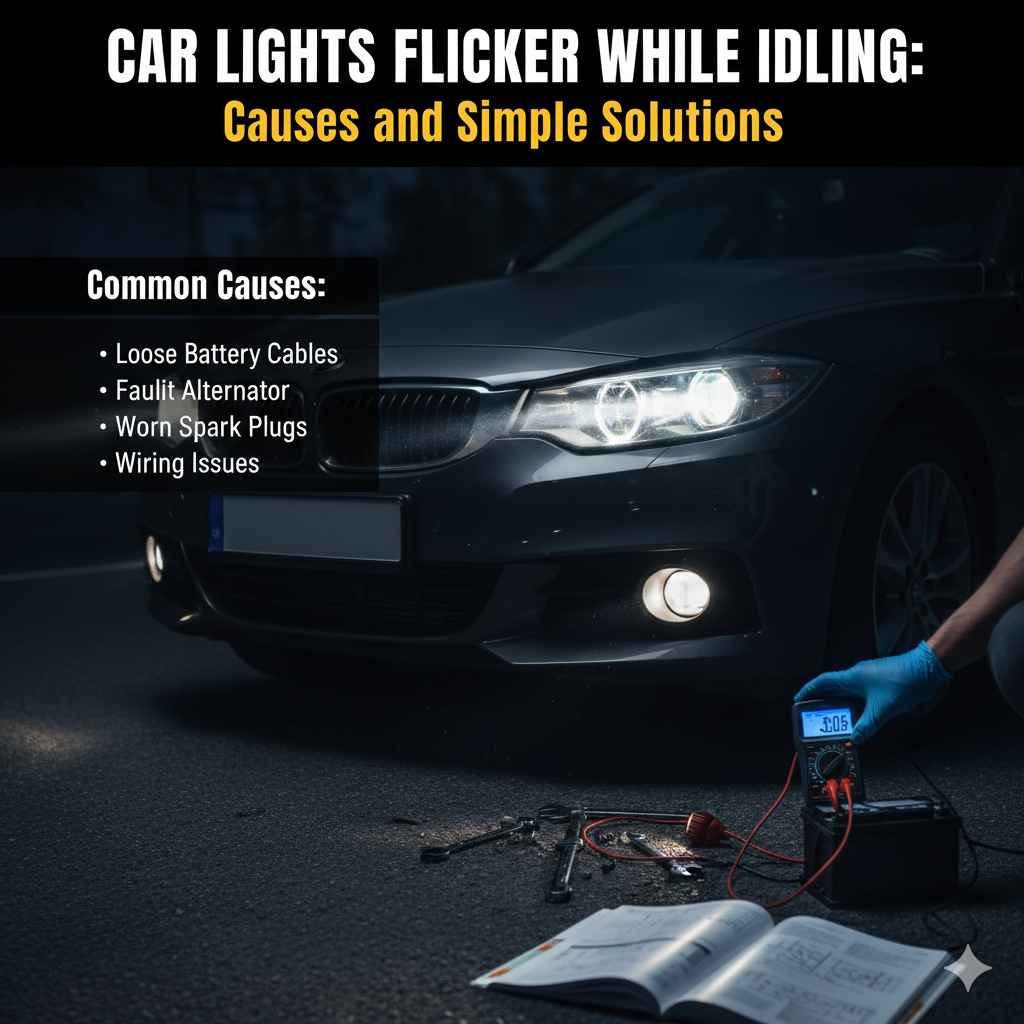
Car Lights Flicker While Idling: Causes and Simple Solutions
If you’ve noticed your car’s headlights or interior lights flickering when you’re stopped at a red light, don’t worry, you’re not alone! Many people experience this, and it can be a bit unsettling if you’re not sure what’s going on. The good news is that in most cases, this issue with Car Lights Flicker While Idling: Why It Happens isn’t a major problem, and it’s usually something that can be fixed. This guide will walk you through the most common reasons this happens and offer easy, step-by-step solutions to help you get your lights back to normal. Let’s explore why this happens and what you can do about it.
Possible Issues When Your Lights Blink
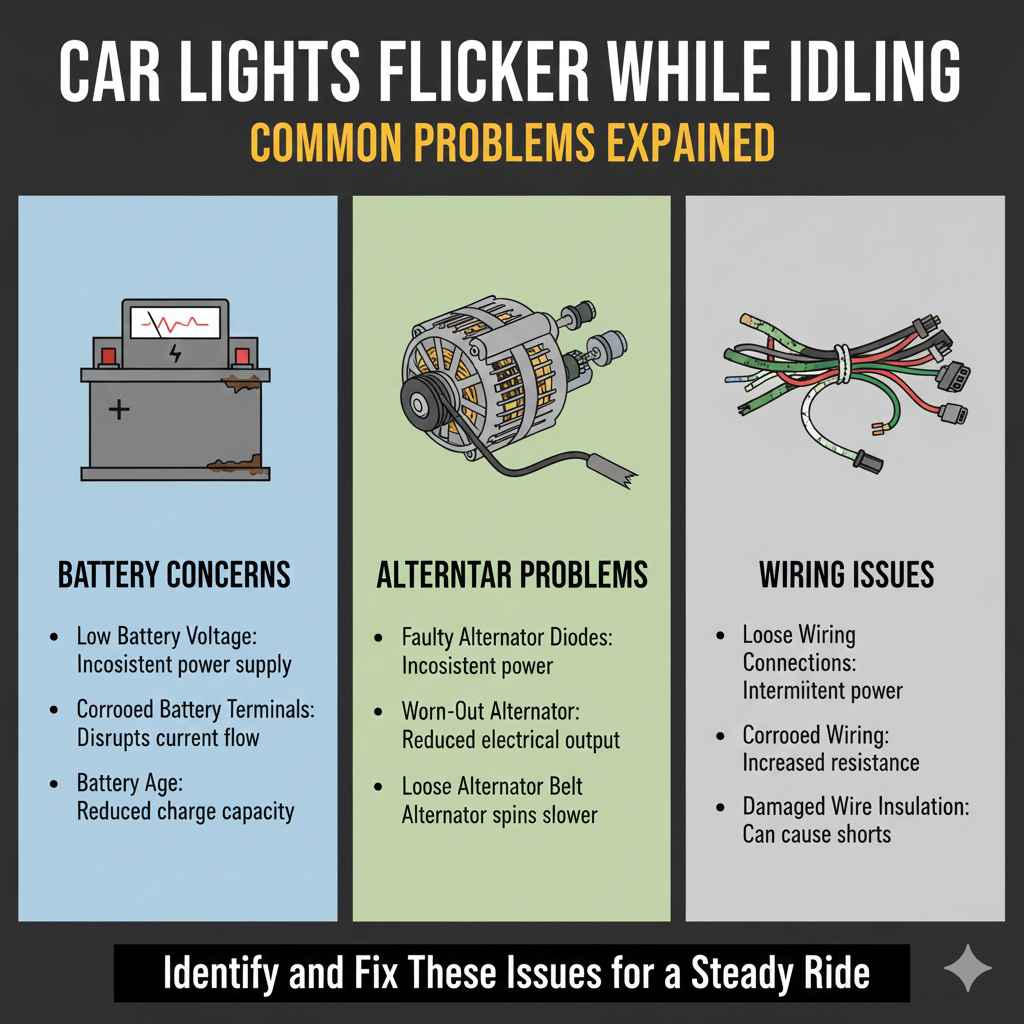
When the lights in your car flicker, it can indicate a few potential problems with your vehicle’s electrical system. This can be caused by problems with the battery, alternator, or wiring. The car’s electrical components need to function correctly to power the lights. Knowing what might cause your lights to flicker can help you figure out where to start when troubleshooting. It is important to know the common causes before finding the right solution. Let’s explore each of them in detail.
Battery Concerns
The battery is like the heart of your car’s electrical system, providing the initial power to start the engine and keep everything running. A weak or dying battery can struggle to supply enough power, especially when the engine is idling and the alternator isn’t producing as much electricity. This can lead to flickering lights as the electrical system struggles to distribute the available power to all the different components. This is one of the most common reasons for lights to flicker, especially in older cars or those with frequently discharged batteries.
- Low Battery Voltage: A battery that isn’t fully charged can cause voltage fluctuations, making the lights dim and flicker.A battery that cannot hold a charge may deliver an inconsistent power supply to your car’s electrical system. This fluctuation causes the lights to flicker when the car is idling. It can also cause problems with your engine, and it may not start on occasion.
- Corroded Battery Terminals: Corrosion on the battery terminals can disrupt the flow of electricity, causing voltage drops and flickering lights.Corrosion creates resistance in the electrical circuit, restricting the current flow. This resistance can cause voltage drops that cause lights to flicker, especially when the car is idling and the electrical system is under less demand. Regular cleaning helps prevent corrosion.
- Battery Age: As batteries age, they lose their ability to hold a charge efficiently, which can lead to flickering lights.As the car battery ages, the internal components deteriorate, reducing the battery’s capacity to deliver a stable power supply. Old batteries may struggle to supply the power needed for all electrical components, resulting in flickering lights. You can monitor the condition of the battery, which would help you determine when you should replace it.
Alternator Problems
The alternator is responsible for generating electricity to power your car’s electrical systems once the engine is running and also to recharge the battery. If the alternator isn’t working correctly, it might not provide enough power, leading to flickering lights. This is especially noticeable when idling because the engine speed is low, and the alternator’s output is lower.
- Faulty Alternator Diodes: Diodes within the alternator convert the alternating current (AC) to direct current (DC) for the car’s electrical system. If the diodes are failing, they can cause an inconsistent power supply, making the lights flicker.When alternator diodes fail, the electrical current might not be converted correctly, creating voltage fluctuations. These fluctuations can then cause the lights to flicker. A bad diode can cause a loss of charging ability, as well.
- Worn-Out Alternator: Over time, an alternator can wear out, leading to reduced output and flickering lights.Alternators will eventually need replacing as they wear out from normal use. The internal components, such as brushes and bearings, can degrade, reducing the alternator’s efficiency. As the efficiency decreases, the lights may flicker because of an insufficient power supply.
- Loose Alternator Belt: If the belt that drives the alternator is loose, the alternator won’t spin at the correct speed, reducing its power output and potentially causing flickering lights.The alternator belt transfers power from the engine to the alternator. When the belt slips or is loose, the alternator spins slower than it should. This leads to a reduction in its electrical output. Make sure that your alternator belt is not loose.
Wiring Issues
Faulty wiring can cause all sorts of electrical problems in a car, including flickering lights. Loose connections, corroded wires, or damaged insulation can disrupt the flow of electricity, causing lights to flicker, especially when the engine vibrations are the strongest, such as when idling. The problems can be difficult to find, often requiring careful inspection and testing.
- Loose Wiring Connections: Loose connections in the wiring harness can cause intermittent electrical problems and make the lights flicker.Loose wiring connections can make electrical current interrupted. When the connections move, the connection can be lost temporarily, causing the lights to blink. This is caused by vibration in your car. This can happen around the lights or inside the fuse box.
- Corroded Wiring: Corrosion on wires can increase resistance and disrupt the electrical current.Corroded wires restrict the flow of electricity. This reduced flow causes the lights to flicker and is frequently caused by environmental factors like moisture and humidity. Corroded wires can cause shorts, which can cause electrical problems.
- Damaged Wire Insulation: Damaged or worn insulation can expose the wires and cause shorts.When the insulation protecting the wires is damaged, exposed wires can touch each other or the metal parts of the car. This can create a short circuit causing lights to flicker. Damage can be caused by heat, friction, or rodents chewing the wires.
How to Troubleshoot Car Lights Flicker While Idling
Troubleshooting flickering car lights requires a systematic approach, starting with easy checks and progressing to more complex diagnostics. By using these steps, you can find the source of the problem. This can help you figure out if you can fix it yourself, or if you need to take the car to a mechanic. It is important to remember to take precautions such as disconnecting the battery before working on electrical components. You want to make sure you do it safely.
Visual Inspections
The first step in troubleshooting flickering lights is a visual inspection. This involves looking for obvious signs of problems, such as loose connections, corrosion, or damaged components. This is a simple, no-cost way to identify potential issues before you start testing other parts of the electrical system. You may be able to spot the problem right away, saving you time and money.
- Battery Terminals: Check the battery terminals for corrosion. If you see white or green residue, it’s a sign of corrosion. Clean the terminals using a wire brush and a mixture of baking soda and water.Corrosion on battery terminals blocks electrical flow, making the lights flicker. Clean terminals make a good connection. This can resolve the issue immediately. Removing the corrosion helps ensure the battery receives and provides the power it needs.
- Wiring Harness: Inspect the wiring harness near the headlights and tail lights for any signs of damage or loose connections. Wiggle the wires to see if the lights flicker.Loose wires and damaged insulation can cause flickering lights. You will need to look closely for any breaks in the wire insulation. Also, make sure that the wires are securely connected to the lights and other electrical components.
- Ground Connections: Check the ground connections for any corrosion or looseness. Ground connections are essential for completing the electrical circuit, and a bad ground can cause various electrical issues.Good ground connections are important to the car’s electrical system. Look for ground wires that are securely attached to the chassis and engine. Make sure there is no rust or corrosion at these points. Make sure all the ground wires are clean and secure.
Testing the Battery
The battery is often the first place to look when dealing with flickering lights. A weak or dying battery can cause a variety of electrical issues, and it’s relatively easy to test. You can check the battery voltage and do a load test to determine if the battery is performing as it should. A multimeter will be used for these tests. If you don’t have a multimeter, you can find one at an auto parts store.
- Voltage Test: Use a multimeter to measure the battery voltage when the engine is off (should be around 12.6 volts) and when idling (should be around 13.5-14.5 volts).When the engine is off, a fully charged battery should read approximately 12.6 volts. This is a simple test that quickly shows the battery’s condition. The voltage should go up when the engine is running due to the alternator charging the battery.
- Load Test: Have the battery load-tested at an auto parts store. This test applies a load to the battery to simulate starting the engine, checking its ability to deliver power under load.A load test simulates the high demand placed on the battery when starting the car. It will find a weak battery that might pass a voltage test. This test will help you find any problems with your car’s electrical system.
- Battery Replacement: If the battery fails the voltage or load test, it should be replaced.If the battery tests weak or fails, it is probably time for a replacement. A new battery can restore consistent power to the electrical system and help solve the flickering light issue. Proper maintenance and replacing the battery on time can prevent future electrical problems.
Checking the Alternator
The alternator is another key component to investigate when dealing with flickering lights. A failing alternator can be unable to provide the necessary power to keep your car’s electrical systems running smoothly, especially at idle. You can test the alternator’s output using a multimeter and check the alternator belt for issues.
- Voltage Test at the Alternator: With the engine running, measure the voltage at the alternator output terminal. It should be around 13.5-14.5 volts.The alternator’s output voltage should be within the specified range to properly charge the battery and power the car’s electrical components. Check the alternator’s output voltage with the engine running. Make sure that it is supplying the correct amount of current.
- Diode Test: Check for faulty diodes using a multimeter set to the diode test function.Faulty diodes can cause voltage fluctuations, leading to flickering lights. By testing the diodes with a multimeter, you can tell if the alternator is working properly. If any diodes are bad, the alternator will need to be repaired or replaced.
- Alternator Belt Inspection: Check the alternator belt for cracks, wear, or looseness. A loose belt can cause the alternator to spin at a slower speed, reducing its output.A damaged or loose alternator belt may result in the alternator not generating enough electricity to power all the electrical components. Check the belt for damage, such as cracks, fraying, or wear. Check the tension to make sure the belt isn’t loose.
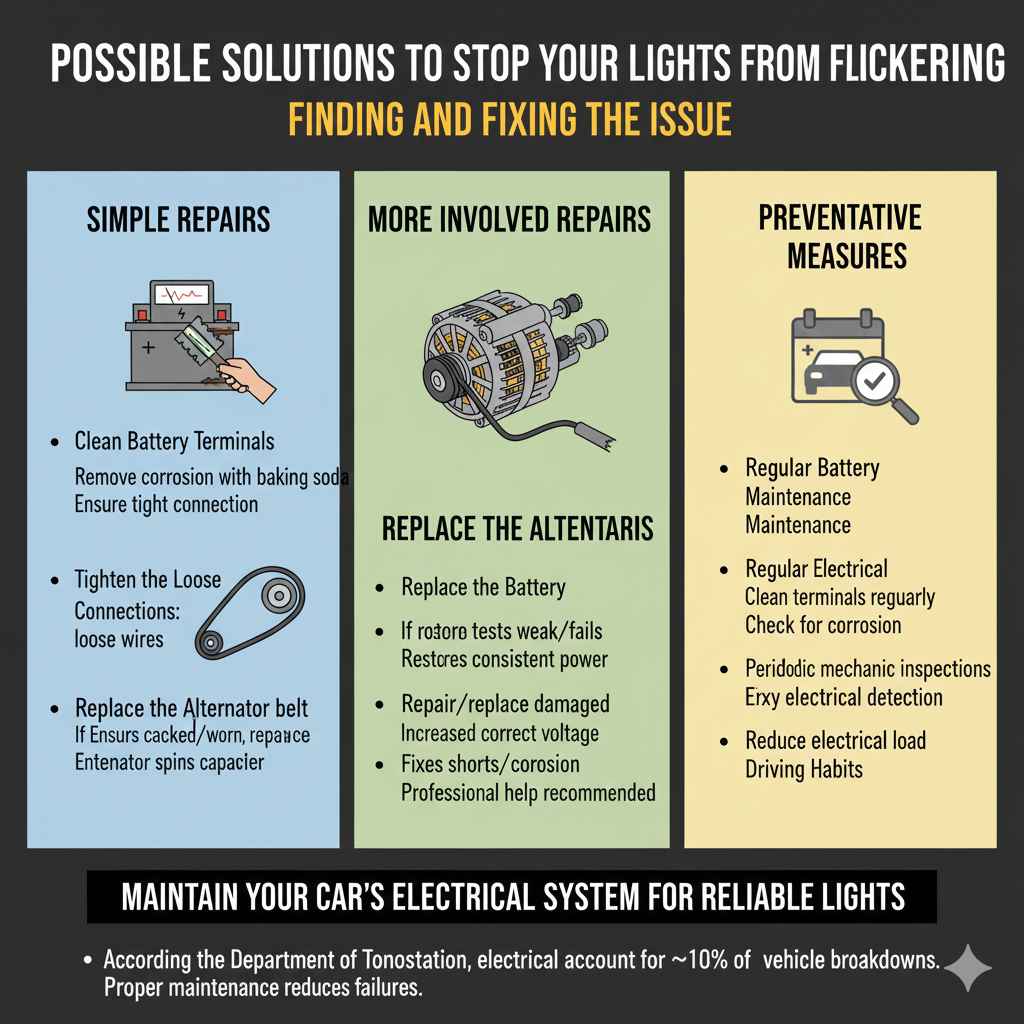
Possible Solutions to Stop Your Lights From Flickering
Finding the cause of your car lights flickering is the first step, but then you need to fix the issue. Depending on what you find when you test the electrical system, there are different solutions. This could involve cleaning or replacing parts like battery terminals or an alternator.
Simple Repairs
Some solutions are easy to fix and may only require simple repairs. These include cleaning corrosion, tightening connections, or replacing a belt. These fixes are usually cost-effective and can be done without any special equipment. Knowing how to do these simple repairs can save you time and money and may fix your flickering lights.
- Clean Battery Terminals: Remove corrosion from the battery terminals using a wire brush and baking soda solution. Make sure the terminals are clean and tight.Corrosion can easily be cleaned off the battery terminals with a simple solution. Cleaning the terminals ensures a good electrical connection, which will help resolve voltage fluctuations causing flickering lights.
- Tighten Loose Connections: Check and tighten any loose wiring connections in the engine bay and around the lights.Loose connections can interrupt the electrical flow and cause flickering lights. You should check the connections and tighten them. This may prevent any more electrical problems.
- Replace the Alternator Belt: If the alternator belt is cracked or worn, replace it. A loose belt can cause the alternator to not charge correctly.A bad alternator belt can cause the alternator to not charge correctly. A new belt will help to make sure the alternator is performing at its best, and your lights may stop flickering.
More Involved Repairs
Sometimes, the solutions might be a bit more difficult, and the issue might require you to have your car looked at by a professional. These fixes often involve replacing more complicated components, such as a battery, alternator, or wiring harness. Make sure to have a professional do the work for you, so it is done correctly and safely. Consider getting professional help for safety.
- Replace the Battery: If the battery tests weak or fails, replace it.A bad battery might not be able to provide the necessary power to your car’s electrical systems. Replacing the battery is an important step to restore consistent power and fix the flickering lights.
- Replace the Alternator: If the alternator tests bad, replace it.A bad alternator might not produce the voltage to charge your car’s battery and power all the electrical systems. Replacing the alternator can resolve this issue and keep your car running.
- Rewire the System: Repair or replace damaged wiring harnesses, paying close attention to any shorts or corroded wires.If the electrical system has extensive wiring issues, rewiring might be required. Fixing wiring issues is essential to prevent shorts, intermittent power issues, and flickering lights. These repairs can be very involved and should be done by a professional.
Preventive Measures
Preventing future problems is a smart move. Regular maintenance and paying attention to your car’s electrical system can help prevent flickering lights. By adopting these preventive measures, you can prolong the life of your car’s components and avoid future problems. Regular maintenance is a good way to maintain your car, save money, and have a safer car.
- Regular Battery Maintenance: Clean battery terminals regularly and check for corrosion.Regular battery maintenance helps to maintain the battery’s performance. Clean terminals prevent corrosion, allowing for an efficient electrical connection. Regularly checking the battery can help find potential problems before they get worse.
- Routine Electrical System Checks: Have your car’s electrical system checked periodically by a mechanic.Scheduled inspections allow professionals to find problems before they cause significant issues. These inspections are usually included in routine maintenance services. This can help to catch problems early, before they get too bad.
- Driving Habits: Avoid excessive use of electrical accessories while idling.Excessive use of electrical accessories can strain the car’s electrical system. Reduce the load on the electrical system by limiting the use of items like the AC system, headlights, or other electronics when idling, particularly when the battery is under a heavy load.
According to the Department of Transportation, electrical issues are a significant factor in vehicle breakdowns, accounting for about 10% of all reported issues. Proper maintenance and regular inspections can reduce the likelihood of electrical failures and ensure your car remains reliable.
| Component | Common Issue | Impact on Lights |
|---|---|---|
| Battery | Weak or dying | Flickering or dim lights |
| Alternator | Faulty diodes or worn brushes | Inconsistent power supply |
| Wiring | Loose or corroded connections | Intermittent flickering |
Frequently Asked Questions
Question: Why do my headlights flicker only when I’m idling?
Answer: Flickering headlights at idle are often due to a reduced power supply from the alternator at lower engine speeds. When the engine is idling, the alternator spins slower, producing less electricity. If the battery is weak or other electrical components are drawing a lot of power, the voltage can drop, causing the lights to flicker.
Question: Can a bad battery cause my car lights to flicker?
Answer: Yes, a weak or failing battery can definitely cause your car lights to flicker. A bad battery can’t provide a consistent voltage, causing the lights to dim or flicker, especially when the engine is under load or idling.
Question: What does it mean if my dashboard lights are also flickering?
Answer: Flickering dashboard lights, along with other interior or exterior lights, often indicates a broader electrical issue. The same problem causing your headlights to flicker, such as a bad alternator, battery, or wiring problem, can affect all lights in your car. This is why it’s important to find the root cause, such as by performing electrical tests.
Question: How can I tell if my alternator is bad?
Answer: You can suspect an alternator problem if the lights are flickering, dimming, or getting brighter, especially when the engine is running. Other signs are a battery that frequently dies, even after being charged, or a warning light on the dashboard. A mechanic can perform a load test to check the alternator’s output.
Question: Is it safe to drive my car if the lights are flickering?
Answer: It’s generally safe to drive if your lights flicker, but it’s important to have it checked as soon as possible. Flickering lights can be a sign of a larger electrical issue that, if left unattended, could lead to your car not starting. Address the problem quickly to prevent more severe issues or breakdowns.
Final Thoughts
Dealing with Car Lights Flicker While Idling: Why It Happens can be a common frustration for many car owners, but with a bit of detective work, it’s often something you can resolve. The causes range from a simple issue with the battery or alternator to a wiring problem. By following a step-by-step approach—checking the battery, inspecting the alternator, and looking at the wiring—you can find the problem.
Remember that if you’re not comfortable working with electrical components, it’s always best to have a qualified mechanic take a look. Keeping up with regular maintenance, doing visual checks, and paying attention to any changes in how your car performs will go a long way in preventing future electrical problems. Happy driving!