Car Speaker Replacement Cost
Car speaker replacement cost is often reported at about $50 to $150 for a single factory-style speaker, about $150 to $400 for a pair, and about $300 to $1,000+ for a full set, with labor and adapter parts changing the total. Ignoring a failing speaker can damage the amp, hide wiring faults, and turn a cheap fix into a larger audio bill. This guide breaks down repair versus replacement, one-speaker versus full-set pricing, and the compatibility costs that move the number.
Car speaker replacement cost by scenario
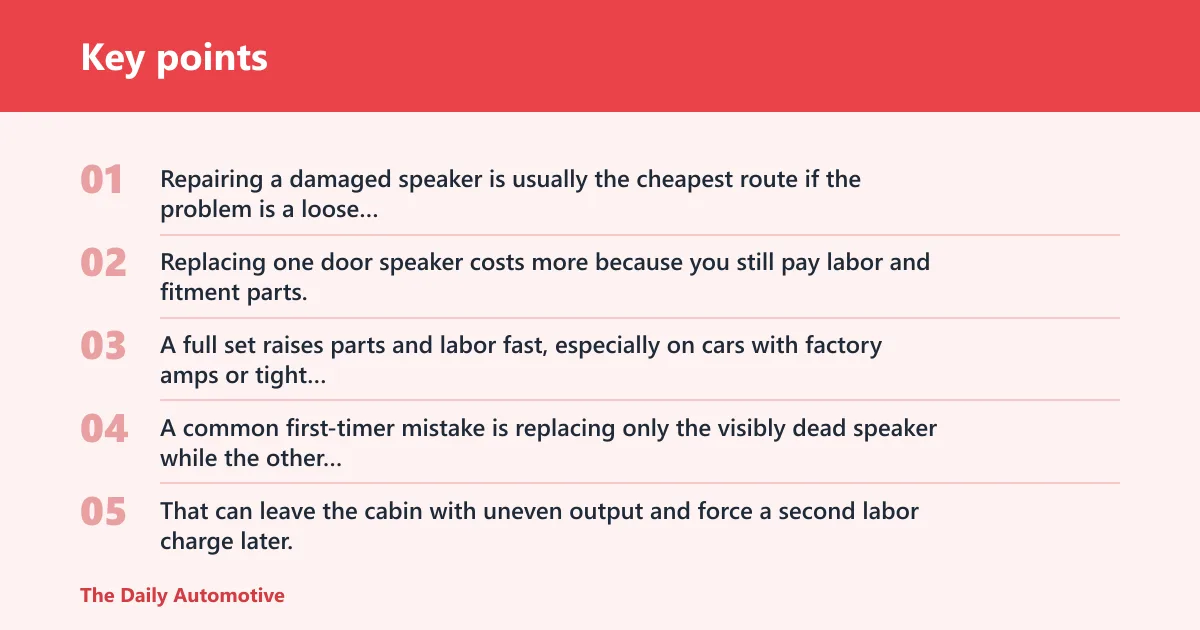

The price depends on which path you choose. Repairing a damaged speaker is usually the cheapest route if the problem is a loose connection, torn surround, or simple wiring issue. Replacing one door speaker costs more because you still pay labor and fitment parts. A full set raises parts and labor fast, especially on cars with factory amps or tight door access.
| Scenario | Typical parts cost | Labor cost | Extra parts | Total budget range | When OEM or aftermarket makes sense |
|---|---|---|---|---|---|
| Repair a blown speaker | $0-$50 | $60-$100 | $10-$30 for clips, wire, or sealant | $100-$200 | OEM if the cone, impedance, and mounting are still factory-matched; aftermarket if the repair is minor and the system is already mixed. |
| Replace one door speaker | $20-$300+ | $60-$100 | $10-$40 for adapters or a wiring adapter | $165-$265 for a basic swap, often higher for premium systems | OEM for exact fit and factory amp compatibility; aftermarket coaxial if you want lower cost and a simple daily-driving upgrade. |
| Replace a full 4-speaker set | $80-$1,200+ | $260-$300 | $40-$120 for adapters, wiring adapters, or deadening | $400-$600 for components only, $660-$1,060 installed, and $660-$900 for a decent-quality system | OEM for premium factory systems or when the car needs exact part numbers; aftermarket makes sense for a lower-cost refresh if fitment is straightforward. |
A common first-timer mistake is replacing only the visibly dead speaker while the other front speaker is already weak. That can leave the cabin with uneven output and force a second labor charge later.
What changes the price?
Vehicle make and model matter because the door structure, clip layout, and factory audio setup change the job. Door-panel design changes labor time, and some cars need special clips, shallow-mount speakers, or more trim removal just to reach the speaker. OEM systems with factory amps also raise the risk of an expensive mismatch, because impedance and mounting depth must line up with the original hardware.
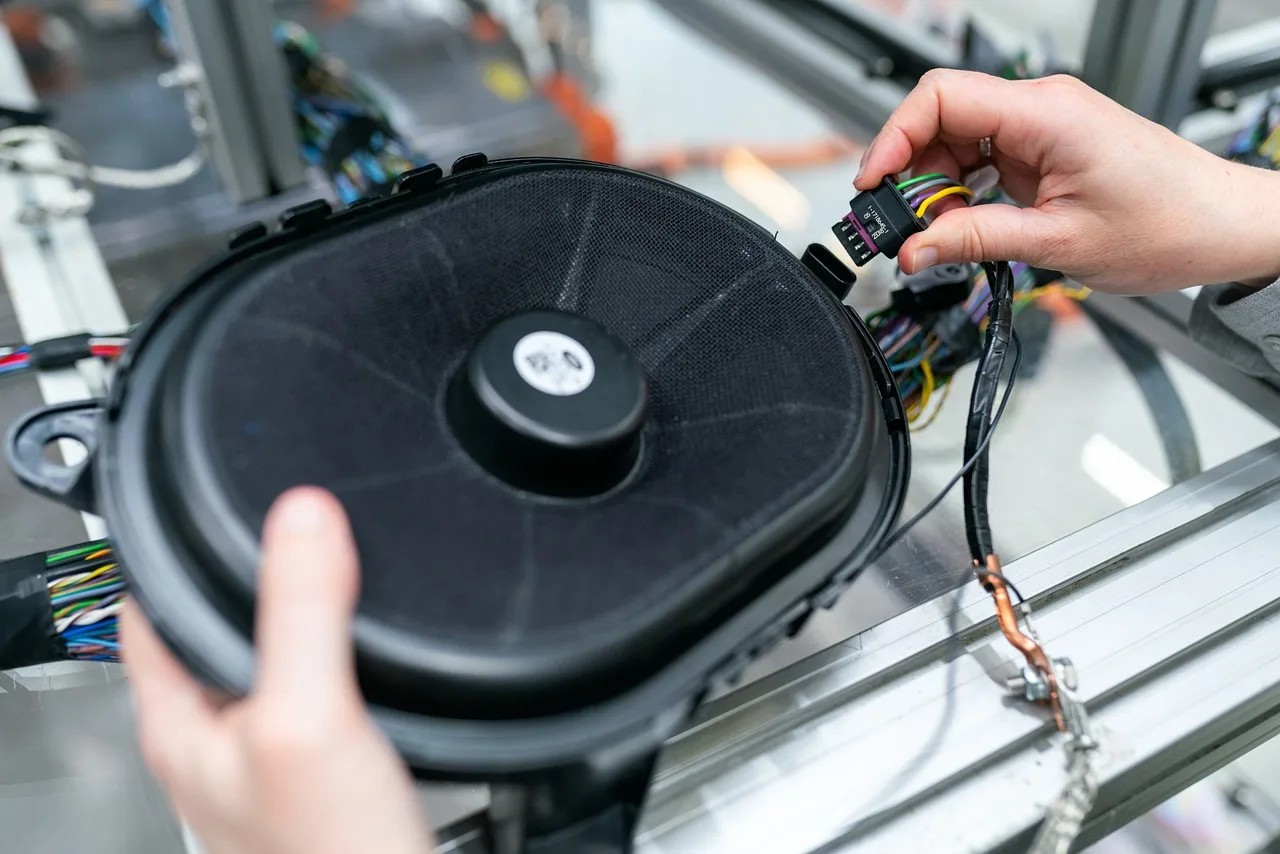
Vehicle make and model fitment
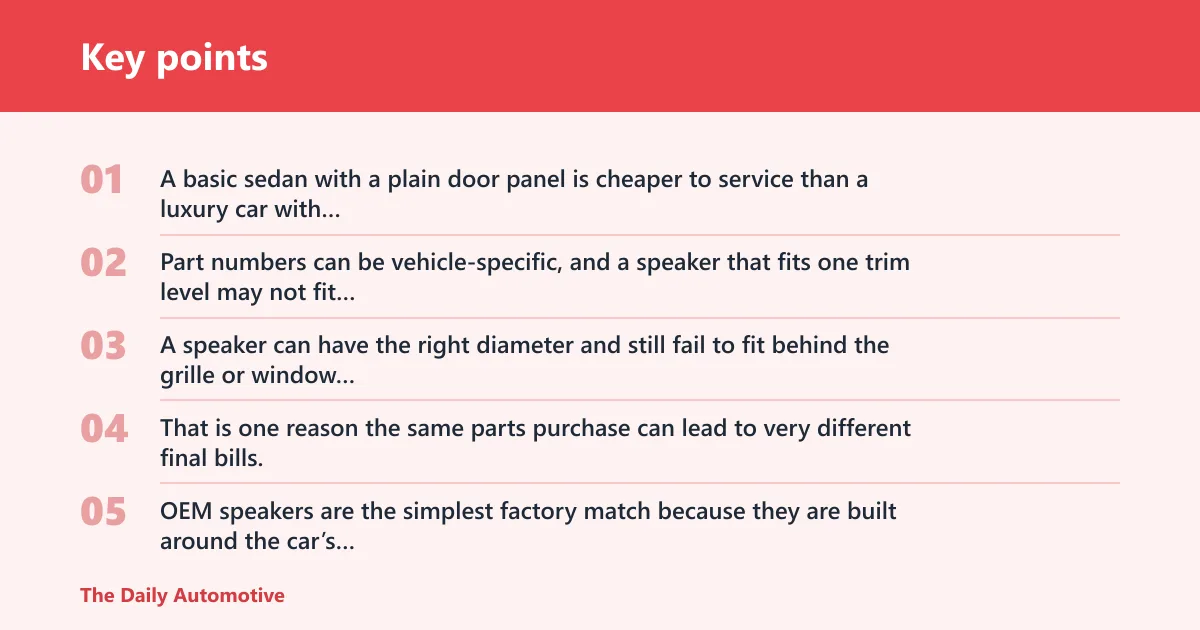
Some vehicles are simple. Others are not. A basic sedan with a plain door panel is cheaper to service than a luxury car with layered trim, integrated tweeters, and a factory amplifier. Part numbers can be vehicle-specific, and a speaker that fits one trim level may not fit another.
Mounting depth matters too. A speaker can have the right diameter and still fail to fit behind the grille or window track. That is one reason the same parts purchase can lead to very different final bills.
OEM versus aftermarket parts
OEM speakers are the simplest factory match because they are built around the car’s original specifications. They usually cost more because they are tied to vehicle-specific part numbers, matched impedance, and exact mounting dimensions. Aftermarket coaxial speakers are often cheaper and easier to install, which is why they are a common choice for daily driving.
Coaxial speakers combine multiple drivers in one unit, so they are usually simpler than component speakers. That simplicity often keeps labor lower, especially on a standard one-speaker swap.
Door access and installation time
Labor is often charged per speaker or by the hour. Professional labor can range from $50 to $100 per hour, and labor is estimated at about $60-$100 per speaker. A front door may take less time than a rear door if the panel is easier to remove and the wiring is more direct.
Suppose a compact car needs one front door speaker and a basic adapter ring. The parts bill may stay modest, but if the door panel has hidden screws, tight clips, and extra trim, labor can become the bigger line item.
Speaker repair or replacement?
Repair is realistic when the speaker still has a sound structure worth saving. A loose connector, damaged wire, or minor surround issue may be worth fixing. Replacement is the better spend when the cone is torn, the voice coil is damaged, or the speaker has gone quiet after repeated clipping from a weak amp or incorrect load.
When repair is realistic
If the speaker is crackling only at certain bass notes, the failure may be in the wiring or mounting rather than the driver itself. In those cases, a shop may fix the problem without replacing the speaker. That keeps the bill lower, but only if the rest of the system checks out.
When replacement is the better spend
Replacement makes more sense when the speaker is physically damaged or when repair parts are not practical. A blown cone, torn surround, or burnt voice coil usually points to a full swap. If the car uses a premium factory amp, replacing the failed speaker with the correct impedance and fit is often the safer long-term move.
How to avoid paying twice
Check the whole path before approving the job. A bad speaker can be the symptom, not the cause. If a loose connection, corroded connector, or amp fault caused the failure, a new speaker alone may fail again. That is especially important in Bose and other integrated audio systems.
OEM, aftermarket, or component speakers?
The right choice depends on fit, budget, and the rest of the audio system. OEM speakers are the easiest factory match. Aftermarket coaxial speakers keep cost down. Component speakers can sound better, but they add parts and labor, which can move the total well above a basic swap.
OEM speakers and factory fitment
OEM speakers are the safest choice when you want original fit and the least guesswork. They are matched to the car’s mounting depth, impedance, and amplifier output. That is why they often cost more than aftermarket parts, especially on premium trims and luxury systems.
Aftermarket coaxial speakers
Basic coaxial speakers are priced at $20-$60 per speaker. That keeps them in budget for many drivers, and their simpler design often makes installation easier than a component setup. For daily driving, they are the most practical cost-saving replacement when the goal is restoring normal sound, not chasing a major audio upgrade.
Component speakers and added install complexity
Component speakers are priced at $50-$150 per speaker. They use separate tweeters and woofers, which can improve sound quality, but the install is more complex. More wiring, more mounting points, and more fitment decisions usually mean more labor.
Premium speakers are priced at $100-$300+ per speaker. That price tier makes sense when the goal is a higher-end refresh, but it can quickly outpace the cost of a basic repair or a simple coaxial replacement.
Labor and hidden costs
Labor is a major part of the bill. Even a low-cost speaker can become expensive once a shop removes door trim, checks wiring, and reinstalls everything cleanly. Hidden costs usually come from fitment parts, trim damage, and any audio-system work needed to keep the new speaker safe.
Labor per speaker or per hour
Professional labor can range from $50 to $100 per hour, and many shops price by speaker instead. Labor is estimated at about $60-$100 per speaker, which is why a single replacement can feel expensive compared with the part price alone. The more complex the door, the more the labor portion grows.
Adapters and wiring harnesses
Speaker adapters and wiring adapters are common add-ons. They can cost about $10-$30 per pair or $10-$20 per speaker. These parts help a new speaker fit or plug in cleanly, and they are easy to miss when you budget only for the speaker itself.
Sound deadening and trim damage risk
Sound deadening material is often added during installation to reduce vibration and rattles. It can cost about $20-$100 for doors. Broken clips, scuffed trim, and damaged vapor barriers can also add to the bill if the door panel comes apart badly or has to be resecured.
Factory amplifier compatibility
Factory amplifiers can change everything. A speaker that looks correct on paper may still be a bad match if the impedance is wrong. That can cause clipping or damage, especially in Bose and similar premium systems. If the car uses an integrated amp, the replacement should match the original load and sensitivity as closely as possible.
Decision table for speaker budgets
Use the table below to decide whether to repair, replace one speaker, or refresh the full set. The total budget moves up when the car needs custom fitment, a factory amp match, or extra trim work. It moves down when the speaker is easy to reach and the part is a simple coaxial replacement.
| Decision path | What you pay first | What can move the bill up | Best fit for | Budget cue |
|---|---|---|---|---|
| Repair the damaged speaker | Diagnosis, labor, small hardware | Trim clips, wiring faults, amp checks | A speaker with a minor mechanical or connection issue | Choose repair only if the cone and coil are still sound. |
| Replace one door speaker | One speaker, labor, adapter or wiring adapter | Factory amp mismatch, door-panel damage, sound deadening | A single failed driver in an otherwise healthy system | Best for a dead speaker when the rest still works well. |
| Replace a full 4-speaker set | Four speakers, higher labor, install parts | Component system wiring, calibration, premium fitment parts | Worn-out factory speakers or a planned sound refresh | Best when more than one speaker is weak or the car already has age-related wear. |
The guide lists a full 4-speaker system at $660-$1,060, while a complete installed decent-quality system is shown at $660-$900. A full 4-speaker system is shown at $400-$600 for components only, and professional installation for four speakers is listed at $260-$300. Those figures show how fast labor and fitment parts can change the total.
Say your front-left door speaker fails on a midsize sedan with a factory amp. A basic aftermarket coaxial may keep the parts bill low, but if the amp expects a specific impedance, the shop may recommend OEM instead to avoid clipping or damage.
How to keep the bill down
Start with the failed part, not the whole audio system. Replace only what failed when the other speakers are still healthy. Match the speaker to the car’s amp and mounting depth. Get quotes before you buy parts, because the cheapest speaker is not always the cheapest install.
- Confirm which speaker failed and whether the issue is in the driver, wiring, or amp.
- Check the car’s factory audio system for impedance, depth, and connector needs.
- Choose OEM for exact fit or aftermarket coaxial for a simpler budget swap.
- Ask whether adapters, wiring adapters, clips, and deadening are already included in the quote.
- Compare one-speaker pricing with a front-pair or full-set price before approving the job.
Frequently asked questions
How much does it cost to replace car speakers?
Car speaker replacement cost usually ranges from $200 and $1,000+, depending on the speaker type, labor, and fitment parts. A single factory-style swap can be much lower, while a premium or full-set job can climb fast once adapters, trim work, and amp compatibility are included.
How much does it cost to get speakers replaced in a car?
Getting speakers replaced in a car often costs about $165-$265 for one speaker and $660-$1,060 for a full 4-speaker set, though the total can be as low as $100 or as high as $2,000+. The difference comes from parts, labor, and whether the car needs special fitment hardware.
What is the average labor cost to replace car speakers?
Average labor cost to replace car speakers is about $60-$100 per speaker, or $50 to $100 per hour at many shops. Labor rises when the door panel is hard to remove, when the speaker sits behind extra trim, or when the system uses a factory amplifier that needs careful matching.
Do I need to replace all car speakers at once?
No. Replacing all speakers at once is not required if only one has failed and the others still sound healthy. Many drivers replace only the front speakers first, because that is where most of the sound is heard. A full set makes more sense when several speakers are worn out.
What extra parts add to car speaker replacement cost
Adapters, wiring adapters, sound deadening, and broken clips are the most common add-ons. Adapters and wiring adapters often add $10-$30 per pair or $10-$20 per speaker, while sound deadening can cost about $20-$100 for doors. Premium systems may also need extra amp-related checks.
Is it cheaper to repair or replace a blown car speaker?
Repair is cheaper only when the problem is minor, such as a loose connection or a small mechanical issue. If the cone, coil, or surround is damaged, replacement is usually the better spend. The safe rule is simple: repair only when the speaker still has real life left in it.
Products related to this article
Sponsored / affiliate links. As an Amazon Associate I earn from qualifying purchases. I may earn additional commission from eligible campaigns.