Car Towing Cost: How Much Should You Pay for a Tow?
A local tow usually costs about $75 to $125 plus about $2 to $7 per mile; after-hours, winching, and storage can add to the bill. Approve the wrong service, and a short tow can turn into a $200-plus bill or a car held in storage. This guide breaks down the usual line items, what you can negotiate, and which charges deserve a hard no before you authorize the truck.
How much does towing cost?
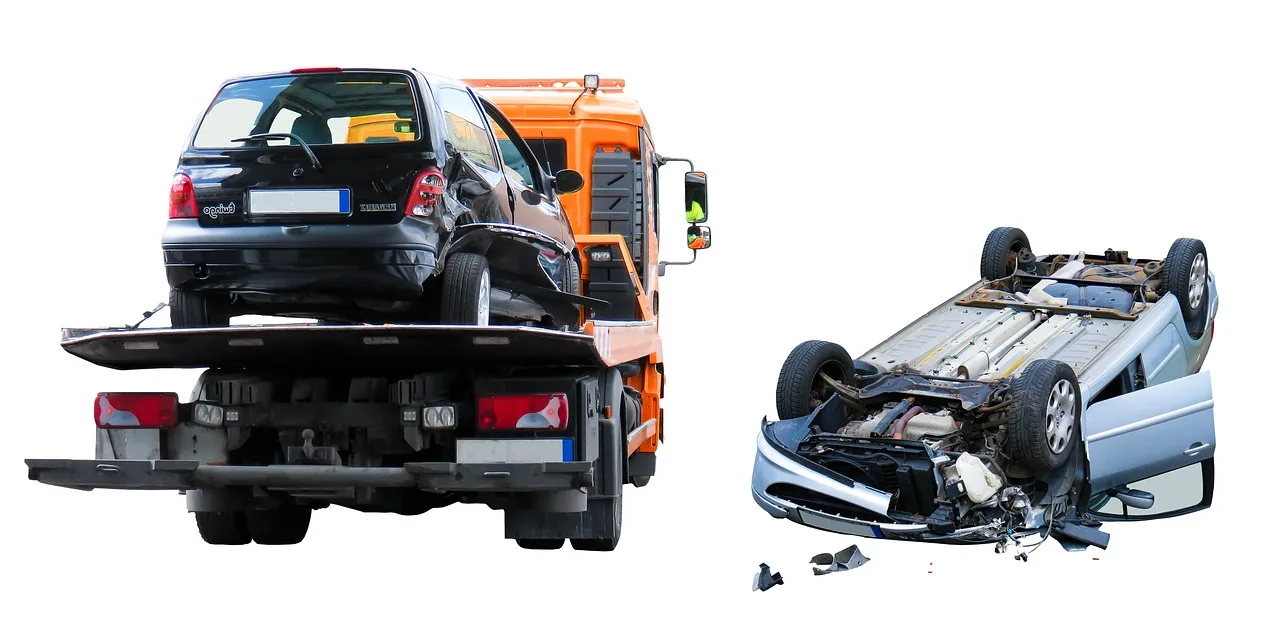
For a short tow, many bills land in the low hundreds once the hook-up fee and mileage are added together. Typical towing has a base rate of $35-$100 plus $2.50-$5 per mile, and a five-mile tow can range from $35-$125+. Local totals often fall between $115 and $300.
What drives the price up fast
Distance, timing, and access move the price fastest. Night calls, weekends, holidays, and tough recovery work all add cost. If the vehicle cannot roll normally, has locked steering, or sits in a ditch, the tow is no longer a simple hook-and-go job.
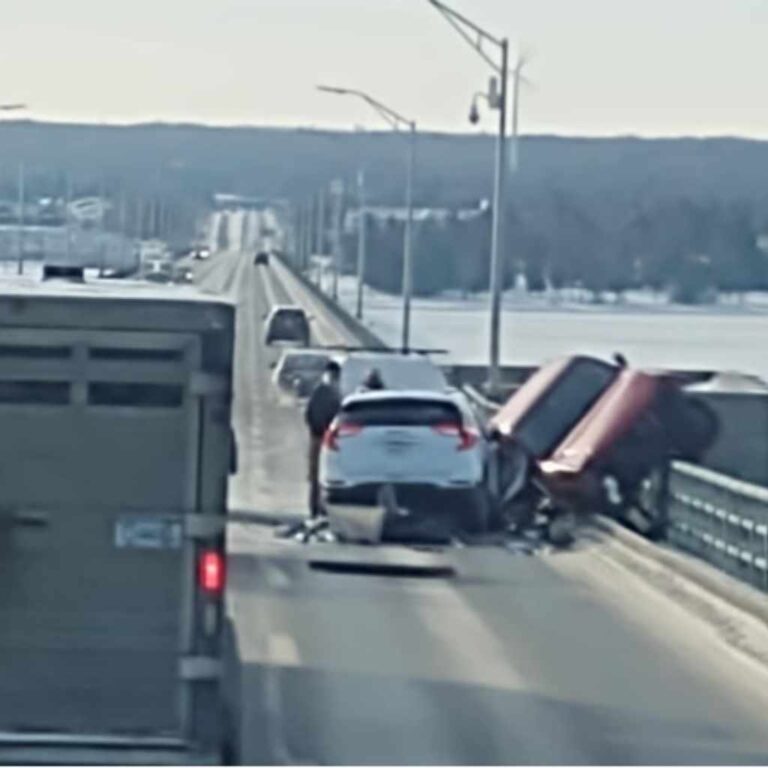
Say your sedan dies on a city street and rolls freely. A standard truck, daytime dispatch, and a short tow may stay close to the base rate plus miles. Suppose the same car is nose-down in a snowbank at 11 p.m.; the bill can add recovery labor, an after-hours surcharge, and possibly storage if the vehicle goes to a lot.
What a tow bill should include
A clean estimate should separate the base charge from add-ons. The base fee should cover dispatching, arriving, hooking up the vehicle, and securing it for transport. Mileage should appear as its own line. Anything beyond that needs a reason tied to the job.
The common structure is simple: a hook-up fee once per tow, then a per-mile rate, then extra lines only when the job needs them. Most U.S. towing costs range from $75 to $150 hook-up plus $2.50-$6 per mile. For up to roughly 5 miles, typical cost runs about $84 to $150.
Base fee, miles, and add-ons
The hook-up fee, also called a drop fee or base fee, is charged once per tow. It commonly starts around $35-$100, or $50-$75 depending on the provider. It should cover dispatching and securing the vehicle, not storage, recovery, or long-distance transport.
The per-mile towing rate is usually lower on longer trips and varies by vehicle type, region, and time of day. A short local tow can cost more per mile than a 100-mile move, where the average rate often drops after the initial pickup and hook-up.
Tow bill checklist
Use this as a line-by-line audit before you pay. If the invoice does not match the estimate, ask which item changed and why. Some charges are normal. Some are tied to the condition of the car. A few deserve a direct challenge.
| Charge | Usually legitimate | Sometimes legitimate | Red flag | What to check |
|---|---|---|---|---|
| Hook-up fee | Yes | One charge per tow; should cover dispatch and securing the vehicle. | ||
| Per-mile rate | Yes | Should match the quoted mileage and route. | ||
| Flatbed fee | Yes | Normal for AWD, EV, luxury, or low-clearance vehicles. | ||
| Winch-out / recovery | Yes | Reasonable if the car is stuck in mud, a ditch, or snow. | ||
| After-hours surcharge | Yes | Should be stated before dispatch if the tow is at night, on a weekend, or a holiday. | ||
| Storage fee | Yes | Legitimate if the vehicle goes to an impound or storage lot. | ||
| Administrative fee | Sometimes | Yes, if unexplained | Ask what paperwork or processing it covers. | |
| Gate fee / access fee | Sometimes | Yes, if not disclosed | May apply only if the lot has restricted access or after-hours pickup. |
Usually legitimate charges
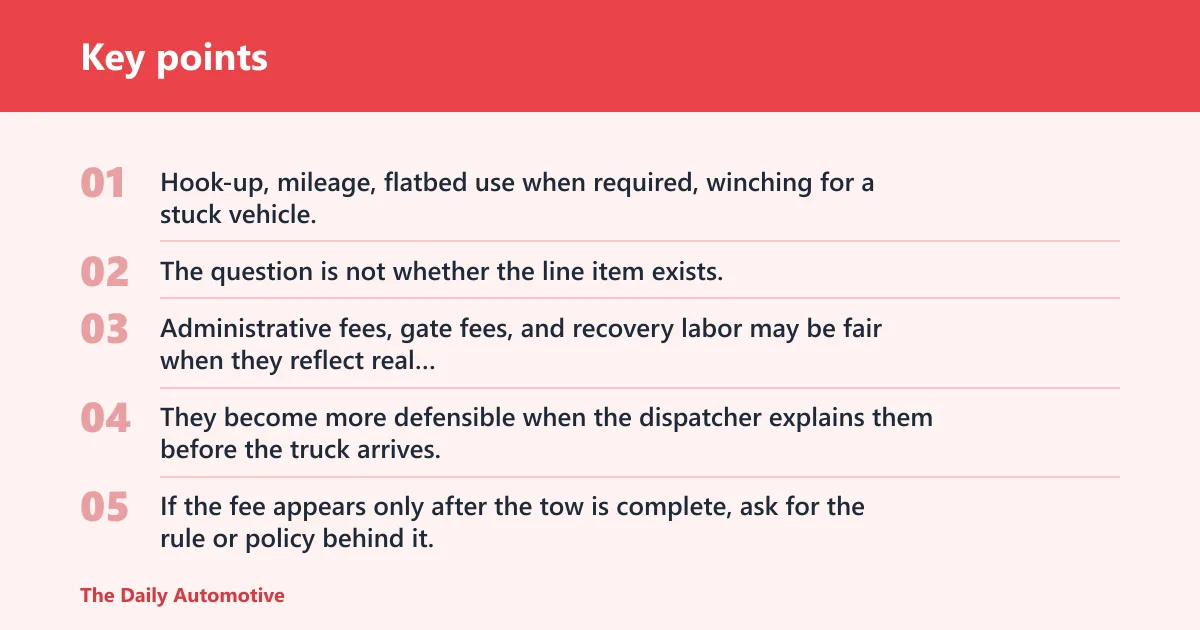
Hook-up, mileage, flatbed use when required, winching for a stuck vehicle, and storage after impound are all normal in the right situation. After-hours charges are common too. The question is not whether the line item exists, but whether it matches the actual job and the estimate you approved.
Sometimes legitimate charges
Administrative fees, gate fees, and recovery labor may be fair when they reflect real extra work or access issues. They become more defensible when the dispatcher explains them before the truck arrives. If the fee appears only after the tow is complete, ask for the rule or policy behind it.
Red flag charges to question
Question any fee that is vague, duplicated, or not tied to a real service. A second hook-up fee, mileage that exceeds the route, or a storage charge that begins before the vehicle reaches a lot should all be challenged. So should any surcharge that was not disclosed before authorizing the tow.
How much does towing change by vehicle?
Vehicle type can change towing cost as much as distance does. AWD, EV, luxury, and low-clearance cars often need a flatbed, and flatbed towing is commonly reported to cost about 30% more than standard towing. Heavy-duty towing may cost 20%-25% more than standard towing when the vehicle or equipment demands it.
AWD, EV, luxury, and low-clearance cars
Flatbed tow is often the safer choice for these vehicles because it avoids drivetrain damage. Standard tow pricing for flatbed-required vehicles is listed at $135-$300. If the car’s manual calls for a specific towing method, that instruction should control the choice of truck.
Cars that cannot roll or steer
A vehicle that will not roll normally, has locked steering, or is sitting in a ditch takes more labor to load. That can turn a basic tow into recovery work. Winching or recovery from a ditch can add $100-$400 extra, and some providers bill that work hourly or as an add-on.
Picture a front-wheel-drive hatchback stuck with two wheels in mud after a storm. A wheel-lift might be enough if the car can be freed quickly. If the wheels are buried or the underbody is hung up, the bill may shift from a tow charge to a recovery charge, which should be stated separately.
When recovery work costs extra
Recovery work is different from transport. Pulling a vehicle out of a ditch, snowbank, or soft shoulder can require more equipment, more time, and more risk. Phoenix Towing Service charges $90-$100 an hour for recoveries using a winch, which shows how quickly labor can overtake the base tow price.
How much does towing cost by distance?
Distance changes pricing in tiers. Short tows are priced more like a service call. Long-distance transport is priced more like freight. A 100-mile tow can cost about $275-$600+, and some pricing sheets list long-distance towing for 50+ miles at about $400+.
Short tow pricing
Short local tows usually fall in the $115 to $300 range. Standard car short local tow pricing is listed at $115-$220. For a quick move across town, the hook-up fee often matters more than the per-mile rate because the base charge makes up a bigger share of the total.
100-mile towing comparison
At 100 miles, the per-mile rate matters more, but some providers lower the rate after a distance threshold. The final bill can still rise if the truck has to wait, load a nonrolling vehicle, or return empty from a remote destination. Ask whether the quote includes deadhead time or only loaded miles.
200-mile towing comparison
On 200-mile jobs, the quote may shift from local towing to long-distance transport pricing. That is where line-by-line review matters most. Ask whether the rate drops after the first segment, whether flatbed transport is mandatory, and whether the company charges separately for mileage in both directions.
What fees should you question?
Question any charge that is not part of the base tow, not disclosed before dispatch, or not connected to the vehicle’s condition. Storage, administrative, gate, and holiday fees can all be legitimate, but they should be specific, stated up front, and consistent with the area’s rules.
Storage, admin, and gate fees
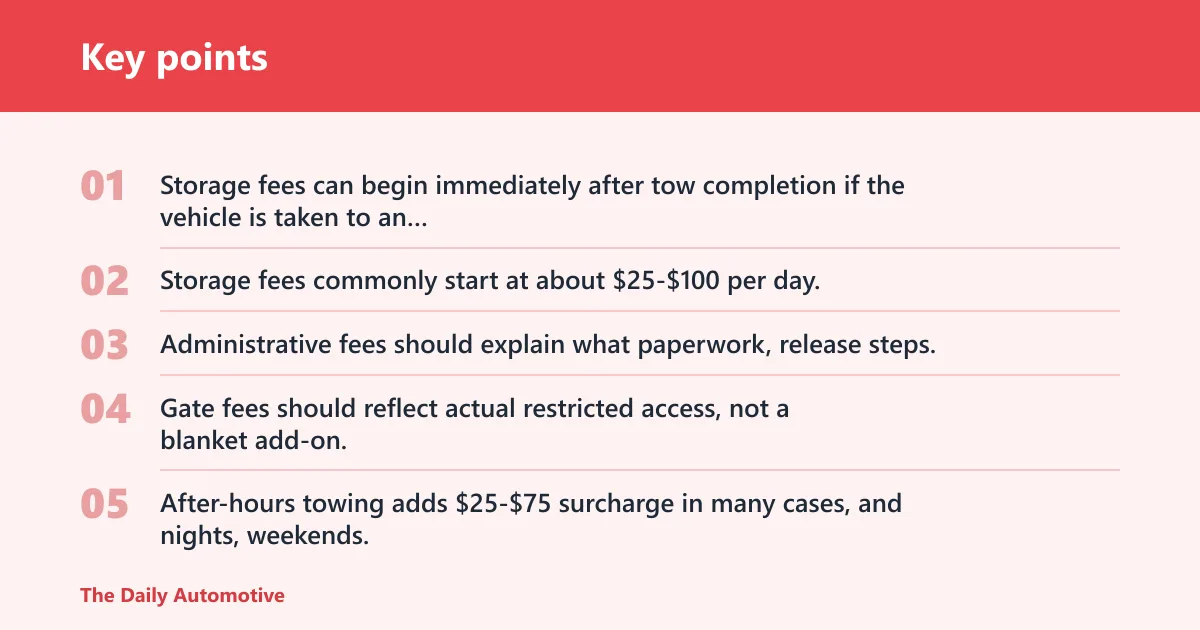
Storage fees can begin immediately after tow completion if the vehicle is taken to an impound or storage lot. Storage fees commonly start at about $25-$100 per day. Administrative fees should explain what paperwork, release steps, or processing they cover. Gate fees should reflect actual restricted access, not a blanket add-on.
After-hours and holiday surcharges
After-hours towing adds $25-$75 surcharge in many cases, and nights, weekends, and holidays can raise the price further. A provider may charge a minimum after-hours fee or a percentage increase. Ace Towing charges a $135 minimum from 10pm to 7am or on holidays, which shows how quickly timing can change the floor price.
A common first-timer mistake is agreeing to a tow from a busy freeway shoulder without asking for the hookup and mileage charges first. without asking for the night rate first. If the dispatcher quotes a daytime price but sends a truck after hours, the invoice should still reflect the agreed surcharge, not a surprise bundle of new fees.
Charges that should match the estimate
If the estimate said hook-up plus mileage, the bill should not add a second base fee. If the car was described as rolling and then billed as a recovery job, ask why the classification changed. The estimate, the vehicle condition, and the final invoice should tell the same story.
Can roadside coverage lower the bill?
Roadside coverage can cut towing out-of-pocket costs sharply, especially for short trips. AAA plans, insurer add-ons, and programs through companies such as GEICO and State Farm often include limited free towing mileage. The catch is that coverage usually stops at a mileage cap or a service limit.
AAA, insurer add-ons, and limited free miles
Memberships and add-ons may pay for the hook-up and a set number of miles, then leave the rest to you. That still helps, especially on short tows or when the vehicle only needs to reach a nearby shop. Always check whether the plan covers flatbed use, winching, or after-hours dispatch.
When coverage still leaves a balance
Even with coverage, you may still owe the overage miles, a holiday surcharge, storage, or a recovery fee. If the tow goes beyond the free mileage, the remaining balance can be billed at the provider’s standard rate. Ask the dispatcher how the claim will be processed before the truck starts loading.
Tow service choice
The right truck depends on the car and the problem. Wheel-lift works for many normal rollable vehicles. Flatbed is the safer call for AWD, EV, luxury, and low-clearance vehicles. Carrier transport makes more sense for long-distance moves where the car should stay fully off the ground the whole way.
- Confirm whether the car rolls, steers, and brakes normally.
- Check the owner’s manual for the towing method and any ride-height or drivetrain limits.
- Ask for the base fee, mileage rate, and any likely add-ons before dispatch.
- Request flatbed service if the vehicle requires it under the manual or if ground clearance is tight.
- Get the destination, storage policy, and after-hours pricing in writing or text before authorizing pickup.
Frequently asked questions
How much does towing a vehicle cost?
For a vehicle that can roll and be loaded normally, towing often lands in the low hundreds for local jobs. Recovery, storage, and timing can push it higher.
How much is towing a car?
A car tow usually starts with a hook-up fee and a mileage charge. Flatbed, after-hours, and winching fees can change that quickly.
How much does towing usually cost?
Most towing bills follow a local-service pattern rather than a single fixed price. Typical U.S. towing costs range from $75 to $150 hook-up plus $2.50-$6 per mile. If the vehicle is stuck, needs a flatbed, or is stored, the total can move well above that.
How much car towing costs without insurance
Without roadside coverage, you usually pay the full tow invoice yourself. That means the hook-up fee, mileage, and any add-ons such as after-hours, winching, or storage. A 100-mile tow can cost $275-$600+, so long-distance jobs are where uninsured drivers feel the biggest hit.
How much does towing cost for a car?
If the car cannot roll, needs a flatbed, or is retrieved from a ditch, the bill can move into a much higher bracket.
How much towing cost
The answer depends on whether you mean local towing or long-distance transport. Always separate the base fee from recovery, storage, and timing charges before you approve the truck.
Products related to this article
Sponsored / affiliate links. As an Amazon Associate I earn from qualifying purchases. I may earn additional commission from eligible campaigns.