Car Inspection Cost: How Much It Really Is?
A car inspection usually costs about $20 to $90 for the required safety check, plus about $10 to $40 more if your state also requires emissions testing. Failed inspections can add repair bills that push the total far higher. Skip it or fail it, and you can pay for a retest, fines, registration delays, and the fixes needed to pass. This guide separates the inspection fee, what it covers, and how a failure changes the final bill.
Understanding state fees and extra testing charges
The posted price is usually the legal inspection fee, not the full amount you may end up paying. In some states the fee is set by the government or capped, while in others the station sets the price within local rules. New York is one example of a flat-rate system: the official state car inspection fee is $37 for most vehicles, and one guide says the annual inspection is mandatory there.
That sticker or certificate fee is only part of the bill. If your state also requires emissions testing, that add-on may be included in the posted price or billed separately. If the car fails, the repair bill can dwarf the inspection fee.
Typical fee range by state and station type
For a legal compliance inspection, the price depends on where you live and who performs it. Licensed inspection stations can include independent repair shops, dealerships, or certified centers, and pricing can differ by station type. One New York guide puts the safety inspection fee at a capped $21.00, another says the total inspection cost can reach up to $37.50, and Carlos Repairs says passenger vehicle inspections typically range from $10 to $27.
Those figures show different pricing rules, not a national price. A station with a low advertised fee may still charge for emissions testing, documentation, or a re-check if the car fails.
What the posted price usually includes
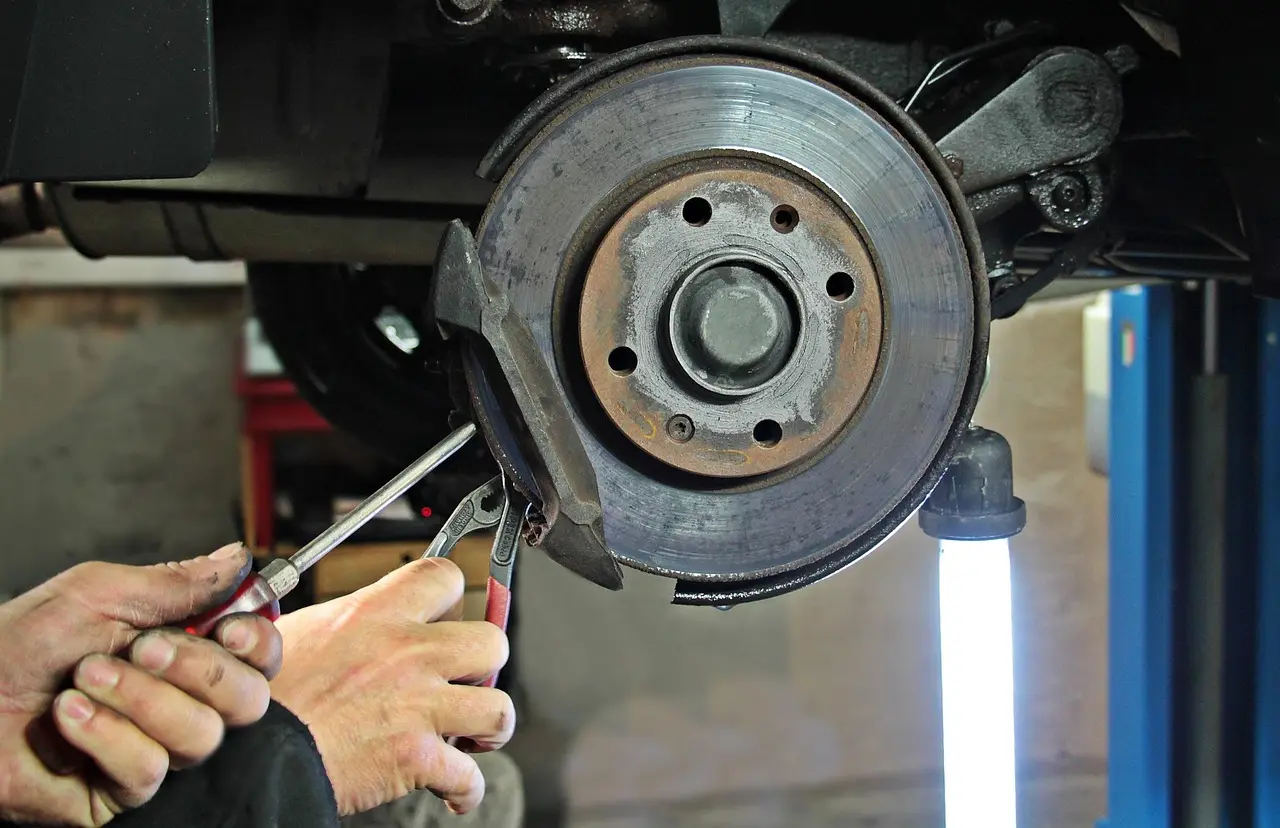
A legal safety inspection usually checks the items tied to roadworthiness and registration compliance. A New York inspection, for example, covers brakes, steering, lights, tires, emissions, suspension, windshield and wipers. Other states use different checklists, but the pattern is similar: the fee covers the inspection itself, not repairs.
Some stations also include a sticker or certificate in the posted price. Others charge only for the inspection and list any additional paperwork or emissions test as a separate line item.
Why a low quote may exclude emissions or certificate fees
A quote that looks cheap can leave out the add-on that matters most for your vehicle. Carlos Repairs says emissions inspections generally cost between $11 and $27, and that combined safety and emissions cost can reach up to $37 total. Emissions inspection may be combined with the safety inspection fee.
That means two shops can advertise different prices for the same car. One may quote only the safety portion. The other may quote the full compliance check.
Car inspection cost table
| Scenario | Inspection fee | Emissions fee | Retest fee | Repair estimate | Total out-the-door |
|---|---|---|---|---|---|
| Clean pass | $20 to $90 | $0 | $0 | $0 | $20 to $90 |
| Pass with emissions add-on | $20 to $90 | $10 to $40 | $0 | $0 | $30 to $130 |
| Fail and retest | $20 to $90 | $10 to $40 | $0 to a reduced or free re-check | $0 to variable | Depends on repairs and retest rule |
| Fail plus common repair items | $20 to $90 | $10 to $40 | $0 to a reduced or free re-check | Brakes, tires, lights, wipers, sensor or emissions repair can add hundreds or more | Often far above the inspection fee |
This table separates the legal fee from the cost to fix the car. That matters, because the inspection bill can be small while the failure repair bill is not. The inspection fee buys the check. The repair estimate is what gets the car back into passing shape.
What does a car inspection include?
A legal inspection looks at the items tied to safe and legal operation. Common safety components checked include brakes, steering, lights, tires, windshield and wipers, and horn. Emissions inspections may also be required, especially on newer vehicles that use OBD-II monitoring.
Safety items checked
Safety inspections focus on the parts that affect control, visibility, and stopping distance. Brakes, steering, lights, tires, windshield and wipers, and horn are common inspection points. Suspension is also listed in New York’s inspection coverage.
Say your low beam is out and one front tire is worn below the legal limit. That can be enough to fail a safety inspection even if the engine runs well and the car drives normally.
Emissions items checked
Emissions checks can be part of annual compliance in some places and may depend on county or vehicle rules. Many modern cars get an OBD-II based test, which means the station checks the onboard diagnostics system and related emissions controls rather than using only a tailpipe test. Model year rules matter here.
That is why two similar cars may face different testing. A newer car may be read through the diagnostic port, while an older vehicle may fall under a different rule set, or not need the same emissions test at all.
Why requirements change by vehicle and location
States do not all use the same inspection format. Some require safety only. Some require emissions only. Some require both, and some combine the charges at one station. County rules, model year, and vehicle class can all change what gets checked and what gets charged.
Why do inspection prices vary?
Inspection prices vary because the fee structure is not the same everywhere. Some states set the price directly. Others cap it. Some stations charge a posted safety fee and then add an emissions charge, while others bundle the two. Vehicle type can also change the bill.
State caps and government-set fees
In places with a government-set or capped price, the station cannot charge whatever it wants for the legal inspection itself. New York is the clearest example in the sources here: the official fee is $37 for most vehicles, and one guide describes the state system as a flat rate mandated by the state. Another guide cites a $21.00 safety cap.
That is why a fee quote needs context. The same state may use different charges for different vehicle classes or different pieces of the inspection.
Emissions rules by county or vehicle
Emissions testing is not universal. It can depend on where the vehicle is registered, what model year it is, and whether the state ties emissions to the safety inspection or bills it separately. Carlos Repairs places emissions inspections between $11 and $27, which is why one shop’s “inspection” quote may look cheaper until the emissions line appears.
Picture a 7-year-old sedan registered in a county that requires emissions. The shop may quote the safety fee first, then add the emissions test once it verifies the car falls under that local rule.
Station type and add-on charges
A dealership, independent shop, or certified center may all be authorized to inspect a vehicle, but each can price the visit differently within local rules. Some stations also have a re-inspection policy if the car returns after repairs. Others charge a new inspection fee once the original result expires.
Ask whether the posted quote includes the certificate or sticker, emissions testing, and any re-check. That question can prevent a cheap quote from becoming a bigger one at the counter.
What happens if your car fails?
A failed inspection can trigger repair costs, a retest charge, and a delay in registration or renewal. In some states, the vehicle may receive a rejection sticker or similar notice until the defects are fixed and the car passes. The inspection fee does not disappear, and the repair bill starts on top of it.
Common failure points
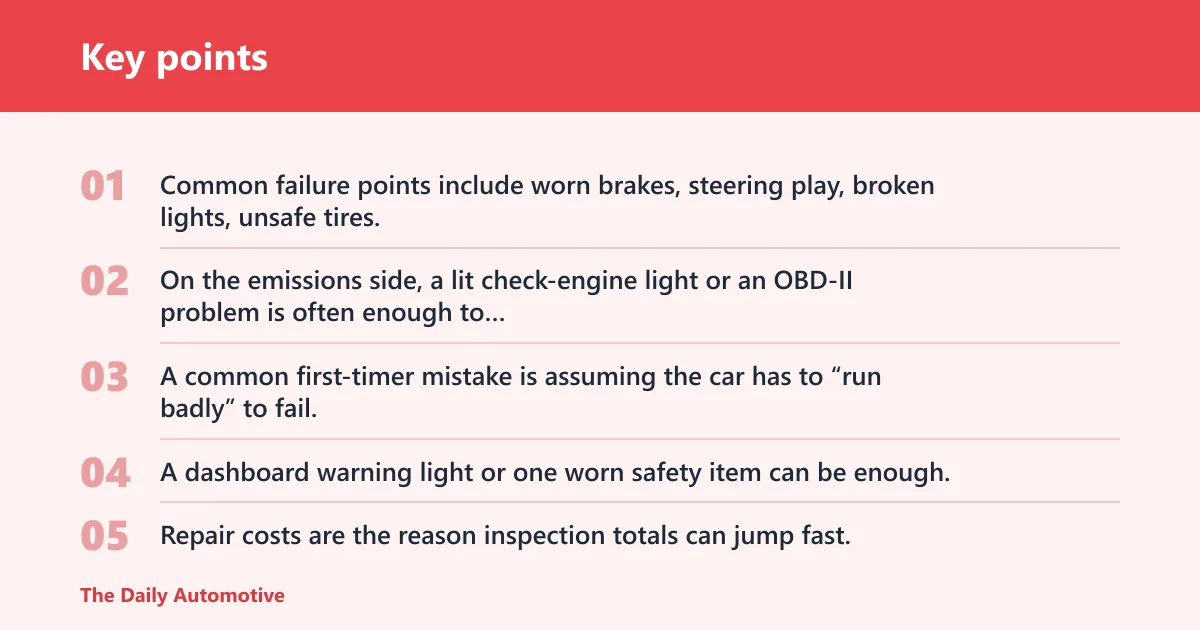
Common failure points include worn brakes, steering play, broken lights, unsafe tires, torn wipers, an inoperative horn, and emissions faults. On the emissions side, a lit check-engine light or an OBD-II problem is often enough to fail the test.
A common first-timer mistake is assuming the car has to “run badly” to fail. It does not. A dashboard warning light or one worn safety item can be enough.
Repair costs that can follow
Repair costs are the reason inspection totals can jump fast. A failed bulb is cheap. A brake job, tire replacement, or emissions-system repair can be much more expensive. That is the real financial risk behind the inspection fee.
Because of that, the smart comparison is not just “what is the inspection price?” It is “what will it cost to get the car to pass?” Those are different questions.
Retest timing and possible free re-checks
Re-inspection rules vary by state and station. A time window may apply after the first failure, and the same station may offer a free or reduced re-check if you return soon enough. Other places charge again. The local rule controls the answer.
If you fail, keep the repair receipts and ask the station how long the car has before the original result expires. That saves you from paying twice for the same inspection cycle.
How much does a pre-purchase inspection cost?
A pre-purchase inspection is different from a legal inspection. It is a used-car check done before you buy, not a compliance test for registration. A shop-based pre-purchase inspection usually costs about $100 to $250 and typically includes a road test, a lift inspection, and a scan tool check. It also takes about 60 to 90 minutes.
How it differs from a legal inspection
A legal inspection answers one question: does the car meet the state’s required standard today? A pre-purchase inspection answers a different one: is this used car worth buying, and what repairs may be coming next? The second one is broader and more diagnostic.
That distinction matters for buyers. A car can pass a state inspection and still need expensive work soon.
What a buyer pays
With a pre-purchase inspection, you are paying for a mechanic’s judgment on condition, not a sticker for registration. The fee covers the lift check, road test, diagnostic scan, and a close look at wear items that may not fail a state inspection yet.
For a used car purchase, that money can be cheap compared with the cost of hidden brake, suspension, or engine work.
When this inspection is worth the money
It is worth it when the vehicle costs far more than the inspection, when the seller will allow time for a check, or when warning lights and uneven tire wear raise questions. A clean legal inspection does not replace a purchase check.
Where to get an inspection
You can get a legal inspection at a licensed or authorized inspection station, which may be a repair shop, dealership, or certified center. The station must be approved to inspect your vehicle type, and the price can vary by location, add-ons, and station policy.
How to confirm the station can inspect your vehicle
Before you book, confirm that the station is authorized for your vehicle class and for any emissions test you need. Ask whether the posted price includes the safety check, emissions test, certificate or sticker, and re-inspection policy. Those details change the final bill.
What to ask before you book
- Does the posted price include emissions testing?
- Is the sticker or certificate included?
- What is the retest policy after a failure?
- Do you inspect my vehicle class and model year?
- Will you charge again if repairs are needed and I return later?
Those five questions give you the real out-the-door number before you arrive.
Frequently asked questions
How much should a car inspection cost?
For a legal safety inspection, a common range is $20 to $90, with emissions add-ons often running $10 to $40 more where required. Some states cap the legal fee, and some stations bundle emissions into the total. The real price depends on local rules and vehicle type.
How much does a vehicle inspection cost?
A vehicle inspection can be a low legal fee, or it can include emissions testing and a retest charge if the car fails. In the sources here, passenger vehicle inspection examples run from $10 to $27, emissions from $11 to $27, and New York’s official fee is $37 for most vehicles.
Does a car inspection cost money?
Yes. A legal inspection is usually a paid service, even when the fee is government-set or capped. The posted price may include a sticker or certificate, but repairs are separate. If the vehicle fails, you may also face retest fees and the cost of the needed fixes.
How much are car inspections?
That depends on the state, the station, and whether emissions testing is part of the visit. A basic safety inspection can be relatively low-cost, while a combined safety and emissions check costs more. Some stations quote only the legal fee; others include the emissions line in the posted price.
What happens if my car fails inspection?
A failure can mean a rejection sticker, a registration delay, and repair costs before you can return. You may also owe a retest fee, though some stations offer a free or reduced re-check within a set window. The total cost rises fast if the failure involves brakes or emissions repairs.
Products related to this article
Sponsored / affiliate links. As an Amazon Associate I earn from qualifying purchases. I may earn additional commission from eligible campaigns.