How Often to Change Car Air Filters for Peak Performance
Knowing how often to change car air filters directly affects your engine efficiency, fuel economy, and overall vehicle longevity. This guide covers the standard replacement intervals, the warning signs of a clogged filter, and the simple steps you can take to keep your car breathing easy.
Simply put, you should replace your engine air filter every 12,000 to 15,000 miles or once a year, whichever comes first. If you drive in dusty or polluted conditions, cut that interval in half. Cabin air filters typically need changing every 15,000 to 25,000 miles — though not every vehicle has one from the factory.
Key Takeaways
- Change car air filters every 12,000–15,000 miles under normal driving conditions for best engine performance.
- A dirty air filter can reduce fuel economy by up to 10% and cause rough idling or sluggish acceleration.
- You can inspect your air filter at home in under two minutes without any special tools.
- Cabin air filters follow a different schedule (15,000–25,000 miles) and affect interior air quality.
- Your owner’s manual is the most reliable source for your specific make and model’s recommended interval.
— see our related guide, How Often Does a Ford Fusion Need an Oil Change?.
What Is a Car Air Filter and Why Does It Matter?
Your engine is essentially a large air pump. It sucks in outside air, mixes it with fuel, and ignites the mixture to create power. The car air filter is the gatekeeper that stops dirt, dust, pollen, leaves, and road debris from entering the engine’s combustion chambers.
Without a properly functioning filter, abrasive particles would grind against cylinder walls, piston rings, and bearings. Over time, that contamination leads to premature wear and costly repairs. According to a study by the Society of Automotive Engineers (SAE), a clogged filter can reduce engine power by up to 11% under full load conditions.
Modern engines rely on precise air-to-fuel ratios. A restricted filter starves the engine of oxygen, forcing the computer to compensate with a richer fuel mixture. That means more fuel burned for the same output — and more money out of your pocket.
- Traps airborne contaminants before they reach the intake manifold
- Maintains the correct air-to-fuel ratio for efficient combustion
- Protects mass airflow sensors from debris buildup
- Reduces engine wear and extends oil change intervals
- Supports consistent throttle response and acceleration
How Often Should You Change Your Car Air Filter?
Most automakers recommend replacing the engine air filter every 12,000 to 15,000 miles or once a year. This standard interval applies to typical highway and city driving in moderate climates. However, your actual replacement schedule depends on where and how you drive.
The American Automobile Association (AAA) notes that driving in heavy traffic, on unpaved roads, or in areas with high pollen counts can clog a filter much faster. If you live in a desert region or frequently drive through construction zones, consider changing the filter every 6,000 to 8,000 miles instead.
Replacement Interval by Driving Condition
| Driving Condition | Recommended Interval | Example Scenarios |
|---|---|---|
| Normal (mixed city/highway) | 12,000–15,000 miles | Suburban commute, highway cruising |
| Severe (dust, off-road, heavy traffic) | 6,000–8,000 miles | Farm roads, desert driving, urban stop-and-go |
| Extreme (construction, mining, high pollen) | 3,000–5,000 miles | Active construction zones, wildfire smoke areas |
The intervals above apply to most gasoline-powered passenger vehicles. Diesel engines and performance-oriented cars may have different requirements, so always cross-check with your manufacturer’s service schedule.
Tip: Set a recurring reminder on your phone or note the mileage on a sticker inside the glove box. Most auto parts stores offer free visual inspections if you’re unsure.
Signs That Your Air Filter Needs Immediate Replacement
Mileage guidelines are helpful, but your car will often tell you when the filter is struggling. Pay attention to these warning signs — they can save you from a roadside breakdown or an expensive repair bill.
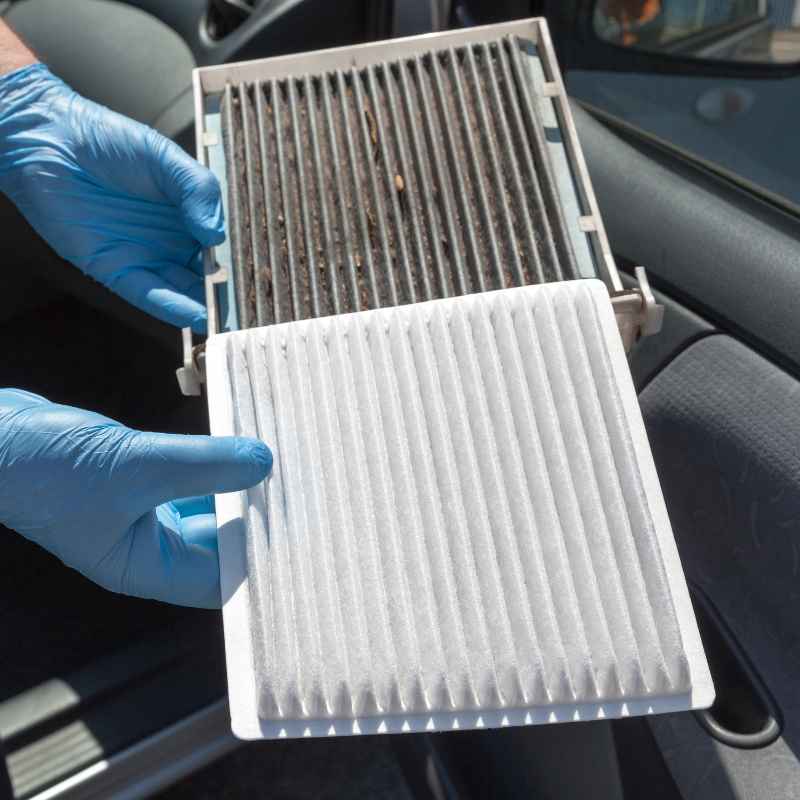
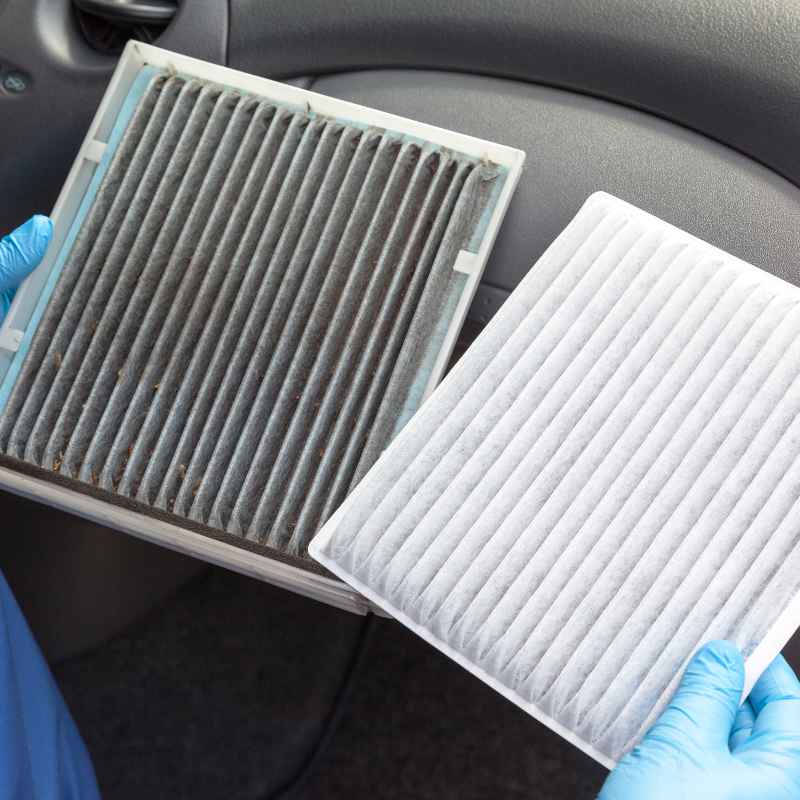
The easiest clue is visual. Pull out your air filter and hold it up to the sun or a strong light. If you can barely see light through the material, it’s time for a fresh one.
Additionally, a filter that feels damp, smells of fuel, or has visible debris embedded in the pleats needs immediate replacement.
- Reduced fuel economy: If your mileage drops noticeably, a clogged filter could be forcing the engine to run rich.
- Rough idling or misfires: Starved airflow disrupts the combustion cycle, causing the engine to shake or stumble at stoplights.
- Unusual engine sounds: A dirty filter can produce a low whistling or sucking noise from the intake box as air struggles to pass through.
- Black smoke from the exhaust: Excess unburned fuel leaves the combustion chamber as dark smoke — a clear sign of an overly rich mixture.
- Check engine light: The oxygen sensor may detect an imbalance and trigger the warning light on your dashboard.
What Happens When You Ignore a Dirty Air Filter?
Putting off a simple $15–$30 filter change can trigger a chain reaction of mechanical problems. The U.S. Department of Energy estimates that replacing a clogged filter can improve fuel economy by up to 10%, but the upside is only half the story — the downside is where real costs add up.
When the engine runs rich (too much fuel, not enough air), unburned fuel washes past the piston rings and dilutes your engine oil. That contaminated oil loses its lubricating properties, accelerating wear on bearings, camshafts, and valvetrain components. Over time, this leads to increased oil consumption and potentially catastrophic engine failure.
Warning: Delaying an air filter change for 20,000+ miles can shorten your engine’s lifespan by tens of thousands of miles. The cost of a filter is tiny compared to an engine rebuild.
Potential Consequences of a Severely Clogged Filter
| Issue | Impact on Vehicle | Approximate Repair Cost |
|---|---|---|
| Oil contamination | Accelerated internal wear, sludge buildup | $50–$100 (extra oil changes) |
| Oxygen sensor failure | Poor fuel trims, check engine light | $150–$300 |
| Catalytic converter damage | Exhaust restriction, failed emissions test | $1,000–$2,500 |
| Piston ring wear | Oil burning, power loss | $2,000–$4,000 |
These costs make a routine filter swap look like pocket change. A little preventive maintenance goes a long way toward avoiding the domino effect of neglected airflow.
How to Check Your Car Air Filter in 3 Simple Steps
You don’t need mechanical experience or expensive diagnostic tools to inspect your air filter. Most cars make the filter housing easy to access, and the whole check takes less than two minutes.
Before you start, make sure the engine is cool and turned off. Locate the air filter box — it’s usually a black plastic rectangular housing near the top of the engine, connected to a large intake tube. If you’re unsure, your owner’s manual provides an exact diagram.
- Open the housing: Release the metal clips, unscrew the wing nuts, or unbolt the latches that hold the cover in place. Some housings require a flathead screwdriver to pop the clips.
- Remove the filter: Lift the old filter straight out. Note which side faces the engine (usually the dirtier side) so you install the new one correctly.
- Inspect against light: Hold the filter up to a bright light source. If light passes through evenly, the filter is still usable. If it’s dark, clumped with debris, or has oily spots, replace it immediately.
Important: Never tap or bang a dirty filter against the ground to “clean” it. That only loosens surface debris while pushing finer particles deeper into the media, making it even less effective.
How to Replace the Air Filter Yourself
Replacing the filter is just as easy as checking it — and it saves you the $20–$40 labor fee a shop would charge. A new filter costs between $10 and $30 at any auto parts retailer or online marketplace.
Start by purchasing the correct filter for your vehicle. Use your car’s make, model, year, and engine size to match the part. Many retailers have online lookup tools or in-store catalogs that cross-reference OEM part numbers.
Step-by-Step Replacement Process
- Open the air filter housing using the same method you used for inspection.
- Remove the old filter and set it aside. Wipe out any loose debris or dead insects from inside the housing using a clean rag.
- Insert the new filter with the correct orientation (the direction arrows on the filter frame should point toward the engine).
- Close the housing and secure all clips, screws, or latches. Make sure the seal is tight — a loose cover lets unfiltered air bypass the filter entirely.
- Start the engine and let it idle for a minute. Listen for any unusual whistling or hissing that might indicate a poor seal.
That’s it. The entire job takes 5 to 10 minutes and requires no special skills. If you can open a tupperware container, you can replace your air filter.
Tip: Snap a quick photo of the old filter next to the new one before tossing it. This helps you verify the correct fit and provides a handy before-and-after reference for future checks.
Cabin Air Filter vs Engine Air Filter: What’s the Difference?
Many drivers confuse the engine air filter with the cabin air filter, but they serve completely different purposes. The engine filter protects your motor, while the cabin filter cleans the air entering the passenger compartment through the HVAC system.
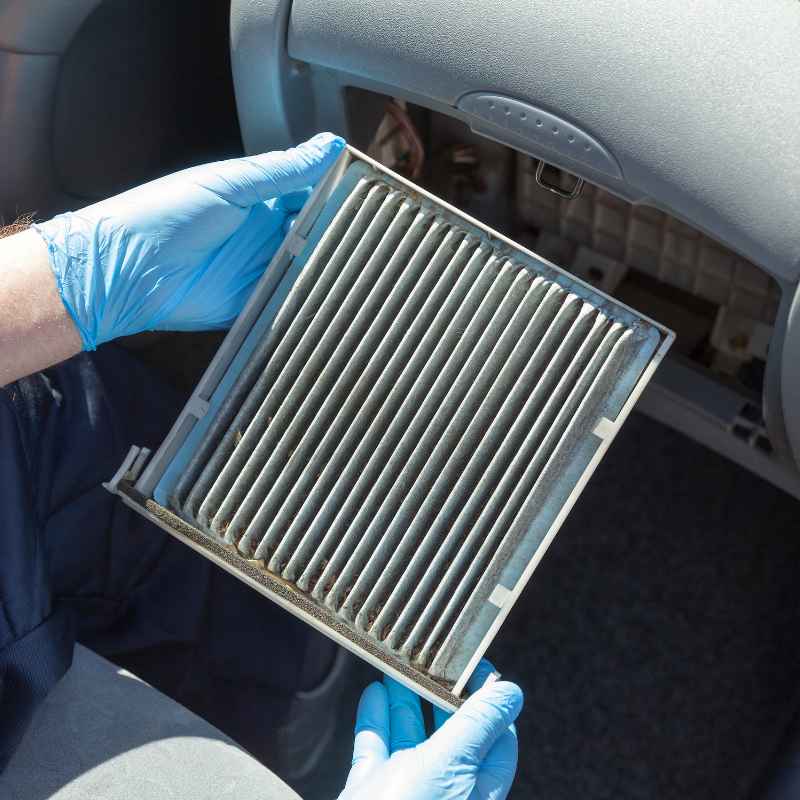
The cabin air filter traps pollen, mold spores, dust, and exhaust fumes before they reach your vents. If you notice musty odors, weak airflow from the vents, or worsened allergy symptoms while driving, your cabin filter is likely overdue for replacement. Most manufacturers recommend changing it every 15,000 to 25,000 miles.
Key Differences at a Glance
| Feature | Engine Air Filter | Cabin Air Filter |
|---|---|---|
| Location | Under the hood, inside the air intake box | Behind the glove box or under the dashboard |
| Affects | Engine performance, fuel economy, emissions | Interior air quality, HVAC airflow, odor |
| Replacement interval | 12,000–15,000 miles | 15,000–25,000 miles |
| Typical cost | $10–$30 | $15–$40 |
Both filters are cheap and easy to replace, so there’s no reason to skip either one. Mark both intervals on your maintenance calendar to stay ahead of the schedule.
Common Mistakes People Make With Air Filters
Even experienced drivers sometimes get the little things wrong. These common pitfalls can undermine your efforts and leave your engine unprotected.
- Installing the filter upside down: Many filters have directional arrows indicating airflow. Installing it backward forces air through the less efficient side and can damage the media.
- Overtightening the housing clips: Plastic clips and screws break easily if you crank them too hard. Snug them down firmly, but stop when you feel resistance.
- Using a cheap no-name filter: Budget filters often use thinner media with lower filtration efficiency. Stick to reputable brands like Fram, K&N, Bosch, or Wix.
- Ignoring the cabin filter: A clean engine filter won’t help if you’re breathing mold spores on the drive to work. Replace both on schedule.
- Assuming a reusable filter is set-and-forget: Washable filters (like K&N) need periodic cleaning and re-oiling. Neglecting maintenance turns them into airflow blocks.
Warning: Some aftermarket “performance” oiled filters can contaminate your mass airflow sensor if over-oiled. This can trigger a check engine light and drivability issues. Always follow the manufacturer’s re-oiling instructions exactly.
Frequently Asked Questions
Can I clean and reuse my car air filter instead of replacing it?
Some aftermarket filters (like K&N) are designed to be cleaned and re-oiled. However, most OEM and standard replacement filters are disposable and cannot be effectively cleaned. Attempting to wash a paper filter will damage the media and leave gaps that let dirt pass through.
Does changing the air filter improve gas mileage?
Yes, especially if your current filter is visibly clogged. The U.S. Department of Energy states that replacing a dirty filter can improve fuel economy by up to 10% in older cars with carbureted engines.
Modern fuel-injected engines may see a smaller but still noticeable improvement.
How much does it cost to have a shop replace the air filter?
Most independent repair shops charge between $30 and $60 for the part and labor combined. Dealerships often charge $50 to $90. Doing it yourself brings the cost down to just the price of the filter — typically $10 to $30.
What happens if I never change my air filter?
Eventually, the filter becomes so clogged that the engine struggles to draw enough air. This leads to poor acceleration, reduced fuel economy, rough idling, and increased emissions. In extreme cases, the engine may stall or suffer internal damage from oil contamination.
Is a reusable air filter worth the extra money?
Reusable filters cost more upfront ($40–$80) but can last the life of the vehicle with proper cleaning. They offer good airflow and reduce waste — see our picks for the best performance air filters if you want to compare specific reusable models. However, they require periodic maintenance and can be tricky to oil correctly.
For most drivers, a disposable filter is simpler and more cost-effective.
Final Thoughts
Sticking to a regular air filter replacement schedule is one of the simplest and cheapest ways to protect your engine and maintain fuel efficiency. Check your filter every 12,000 miles or at your next oil change, and swap it out as soon as it looks dirty. Combine that with routine cabin filter changes, and you’ll enjoy a cleaner, smoother, and more reliable ride for years to come.
Products related to this article
Sponsored / affiliate links. As an Amazon Associate I earn from qualifying purchases. I may earn additional commission from eligible campaigns.