Do You Need A Driver License To Drive A Car? Essential Guide
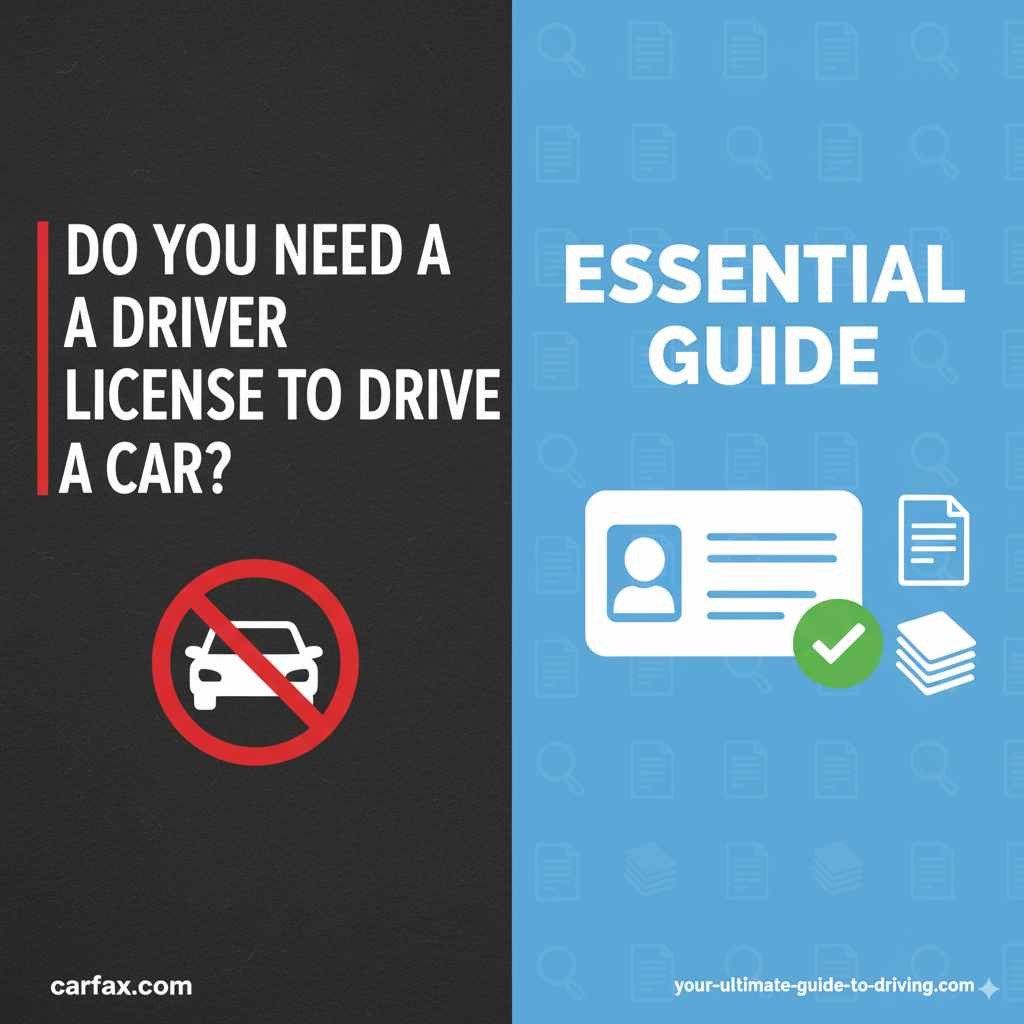
Yes, you absolutely need a valid driver’s license to legally drive a car on public roads. Driving without one can lead to serious fines, legal trouble, and insurance issues. This guide will walk you through why it’s essential and what you need to know.
Ever wondered if you can hop behind the wheel just because you know how to drive? It’s a common question for many, especially those just starting out or considering a move. The short answer is a resounding yes – you need a driver’s license. Think of it as your official permission slip to navigate our roads safely and legally. It’s not just a piece of plastic; it’s proof that you’ve met certain standards and understand the rules of the road. This guide will clear up any confusion and make sure you’re fully informed about the necessity and importance of having a driver’s license.
Why You Absolutely Need a Driver’s License to Drive a Car
Driving a car is more than just knowing how to operate the pedals and steering wheel. It’s a privilege that comes with significant responsibilities. A driver’s license is the formal recognition from your local government that you are qualified and permitted to take on these responsibilities. Without it, you’re essentially operating a vehicle illegally, even if you’re the most careful driver on the planet.
Understanding the Legal Requirements
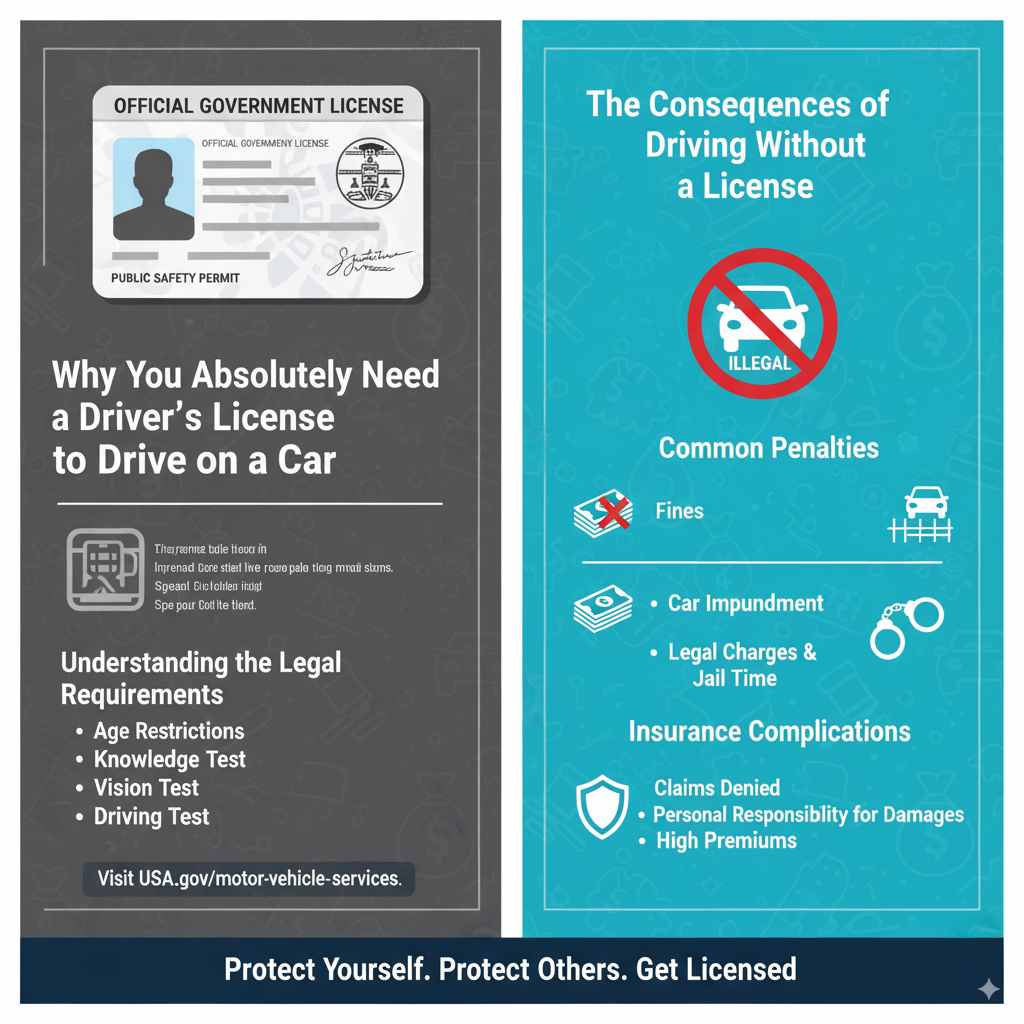
In virtually every country and every state or province, operating a motor vehicle on public roads requires a valid driver’s license. This law is in place for one primary reason: public safety. By requiring drivers to pass tests, the government ensures that individuals have the necessary knowledge and skills to operate a vehicle without posing an undue risk to themselves or others.
The requirements for obtaining a driver’s license vary by location, but generally, they involve:
- Age Restrictions: You must meet a minimum age requirement.
- Knowledge Test: Demonstrating understanding of traffic laws and road signs.
- Vision Test: Ensuring your eyesight meets a certain standard for driving.
- Driving Test: A practical assessment of your driving skills.
- Application and Fees: Completing necessary paperwork and paying associated costs.
For detailed information specific to your area, it’s always best to visit your local Department of Motor Vehicles (DMV) or its equivalent. You can often find comprehensive guides and application forms on their official websites. For instance, in the United States, the USA.gov portal provides links to motor vehicle services for each state.
The Consequences of Driving Without a License
Ignoring the requirement for a driver’s license can lead to a cascade of negative consequences. These aren’t just minor inconveniences; they can have long-lasting financial and legal impacts.
Common Penalties for Driving Unlicensed
The penalties for this offense can range from moderate to severe, depending on how many times you’ve been caught and if there were any aggravating circumstances (like an accident). Here’s a general idea of what you might face:
- Fines: Expect significant monetary penalties. These can increase with subsequent offenses.
- Car Impoundment: Your vehicle could be towed and stored, incurring additional fees.
- Legal Charges: You could face a criminal charge, which will appear on your record.
- Jail Time: In some cases, especially for repeat offenders or those with previous driving violations, jail time is a possibility.
- Driving Bans: You may be prohibited from obtaining a driver’s license for a considerable period.
Insurance Complications
Driving without a license also wreaks havoc on your ability to get car insurance. Most insurance policies require you to be legally licensed to drive. If you’re involved in an accident while driving unlicensed, your insurance claim could be denied, leaving you personally responsible for all damages and medical costs. This can be financially devastating.
Even if you manage to get insurance somehow, premiums will likely be astronomically high because you’ll be considered an extremely high-risk driver.
What About Driving Learners Permits?
Many people start their driving journey with a learner’s permit. A learner’s permit is a restricted license that allows you to practice driving under certain conditions, almost always with a fully licensed adult supervising you. It’s a crucial stepping stone towards getting a full driver’s license, not a substitute for one.
Key points about learner’s permits:
- Supervision Required: You cannot drive alone. An accompanying licensed driver must be present.
- Time Restrictions: Often, there are limitations on when you can drive (e.g., not at night).
- Passenger Restrictions: Some permits may limit the number or age of passengers you can carry.
- Purpose: To gain supervised driving experience before the official driving test.
Even with a learner’s permit, you are still subject to specific rules and regulations, and driving outside of these parameters is considered driving without a license.
Different Types of Driver’s Licenses
Not all driver’s licenses are the same. The type of license you need depends on the type of vehicle you intend to drive and your driving experience. For everyday cars, we’re primarily talking about standard passenger vehicle licenses.
Standard Passenger Vehicle Licenses
This is the most common type of license, often referred to as a Class D license in many places. It permits you to operate:
- Cars and light trucks.
- Vans.
- Vehicles designed to carry a certain number of passengers or gross vehicle weight (the specific limits depend on your local jurisdiction).
Getting this license typically involves passing the standard written and practical driving tests as described earlier.
Specialized Licenses
If you plan to drive larger or more specialized vehicles, you’ll need different types of licenses:
- Commercial Driver’s License (CDL): Required for driving large trucks, buses, and other commercial vehicles. These have much more stringent requirements.
- Motorcycle Licenses: Separate licenses are needed for operating motorcycles.
- Moped/Scooter Licenses: Some jurisdictions may require a specific license or endorsement for smaller motorized two-wheeled vehicles, while others may not if they fall below a certain engine size or speed.
For the purposes of this guide, we are focusing on the standard passenger vehicle license, as that’s what is needed to drive a typical car.
Step-by-Step: How to Get Your Driver’s License
The process of getting a driver’s license, while sometimes feeling like a marathon, is designed to be straightforward. Breaking it down into steps can make it less daunting.
Step 1: Meet the Basic Requirements
Before you even think about tests, ensure you meet the fundamental criteria:
- Age: Verify the minimum age for a learner’s permit and a full license in your area.
- Residency: You’ll need to prove you live in the state or region where you’re applying.
- Identification: Gather all necessary documents, such as a birth certificate, passport, social security card, and proof of address.
Your local DMV website will have an exhaustive list of required documents. It’s crucial to have these ready to avoid multiple trips.
Step 2: Obtain a Learner’s Permit (If Applicable)
For most new drivers, the journey begins with a learner’s permit. This usually involves:
- Studying the Driver’s Handbook: This official guide contains all the traffic laws, road signs, and safe driving practices you need to know.
- Passing the Knowledge Test: A written or computerized test covering the material in the handbook. Questions focus on traffic signals, road signs, right-of-way rules, speed limits, and safe driving techniques.
- Passing the Vision Test: Proving your eyesight meets the minimum requirements for driving.
Once you pass these, you’ll be issued your learner’s permit. Remember, this is for practice only!
Step 3: Practice Driving
This is where the real learning happens. You’ll need to get behind the wheel as much as possible under supervised conditions. Many aspiring drivers opt for driving schools, which offer professional instruction and can help prepare you for the driving test.
Here are some tips for effective practice:
- Start in quiet areas like empty parking lots.
- Progress to quiet residential streets.
- Gradually introduce more complex situations: moderate traffic, intersections, lane changes.
- Practice at different times of day and in various weather conditions (within safe limits, of course).
- Get comfortable with parallel parking, three-point turns, and other essential maneuvers.
Most jurisdictions require a minimum number of practice hours, often including a certain number of hours at night, before you can even schedule your driving test. Keep a log of your practice sessions!
Step 4: Schedule and Take Your Driving Test
Once you feel confident and have met any practice hour requirements, it’s time to book your practical driving test. On test day:
- Bring Your Permit and Required Documents: Ensure everything is in order.
- Have a Vehicle: You’ll need to provide a safe, roadworthy vehicle for the test. It must have current registration and proof of insurance.
- Follow the Examiner’s Instructions: Perform maneuvers as directed and demonstrate safe driving habits.
The test will assess your ability to control the vehicle, follow traffic laws, react to other road users, and execute various driving maneuvers safely.
Step 5: Receive Your Driver’s License
Pass the driving test, and congratulations! You’ll typically receive a temporary license on the spot, with your permanent license mailed to you shortly after. Now you have the legal right to drive a car on your own!
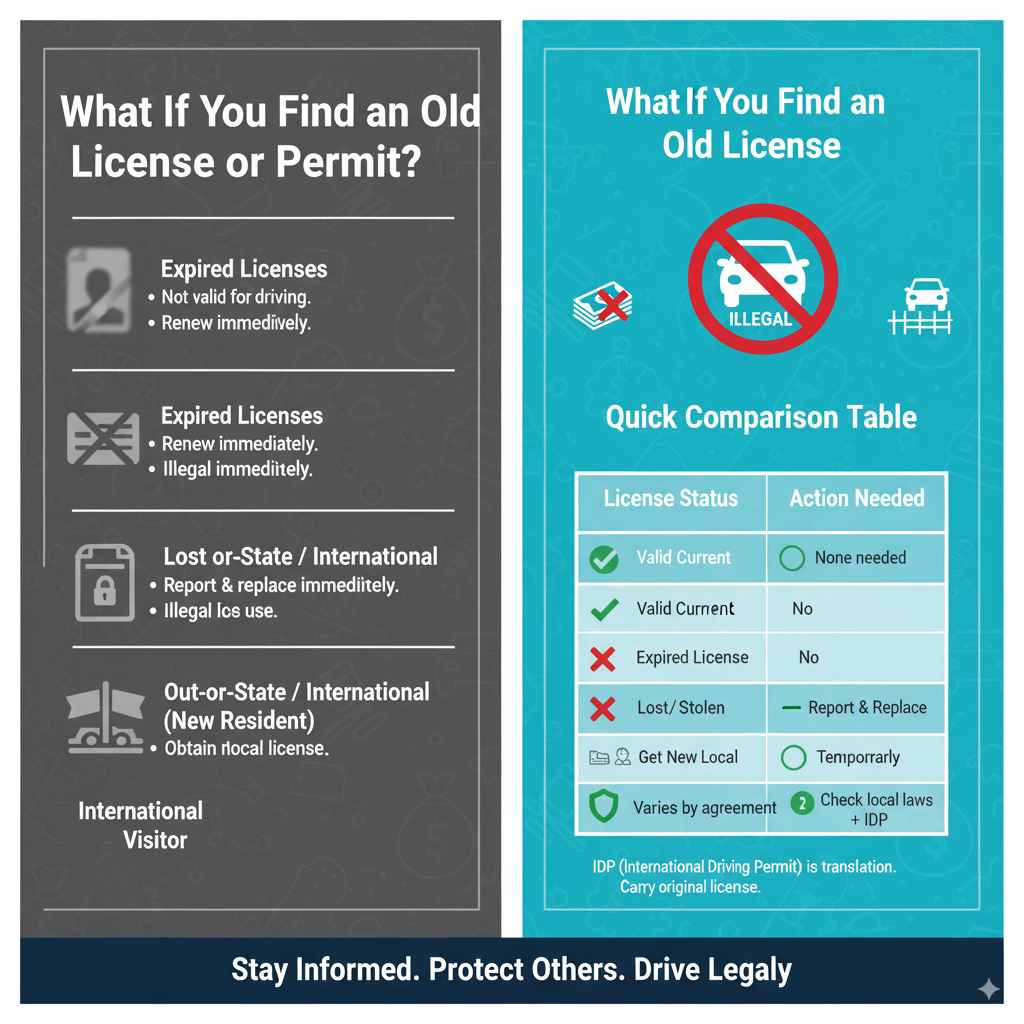
What If You Find an Old License or Permit?
Let’s say you find an old driver’s license or permit in a box. Can you use it? The answer depends on its status and expiration date.
Expired Licenses
An expired driver’s license is not valid for driving. Just like any other identification, it has a shelf life. If your license has expired, you are legally considered to be driving without a license until you renew it.
Renewal processes are usually similar to the initial application but often less intensive. You’ll typically need:
- Your old license.
- Proof of residency.
- Payment of renewal fees.
- Possibly a vision test.
Some states allow you to renew online or by mail, while others require an in-person visit.
Lost or Stolen Licenses
If your license is lost or stolen, you need to report it to the issuing authority (your DMV) and apply for a replacement immediately. Driving with a lost or stolen license is the same as driving without one – it’s illegal. Fortunately, getting a replacement is usually a straightforward administrative process, though it may involve a fee and new identification checks.
Out-of-State or International Licenses
If you’re moving to a new state or country, you generally cannot drive indefinitely on your old license. Most jurisdictions require you to obtain a local driver’s license within a specified period after establishing residency.
Here’s a quick comparison table:
| License Status | Is it Valid for Driving? | Action Needed |
|---|---|---|
| Valid, Current License | Yes | None needed if within requirements. |
| Expired License | No | Renew immediately. |
| Lost or Stolen License | No | Report lost/stolen and apply for a replacement. |
| Out-of-State License (New Resident) | Temporarily (usually 30-90 days) | Obtain a new license from the current state. |
| International License (Visitor) | Varies by agreement | Check local laws; often requires a valid license from home country and sometimes an International Driving Permit (IDP). |
An International Driving Permit (IDP) is not a license itself but a translation of your home country’s license. It’s recognized in many countries, but you must always carry your original license with it. A good resource for information on IDPs is the American Automobile Association (AAA), which is an authorized issuer in the US.
Frequently Asked Questions (FAQ)
Here are some answers to common questions beginners might have about driver’s licenses.
Q1: Can I drive my friend’s car if I have a driver’s license?
A: Yes, as long as your driver’s license is valid and you have the owner’s permission to drive their car. Your license allows you to operate vehicles, not just your own.
Q2: Is it legal to drive with just a picture of my driver’s license?
A: No, a photograph of your driver’s license is not a legally valid form of identification for driving purposes. You must carry your physical, valid driver’s license with you at all times while driving.
Q3: Do I need a driver’s license to drive a car on private property, like my own driveway?
A: Generally, you do not need a driver’s license to operate a vehicle on strictly private property (like your own driveway or a private farm road) where it’s not accessible to the public. However, laws can be complex, and if private property is connected to public access in any way, regulations might apply. It’s always safest to have a license.
Q4: How long is a driver’s license usually valid for?
A: The validity period for a driver’s license varies significantly by state or country. Many standard licenses are valid for 4 to 8 years. You should always check the expiration date on your license and be aware of renewal deadlines.
Q5: What is an International Driving Permit (IDP) and do I need one?
A: An IDP is a translation of your home country’s driver’s license into several languages. It’s not a standalone license but is used in conjunction with your actual driver’s license when driving abroad. You may need one if you are visiting another country, depending on international agreements. Check the requirements of the country you are visiting.
Q6: Are there any exceptions to needing a driver’s license?
A: While there are very few exceptions for operating vehicles on public roads, some might include operating very specific types of machinery on private land that aren’t considered “motor vehicles” in a legal sense, or certain very low-speed conveyances. However, for any standard car, truck, or motorcycle on any road accessible to the public, a license is mandatory.
Conclusion
So, to circle back to our initial question: “Do you need a driver’s license to drive a car?” The answer is an unequivocal yes. It’s the cornerstone of legal and safe driving. Without it, you expose yourself to significant fines, legal trouble, potential vehicle impoundment, and severe insurance complications.
Getting your driver’s license is a rite of passage for many, opening up a world of independence and convenience. It involves understanding the rules, proving your skills, and accepting the responsibilities that come with operating a motor vehicle. By following the steps, studying diligently, and practicing responsibly, you can confidently navigate the process and earn your license.
Remember, being a responsible licensed driver means more than just knowing how to steer; it means committing to safety for yourself and everyone else on the road. Keep your license current, always drive safely, and enjoy the freedom that comes with being a legal, responsible driver!