What Cars Can Use Unleaded 88 (E15)? Model Years and Makers
Unleaded 88 is E15, gasoline with up to 15% ethanol, and the short answer on which cars can use it is this: the EPA allows it in conventional gasoline cars and light trucks from model year 2001 on, but that is only the legal floor. Some automakers allow it from a later year, and at least one still tells US owners to stay at 10% ethanol.
This guide gives you the federal rule, a table of what individual makers say in their own manuals, the engines that must never get E15, and the 2026 availability situation, so you can decide at the pump instead of guessing. Everything below is dated October 2026 and drawn from EPA, DOE and maker pages read for this update.
Quick Answer
EPA allows Unleaded 88 (E15) in flex fuel vehicles and conventional vehicles of model year 2001 and newer. It is not allowed in motorcycles, heavy-duty vehicles, boats, small engines, or cars older than 2001. Ford says model year 2013 and newer; Mazda’s US manuals still say 10% ethanol maximum. Always check your own manual.
What Cars Can Use Unleaded 88 (E15)?
| Best Pick for Small Engines That Cannot Run E15 | |
 |
TruFuel 4-Cycle Ethanol-Free Fuel for Outdoor Power Equipment, 32 oz, Pack of 2
|
| View Our Pick on Amazon | |
As an Amazon Associate we earn from qualifying purchases. This is a spec-based pick from the product listing, not a hands-on test.
The federal rule is simple. According to the DOE Alternative Fuels Data Center, EPA approved E15 in 2011 for light-duty conventional vehicles of model year 2001 and newer, plus flexible fuel vehicles. That covers most gasoline cars, SUVs and light pickups on the road today.
Two things the rule does not tell you. First, the approval is about ethanol, not octane. The 88 on the pump label is a minimum octane number only one point above regular, so a car whose manual calls for premium still needs the octane its maker specifies. Second, EPA approval is not the same as the maker’s approval, which is why the brand table below matters. If your car needs premium, our guide on whether Lexus cars need premium gas shows how required and recommended octane differ.
What Unleaded 88 Actually Is (and What E88 Means)
A lot of searches use the term E88, but no fuel by that name exists. Unleaded 88 is the pump name for E15, the number 88 is its octane rating, and the 15 is the maximum ethanol share. Regular pump gasoline in most of the country is E10, which the DOE describes as 10% ethanol and 90% gasoline.
Myth check: Unleaded 88 does not automatically give you more power or better mileage. Earlier versions of this page claimed it burns cleaner, boosts acceleration and improves mpg. None of that is supported by EPA or DOE. The DOE page says denatured ethanol carries about 30% less energy per gallon than gasoline and that the fuel economy effect depends on the ethanol content and on whether the engine is optimized for gasoline or ethanol. Treat Unleaded 88 as a fuel option your car is allowed to use, not as a performance upgrade, and do not buy it expecting mileage gains.
What Each Car Maker Says About Unleaded 88
This is where drivers get surprised. Makers write their own fuel limits, and they do not all match the EPA floor. The table lists only the makers whose own material we read, with the exact limit each states. Your owner’s manual for your model year overrides any summary, including this one.
| Maker | What the maker says | What we checked |
|---|---|---|
| Ford | Ford vehicles are capable of using E15 as of the 2013 model year; earlier model years are limited to E10 | Ford’s “Can I use E15 fuel in my vehicle?” support page |
| Chevrolet (GM) | The 2018 and 2019 manuals found state that blends above E15, such as E85, cannot be used, so E15 is the ceiling | Search excerpts of 2018 Volt, Cruze, Malibu and 2019 Blazer manuals; confirm your model year |
| Hyundai | Defines E15 as 15% ethanol and 85% gasoline, says not to use gasohol above 15% ethanol or any methanol, and to stop using it if drivability problems occur | 2023 Santa Cruz owner’s manual |
| Mazda (US) | Vehicle can only use oxygenated fuel with no more than 10% ethanol by volume; damage may occur above that | 2026 CX-70 PHEV owner’s manual on mazdausa.com |
| Toyota, Honda, Nissan, Subaru, Stellantis, Kia, BMW, Mercedes-Benz, others | Not verified for this update | Open the “Fuel” section of your own manual |
The Mazda row is the one that conflicts most clearly with federal approval. EPA’s approval covers conventional light-duty vehicles of model year 2001 and newer, yet the US Mazda manual we read says 10% ethanol. If you own a car like that, the manual is the safer instruction to follow. To find the right fuel for any car, see our guide to what fuel your car takes.
Where Unleaded 88 Is Not Allowed
EPA’s list of prohibited uses, repeated on the DOE page, is blunt. Do not put E15 in any of the following. EPA’s misfueling rule also prohibits using gasoline above 10% ethanol in any vehicle, engine or equipment that is not covered by the waiver.
- All motorcycles
- Heavy-duty vehicles, such as school buses and delivery trucks
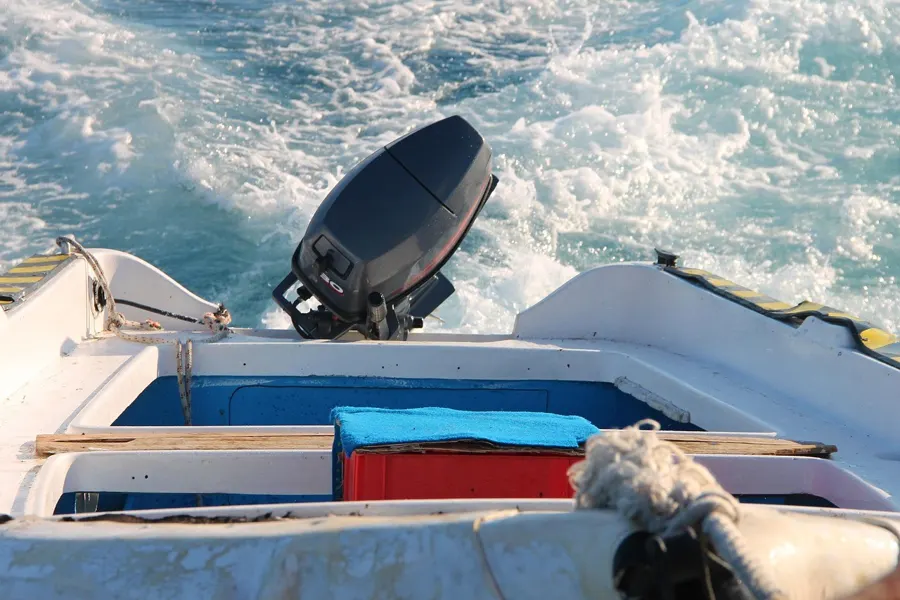
- Off-road vehicles, such as boats and snowmobiles
- Off-road equipment engines, such as chain saws and gasoline lawn mowers
- Conventional vehicles older than model year 2001, which stay limited to E10
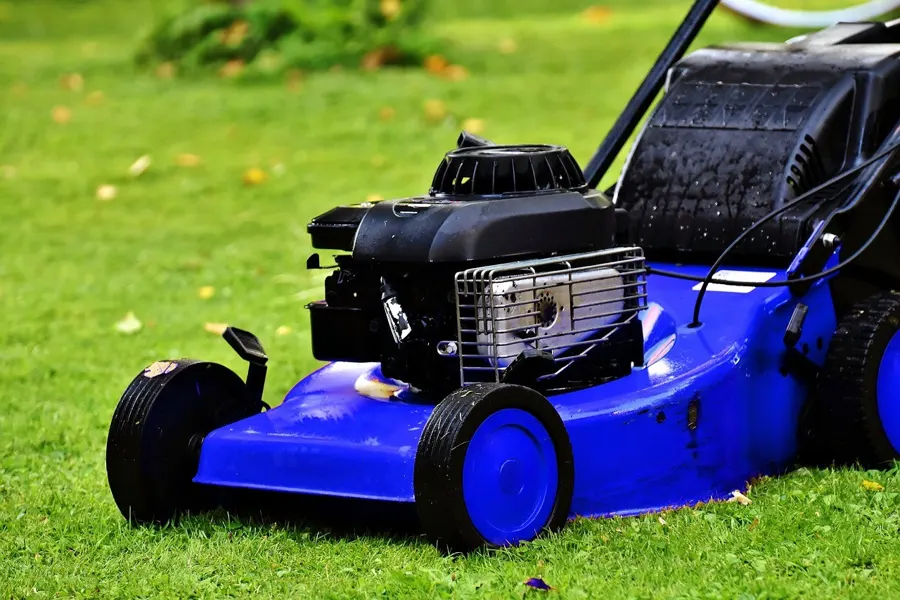
The pump itself is a hazard here. EPA’s motorcycle fueling FAQ explains that at a co-dispensing pump, E10 and E15 share a common hose and nozzle, so the first few gallons of E10 can contain slightly more than 10% ethanol after someone has pumped E15. EPA says buying at least 4 gallons of E10 from such a pump ensures the total volume holds no more than 10% ethanol. If you are filling a mower can or motorcycle, use a dedicated E10 or ethanol-free pump or follow that 4-gallon rule.
What Happens if You Use Unleaded 88 in the Wrong Engine
Be careful with exact claims here, because the evidence is limited. When EPA required the orange and black E15 pump label in 2011, it declined to say E15 “will” harm older engines. It reasoned that engineering analysis suggests damage could occur but does not establish that it will, so the label warns that it “may” cause damage. That is why the rule is a legal prohibition rather than a promise of a specific failure.
Hyundai’s manual gives a practical stop point: discontinue gasohol of any kind if drivability problems occur. Apply the same rule to any car. If a check engine light, rough running or stalling starts after you fill with E15 in a vehicle not approved for it, stop using it, refill with E10 once the tank allows, and take the car to a dealer or qualified mechanic if the symptom stays. Do not keep driving a car that is running poorly.
On warranties, EPA said in the same rulemaking that manufacturer warranties vary and not every maker conditions coverage on a particular fuel, and that a maker cannot deny a claim over a different fuel if that fuel did not cause the problem. Do not read that as a blanket guarantee. The warranty booklet for your exact vehicle controls.
Is Unleaded 88 (E15) Available Year-Round? 2026 Update
Historically, E15 sales were restricted in many areas during the summer ozone season because of evaporative emission rules. The picture for 2026, as of October 12, 2026:
- Eight Midwest states, Illinois, Iowa, Minnesota, Missouri, Nebraska, Ohio, South Dakota and Wisconsin, were set for year-round E15 with an April 28, 2025 implementation date, per EPA.
- On March 25, 2026 EPA issued a temporary emergency fuel waiver allowing E15 sales nationwide. The EPA announcement says it took effect May 1, 2026 for most states, initially through May 20, 2026, the maximum period the Clean Air Act allows, with extensions possible if fuel supply conditions warrant.
- EPA’s own documents list a June 9, 2026 letter to governors renewing the waivers. We could not confirm EPA’s status after the summer season, so treat anything beyond that as unconfirmed.
Stations are never required to sell E15. The DOE page lists it as sold in 31 states at just over 3,000 stations, so even where it is legal your closest pump may not carry it.
How to Check Your Own Car in Three Steps
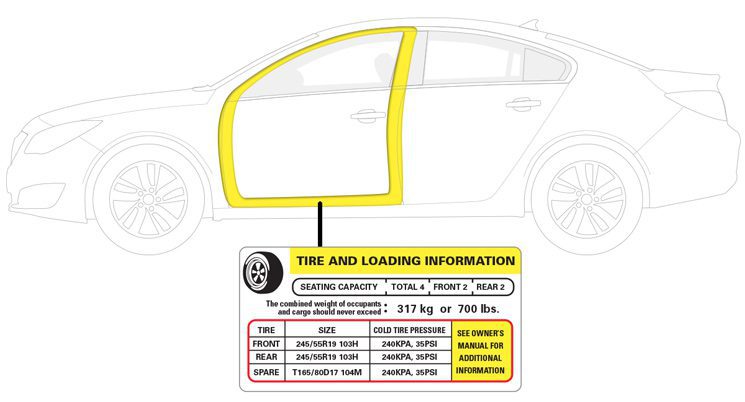
- Look at the fuel door. Many cars print the approved fuel or ethanol limit on the inside of the fuel door or near the cap.
- Read the Fuel section of the owner’s manual for your exact model year and search for the words ethanol, E15 and gasohol. If a number is stated, follow it.
- Check the maker’s owner or support site if you do not have the manual, and call a dealer if the language is unclear. Ask them to state the answer for your VIN.
For more on how fuels differ, see our guides to putting 88 in your car, E85 in a regular vehicle, and the best gas for your car.
Frequently Asked Questions
What does the 88 in Unleaded 88 mean?
The 88 on the pump is the octane rating. The fuel itself is E15, which the DOE Alternative Fuels Data Center says is gasoline blended with 10.5% to 15% ethanol. There is no separate fuel called E88: searches for that usually mean Unleaded 88, which is E15.
Can all cars use Unleaded 88?
No. EPA approves E15 for flex fuel vehicles and for conventional light-duty vehicles of model year 2001 and newer. It is not approved for any motorcycle, heavy-duty vehicle, boat, small engine, or conventional vehicle older than model year 2001. Beyond that legal limit, your maker’s owner’s manual has the final say, and a few makers still list 10% ethanol as the maximum.
Can a car older than 2001 use Unleaded 88?
No, not under EPA’s approval. Passenger vehicles older than model year 2001 remain limited to E10, which includes classic cars such as a late-1960s Mustang. Use regular E10 or ethanol-free fuel in them.
Will Unleaded 88 void my warranty?
It depends on the maker and the vehicle. In its 2011 rulemaking EPA said manufacturer warranties vary and that not every maker conditions its warranty on a particular fuel, and that a maker may not deny a claim over a different fuel if that fuel did not cause the problem. Read the fuel section and the warranty booklet for your exact model year, and ask a dealer in writing if the manual is unclear.
Can I use Unleaded 88 in a lawn mower, motorcycle, or boat?
No. EPA lists all motorcycles, off-road vehicles such as boats and snowmobiles, and off-road equipment engines such as chain saws and gasoline lawn mowers as not allowed to use E15. Use E10 or ethanol-free fuel as the equipment’s manual directs.
Is Unleaded 88 available year-round?
In 2026 EPA issued a temporary emergency fuel waiver on March 25 allowing E15 sales nationwide, and eight Midwest states have had year-round E15 access since April 28, 2025. Waivers are time-limited, so check EPA’s fuel waiver page or your local station for the current status before you plan a trip around it.
Conclusion
EPA clears Unleaded 88 for 2001 and newer conventional vehicles and flex fuel vehicles, and bans it from motorcycles, boats, small engines, heavy-duty vehicles and older cars. Your maker may be stricter, so read the fuel section of your manual first. Keep E15 away from mowers, chainsaws and boats, and use an ethanol-free fuel for engines that cannot take it.
Products related to this article
Sponsored / affiliate links. As an Amazon Associate I earn from qualifying purchases. I may earn additional commission from eligible campaigns.