Is a Car Battery AC or DC? (Alternator’s AC Explained)
A car battery is DC (direct current) — it stores and delivers electricity in one steady direction, never alternating like household AC outlets. Inside the alternator, though, the current starts as AC before a diode rectifier converts it to DC — feeding raw AC to a car’s electronics would fry them. This guide covers how that conversion works, why DC suits low-voltage vehicle systems, and how to run AC devices off a 12V battery using an inverter.
Basics Of Car Batteries
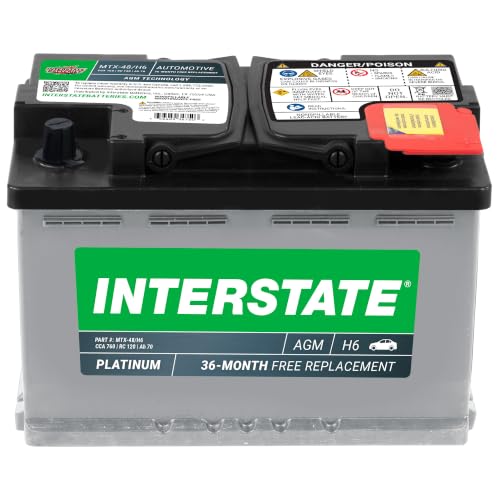
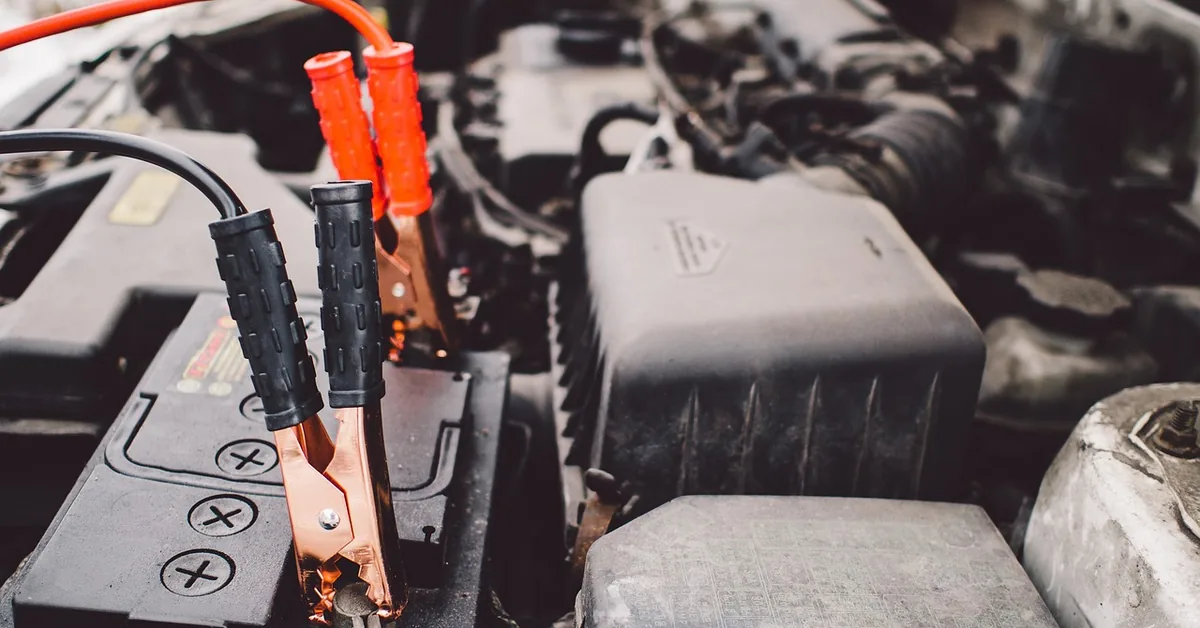
Car batteries provide the electricity needed to start the engine and power the lights, radio, and other components. Most are lead-acid types that store energy chemically and release it as electricity on demand. Car batteries are always DC — the electricity flows in one direction only, never reversing like AC does.
Lead-acid batteries are the most common type, used in the vast majority of gas and diesel vehicles. Lithium-ion batteries are lighter and last longer, and power most EV and hybrid drivetrains. Nickel-metal hydride batteries show up in some hybrids too. Every one of these chemistries still outputs DC — the battery type changes, but the current type doesn’t.
Understanding AC and DC
AC stands for Alternating Current — the flow of electrons keeps reversing direction, dozens of times a second in a home outlet. It’s how power is delivered to houses because it travels long distances efficiently. DC stands for Direct Current — the flow moves one way only. Batteries, including car batteries, store and release DC because it’s what steady, low-voltage electronics need.
The practical difference: AC is better suited to long-distance power transmission and high-voltage grids, while DC is better suited to storage and to the sensitive low-voltage electronics packed into a modern car. That’s why a home outlet and a car battery answer the “AC or DC” question so differently — they’re solving different problems. (For how AC and DC show up across a car’s entire electrical system, not just the battery, see Is a Car AC or DC Voltage?)
Car Battery Current Type: Why the Alternator Starts With AC
Car batteries store and deliver DC. It’s steady, one-directional power, ready the instant you turn the key — which is exactly what a starter motor needs. But the part that keeps the battery charged while you drive, the alternator, doesn’t generate DC directly.
Inside the alternator, a spinning rotor passes a magnetic field across stationary stator windings, which induces a current the same way a generator does — and that current is AC, not DC. Most automotive alternators generate three-phase AC. Before any of it reaches the battery, it passes through a rectifier: a set of diodes (typically six, in a three-phase bridge) that only let current flow one way. The result is DC current that the battery and every DC-powered accessory in the car can actually use.
According to Mia Bevacqua, an ASE Certified Master Automobile Technician who writes for CarParts.com, the rectifier inside a car’s alternator uses six diodes — three positive and three negative — to turn the fluctuating three-phase AC from the spinning rotor into the steady DC a car’s battery and electronics actually need.
📊 A healthy 12V battery rests at about 12.4–12.6V with the engine off, then rises to roughly 13.7–14.7V once the alternator is running and charging — because what reaches the battery is rectified DC, not the raw AC the stator windings actually generate. — Source: AutoZone, 2026
If that charging voltage looks off on your own battery, it’s worth a closer look — see our guide to checking car battery health for the exact multimeter steps.
Can You Run AC-Powered Devices Off a Car Battery?
Yes — but only through a power inverter, which converts the battery’s 12V DC into 120V AC. A car battery can’t power an AC device directly; feeding raw DC into something built for AC current either does nothing or damages the device.
Not all inverters produce the same quality of AC. A modified sine wave inverter is cheaper and fine for basic electronics like phone chargers and power tools, but it can make sensitive gear (laptops, medical devices, some TVs) run hot or behave oddly. A pure sine wave inverter reproduces the smooth waveform of household power and is the safer choice for anything electronic. Either way, runtime is limited — a mid-size inverter under real load will typically drain a resting battery in well under an hour unless the engine is running to recharge it.
- Match wattage to the device: A laptop draws roughly 65–100W, but a hair dryer or microwave can spike past 1,000W — check the inverter’s continuous wattage rating before plugging anything in.
- Connect the inverter: Plug small inverters (150W and under) into the 12V accessory outlet; clamp larger inverters directly to the battery terminals.
- Start the engine for sustained loads: Idling alone struggles to keep up with anything over roughly 150W — run the engine so the alternator can help carry the load.
- Watch the voltage: Unplug the device if the inverter’s display (or a multimeter) shows the battery dropping below about 11.8V.
Best Car Power Inverter Pick
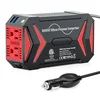
BESTEK 300W Pure Sine Wave Power Inverter – $38.93
Puts out a clean, pure sine wave instead of a choppy modified one — the safer option for the laptops and electronics this guide warns can misbehave on cheaper inverters.
- Best for: Laptops, cameras, and other sensitive electronics
- Why we picked it: Pure sine wave output matches household AC most closely of any option here
- Main drawback: Costs more than modified sine wave inverters of the same wattage
Compare more car power inverter options
 Option 1 300W Inverter, 4 USB Ports – $39.99
|
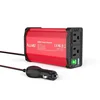 Option 2 ALLWEI 300W Inverter – $20.67
|
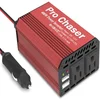 Option 3 Pro Chaser 400W Inverter – $34.98
|
As an Amazon Associate we earn from qualifying purchases.
Why DC Power Suits Car Electronics and Safety
Car batteries deliver DC power, which matches what car electronics are built for. Lights, radios, and navigation systems all need the steady, consistent current DC provides — AC’s constant direction-switching isn’t something low-voltage automotive electronics are designed to handle.
DC is also the safer choice at the voltages a car works with. Cars have protection systems against electrical problems like fuses and circuit breakers, and at 12V, DC is far less likely to cause a dangerous shock than AC would be at the same voltage — one more reason automakers standardized on it decades ago and never looked back.
Are EV and Hybrid Car Batteries AC or DC Too?
Yes — an EV or hybrid’s high-voltage traction battery pack (typically 200–800V) stores DC, exactly like the 12V battery in a gas car. What’s different is everything wired around it.
Most EV drive motors are AC motors — they’re more efficient and powerful for their size than DC motors at highway speeds. So the car runs the process from the alternator section in reverse: an onboard inverter pulls DC from the battery pack and converts it to three-phase AC to spin the motor. When you plug into a Level 1 or Level 2 charger, the incoming power is AC from the grid, and the car’s onboard charger rectifies it back to DC to refill the pack; DC fast chargers skip that step and feed DC in directly. That’s also why EVs don’t need an alternator — there’s no engine spinning to generate anything.
Most EVs and hybrids also carry a small separate 12V DC battery, stepped down from the main pack, just to run accessories and onboard computers the same way a gas car’s battery does. For more on how the main pack itself holds up over time, see our guide on the lifespan of an electric car battery.
Common Misconceptions
The most common mix-up is assuming a car battery works like a home outlet. It doesn’t — home outlets deliver AC, while a car battery stores and delivers DC. That distinction matters because a car’s starter motor and electronics need current that flows steadily in one direction; AC’s constant reversing isn’t compatible with how they’re built.
The “current war” between Thomas Edison and Nikola Tesla in the late 1800s was fought over exactly this trade-off. Edison championed DC; Tesla championed AC, and AC ultimately won out for long-distance power transmission because it travels far more efficiently at high voltage. But for storing energy in a battery and running low-voltage automotive electronics, DC’s steadiness is the better fit — which is why, more than a century later, every car on the road still starts with a DC battery.
Frequently Asked Questions
Is a car battery AC or DC?
A car battery is DC. It stores and delivers direct current to power the vehicle’s electrical components, and that steady, one-direction flow is essential for starting the engine and running accessories.
Why is DC used in car batteries?
DC gives a stable, consistent power supply that low-voltage automotive electronics are built to run on. It’s also what’s required to reliably deliver the high burst of current a starter motor needs to crank the engine.
Can a car battery produce AC power?
Not directly — a car battery only stores and delivers DC. To power an AC device, you need a power inverter, which converts the battery’s DC output into AC. See the inverter section above for how to size and use one safely.
How does a car battery store energy?
A car battery stores energy through a chemical reaction — in a standard lead-acid battery, lead plates and sulfuric acid electrolyte react to store energy, then reverse that reaction to release it as DC electricity when the car needs power.
Does a car’s alternator produce AC or DC?
An alternator generates AC internally — its spinning rotor induces alternating current in the stator windings. A diode-based rectifier bridge then converts that AC into DC before it reaches the battery, since the battery and the rest of the car’s electronics can only use DC.
Is an EV or hybrid car’s battery AC or DC?
It’s DC, just like a standard 12V battery. The difference is what surrounds it: an onboard inverter converts that stored DC into AC to run the drive motor, and the onboard charger converts incoming AC from the wall back into DC to refill the battery pack.
Conclusion
Car batteries operate using DC, or direct current, flowing in one direction to power your vehicle’s starter, lights, and electronics. The alternator that recharges the battery is the one part of the system that briefly touches AC — generating it internally, then rectifying it to DC before it ever reaches the battery. Knowing that difference helps you understand what’s actually happening the next time you check a voltage reading, jump-start a battery, or plug an inverter into your 12V outlet.
Products related to this article
Sponsored / affiliate links. As an Amazon Associate I earn from qualifying purchases. I may earn additional commission from eligible campaigns.