Does Revving the Engine Charge Battery Faster
Many car owners wonder, Does Revving the Engine Charge the Battery Faster? It’s a common question, especially when you’re not sure why your car battery might be acting up. Some people think revving the engine hard is the best way to give the battery a quick boost. This might seem logical, but it’s not quite how your car’s charging system works.
Don’t worry, though! We’ll break down exactly what’s happening in simple terms. Get ready for a clear, step-by-step look at how your car battery gets its power.
You’ll learn the real answer and what you can do to keep your battery healthy.
Understanding Your Car’s Charging System
This section explores how your car’s battery gets charged. We will explain the roles of the alternator and the engine’s speed in this process. You will learn why simply revving the engine isn’t the most effective way to charge your battery.
We will cover the basic components and how they interact to keep your car running smoothly.
The Alternator’s Job
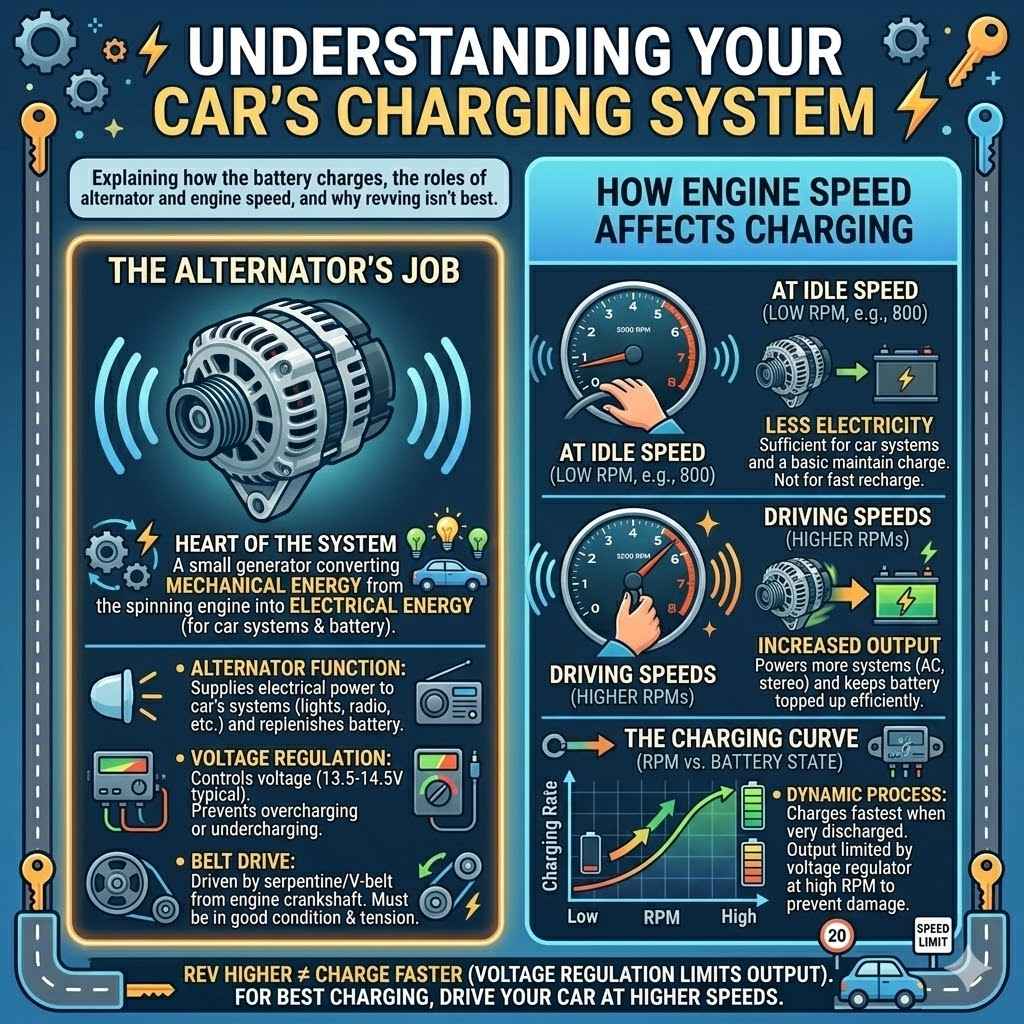
The alternator is the heart of your car’s charging system. It’s a device that makes electricity when your engine is running. Think of it like a small generator.
It converts mechanical energy from the spinning engine into electrical energy. This electricity is then used to power your car’s electrical systems, like the lights, radio, and ignition. It also recharges your car’s battery.
The alternator has a pulley that is connected to the engine’s crankshaft by a belt. When the engine turns, it spins the alternator. Inside the alternator, a rotor spins within a stator.
This spinning action creates a magnetic field that generates electrical current. The amount of electricity produced depends on how fast the alternator is spinning.
Alternator Function The alternator’s primary role is to supply electrical power to the car’s systems while the engine is on. It also replenishes the battery’s charge. Without a working alternator, your car would run solely on battery power until it drains.
Voltage Regulation The alternator doesn’t just make electricity; it also controls the voltage. A voltage regulator ensures the electricity is at the correct level, typically around 13.5 to 14.5 volts. This prevents overcharging or undercharging the battery, both of which can damage it.
Belt Drive The alternator is driven by a serpentine belt or a V-belt that connects it to the engine’s crankshaft. This belt needs to be in good condition and properly tensioned for the alternator to spin at the correct speed.
How Engine Speed Affects Charging
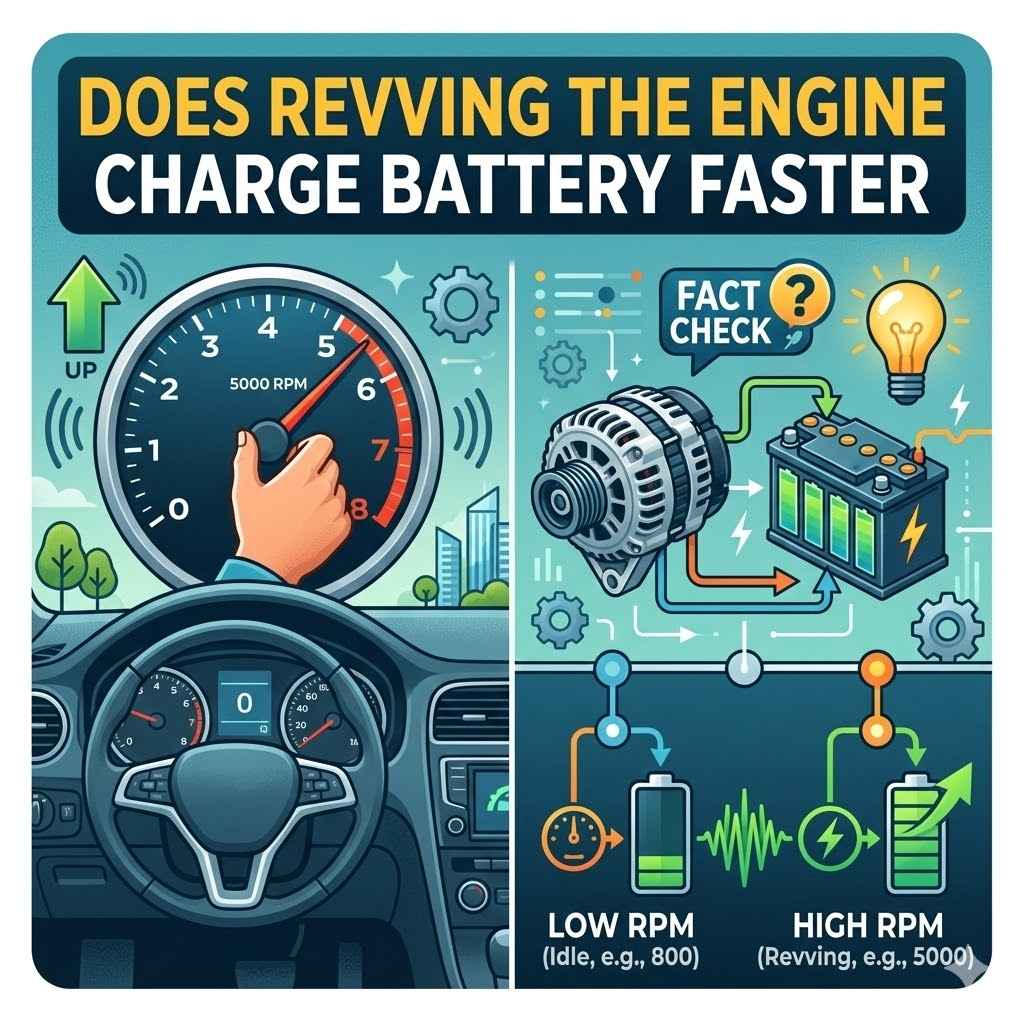
The speed at which your engine runs directly impacts how fast the alternator spins. When your engine is at idle speed, the alternator spins at a slower rate. This means it produces less electricity.
As you increase the engine’s revolutions per minute (RPM), the alternator spins faster and generates more electrical power.
This is where the common idea of revving the engine comes from. If the alternator makes more power when it spins faster, then revving the engine must charge the battery faster, right? While it’s true that higher RPMs mean more power generation, the relationship isn’t as simple as just revving it as high as possible.
Your car’s charging system is designed to maintain a specific voltage. The voltage regulator in the alternator plays a key role here. Even if the alternator is capable of producing more power at higher RPMs, the regulator will limit the output to prevent overcharging the battery.
This ensures the battery receives a steady, safe charge.
Idle Speed Charging At idle, the alternator produces enough electricity to run the car’s systems and maintain a basic charge on the battery. However, if the battery is very low, or if many accessories are running, it might not be enough to fully recharge it quickly.
Higher RPMs and Output When you drive at higher speeds, your engine RPMs are higher. This makes the alternator spin faster, allowing it to produce more electricity. This increased output is necessary to power more demanding electrical loads, like headlights, air conditioning, and the stereo, while also keeping the battery topped up.
The Charging Curve The rate at which a battery charges isn’t linear. It charges fastest when it’s very discharged. As it gets closer to full, the charging rate slows down.
The alternator’s output also varies with RPM. It’s a dynamic process, not a simple “rev higher, charge faster” equation.
Does Revving the Engine Charge the Battery Faster
This section directly addresses the core question: Does Revving the Engine Charge the Battery Faster? We will explain the nuances of how engine speed, alternator output, and battery state of charge interact. You will discover why high RPMs aren’t always the best solution and what actually leads to efficient battery charging.
The Science Behind the Charge
The alternator’s output is directly proportional to its rotational speed, up to a certain point. At idle, the alternator may only be spinning at a few hundred RPM. In this state, it produces the minimum amount of electricity needed to keep the car running.
If your battery is significantly discharged, idling alone won’t bring it back to full charge efficiently.
When you increase the engine’s RPMs, the alternator spins faster. This allows it to generate more electrical current. For example, an alternator might produce 20 amps at idle but 70 amps or more at 2000 RPM.
This increased current is what helps to recharge a depleted battery more quickly.
However, there’s a limit. The voltage regulator is crucial. It monitors the battery’s voltage and adjusts the alternator’s output to maintain a safe charging voltage.
This means that even if the alternator could produce 100 amps, the regulator will stop it at a level that’s optimal for the battery, preventing damage from overcharging.
Alternator Output Curve The alternator’s output typically increases with RPM, but it often “tails off” at very high RPMs. This means there’s a sweet spot where you get good charging without unnecessarily stressing the engine or alternator.
Battery State of Charge The battery charges faster when it’s deeply discharged. As it reaches about 80% charge, the charging rate naturally slows down, regardless of how fast the alternator is spinning. This is a built-in safety mechanism.
Load on the System The more electrical accessories you have turned on (lights, radio, A/C), the more power the alternator needs to supply. If the battery is low and you have many accessories on, simply idling might not be enough to charge the battery at all; it might just maintain its current low level.
Why Simple Revving Isn’t Ideal
While revving the engine does increase alternator output and thus charging speed, doing it aggressively or for extended periods isn’t always the best approach. Consistently revving your engine to high RPMs can lead to increased wear and tear on engine components. It also burns more fuel, making it an inefficient way to charge a battery in the long run.
For most modern cars, the alternator is designed to provide sufficient charging at normal driving speeds. Driving the car as intended, with a mix of city and highway driving, is usually enough to keep the battery healthy. Extreme revving is typically only considered a temporary measure in specific, urgent situations.
If you suspect your battery isn’t charging properly, there are likely underlying issues that need addressing, rather than just relying on revving. These could include a weak battery, a faulty alternator, or a problem with the voltage regulator.
Fuel Efficiency Revving the engine to charge the battery is very inefficient. You will use significantly more fuel than the energy gained in the battery. This is not a cost-effective or environmentally friendly solution.
Engine Wear Consistent high RPMs put extra stress on engine parts like pistons, connecting rods, and the crankshaft. Over time, this can lead to premature wear and potentially costly repairs.
Noise and Vibration Aggressive revving can also be unnecessarily loud and create vibrations, which is unpleasant for the driver and passengers, and for people nearby.
The Role of the Battery Itself
The battery’s condition plays a significant role in how quickly it can accept a charge. An older battery that has started to degrade might not be able to hold a charge as effectively as a new one. Even if the alternator is working perfectly and you’re revving the engine, a weak battery will still struggle to get back to full capacity.
Batteries have a limited lifespan, typically around 3-5 years for conventional lead-acid batteries. Over time, the chemical processes inside the battery can degrade the lead plates and the electrolyte. This reduces its ability to store and deliver electrical energy.
A battery that is failing may show symptoms like slow cranking, dim lights, or frequent dead battery incidents.
When a battery is deeply discharged, it takes time to replenish its energy. The rate at which it accepts charge also decreases as it gets closer to being fully charged. This is a natural part of the electrochemical process and is designed to protect the battery from damage.
Battery Age and Health Batteries degrade over time. An old or damaged battery might not accept a charge efficiently, even with a healthy alternator and optimal engine speed. It’s like trying to fill a leaky bucket; some of the charge will be lost.
Deep Discharge Recovery A deeply discharged battery needs a sustained period of charging. Quick bursts of high RPMs might provide a temporary boost, but a full recovery requires consistent charging over a longer duration.
Internal Resistance As batteries age, their internal resistance increases. This makes it harder for electricity to flow in and out, reducing both cranking power and charging efficiency.
Practical Steps for Battery Charging
Now that we understand the basics, let’s talk about what actually works. This section will provide actionable advice on how to effectively charge your car battery. We will cover the best ways to use your car’s system for charging and when to consider external solutions.
Driving Habits for Battery Health
Good driving habits are key to keeping your car battery healthy and ensuring it gets charged properly. Frequent short trips where the engine doesn’t have enough time to reach optimal operating temperature can actually drain the battery. This is because starting the engine uses a lot of power, and short trips don’t allow the alternator enough time to replenish that power fully.
Ideally, you should aim for longer drives regularly. A drive of at least 20-30 minutes at highway speeds allows the alternator to work efficiently, recharge the battery, and keep all systems running smoothly. This sustained operation helps the battery return to a full charge after the demands of starting the engine and running accessories.
Avoid excessive use of electrical accessories when the engine is off or at idle for long periods. This includes leaving lights on, playing the stereo without the engine running, or using power outlets for extended charging of devices. These actions drain the battery without the alternator actively recharging it.
Avoid Frequent Short Trips Long commutes are better for battery health than many short trips. Short trips don’t give the alternator enough time to fully recharge the battery after starting the engine.
Sustained Driving Longer drives, especially at highway speeds, provide the alternator with the opportunity to operate at its most efficient output, ensuring the battery is fully charged.
Accessory Management Be mindful of which accessories you use, especially when the engine is off or idling. Minimize drain on the battery when the car is not actively charging.
When to Use a Battery Charger
If your car battery is frequently dying, or if you know it’s been deeply discharged, using an external battery charger is often the most effective solution. These chargers are designed to provide a consistent and controlled charge directly to the battery, regardless of engine speed or alternator output.
There are various types of battery chargers available, from simple trickle chargers that maintain a charge over long periods to more advanced “smart” chargers that can diagnose battery health and optimize the charging process. For a deeply discharged battery, a standard charger might take several hours to bring it back to a good state of charge.
Connecting an external charger bypasses the car’s charging system altogether, allowing for a more thorough and efficient recharge. This is especially useful if you suspect an issue with your car’s alternator or if you live in a climate with extreme temperatures that can affect battery performance.
Types of Chargers There are trickle chargers for maintenance, manual chargers for basic charging, and automatic smart chargers that monitor and adjust the charge. A smart charger is generally recommended for optimal battery care.
Charging Time The time it takes to charge a battery depends on its discharge level and the charger’s amperage. A deeply discharged battery might need 8-12 hours or more on a standard charger.
Safety Precautions Always follow the manufacturer’s instructions for your battery charger. Ensure proper ventilation and avoid sparks, as batteries can release flammable hydrogen gas.
Checking Your Battery and Alternator
If you’re constantly dealing with battery issues, it’s wise to have your battery and alternator professionally tested. Auto parts stores and repair shops often offer free battery and alternator testing. This can help identify if a component is failing and needs replacement.
A mechanic can use specialized tools to check the battery’s cranking amps, voltage under load, and overall health. They can also test the alternator’s output at different RPMs and verify that the voltage regulator is functioning correctly. Catching these problems early can prevent you from being stranded.
Regular checks can also help you understand the lifespan of your current battery and alternator. Knowing when components are nearing the end of their life can help you plan for replacements and avoid unexpected failures. This proactive approach saves time and money in the long run.
Battery Testing Tools Professionals use tools like battery testers and load testers. These devices can accurately measure a battery’s capacity and its ability to perform under stress.
Alternator Testing A mechanic will typically check the alternator’s output voltage and amperage while the engine is running at various speeds. They will also test the voltage regulator’s function.
Professional Diagnosis If you’re unsure about your car’s charging system, it’s best to have a qualified mechanic diagnose the issue. They have the expertise and equipment to pinpoint the exact problem.
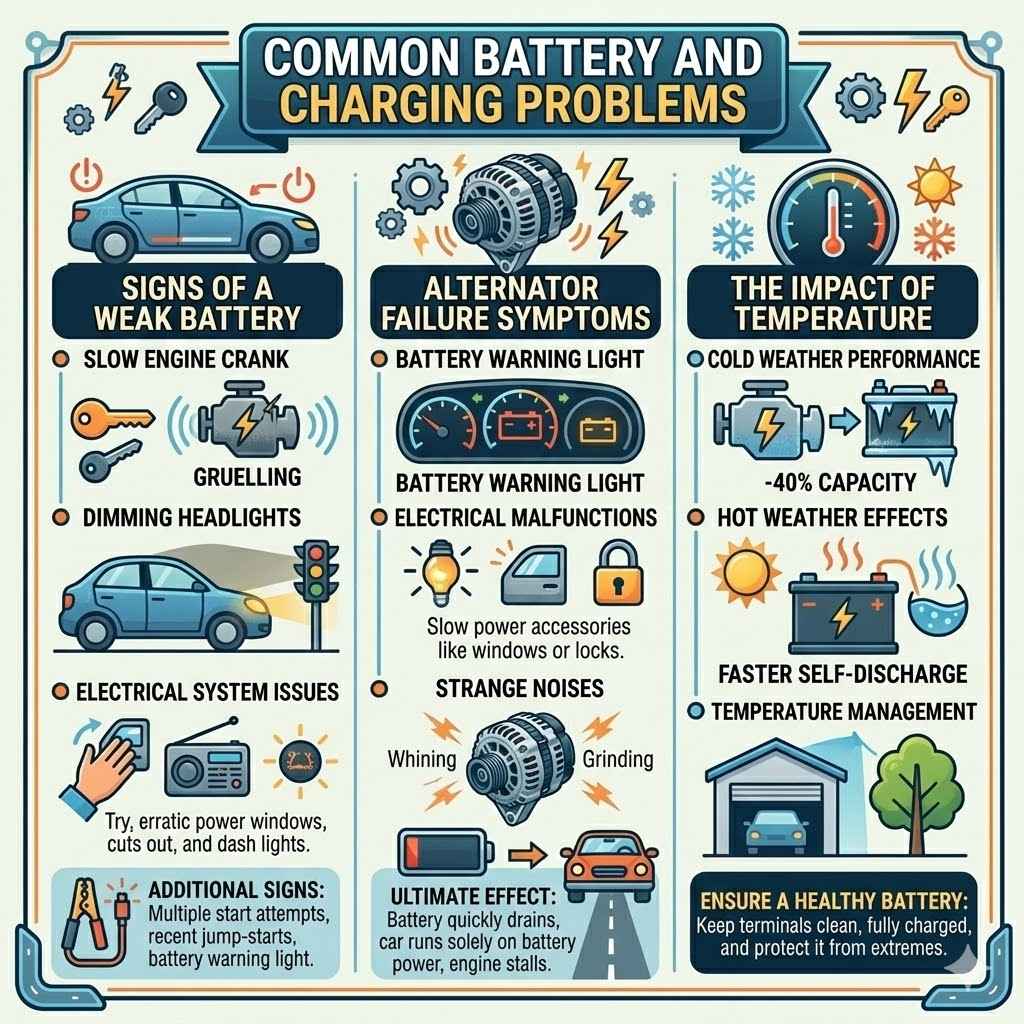
Common Battery and Charging Problems
This section details common issues that car owners face with their batteries and charging systems. We will explore what causes these problems and how they relate to the effectiveness of charging methods.
Signs of a Weak Battery
A weak battery often shows its signs subtly at first. You might notice your headlights dimming when you’re at a stoplight or when you turn on accessories like the power windows. The engine might crank slower than usual, making a “gruelling” sound instead of a quick “vroom.”
In colder weather, these symptoms can become more pronounced. A weak battery loses some of its power in the cold, making it even harder to start the engine. If your car requires multiple attempts to start, or if you’ve had to jump-start it recently, it’s a strong indicator that your battery is on its way out or is not being charged properly.
Dashboard warning lights are another key indicator. Many cars have a battery warning light that illuminates when the charging system isn’t functioning correctly or when the battery voltage is too low. Ignoring these signs can lead to the battery dying completely when you least expect it.
Slow Engine Crank The engine struggles to turn over when you try to start it. This is the most common sign of a weak battery, as it lacks the power to spin the starter motor quickly.
Dimming Lights Headlights and interior lights may dim when you apply load to the electrical system, such as turning on the air conditioning or power windows.
Electrical System Issues Other electrical components, like the power locks, radio, or dashboard lights, might behave erratically or not work at all.
Alternator Failure Symptoms
If your alternator is failing, you’ll likely see symptoms related to a lack of electrical power. The most obvious sign is a battery warning light that stays on while you’re driving. This light often looks like a battery symbol.
This indicates that the alternator isn’t producing enough electricity to keep the battery charged.
You might also notice that your electrical accessories are behaving strangely. Power windows might move slower, the radio could cut out, or headlights might flicker or dim significantly. In more severe cases, the car might start to run rough as the engine’s computer receives inconsistent power.
Eventually, if the alternator fails completely, your car will run solely on battery power. The battery will quickly drain, and the engine will stall. If you experience these issues, it’s crucial to have your alternator checked immediately, as it’s essential for your car’s electrical system and battery health.
Battery Warning Light A constant illumination of the battery warning light on the dashboard is a primary indicator of alternator problems. It means the alternator is not charging the battery.
Electrical Malfunctions Dimming headlights, flickering interior lights, and malfunctioning power accessories suggest the alternator isn’t providing sufficient or stable voltage.
Strange Noises A failing alternator can sometimes make whining or grinding noises, especially when the engine is running. This can be due to worn bearings or other internal issues.
The Impact of Temperature
Both extreme heat and extreme cold can negatively impact battery performance and lifespan. In very cold temperatures, the chemical reactions inside the battery slow down, reducing its capacity to deliver power. This is why batteries are more likely to die in winter, especially during cold snaps.
Conversely, excessive heat can accelerate the degradation of the battery’s internal components. High temperatures cause the electrolyte to evaporate faster and can lead to sulfation, a process that hardens the lead plates and reduces the battery’s ability to hold a charge. This is why batteries often fail in the summer months, even though the cold is when you notice the symptoms.
To combat temperature effects, it’s important to ensure your battery is in good condition. A fully charged battery can withstand cold better than a partially discharged one. Keeping your battery terminals clean and free of corrosion also helps maintain good electrical contact, especially when it’s struggling due to temperature extremes.
Cold Weather Performance In cold climates, batteries lose up to 40% of their capacity. Starting your engine requires more power in the cold, putting a strain on a weakened battery.
Hot Weather Effects High temperatures speed up chemical reactions within the battery, leading to faster self-discharge and increased wear on internal components, shortening its lifespan.
Temperature Management Parking your car in a shaded area during hot weather or a garage during extreme cold can help protect the battery from temperature-related stress.
Frequently Asked Questions
Question: Does revving the engine charge the battery faster than idling?
Answer: Yes, revving the engine does charge the battery faster than idling because the alternator spins faster, producing more electricity. However, it’s not always the most efficient or best method due to fuel consumption and potential engine wear.
Question: How long does it take to charge a car battery?
Answer: The time varies greatly. A slow trickle charger might take 24 hours or more, while a fast charger could do it in a few hours. Driving your car for at least 30 minutes is generally enough to recharge it after a typical start.
Question: Can I jump-start my car if the battery is completely dead?
Answer: Yes, you can jump-start a car with a dead battery. However, if the battery is old or faulty, it may not hold a charge afterward, and you might need a new one.
Question: What is the difference between a battery and an alternator?
Answer: The battery stores electrical energy, while the alternator generates it when the engine is running. The alternator recharges the battery and powers the car’s electrical systems.
Question: Should I rev my engine if my car battery is low?
Answer: While revving can provide a temporary charge boost, it’s not the ideal long-term solution. Driving the car normally or using an external charger is a better approach for sustained charging and battery health.
Summary
To recap, Does Revving the Engine Charge the Battery Faster? Yes, it does provide a quicker charge than idling because a faster engine means a faster alternator. However, this isn’t the most practical or efficient way to maintain battery health. Regular driving and proper maintenance are key.
If your battery issues persist, it’s best to check your alternator and battery condition.