Does Wrapping A Car Devalue It? Genius Advice
A car wrap typically does not devalue your car if done correctly with quality materials and proper installation. In fact, it can protect your original paint. However, improper installation or removal can lead to paint damage and potential devaluation.
Thinking about giving your car a fresh new look with a wrap? It’s a fantastic way to personalize your vehicle and stand out from the crowd. But a common question pops up: “Will wrapping my car actually lower its resale value?” It’s a worry many car owners have, and it’s totally understandable. You want to protect your investment and make smart choices for your car’s future. We’re here to clear up the confusion and give you the straightforward, expert advice you need. We’ll break down exactly how wraps affect value, what to look out for, and how to ensure your car remains a valuable asset. Get ready to understand car wraps like never before!
Understanding Car Wraps and Car Value
Let’s dive into what a car wrap is and why people even consider them. A car wrap is essentially a large vinyl sticker applied over your car’s original paint. It’s not paint; it’s a flexible, durable material that can change the color, add graphics, or give your car a unique texture. People choose wraps for a variety of reasons:
- Aesthetic Changes: Want a matte black finish but your car is red? A wrap can do that without permanent changes.
- Protection: Wraps act as a shield for your original paint, protecting it from minor scratches, chips from road debris, and UV rays.
- Advertising: Businesses often use wraps for impactful mobile advertising. For personal cars, it’s about making a statement.
- Cost-Effectiveness: Compared to a high-quality custom paint job, a wrap can often be more affordable.
Now, about that value question. The resale value of a car is influenced by many factors, including mileage, condition, maintenance history, and of course, its appearance. Paint condition is a significant part of that appearance. A car with pristine, original paint will generally fetch a higher price than one with damaged or repainted surfaces. This is where the concern about wraps comes in. People worry that a wrap might damage the original paint, thus devaluing the car.
The truth is, when done right, a car wrap should protect your paint and therefore help maintain or even enhance its value by preserving its original finish. The key phrases here are “when done right” and “protect your paint.” We’ll explore what that means in detail.
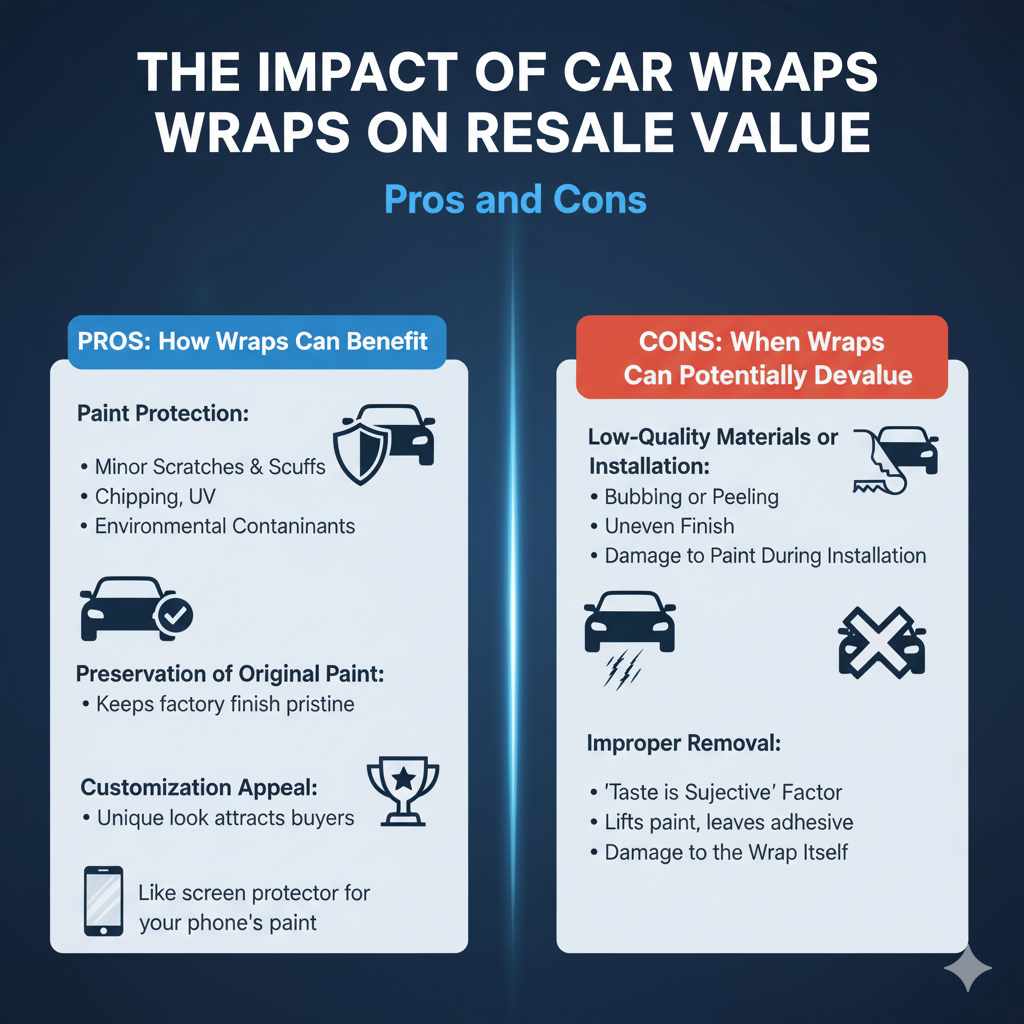
The Impact of Car Wraps on Resale Value: Pros and Cons
Like most things in the automotive world, car wraps come with their own set of advantages and potential drawbacks when it comes to resale value. Understanding these can help you make an informed decision.
Pros: How Wraps Can Benefit Your Car’s Value
When implemented with care and quality in mind, a car wrap can actually be a positive factor for your car’s resale value. Here’s how:
-
Paint Protection: This is the biggest advantage. The vinyl acts as a protective layer over your car’s original paint. It shields against:
- Minor Scratches and Scuffs: Everyday minor incidents are less likely to damage your original paint.
- Chipping: Small rocks and road debris kicked up while driving are deflected by the wrap.
- UV Damage: Prolonged sun exposure can fade and degrade paint. The wrap adds a barrier.
- Environmental Contaminants: Bird droppings, tree sap, and harsh chemicals can etch into paint. A wrap is more resistant and easier to clean.
- Preservation of Original Paint: Because the wrap covers and protects the original paint, it effectively preserves it in its “as new” condition. When the wrap is removed, underneath lies the untouched, factory-finish paint, which is highly desirable to potential buyers.
- Customization Appeal: For some buyers, a unique or stylish wrap can be a selling point. If the wrap is tasteful and well-executed, it can make the car stand out and attract specific buyers who appreciate that aesthetic.
- Demonstrating Care: A car that has been wrapped and well-maintained can signal to potential buyers that the owner took exceptional care of the vehicle.
Think of it like a screen protector for your phone. The protector might get scratched, but your actual phone screen underneath remains pristine. Similarly, a wrap can take minor hits, saving your car’s original finish.
Cons: When Wraps Can Potentially Devalue Your Car
While the pros are significant, it’s crucial to be aware of the downsides. These typically arise from poor execution or specific circumstances:
-
Low-Quality Materials or Installation:
- Bubbling or Peeling: Cheap vinyl or improper installation can lead to unsightly bubbles or edges that lift.
- Uneven Finish: Poor application can result in an unprofessional look, which might deter buyers.
- Damage to Paint During Installation: Aggressive cutting or incorrect application techniques can scratch or damage the paint beneath.
- Improper Removal: This is a major tipping point. If the wrap is removed too quickly, with the wrong tools, or after being on for an excessively long time (especially cheap wraps that degrade and become brittle), it can lift paint, leave adhesive residue, or cause permanent damage. This is often the biggest culprit in devaluing a wrapped car.
- Adhesive Residue: Even with careful removal, some residual adhesive may remain. If not properly cleaned, this can look terrible and require significant effort to remove, potentially impacting paint.
- “Taste is Subjective” Factor: While some buyers love custom wraps, others may not. An overly personalized or garish wrap might be a turn-off for the general market, making it harder to sell or leading to lower offers.
- Damage to the Wrap Itself: Deep scratches or tears in the wrap can make the car look uncared for, potentially devaluing it even if the original paint is fine.
It’s important to remember that for most buyers, the pristine original paint is the most valuable aspect. Any factor that compromises that, like a poorly executed wrap job or difficult removal, is where the devaluation risk lies.
The Crucial Role of Professional Installation
This cannot be stressed enough: the skill and expertise of the installer are paramount. A professional installation is your best defense against potential devaluation. Here’s why:
- Precision Cutting: Professionals know exactly where to cut the vinyl to avoid scratching your car’s paint or trim. They often use specialized tools and techniques.
- Proper Surface Preparation: Before applying the wrap, the car’s surface must be meticulously cleaned and decontaminated. Any dirt or debris trapped under the vinyl will show and can cause damage. Professionals use industry-standard cleaning agents and techniques.
- Heat Application: Vinyl needs to be heated and stretched correctly to conform to the vehicle’s curves. Too much heat or improper stretching can damage the vinyl or the paint. Skilled installers understand the nuances of material behavior.
- Edge Wrapping: Professionals ensure edges are properly sealed and tucked to prevent lifting and premature peeling. They know how to work around panels, mirrors, and lights without causing damage.
- Quality Control: A reputable shop will have quality control checks to ensure there are no bubbles, wrinkles, or imperfections in the wrap.
When choosing an installer, always look for:
- Experience: How long have they been wrapping cars?
- Portfolio: Do they have examples of their work?
- Reviews: What do other customers say?
- Warranty: What do they offer on their workmanship and materials?
A good installer is an investment that helps protect your car and its value. Websites like 3M’s Find a Dealer tool can help you locate certified installers for their high-quality wrapping films.
Choosing the Right Wrap Material
Not all vinyl is created equal. The type and quality of the wrap material significantly impact its longevity, appearance, and how easily it can be removed later without damaging your paint.
Types of Vinyl
The most common types of vinyl used for car wraps are:
- Cast Vinyl: This is generally considered the highest quality for vehicle wraps. It’s manufactured by pouring liquid vinyl mixture onto a liner and curing it. This process allows the vinyl to be thinner, more conformable, and more durable. It’s excellent for complex curves and contours on vehicles.
- Calendered Vinyl: This type is made by pushing vinyl through heated rollers. It’s typically thicker and less conformable than cast vinyl. While cheaper, it’s more prone to creasing and may not adhere as well to complex curves, potentially leading to lifting over time.
For a wrap that lasts and removes cleanly, cast vinyl is the preferred choice.
Quality Considerations
When selecting a wrap, consider:
- Durability: Look for materials rated for outdoor automotive use, often with a lifespan of 3-7 years depending on the finish and care.
- Adhesive Type: Reputable brands use specific adhesives designed for automotive applications that allow for repositioning during installation and clean removal.
- Removability: Ensure the material is specifically designed for vehicle wrapping and is known for clean removability without leaving excessive residue or damaging paint.
- Finish: Matte, satin, gloss, chrome, carbon fiber, textured – choose a finish that appeals to you and consider how it might appeal to future buyers.
Reputable wrap manufacturers like Avery Dennison and 3M offer a wide range of high-quality films. For instance, Avery Dennison’s conformity and removability are often highlighted by installers. You can learn more about their vehicle wrap solutions on their website.
The Removal Process: A Critical Step
The way a wrap is removed is arguably just as important, if not more so, than how it’s installed when it comes to preserving your car’s value. A careless removal can undo all the benefits of paint protection and inadvertently devalue your car.
Here’s what to expect and what to emphasize:
- Professional Removal is Key: Just as with installation, professional removal by experienced technicians is highly recommended. They have the tools and knowledge to remove the wrap safely.
- Heat is Essential: Vinyl wraps generally need to be heated (usually with a heat gun or specialized steamer) to soften the adhesive. This makes it easier to peel off cleanly. Too little heat and it’s difficult; too much can potentially heat-damage the paint or cause the vinyl to stretch and tear.
- Patience and Technique: The vinyl should be pulled off at a specific angle, typically a low, shallow one, slowly and steadily. Aggressive tugging or pulling can lift paint.
- Addressing Adhesive Residue: After the bulk of the wrap is off, there might be a sticky residue left behind. Professionals use specialized adhesive removers that are safe for automotive paint to tackle this. Common household cleaners might be too harsh.
- Paint Inspection and Correction: Once the wrap and residue are gone, the original paint should be inspected. If there are any minor marks or swirls from the wrap installation (rare with good installation), a light polish or paint correction might be needed to restore the finish to its absolute best.
The National Institute of Automotive Service Excellence (ASE) emphasizes proper repair and maintenance, and while they don’t specifically cover wraps, their ethos on correct procedures for paint and bodywork applies. A botched removal is akin to a bad repair – it hurts value.
When Should You Avoid Wrapping Your Car?
While wrapping can be beneficial, there are certain scenarios where it might be best to skip it, especially if you’re concerned about resale value. Consider avoiding a wrap if:
- Your Car’s Paint is Already Damaged: If your original paint is heavily faded, peeling, or has significant clear coat failure, a wrap will not fix these underlying issues. In fact, the wrap might adhere poorly to compromised paint, and removing it later could pull off more of the damaged paint. It’s often better to address paint issues directly.
- You Plan to Sell Very Soon: If you’re looking to sell your car in the immediate future (within months), a wrap might not give enough time to prove its worth. Potential buyers might be suspicious, thinking you’re hiding underlying paint problems.
- You’re Opting for the Absolute Cheapest Option: The cheapest wraps and installers are often the most likely to cause problems. If cost is the only deciding factor, you’re entering risky territory.
- You’re Unsure About the Installer’s Reputation: If you can’t find solid proof of an installer’s skill and reliability, it’s safer to walk away.
- Your Car Has Unique or Collectible Paint: For classic cars or vehicles with rare, original, and perfectly preserved paint finishes, sometimes the best approach is to leave them untouched.
It’s always a balance between the desire for a new look and the potential impact on your car’s future value. Sometimes, what you don’t do is as important as what you do.
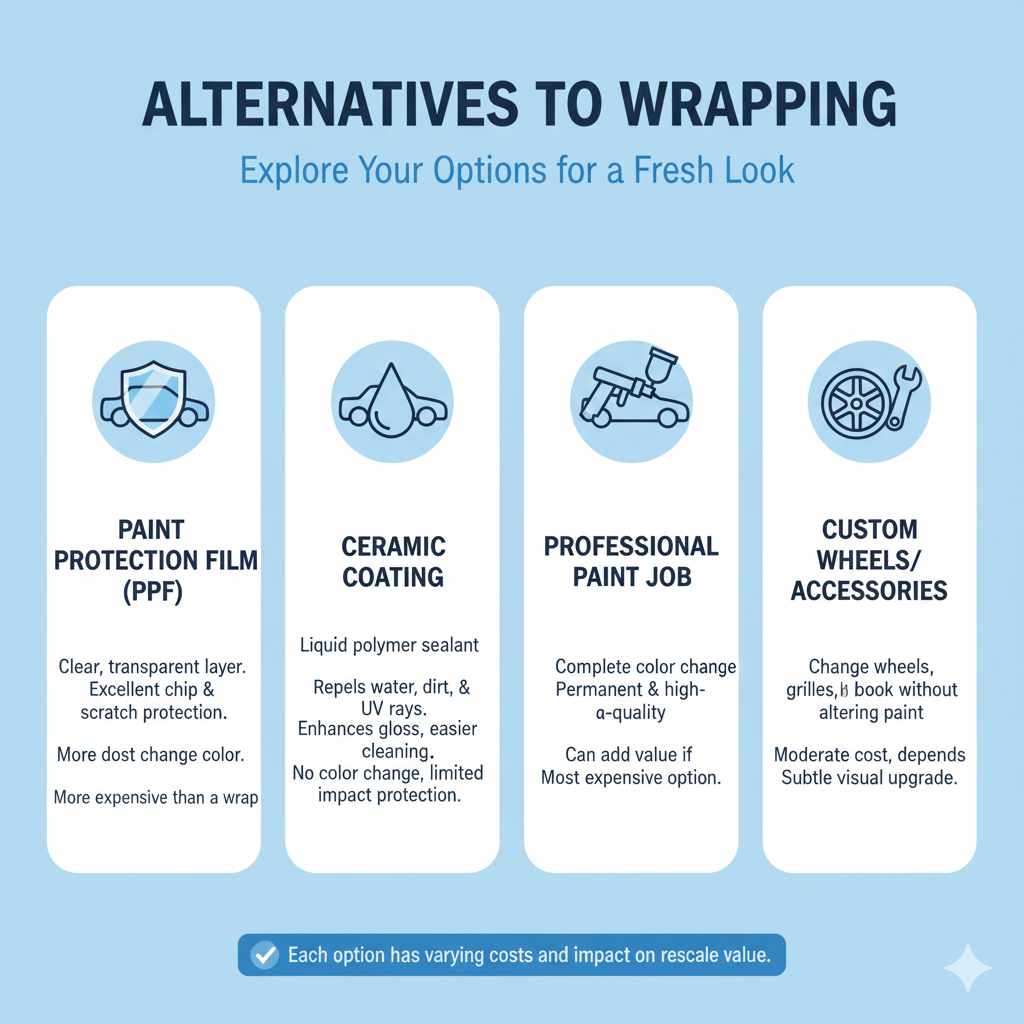
Alternatives to Wrapping
If you’re seeking a change in your car’s appearance but are hesitant about wraps, consider these alternatives:
- Paint Protection Film (PPF): Clear, protective film applied to your car’s paint. It offers excellent protection against chips and scratches but doesn’t change the color. It’s more expensive than a color wrap but is entirely transparent.
- Ceramic Coating: A liquid polymer applied to the exterior. It provides a hard, protective layer that repels water, dirt, and UV rays, making the paint easier to clean and adding a glossy sheen. It does not change the color or provide impact protection like a wrap or PPF.
- Professional Paint Job: A high-quality repaint can completely transform the look of your car. While more expensive than a wrap, it’s a permanent change and can certainly add value if done to a high standard.
- Custom Wheels/Accessories: Sometimes, changing accessories like wheels, grilles, or adding subtle body kits can give your car a refreshed look without altering the paint.
Each option has its own cost, benefits, and impact on resale value. For instance, a perfect, high-quality paint job is almost always a net positive for resale value, whereas a poor one can detract.
FAQ: Your Car Wrap Questions Answered
Let’s address some common questions about car wraps and their effect on value.
Q1: Will a car wrap hide existing paint damage?
A1: While a wrap can cover minor imperfections like swirl marks, it cannot hide or fix significant damage such as rust, peeling clear coat, or deep scratches. It’s best to repair underlying paint issues before wrapping.
Q2: How long do car wraps typically last?
A2: High-quality vinyl wraps, when properly installed and maintained, can last anywhere from 3 to 7 years. Factors like sun exposure, climate, and washing frequency affect longevity.
Q3: Can I remove a wrap myself?
A3: While technically possible, DIY removal is strongly discouraged, especially for beginners. Improper technique can easily damage your car’s paint, leading to devaluation. Professional removal is safer and more effective.
Q4: What is the difference between a “cheap” wrap and a “quality” wrap?
A4: Quality wraps use superior cast vinyl that is more conformable, durable, and designed for clean removal. Cheap wraps often use lower-grade calendered vinyl that can be prone to bubbling, fading, tearing, and leaving stubborn adhesive residue upon removal.
Q5: Does the color of the wrap matter for resale value?
A5: Generally, neutral colors like black, white, silver, or gray tend to have broader appeal and may be easier to sell. More exotic or niche colors can be a selling point for specific enthusiasts but might limit your buyer pool.
Q6: Will removing a wrap leave any marks or residue?
A6: A quality wrap installed by professionals and removed by professionals should leave the original paint in excellent condition, with minimal to no residue. Some minor cleaning may be needed. Poor quality wraps or improper removal can leave significant residue and even damage paint.