Best Dry Ice Blasting Machines for Car Detailing (2026 Guide)
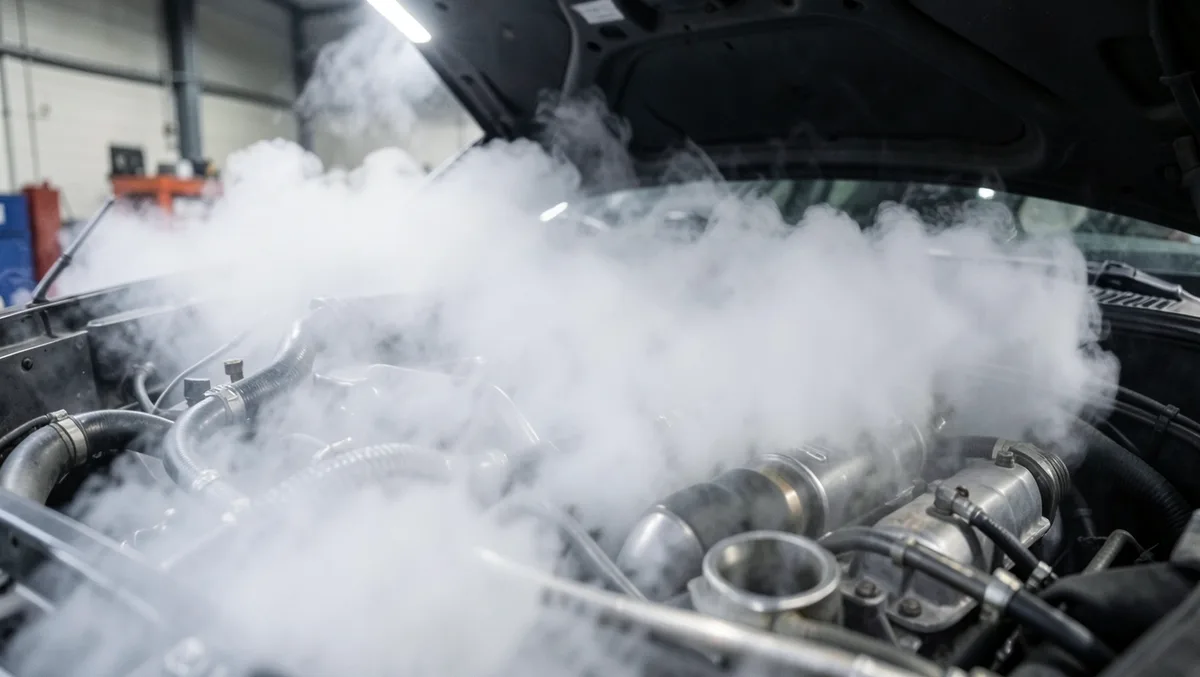
Dry ice blasting cleans engine bays, throttle bodies, and intake valves by firing solid CO2 pellets at roughly negative 109°F that shrink and pop grime loose on contact. The pellets sublimate straight into gas the instant they hit a surface, so there’s no water, no chemical residue, and no risk of scratching paint or shorting out electronics the way pressure washing can.
The three machines below cover the real range of this category, from a $1,652.40 entry-level VEVOR unit to a $3,799 professional-grade QPKING HTS709. A mobile dry ice detailing service typically bills $250 to $400 per hour, so if you’re cleaning more than a handful of engines a year, owning a machine tends to pay for itself faster than hiring one out.
Dry Ice Blasting Machine Hts709
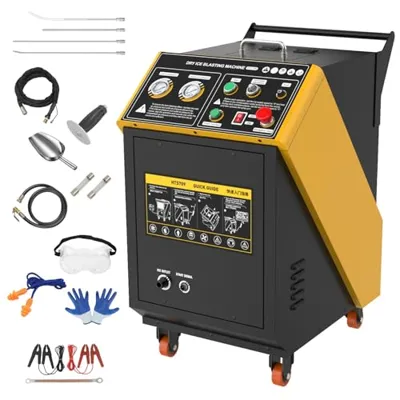
The Dry Ice Blasting Machine HTS709 by QPKING is built for professionals in the automotive industry and industrial maintenance who need an efficient, eco-friendly cleaning tool. Ideal buyers include automotive technicians, maintenance engineers, and industrial cleaners who need a powerful, versatile machine for cleaning engines, machinery, and equipment without damaging the surface underneath.
Pros:
- High-efficiency cleaning performance.
- Dual pressure gauge for precise control.
- Runs on either 110V or 220V power.
- Eco-friendly and non-abrasive cleaning method.
Cons:
- Requires dry ice pellets as a consumable, and pellet suppliers aren’t available in every area.
- $3,799 initial investment is steep for a small shop or a one-car garage.
The HTS709’s standout feature is its dual pressure gauge, which lets you dial in pressure separately for the air supply and the ice feed rate. That matters for delicate automotive parts and intricate machinery, since it means the same machine can strip heavy carbon off an intake manifold and then be turned down to clean a sensitive sensor housing without damaging it.
Dry ice blasting also leaves no residue behind, which matters in shops where a wet or chemical-covered floor is a liability. Because the HTS709 runs on both 110V and 220V, it works in US-style single-phase shops and higher-voltage setups without needing a separate model, which is one reason it’s priced above the other two machines in this roundup.
To buy this product, click here.
VEVOR Dry Ice Blasting Machine, 16.5LBS (7.5KG) Capacity Dry Ice Cleaning Machine with 4 Nozzles, Adjustable Pressure & Dry Ice Amount, Movable Blaster Cleaner for Auto Ship Aviation Chemical, 120V
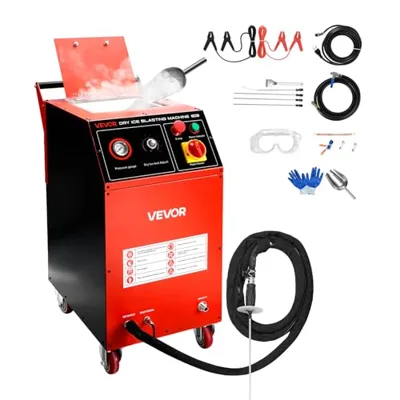
The VEVOR Dry Ice Blasting Machine holds 16.5 lbs (7.5 kg) of dry ice pellets and ships with four interchangeable nozzles, making it the most affordable full-size option in this roundup at $1,652.40. It accelerates 2-4mm dry ice particles with compressed air to knock carbon buildup loose without scratching the metal underneath, and the 120V motor runs on a standard household-style outlet instead of requiring dedicated shop wiring.
Pros:
- Specs: 110-120V 60Hz power, 16.5 lb (7.5 kg) dry ice capacity, 1-3.0 m³/min compressed air flow, 2-4mm particle size.
- Intelligent control panel for precise spray pressure and ice-volume adjustment, with four nozzles for different blast patterns and cleaning distances.
Cons:
- Needs a compressed air source rated for at least 3 m³/min, so an undersized home-shop compressor may not keep the 4-nozzle setup at full pressure.
Overall, the VEVOR Dry Ice Blasting Machine is a practical choice if you’re shopping in this category and want the lowest entry price for a full-size, four-nozzle unit — check current pricing and availability on Amazon before you decide.
To check today’s price and buy this model, click here.
SANITMAX SM2000 Dry Ice Blasting Machine, 44 lbs Dry Ice Hopper, Handheld Control Spray Gun, 5 Nozzles
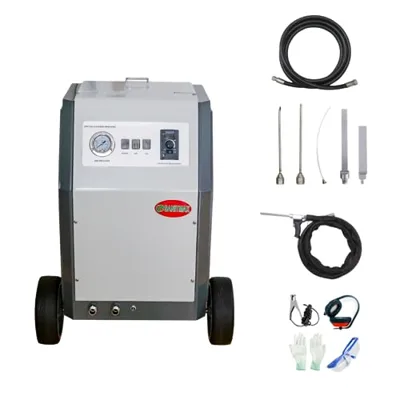
The SANITMAX SM2000 holds a 44-lb dry ice hopper — nearly triple the VEVOR’s capacity — paired with a handheld control spray gun and five nozzle sizes, at a price of $2,899. The larger hopper means you can blast an entire engine bay and undercarriage between refills instead of stopping partway through a job.
Pros:
- 44-lb dry ice hopper, the largest capacity of the three machines here.
- Handheld control spray gun with 5 interchangeable nozzles.
- Non-abrasive on paint, gaskets, and machined surfaces.
Cons:
- The 44-lb hopper plus hose kit makes it a two-person lift between bays, so it suits a fixed shop station more than a mobile detailer.
Overall, the SANITMAX SM2000 is a practical choice if you’re shopping for the longest run time per fill in this category — check current pricing and availability on Amazon before you decide.
See current stock and pricing by clicking here.
Dry Ice Blasting Safety: What to Know Before You Buy
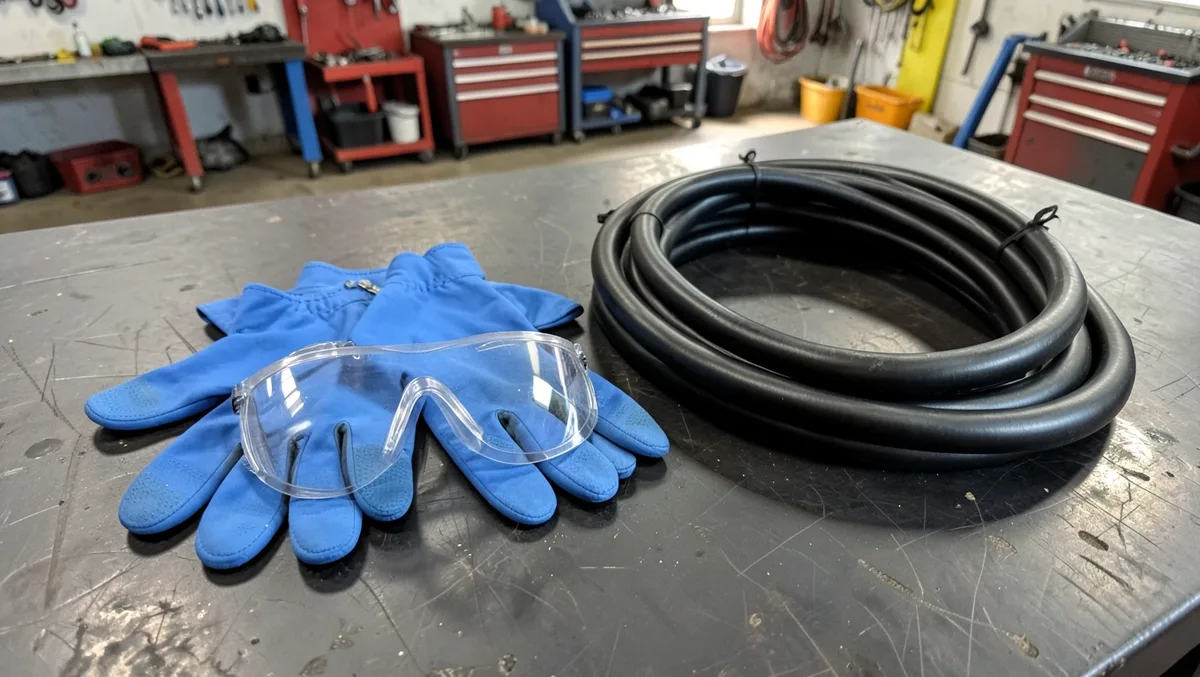
Dry ice blasting is gentler on surfaces than pressure washing or solvents, but the process itself carries two real hazards that none of the listings above spell out. Dry ice sublimates into carbon dioxide gas, which is heavier than air and can build up in a closed garage or shop bay faster than you’d expect — run the job with the garage door open or an exhaust fan pulling air out, and never blast in a sealed room.
The pellets and the blast stream itself sit around negative 109°F, cold enough to cause frostbite on bare skin within seconds, which is why every machine in this roundup ships with insulated gloves and safety goggles in its accessory kit. Hearing protection is worth adding too, since the compressed-air nozzle runs loud enough at close range to match a pressure washer.
Frequently Asked Questions
What Is A Dry Ice Cleaner For Cars?
A dry ice cleaner uses solid CO2 pellets for cleaning. It effectively removes dirt, grease, and contaminants from car surfaces. This method is non-abrasive and eco-friendly, leaving no residue. It’s ideal for engine parts and sensitive automotive components.
How Does Dry Ice Blasting Work?
Dry ice blasting propels CO2 pellets at high speeds onto surfaces. The rapid temperature drop causes contaminants to shrink and detach. This method is efficient and gentle, ideal for automotive cleaning. It leaves no moisture or chemical residue, making it environmentally friendly.
Why Choose A Dual Pressure Gauge Dry Ice Blaster?
A dual pressure gauge allows precise control over cleaning intensity. It offers flexibility for various automotive surfaces. Users can adjust pressure for delicate or tough cleaning tasks. This ensures effective and safe cleaning without damaging sensitive car parts.
Is Dry Ice Cleaning Safe For Car Engines?
Yes, dry ice cleaning is safe for car engines. It effectively removes carbon deposits without damaging components. This non-abrasive method ensures engine parts remain intact. It also prevents the use of harsh chemicals, maintaining engine efficiency and longevity.
Can Dry Ice Blasting Remove Engine Carbon Deposits?
Yes, dry ice blasting effectively removes engine carbon deposits. This method is precise and efficient, targeting carbon buildup. It cleans without disassembling engine parts, saving time. The process is safe and environmentally friendly, improving engine performance and lifespan.
What Are The Benefits Of Portable Dry Ice Machines?
Portable dry ice machines offer convenience and flexibility for on-site cleaning. They are compact and easy to transport. Ideal for automotive detailing, they provide efficient cleaning without bulky equipment. This ensures quick and effective removal of dirt and contaminants on the go.
Is Dry Ice Blasting Safe to Use in an Enclosed Garage?
Not without ventilation. The CO2 gas released by dry ice is heavier than air and can accumulate in a sealed garage, displacing the oxygen inside it. Keep the garage door open or run an exhaust fan the whole time you’re blasting, and never do it in a small, closed room.
Conclusion
Choosing the right dry ice blasting machine comes down to how much you’re cleaning and how often. The QPKING HTS709 ($3,799) suits a shop running the machine daily and wanting dual-voltage flexibility; the VEVOR ($1,652.40) is the lowest-cost entry point for a full-size, four-nozzle unit; and the SANITMAX SM2000 ($2,899) trades some portability for the largest hopper and the fewest refills per job.
All three clean engine bays, throttle bodies, and intake valves without water or chemical residue, and all three ship with the insulated gloves and goggles you’ll actually need for the cold-contact and CO2-ventilation risks covered above. Compare that against a $250-$400 per-hour mobile detailing service, factor in how many vehicles you’d realistically blast in a year, and the machine that pays for itself fastest is the right one to buy.
Products related to this article
Sponsored / affiliate links. As an Amazon Associate I earn from qualifying purchases. I may earn additional commission from eligible campaigns.