3 Best Car Wash Drying Blades in 2026
A flexible silicone model with a soft edge is often recommended for car wash drying; for many cars, about 12 to 14 inches is a common size range, while microfiber is still often preferred for seams and trim. Bad technique leaves streaks, pushes grit across paint, and can miss water that later spots or drips. This guide ranks three drying blades by streak risk, edge drag, size, and when a towel is the better call.
Top pick and quick picks

The top pick is a roughly 12-inch soft silicone drying blade because it is commonly said to offer a good balance of coverage, control, and paint-safe contact when the tool is clean and used on open exterior panels. It is the least awkward option for everyday drying on cars, and it also makes sense for trucks and SUVs with broad panels.
| Best for | Pick | Why it ranks here | Watch-outs |
|---|---|---|---|
| Most cars, daily wash routine | 12-inch soft silicone drying blade | Good panel coverage, lower edge drag than harder tools, easy to control | Can miss seams, trim, and badges if you rush |
| Seams, trim, and delicate finishes | Microfiber drying towel | Absorbs water instead of pushing it, better for tight gaps | Heavier when wet; slower on large flat panels |
| Large vehicles and dealer prep | 12-inch blade plus towel follow-up | Fast water knockdown on broad panels, then towel for missed spots | Blade alone is a poor choice for deep seams |
A quick comparison helps. Use the blade on broad exterior panels. Use the towel for seams, mirrors, badges, and lower trim. For dealer lot cleanup or before-delivery work, the safest routine is often blade first, towel second.
Drying blade decision table
This table maps blade type to the job it handles best. It also shows when a microfiber drying towel is the safer call, because a blade is not the right answer for every panel, finish, or weather condition.
| Blade type | Use case | Width | Material | Best vehicle size | Seam-risk level | Streak risk | Choose a microfiber towel instead when |
|---|---|---|---|---|---|---|---|
| Soft silicone squeegee | After-wash drying on open panels | 12-inch | Soft medical-grade silicone | Cars, trucks, SUVs, boats | Medium | Low to medium | Water sits in seams, emblems, mirror housings, or textured trim |
| Shorter blade | Tight bodywork and compact cars | Shorter than 12-inch | Soft silicone or soft rubber | Small cars and narrow panels | Low to medium | Low if kept clean | You need more absorbency than push-off on a hard-water day |
| Blade plus towel routine | Showroom prep, dealer lot use, before-delivery cleanup | 12-inch blade for broad panels | Silicone blade, then microfiber | Cars, trucks, SUVs | Low after towel follow-up | Low if the towel finishes the job | You need a final pass on glass edges, trim, and panel gaps |
What is the best car wash drying blade in 2026?
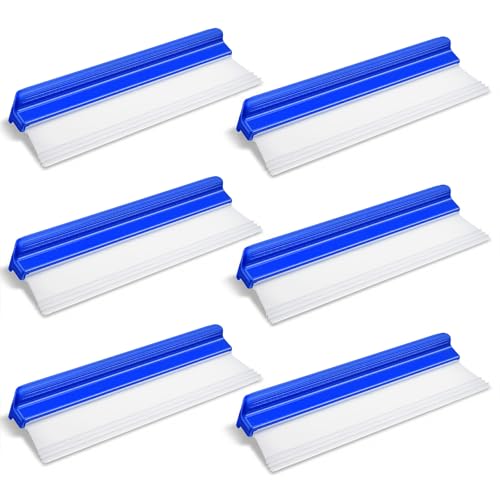
The best car wash drying blade in 2026 is the 12-inch California Style Jelly Blade listed by Auto Dealers Haven as a car drying squeegee. It is described as soft medical-grade silicone, and that material matters more than hype because soft silicone creates less edge drag and stays gentler on paint than harder, rougher contact.
1) 12-inch california style jelly blade
This is the strongest overall pick for open-panel drying. It is the right size for fast coverage without becoming hard to steer, and Auto Dealers Haven says it is suitable for cars, trucks, SUVs, and boats. The product claim is streak-free, scratch-free water removal, but that result still depends on cleanliness and technique.
Pros: soft medical-grade silicone, broad use case, good control on large panels, suitable for multiple vehicle types. Cons: seam water can remain, and dirty edges can smear or drag grit.
2) Microfiber drying towel
This is the safer choice when the problem is not speed but residue in seams, trim, and corners. Auto Express tested 13 drying towels in its 2026 comparison, weighing towels before and after a one-minute immersion and also checking streaks on a glossy panel. CarPlan Demon Micro scored 5.0 stars, while Turtle Wax Ultimate Microfibre Drying Towel was rated 4.5 stars.
Pros: absorbent, streak-free finish potential, better around trim and badges. Cons: heavier when wet, slower on large flat panels, can feel bulky if the towel is oversized.
3) Blade for dealer prep, towel for finish work
This is the best risk-reduction routine for showroom prep, dealer lot use, and before-delivery cleanup. The blade clears most standing water quickly, then the towel handles the water left in seams, edges, and badges. That two-step method lowers the chance of missed drips, water lines, and seam runoff after the vehicle leaves the bay.
Pros: efficient on broad panels, practical for larger vehicles, reduces the number of wet passes. Cons: requires more handling steps, and the finish depends on both tools being clean.
Are silicone drying blades safe on paint?
Soft silicone drying blades are generally paint-safe when the edge is clean, the panel is well rinsed, and the user avoids pressing grit into the finish. The material matters. Soft silicone is far safer than a hard or rough blade, but no drying tool is scratch-proof if contamination stays on the edge or under the blade.
Where the risk goes up
Risk rises on dirty seams, lower door edges, under mirrors, and around badges where trapped grit can get pulled across paint. Trim edges and panel gaps also increase the chance of dragging debris. If the blade catches, chatters, or starts leaving smear lines, stop and switch to a towel.
Say your SUV has fresh wash water on the roof and a gritty line around the rear glass trim. A silicone blade can clear the roof quickly, but the trim line should get towel attention first. That keeps dirt from moving from the edge into the clearcoat.
How wide should a car drying blade be?
For many drivers, about 12 inches is a practical sweet spot. It is wide enough to cover open panels quickly, yet short enough to stay controlled on curves and around mirrors. Wider blades can move more water, but they can also be harder to manage on complex bodywork and tight panel shapes.
12-inch versus narrower blades
A 12-inch car drying blade is a strong fit for cars, trucks, and SUVs because it balances reach and handling. Narrower blades are easier to place in small areas and around tighter curves. The tradeoff is slower coverage, which matters on large hoods, roofs, and tailgates.
Picture a pickup with a long roof and broad doors. A 12-inch blade cuts the drying passes down on those large surfaces. Then a microfiber towel finishes the mirrors, door handles, and the sharp seams around the tailgate where water likes to hide.
Is a drying blade better than a microfiber towel?
Not always. A drying blade is usually faster on open exterior surfaces because it pushes water off paint, glass, and other flat panels. A microfiber drying towel is better when the priority is absorbency, seam cleanup, and a final streak-free finish around trim. The right answer depends on the panel, not the product alone.
Microfiber towel tradeoffs
Microfiber can absorb a lot of water and leave a clean finish, but size and weight matter. Large towels are helpful on roofs and hoods, yet they become heavier when wet. Single-sided towels are often simpler to control; double-sided towels can offer more usable surface, but they can also feel bulkier during a full dry.
The Auto Express comparison matters here because it looked at absorbency and streaks, not just feel. CarPlan Demon Micro led that test with 5.0 stars and 6.4 l/m2 absorbency, while Turtle Wax Ultimate Microfibre Drying Towel rated 4.5 stars at around £15. Those numbers point to a real pattern: towels win when soaking water is the job, not pushing it away.
When the towel beats the blade
Use the towel first if the vehicle has lots of badges, textured plastic, or deep panel gaps. Use it again when water spots are a concern and the rinse water is hard. A towel is also the better choice on delicate finishes where any edge drag is a bigger concern than drying speed.
How to choose and care for one
Choose the tool around your routine, not around the biggest claim on the box. After-wash drying on a clean sedan is a different job from dealer lot cleanup on an SUV, and both are different from before-delivery work on a black vehicle that shows every mark. The safest choice is the one that matches your panels, your water, and your tolerance for follow-up wiping.

Buying checks
- Check the material first. Soft silicone and quality microfiber are the safer starting points for paint contact.
- Pick width for the vehicle. A 12-inch blade suits most cars and still works on trucks and SUVs.
- Match the tool to the finish. If seams, trim, and badges matter most, add a microfiber towel.
- Look for clean storage. A blade tossed into a dirty trunk or bucket becomes a contamination risk.
- Replace worn tools. Cracks, hard edges, or gritty buildup raise streak and scratch risk.
Care and storage
Rinse the blade after each use, then dry it before storage so debris does not stick to the edge. Keep it away from dirty brushes, sandy mats, and chemicals that can leave residue. If the blade starts to leave haze, chatter, or streaks even after cleaning, it has become a maintenance problem rather than a drying aid.
Hard-water areas deserve extra caution. Standing water can leave water spots and limescale marks, so a fast dry matters more there than in soft-water areas. If the vehicle is heavily spotted after rinsing, switch from blade to towel sooner and give seams and trim a final pass.
Frequently asked questions
Are silicone drying blades safe on car paint?
Yes, soft silicone drying blades are generally safe on paint when the blade is clean and the surface is well rinsed. Safety drops fast if the edge picks up grit, if the panel has trapped dirt in seams, or if the user presses too hard. Technique matters as much as the material.
Do drying blades leave streaks on paint?
They can. Streaks usually come from dirty edges, trapped grit, or using the blade on panels that still hold water in seams and trim. A clean soft silicone blade on a rinsed panel should reduce streaking, but a microfiber towel is often safer for the final finish.
Can I use a car drying blade on trucks and SUVs?
Yes. A 12-inch soft silicone blade is a practical size for trucks and SUVs because it handles larger panels without becoming too awkward. It works best on roofs, doors, and tailgates. On deep seams, textured trim, and mirror housings, a microfiber towel is still the safer choice.
Products related to this article
Sponsored / affiliate links. As an Amazon Associate I earn from qualifying purchases. I may earn additional commission from eligible campaigns.