Crane for Cars: Engine Hoist Types & Buying Guide
A “crane for cars” almost always means an engine hoist (also called a cherry picker) – a portable hydraulic tool that lifts an engine or transmission out of a vehicle for repair, rebuild, or replacement. It does not lift the whole car off the ground; that job belongs to a vehicle lift or a set of jack stands.
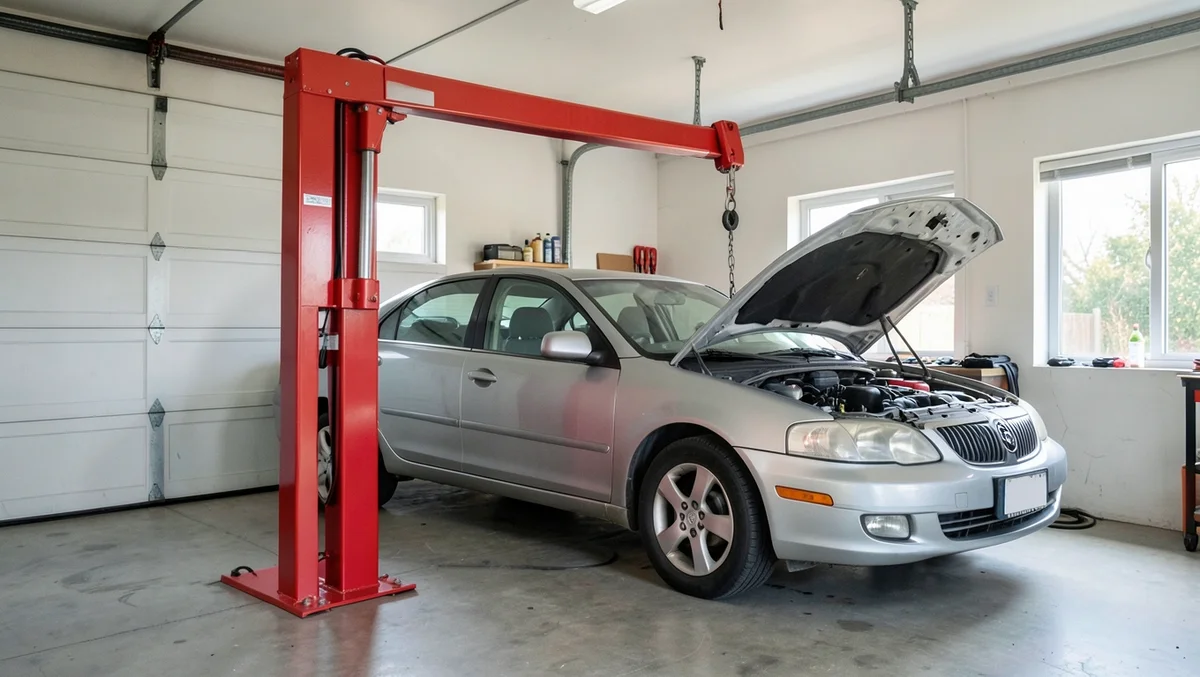
The term gets confusing because it covers several very different tools: the folding shop hoist a home mechanic uses to pull an engine, the fixed two-post lift a shop uses to raise a whole car for undercarriage work, and the boom crane on the back of a tow truck. Below, we break down what each one actually does, how a typical engine hoist works, and what to check before you buy one.
What Is a Crane for Cars? Engine Hoist vs. Vehicle Lift
BUDGET-FRIENDLY ENGINE HOIST PICK
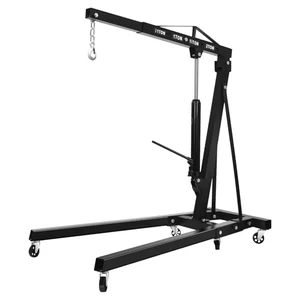 |
BYGOVICE 2-Ton Hydraulic Engine Hoist – $112.99 This is the type of engine hoist most home mechanics actually mean when they search for a “car crane” – a folding cherry picker built to pull an engine, not lift a whole vehicle.
|
When most people search for a “car crane,” they are picturing a portable engine hoist like the one above: a hydraulic ram, a folding boom, and a set of caster wheels, all built to hook onto an engine and lift it clear of the engine bay. That is a completely different tool from a vehicle lift, which raises the entire car so a technician can work underneath it, or a boom crane, which is bolted to the back of a tow truck for vehicle recovery.
Mixing these up matters because their weight ratings are nowhere close. A typical folding engine hoist is rated for 1 to 3 tons (2,000 to 6,000 pounds), which easily covers most engines and transmissions but is nowhere near enough to safely lift an entire car. A shop vehicle lift, by comparison, is usually rated for 9,000 pounds or more because it has to support the full weight of the car.
Types of Cranes and Lifting Equipment Used on Cars
Portable Folding Engine Hoist (Cherry Picker)
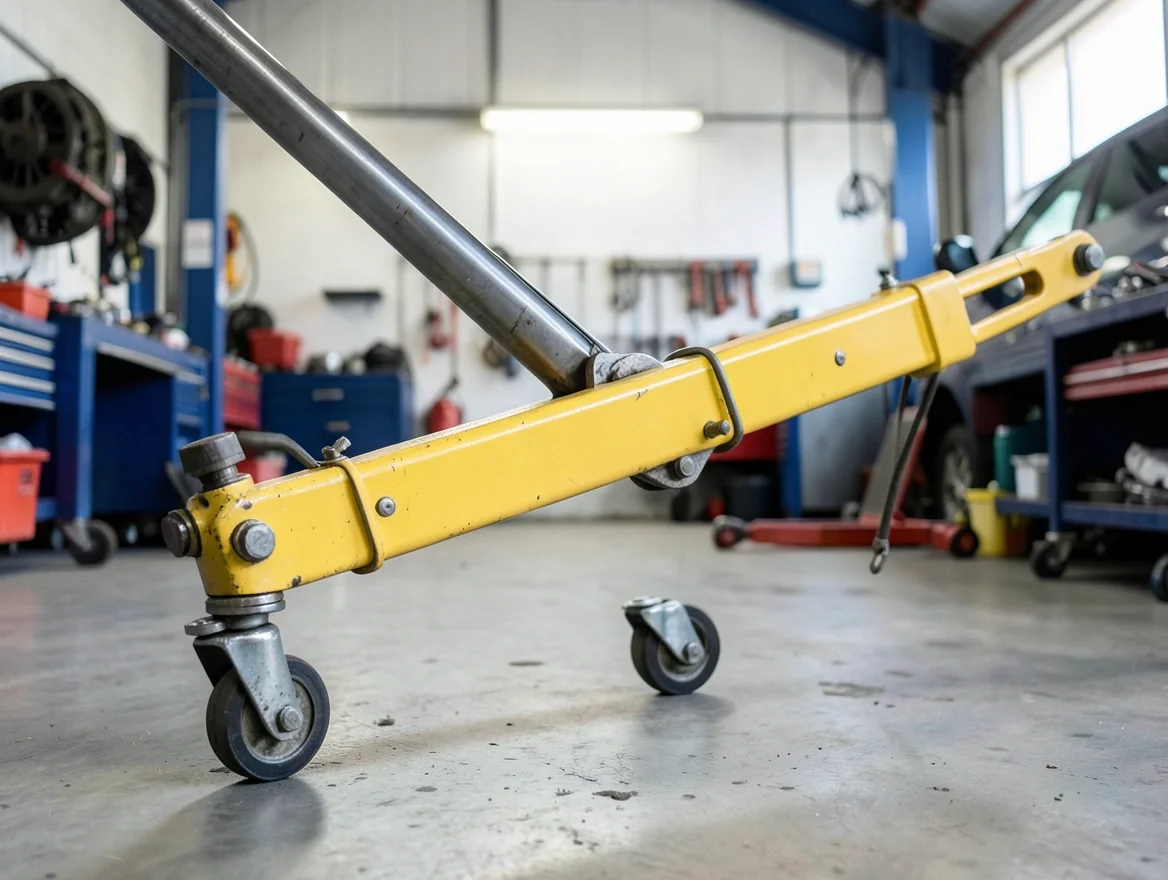
This is the tool most home garages own. It has a vertical mast, a folding boom with a hook at the end, and a hand-pumped hydraulic ram that raises the boom. The legs fold in for storage and the whole unit rolls on caster wheels. It is used almost exclusively for pulling an engine, transmission, or engine/transmission assembly out of a vehicle.
Engine Stand
An engine stand is not a lifting tool by itself, but it works alongside a hoist. Once the hoist has pulled the engine out, you lower it onto the stand, which bolts to the bellhousing or transmission mounting holes and lets you rotate the engine to any angle for teardown, gasket work, or a rebuild.
Two-Post and Four-Post Vehicle Lifts
These are the fixed hydraulic lifts you see in professional repair shops, bolted to the floor with arms or ramps that raise the entire vehicle. They are rated far higher than an engine hoist, usually starting around 9,000 pounds, because they have to hold the full weight of the car for work like exhaust, suspension, or undercarriage repairs.
Tow Truck Boom Cranes
A wrecker or tow truck uses a hydraulic boom crane mounted to its bed to lift and recover vehicles, often after an accident or when a car needs to be pulled out of a ditch. These are heavy commercial equipment rated for several tons, operated by a trained tow operator, and are not something a home mechanic would own or use.
How Does an Engine Hoist Work?
A folding engine hoist runs on the same basic hydraulics as a floor jack. A hand-operated pump forces fluid into a hydraulic ram, and that ram pushes the boom upward around a pivot point. Turning the release valve slowly lets fluid flow back out of the ram, which lowers the boom under control instead of dropping it.
The boom usually has several bolt-hole positions so you can adjust both its length and its rated capacity. A shorter boom position gives you the hoist’s full rated capacity (often 2 tons), while extending the boom out to reach a longer engine bay reduces how much weight it can safely lift, similar to holding a weight closer to or farther from your body. A chain or leveler bar connects the boom’s hook to the engine’s lifting points, and an engine leveler lets you tilt the load to clear obstacles as it comes out.
How to Choose the Right Car Crane (Engine Hoist)
Most consumer engine hoists look similar at a glance, but a few specs make a real difference once you are trying to pull a specific engine out of a specific car.
- Weight capacity: Match the hoist’s rated capacity, at the boom length you will actually use, to the combined weight of the engine and anything still bolted to it (transmission, flywheel, accessories). A 2-ton hoist covers most four- and six-cylinder engines with room to spare; heavier V8s pulled with the transmission attached can get close to that limit.
- Lift height: Most folding hoists reach roughly 6 to 7 feet at full extension, which is enough clearance to swing an engine clear of the hood opening on most vehicles. If you work on trucks or SUVs with a higher engine bay, check the hoist’s maximum lift height before buying.
- Mobility: Six caster wheels (rather than four) make it much easier to roll a loaded hoist in a straight line without the load swinging, which matters in a tight garage.
- Stability: Look for a wide, splayed base and a hoist that is rated for its full capacity with the legs fully extended, not just folded for storage. A narrow base is the main reason a loaded hoist tips over.
- Construction: Solid steel frames with welded (not just bolted) joints hold up better under repeated loading than thin stamped steel.
- Safety features: A slow-release valve you can control precisely, a secure hook latch, and (ideally) an engine leveler bar included in the box all make the lift safer and easier to manage alone.
- Storage space: Folding hoists collapse down significantly for storage, which matters if you are working in a single-car garage and only need the hoist occasionally.
If you want a full side-by-side comparison of specific models, see our best car engine hoists buying guide, which reviews several top-rated hoists head-to-head.
How to Use an Engine Hoist Safely
- Disconnect the battery and drain or safely relocate any fluids and lines (fuel, coolant, refrigerant) before you start disconnecting the engine.
- Remove every mount, bracket, hose, and wiring connection that still ties the engine to the car, and double-check nothing is still attached before you start lifting.
- Attach the chain or leveler bar to the engine’s factory lifting points (or solid bolt points, such as exhaust manifold bolts), not to anything plastic or hollow.
- Position the hoist so the boom sits as directly over the engine’s center of gravity as possible before you start pumping; lifting from an angle is what causes engines to swing or the hoist to tip.
- Pump the hydraulic handle slowly and watch the engine as it rises, stopping to check clearance around hoses, wiring, and the body before continuing.
- Never put any part of your body under an engine that is only supported by the hoist; once it is clear of the car, lower it onto an engine stand or a solid, load-rated surface as soon as possible.
- Lower the boom slowly using the release valve; never release it quickly or let the load free-fall.
Frequently Asked Questions
What Is a Crane for Cars?
In everyday use, a “crane for cars” almost always means a portable engine hoist, also called a cherry picker – a hydraulic tool used to lift an engine or transmission out of a vehicle for repair or replacement. It is not designed to lift an entire vehicle off the ground.
How Does a Car Crane (Engine Hoist) Work?
A hand-operated hydraulic pump pushes fluid into a ram that raises the hoist’s boom. A chain or leveler bar attached to the engine’s lifting points hooks onto the boom, so as the boom rises, the engine lifts straight up and out of the engine bay. A release valve lets you lower the load slowly and under control.
Can an Engine Hoist Lift an Entire Vehicle?
No. A typical folding engine hoist is rated for 1 to 3 tons, which is enough for most engines and transmissions but far below the weight of a complete vehicle. Lifting an entire car requires a two-post or four-post vehicle lift, which is rated for 9,000 pounds or more and bolted to the floor.
Can I Operate a Car Crane (Engine Hoist) Myself?
Yes, a folding engine hoist is designed for a single home mechanic to operate, though having a second person to guide the engine and watch for clearance issues makes the job much safer. Larger commercial lifting equipment, like a tow truck’s boom crane, requires trained, often licensed operators.
How Much Does an Engine Hoist Cost?
Most consumer 2-ton folding engine hoists cost between roughly $100 and $250, depending on the brand, included accessories (such as an engine leveler), and build quality. Heavier-duty models and those with added features like electric or air-assisted pumps cost more.
Why Does an Engine Hoist’s Weight Capacity Change?
Most folding hoists let you bolt the boom into several positions to change its length. A shorter boom setting gives you the hoist’s full rated capacity, while extending the boom to reach farther into a large engine bay reduces the safe load, the same way a longer lever arm reduces how much weight you can hold steady at the end of it. Always check the capacity rating that matches the boom position you are actually using.
Conclusion
A crane for cars, in the way most people search for one, is a portable engine hoist: a folding, wheeled tool built to lift an engine or transmission out of a vehicle, not the vehicle itself. Match its rated capacity and lift height to your engine, check that its base and construction are stable enough to trust with an expensive load, and always lower a lifted engine onto a stand rather than leaving it hanging on the hoist. Get those basics right and an engine hoist will handle most home engine swaps safely for years.
Products related to this article
Sponsored / affiliate links. As an Amazon Associate I earn from qualifying purchases. I may earn additional commission from eligible campaigns.