Grease for Car Door Hinges: Tested & Reviewed (2 Picks)
For most squeaky or sticky car door hinges, use white lithium grease for clean metal pins and a thicker synthetic or chassis grease for rusty, vertical, or load-bearing pins; this guide names the two best picks by use case. Left untreated, the hinge keeps grinding, the noise gets worse, and wear can spread to the pin, bushings, and door alignment. You’ll see which grease fits a clean squeak, a rusty hinge, and a messy overhead application, plus how to apply it without making a mess.
Top pick for car door hinges


WD-40 Specialist White Lithium Grease Spray is the best starting point for most car door hinges because it combines white lithium grease’s metal-on-metal fit with a precision straw, so you can aim into a vertical hinge gap without flooding trim. It also dries into a coating that won’t drip, which matters on painted door edges.
Why the spray format wins for clean, vertical hinge pins
Door hinges are awkward lubrication targets. The pin sits upright, the gap is small, and excess product tends to run onto paint, weather seals, or door checks. A spray white lithium grease with a smart straw handles that access problem better than a broad nozzle, especially when the hinge is clean but dry.
Where the top pick fits best
This pick is strongest for a clean squeak, light corrosion, and tight gaps. It is built for metal-to-metal applications and adds rust and corrosion protection, so it suits humid climates and winter-road-salt exposure better than a plain silicone spray. It is less ideal if the hinge is packed with dirt or the pin is badly worn.
Quick picks by hinge problem
Match the format to the hinge condition. Clean squeaks and tight vertical gaps favor the spray. Rusted pins, overspray concerns, or a need for exact placement favor the tube. That is the practical split, and it matters more than brand loyalty.
- Best for clean squeaks: WD-40 Specialist White Lithium Grease Spray
- Best for targeted tube application: Lucas Oil White Lithium Grease
Hinge lube decision matrix
This table maps the symptom to the hinge condition, the best format, and the most likely way the job goes wrong. The point is to match the grease to the failure case, not to spray everything the same way.
| Symptom | Hinge condition | Best format | Application tool | Likely failure mode | Maintenance interval |
|---|---|---|---|---|---|
| Clean squeak | Dry metal pin, light wear, little visible rust | White lithium spray | Precision straw | Too much product on paint and trim | Inspect every 6 months; reapply at the first return of noise |
| Rusted hinge pin | Surface rust, stiff motion, visible contamination | Tube grease after cleaning | Small brush, swab, or gloved fingertip | Grease over rust seals in grit and leaves the hinge rough | Inspect every 3 to 4 months in wet or salted climates |
| Cold-weather stickiness | Thick feel on cold mornings, slow return, older grease present | NLGI-2 white lithium grease | Small applicator for controlled placement | Thin spray migrates away or leaves weak coverage | Check before winter and again after the salt season |
| Overspray-sensitive trim | Fresh paint, textured plastic, weather seals nearby | Tube grease | Brush or swab | Spray mist lands where it should not | Inspect twice a year; clean the exposed edges when needed |
WD-40 specialist white lithium grease spray review
This is the easier fit for most DIY hinge jobs because the spray format reaches narrow gaps and the Smart Straw gives directed control. It dries into a coating that won’t drip, which helps on a vertical hinge pin where gravity works against you. It is the cleaner choice when the hinge is not heavily contaminated.
Smart straw control for narrow hinge gaps
Smart Straw technology matters because a hinge gap is not a broad bearing surface. You need to place lubricant at the pivot point, not fog the door edge. The straw lets you aim at the pin and the hinge barrel, which reduces waste and lowers the chance of soaking the surrounding panel.
Drying behavior, rust protection, and metal-to-metal use
White lithium grease is the default for bare metal hinges because it resists moisture and cuts friction on sliding metal parts. This spray is aimed at metal-to-metal applications and adds rust and corrosion protection, so it fits cars that live outside, see rain, or pick up road salt.
Likely failure mode: overspray or under-cleaned hinges
The main risk is not the grease itself. It is applying it over old grit or spraying too broadly. On a dirty hinge, the new film can hold onto abrasive debris. On glossy trim, overspray leaves a cleanup job you did not need. Clean first, then apply sparingly.
Lucas Oil White Lithium grease review
Lucas Oil White Lithium Grease is the better pick when you want exact placement and a thicker, more controlled application. It is sold as a two-pack for value and is described as NLGI-2 rated, which is the practical consistency target for vertical hinge surfaces that need the grease to cling instead of running off.
Why tube grease helps on worn pins and exact placement
A tube or squeeze format is easier to place right on the pin, washer, or contact edge. That matters when the hinge is already worn or when you want to avoid misting paint, rubber seals, or door-check hardware. Tube grease is slower to apply, but it gives tighter control.
NLGI 2 thickness, soap-cleanable cleanup, and value in a 2-pack
NLGI consistency grade describes thickness. For door hinges, NLGI 2 is the sweet spot because it is thick enough to stay on a vertical surface yet still workable by hand. Lucas Oil also gives you a two-pack, and its soap-cleanable cleanup is useful when the hinge area needs wiping without harsh solvents.
Likely failure mode: too much grease on exposed surfaces
Tube grease can be overdone. If you pack the hinge barrel or smear the visible edge, the excess will grab dust and make the area look dirty faster. That does not mean grease attracts dirt by itself; over-application is the real problem. Apply a thin film where metal actually moves.
What matters when choosing hinge grease?
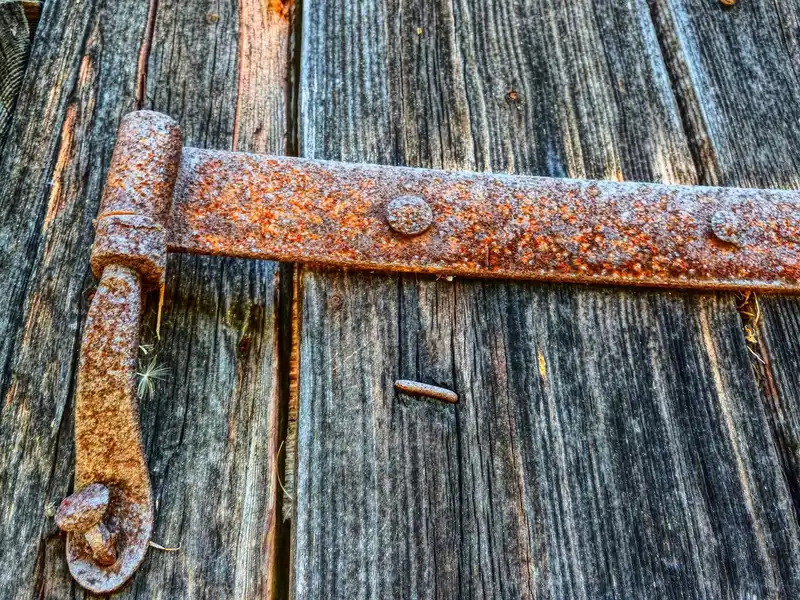
The right grease is the one that fits the hinge condition, the weather, and the way you can apply it. For bare metal pins, white lithium grease is the default. For rubber or plastic nearby, silicone can make sense. For very slick film coverage, PTFE spray has a place, but it is not the best long-term hinge answer.
White lithium grease versus silicone lubricant
White lithium grease is usually the better choice for metal hinges because it clings, resists moisture, and reduces friction on metal contact points. Silicone lubricant is a better fit for rubber and some plastic-adjacent parts. It can work on mixed materials, but on bare metal hinge pins it is usually a weaker choice because it is less suited to load-bearing hinge service.
Where PTFE spray fits and where it falls short
PTFE, or Teflon, lubricants leave a low-friction film that can help on light-duty mechanisms. The tradeoff is durability: that film can dry out faster than grease in hinge service. It can be useful where you want a lighter coating, but it is not the strongest answer for older, noisy, vertical door hinges.
NLGI 2, drop point, and why temperature matters
NLGI 2 matters because it gives the grease enough body to cling to a hinge pin instead of slumping off. Drop point matters because it marks the temperature at which grease melts. In hot climates, a higher drop point reduces melt-off risk, especially on doors that sit in sun and heat-soak.
Spray versus tube: control, reach, and mess
Spray grease wins when the hinge gap is tight and you want reach with minimal contact. Tube grease wins when the hinge is already dirty, the pin is worn, or nearby trim is easy to stain. If the door is above painted sill trim, tube application often gives better mess control.
Say your 12-year-old sedan squeaks only after an overnight rain. That points to moisture on a mostly clean hinge, not a fully seized pin. A white lithium spray with a straw is the better first move, because it can reach the pivot and add rust protection without a heavy cleanup.
Suppose your hatchback door check is stiff in January and the hinge already has dark residue around the pin. That is a different job. Clean the area first, then use a small amount of tube grease so the product stays where the metal moves instead of misting into the door jamb.
How to apply grease without a mess
The cleanest hinge job follows a simple order: remove old grime, place a thin film at the pivot, move the door to spread it, and wipe away excess. If you skip cleaning, you trap grit. If you use too much product, you turn a small fix into a cleanup job.
- Wipe loose dirt and old residue from the hinge pin and barrel.
- Use the straw or a small applicator to put grease at the moving contact point.
- Open and close the door several times so the film spreads through the hinge.
- Wipe squeeze-out from paint, seals, and nearby trim.
- Check the door check and latch area for stray product before driving.
For overspray-sensitive trim, cover the area with a rag and use the tube format if possible. For older vehicles with worn hinge pins, aim for the hinge barrel and pin interface rather than flooding the whole assembly. For door checks, apply only a light film; those parts need movement, not a grease bath.
Frequently asked questions
What is the best grease for car door hinges?
For most car door hinges, white lithium grease is the best starting point because it sticks to vertical metal surfaces, resists moisture, and lowers friction. WD-40 Specialist White Lithium Grease Spray is the better all-around pick for easy application, while Lucas Oil White Lithium Grease is better when you want precise placement from a tube.
Should I use white lithium grease or silicone on door hinges?
Use white lithium grease on bare metal hinge pins and hinge barrels. Use silicone when the part is rubber or plastic-adjacent, or when you need a lighter lubricant for a nearby non-metal component. Silicone is not the stronger choice for a noisy metal hinge that needs staying power under load.
How do you lubricate car door hinges without making a mess?
Clean the hinge first, then apply a small amount directly to the pin or moving joint. A spray with a precision straw helps with reach, while a tube gives better control near trim. Work the door several times, then wipe off excess from paint, seals, and the door edge.
How long does grease last on car door hinges?
There is no universal interval because climate and hinge condition matter. A clean, sheltered hinge may hold up for months, while a salted, wet, or dirty hinge needs attention sooner. A practical rule is to inspect about every 6 months, or about every 3 to 4 months in harsh winter-road-salt regions.
Will grease attract dirt on car door hinges?
Properly applied grease does not automatically attract dirt in a way that ruins the job. Over-application does. A thin film on the moving parts reduces wear; a thick smear on exposed surfaces collects dust and road grit. The cleaner the hinge before lubrication, the less contamination you usually trap.
Can I use WD-40 on squeaky car door hinges?
Standard water-displacing spray can quiet a hinge briefly, but it is not the same as a true hinge grease. For a lasting fix, use a white lithium grease designed for metal-to-metal contact. WD-40 Specialist White Lithium Grease Spray is the better WD-40-branded choice for the actual lubrication step.
What is the difference between spray grease and tube grease for hinges?
Spray grease reaches tight spaces quickly and is easier on vertical hinges, especially with a precision straw. Tube grease gives tighter placement, less overspray, and better control on dirty or worn hinges. If the problem is mess, proximity, or exact placement, the tube usually wins.
What temperature range should hinge grease handle?
For door hinges, the temperature spec matters most when the car sits in heat or winter cold. A grease with a higher drop point is better for hot weather because it is less likely to soften and run. In cold climates, the grease should still move without turning stiff and sticky.
Products related to this article
Sponsored / affiliate links. As an Amazon Associate I earn from qualifying purchases. I may earn additional commission from eligible campaigns.