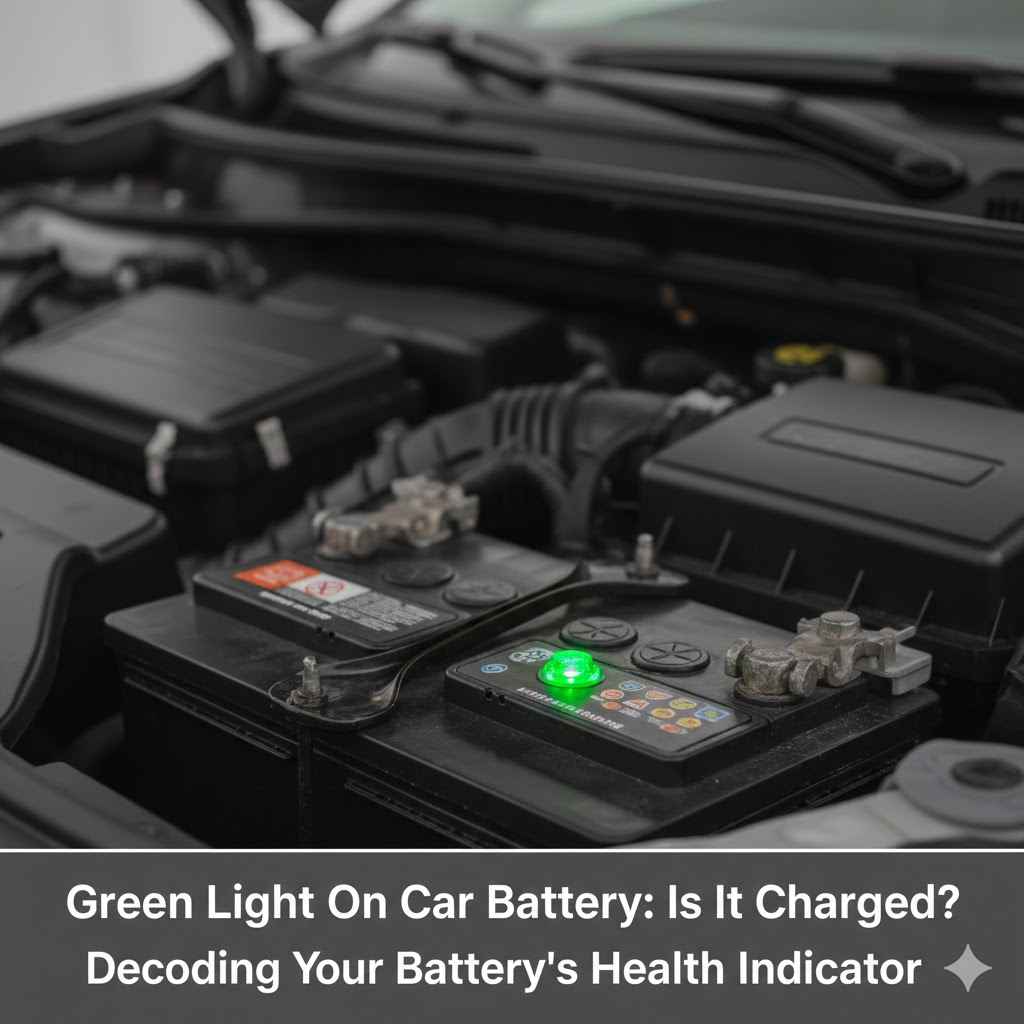
Green Light on Car Battery Is It Charged
Seeing a green light on your car battery can be confusing. Many people wonder, “Green Light on Car Battery: Is It Fully Charged?” This is a common question, especially for those new to car maintenance. It might seem tricky, but figuring it out is easier than you think.
This guide will walk you through everything step-by-step. We’ll make sure you know exactly what that little green light means for your car’s power. Let’s find out if your battery is ready to go!
Understanding Your Car Battery Green Light
The green light on your car battery is a simple indicator, but its meaning can sometimes be misunderstood. This indicator is usually part of a battery’s built-in system, often called a “magic eye” or “hydrometer indicator.” Its main job is to give you a quick visual check of the battery’s state. Knowing what this light signifies is key to proper car care.
It helps you avoid unexpected breakdowns caused by a dead battery. We will explore how this indicator works and what it truly tells you about your battery’s health.
How the Battery Hydrometer Indicator Works
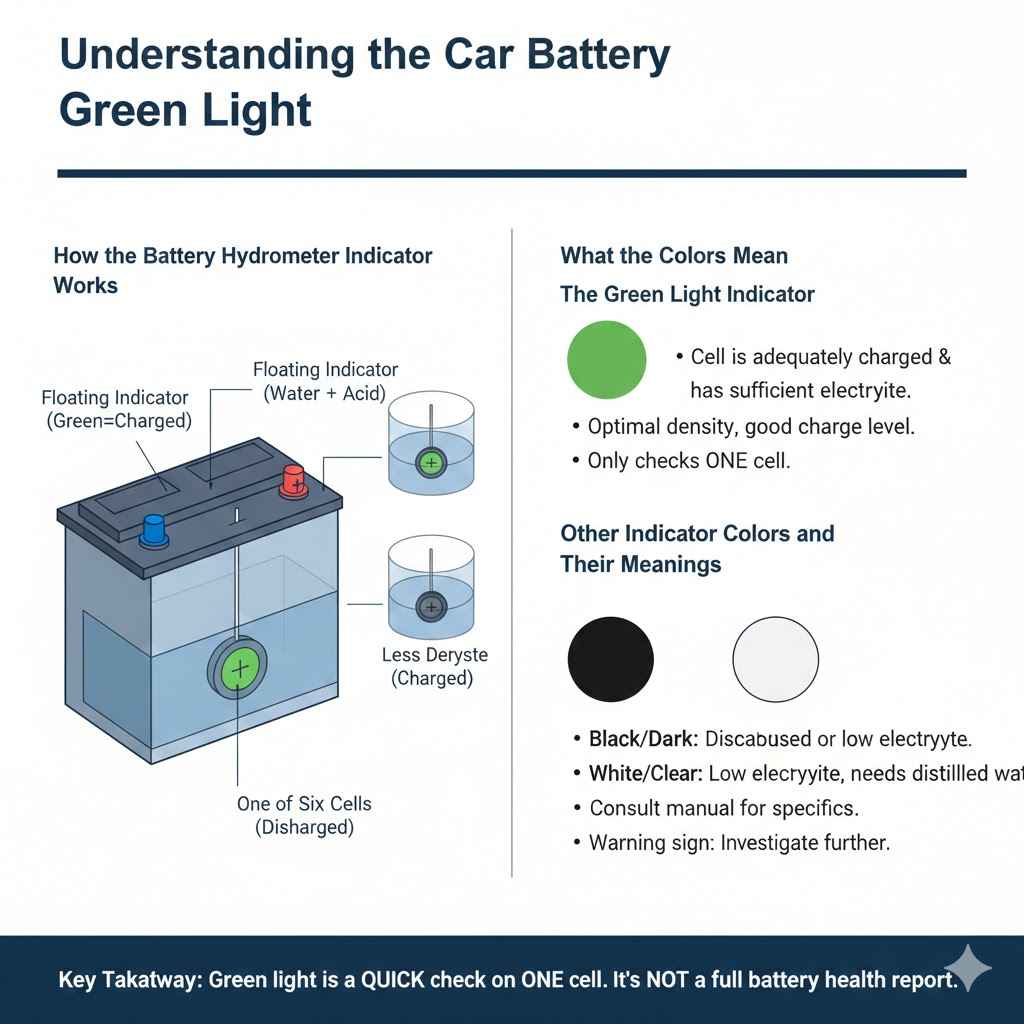
The hydrometer indicator is a small, colored float inside the battery. It’s connected to a tube that reaches into one of the battery’s cells. Each cell contains a mix of water and sulfuric acid, called electrolyte.
The density of this electrolyte changes based on how charged the battery is and its temperature.
When the battery is fully charged and healthy, the electrolyte is dense enough to make the float rise. This floating indicator shows a specific color, usually green. If the battery is low on charge or the electrolyte level is too low, the float will sink, and the indicator might show a different color, like black or white, or no color at all.
This visual cue is designed to be a quick way to assess battery condition without needing special tools. It’s a neat piece of engineering designed for convenience.
Electrolyte Density and Battery Charge
The electrolyte’s density is measured using a tool called a hydrometer. In a healthy, fully charged battery, the sulfuric acid is more concentrated. This higher concentration means the electrolyte is denser.
The hydrometer float is designed to sit at a certain level in dense liquids.
When the battery discharges, the chemical reaction uses up some of the sulfuric acid. This makes the electrolyte less dense, more like water. A less dense liquid will cause the hydrometer float to sink.
So, the color you see from the indicator is a direct result of the electrolyte’s density, which is tied to the battery’s charge level.
This is why temperature can also play a role. Warmer liquids are generally less dense than cooler ones. So, a battery’s performance can be affected by extreme temperatures, influencing the hydrometer reading.
What the Colors Mean
The colors displayed by the hydrometer indicator are standardized, though slight variations can exist between manufacturers. The most common color codes provide clear signals about the battery’s condition. Understanding these colors helps you interpret the indicator accurately.
The Green Light Indicator
When you see a Green Light on Car Battery: Is It Fully Charged?, it generally means that the specific cell it’s in is adequately charged and has a sufficient electrolyte level. This is the best-case scenario. It suggests that at least that part of the battery is functioning as it should.
A green light indicates that the electrolyte density is within the optimal range for that cell. This means the battery has a good chance of holding a charge and providing power. However, it’s important to remember that this indicator only checks one cell.
A battery has multiple cells, and the health of all of them is vital.
Other Indicator Colors and Their Meanings
While green is the goal, other colors appear. A black or dark-colored indicator often means the cell is discharged or has a low electrolyte level. This requires immediate attention.
A white or clear indicator can also signal a low electrolyte level. Sometimes, it might mean the battery needs distilled water. It’s crucial to check the battery’s manual for specific color interpretations.
If the indicator shows a different color, it’s a signal that something is not right. It’s time to investigate further. These colors are like warning lights for your battery.
When Is the Green Light on Car Battery: Is It Fully Charged?
The question “Green Light on Car Battery: Is It Fully Charged?” implies that the green light is the definitive answer. However, the reality is a bit more nuanced. While green is a good sign, it doesn’t always guarantee the battery is at 100% capacity or perfectly healthy.
Understanding these nuances helps in diagnosing battery issues accurately.
Limitations of the Hydrometer Indicator
The hydrometer indicator is a convenient tool for a quick check, but it has limitations. It only tests one cell, and a battery can have six cells. If one cell is weak or damaged, it can affect the entire battery’s performance, even if the indicator in another cell shows green.
Also, the indicator doesn’t account for the battery’s age or overall internal condition. A battery with a green light might still be nearing the end of its lifespan. It could have reduced cranking power or struggle in very cold weather.
Furthermore, the accuracy can be affected by temperature. A battery that looks green on a hot day might show a different reading on a cold day. Regular maintenance and professional testing are still important.
Checking Other Battery Cells
Many car batteries have an indicator in each cell, or at least in several cells. If your battery has multiple indicators, check them all. If one cell shows green and another shows black, it’s a clear sign of a problem.
If you see different colors among the indicators, the battery is likely not fully charged or is developing internal issues. This indicates an imbalance between the cells. This imbalance can lead to premature battery failure.
Always consult your car’s manual or the battery manufacturer’s guide for specific instructions on checking indicators. Some batteries might have a single indicator that is supposed to represent the average condition of all cells.
Factors Affecting the Indicator Reading
Several factors can influence what the hydrometer indicator shows. Temperature is a significant one. Electrolyte density changes with temperature.
Another factor is the electrolyte level. If the battery is low on water, the electrolyte might not be dense enough, affecting the float’s position. This is more common in older batteries or those that have been overcharged.
The condition of the battery’s internal components, like the plates and separators, also plays a role. Sulfation, a common issue with aging batteries, can alter electrolyte density and affect readings.
Temperature Influence on Density
When the temperature rises, liquids expand and become less dense. Conversely, when it gets cold, liquids contract and become denser. This principle directly affects the electrolyte in your car battery.
On a hot day, the electrolyte might appear denser than it actually is relative to its charge. This can cause the hydrometer float to rise, showing green even if the battery is not fully charged. On a cold day, the electrolyte becomes denser, potentially making a fully charged battery appear less charged.
Battery manufacturers often account for this in their testing guidelines. For the most accurate reading, it’s usually recommended to test the battery at a moderate temperature, around 70-80 degrees Fahrenheit (20-27 degrees Celsius).
Electrolyte Level Maintenance
For batteries that allow for it (non-sealed batteries), maintaining the correct electrolyte level is crucial. This involves adding distilled water to the cells when needed. Never use tap water, as its minerals can damage the battery.
Low electrolyte levels mean part of the lead plates are exposed to air. This leads to sulfation and irreversible damage. It also means the hydrometer indicator might not function correctly because the float is not submerged in the electrolyte properly.
Most modern car batteries are “maintenance-free,” meaning they are sealed and do not require water additions. However, older vehicles might still have serviceable batteries. Always check your car’s manual.
How to Check Your Green Light on Car Battery: Is It Fully Charged?
You’ve seen the green light, but how do you confirm if the Green Light on Car Battery: Is It Fully Charged? This section provides practical steps to go beyond the basic indicator and get a clearer picture of your battery’s health. It’s about confirming what the green light suggests and what other signs to look for.
Visual Inspection and Simple Tests
Before relying solely on the hydrometer, a quick visual inspection can tell you a lot. Look for any signs of damage, such as cracks in the battery case or corrosion around the terminals. Clean terminals ensure a good connection.
You can also perform a simple “headlight test.” Turn on your headlights with the engine off. If they are bright, it suggests the battery has a good charge. If they are dim, it’s a sign of a weak battery.
Another easy check is to listen to your car start. A healthy battery will crank the engine over quickly and strongly. A slow, weak crank often means the battery is losing its power.
Terminal Cleaning and Connection Check
Corrosion on the battery terminals can prevent proper electrical flow, even if the battery itself is healthy. This white or bluish powdery substance can build up over time. To clean it, you can use a mixture of baking soda and water, a wire brush, and some old rags.
Carefully remove the battery cables, making sure to disconnect the negative terminal first and reconnect it last. Clean both the battery posts and the inside of the cable clamps. A clean connection is essential for the battery to deliver its full power.
Ensure the cable clamps are tightened securely onto the battery posts. Loose connections can cause intermittent starting problems and power issues.
Using a Multimeter for Accurate Readings
For a more precise understanding of your battery’s charge, a multimeter is invaluable. This common electrical tool can measure voltage. A fully charged car battery should read around 12.6 volts or higher when the engine is off.
To use a multimeter, set it to DC voltage measurement, usually indicated by “VDC” or a “V” with a solid line and dashes above it. Connect the red probe to the positive (+) battery terminal and the black probe to the negative (-) terminal.
A reading between 12.4 and 12.7 volts indicates a good state of charge. Anything below 12.4 volts suggests the battery needs charging. A reading below 12.0 volts means the battery is significantly discharged and may require professional attention.
Interpreting Multimeter Voltage Readings
The voltage reading from a multimeter provides a quantitative measure of the battery’s charge. Here’s a general guide for a typical 12-volt car battery:
| Voltage Reading | Approximate State of Charge | Action Needed |
|---|---|---|
| 12.6V or higher | 100% | Fully charged and healthy. |
| 12.4V – 12.6V | 75% – 100% | Good charge. |
| 12.2V – 12.4V | 50% – 75% | Partially discharged, consider charging. |
| 12.0V – 12.2V | 25% – 50% | Low charge, needs charging soon. |
| Below 12.0V | 0% – 25% | Deeply discharged, requires immediate charging and potential testing. |
Remember that these readings are most accurate when the battery has been resting for several hours, allowing the surface charge to dissipate.
When to Seek Professional Battery Testing
While the green light and a multimeter can give you a good idea, sometimes you need more advanced diagnostics. If you suspect your battery is weak, even with a green light, or if you experience starting issues, it’s wise to visit a mechanic or a battery specialist.
Professionals use load testers. These devices simulate the load placed on the battery when you start your car. This test reveals how well the battery performs under stress, which a simple voltage check cannot do.
A battery might show good voltage but fail a load test if its internal capacity is compromised.
If your battery is more than three to five years old, it’s also a good time for a professional check-up. Battery lifespan varies, and proactive testing can prevent being stranded.
The Importance of Load Testing
A load test is the gold standard for determining a car battery’s true health. It’s more comprehensive than just measuring voltage. A load tester applies a significant electrical load to the battery, mimicking the demands of starting an engine.
During the test, the technician monitors the battery’s voltage under this load. If the voltage drops too low, it indicates that the battery’s internal resistance is too high or its capacity has diminished. This means it can no longer provide the necessary power to start the car reliably.
This test is particularly useful for identifying batteries that might pass a simple voltage check but are about to fail. It helps differentiate between a battery that is just discharged and one that is physically deteriorating.
Green Light on Car Battery: Is It Fully Charged? and Related Issues
Even with a Green Light on Car Battery: Is It Fully Charged?, other issues can affect your car’s electrical system. The battery is just one part of a complex network. Understanding how it interacts with other components is vital.
The Role of the Alternator
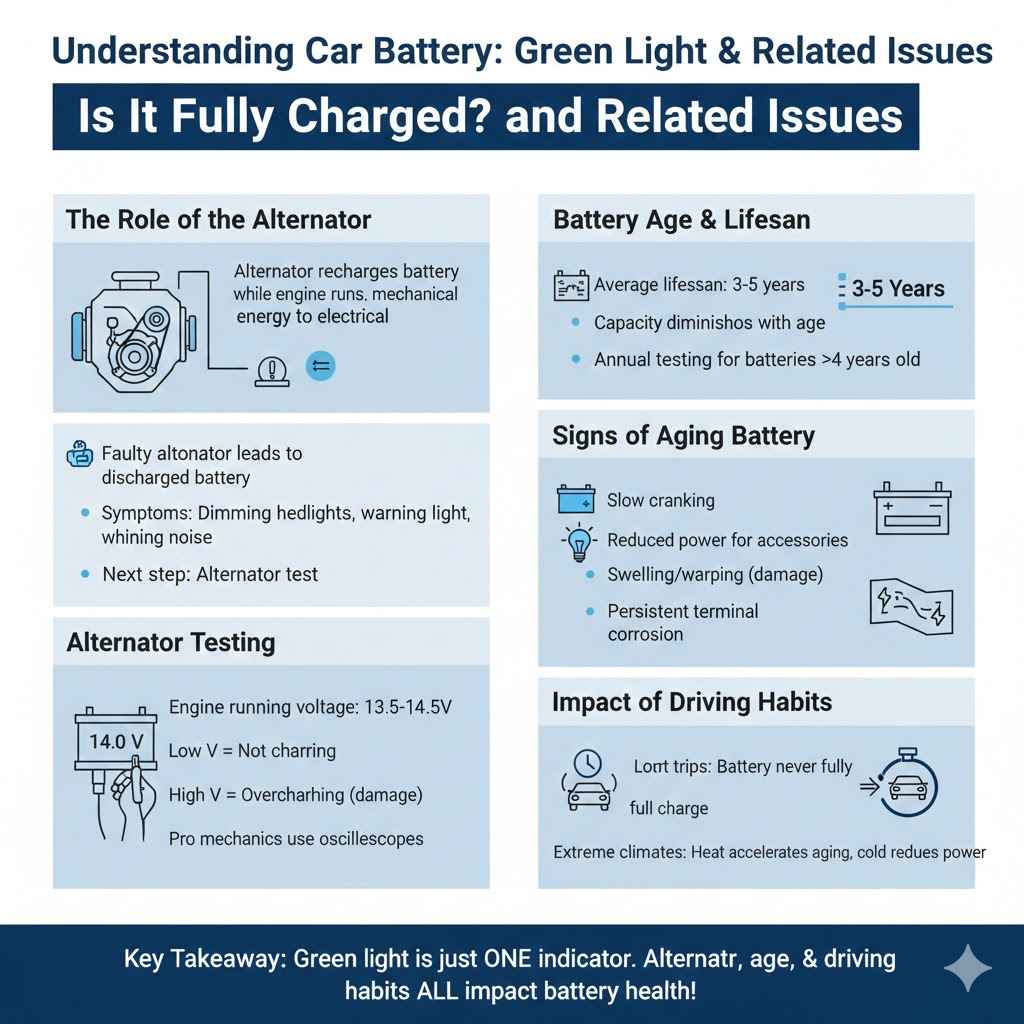
The alternator is the component responsible for recharging the battery while the engine is running. It converts mechanical energy from the engine into electrical energy. If the alternator isn’t working correctly, it won’t charge the battery properly, even if the battery itself is healthy.
A faulty alternator can lead to a battery that frequently appears discharged, despite the green light or recent charging. Symptoms of a bad alternator include dimming headlights, warning lights on the dashboard (like a battery symbol), or a whining noise from the engine.
If your battery keeps dying, and you’ve confirmed the battery is good, the next step is to have the alternator tested. It’s a common cause of battery problems.
Alternator Testing Procedures
Testing an alternator is typically done with a multimeter or a specialized alternator tester. With the engine running, you’ll measure the voltage across the battery terminals.
A healthy alternator should produce a charging voltage of roughly 13.5 to 14.5 volts. This voltage is higher than the battery’s resting voltage, indicating that it is actively supplying power to recharge the battery.
If the voltage reading is too low, the alternator might not be charging effectively. If it’s too high, it could be overcharging the battery, which can also cause damage. Mechanics can perform more thorough alternator tests to check its output under load and diagnose any internal issues.
Battery Age and Lifespan
Car batteries don’t last forever. The average lifespan of a car battery is typically between three to five years. Several factors influence this, including climate, driving habits, and battery quality.
Even a battery showing a green light might be nearing the end of its service life. As batteries age, their ability to hold a charge diminishes. They may not be able to deliver the high surge of power needed to start the engine, especially in cold weather.
If your battery is older than four years, it’s a good idea to have it tested annually, even if it seems to be working fine. Proactive replacement can prevent unexpected failures.
Signs of an Aging Battery
Besides a shortened lifespan, aging batteries often exhibit other signs. These include a slower cranking speed when starting the engine, a reduced capacity to power accessories when the engine is off (like the radio or lights), and a noticeable reduction in performance during extreme temperatures.
Some batteries might swell or warp as they age, especially if they have been overcharged or subjected to extreme heat. This is a clear sign of internal damage and a need for immediate replacement.
Corrosion around the terminals can also become more persistent and difficult to manage as a battery ages. Pay attention to these subtle changes; they can be early warnings of impending battery failure.
Impact of Driving Habits
How you drive your car can significantly affect your battery’s health and lifespan. Short trips where the engine doesn’t run long enough to fully recharge the battery can lead to premature battery degradation.
Cars driven primarily in extreme climates also face challenges. Very hot weather can accelerate battery aging, while very cold weather puts a higher demand on the battery to start the engine.
Consistently draining the battery by leaving lights or accessories on when the engine is off also takes a toll. Regularly topping up the charge can help mitigate some of these effects.
Short Trips vs. Long Drives
When you only take short trips, the alternator only has a limited amount of time to replace the energy used to start the car. The engine needs to run for a sustained period (typically 20-30 minutes or more) to fully recharge the battery.
If your daily commute is very short, the battery might never reach its full charge. Over time, this can lead to sulfation, a condition where lead sulfate crystals build up on the battery plates. Sulfation reduces the battery’s capacity and lifespan.
If you frequently take short trips, consider taking your car for a longer drive at least once a week. This helps ensure the battery gets a proper charge. Alternatively, you might consider using a battery maintainer or charger periodically.
Frequently Asked Questions
Question: Does a green light on my car battery mean it’s 100% charged?
Answer: A green light usually indicates that the specific cell it’s in has adequate charge and electrolyte level. However, it doesn’t always guarantee the entire battery is at 100% capacity or free from other issues. It’s a good sign, but not the only factor to consider.
Question: Can a car battery have a green light but still be bad?
Answer: Yes, it’s possible. The indicator might only be testing one cell, and other cells could be failing. Also, an older battery might show green but lack the cranking power needed to start the car reliably, especially in cold weather.
Question: How often should I check my car battery’s green light?
Answer: You can check it anytime you open the hood for other reasons. For regular monitoring, a monthly check is often sufficient, especially if your car is older or driven frequently on short trips.
Question: What should I do if the green light is not showing?
Answer: If the indicator shows black or white, or no color, it usually means the battery is discharged or has a low electrolyte level. You should check the electrolyte level if possible, and then charge the battery. If it doesn’t hold a charge, it may need replacement.
Question: Does the green light indicator work on all car batteries?
Answer: No, not all car batteries have this indicator. Many modern “maintenance-free” batteries are sealed and do not have a hydrometer indicator. You would need to rely on other methods like a multimeter or professional testing for those.
Conclusion
The green light on your car battery is a helpful visual clue. It suggests that the cell it’s in has a good charge. However, remember it’s just one piece of the puzzle.
Always look at the bigger picture for your battery’s health. Combine this visual check with voltage readings from a multimeter. Pay attention to how your car starts and runs.
This practical approach ensures you know when the Green Light on Car Battery: Is It Fully Charged? is a true reflection of its readiness to power your vehicle.