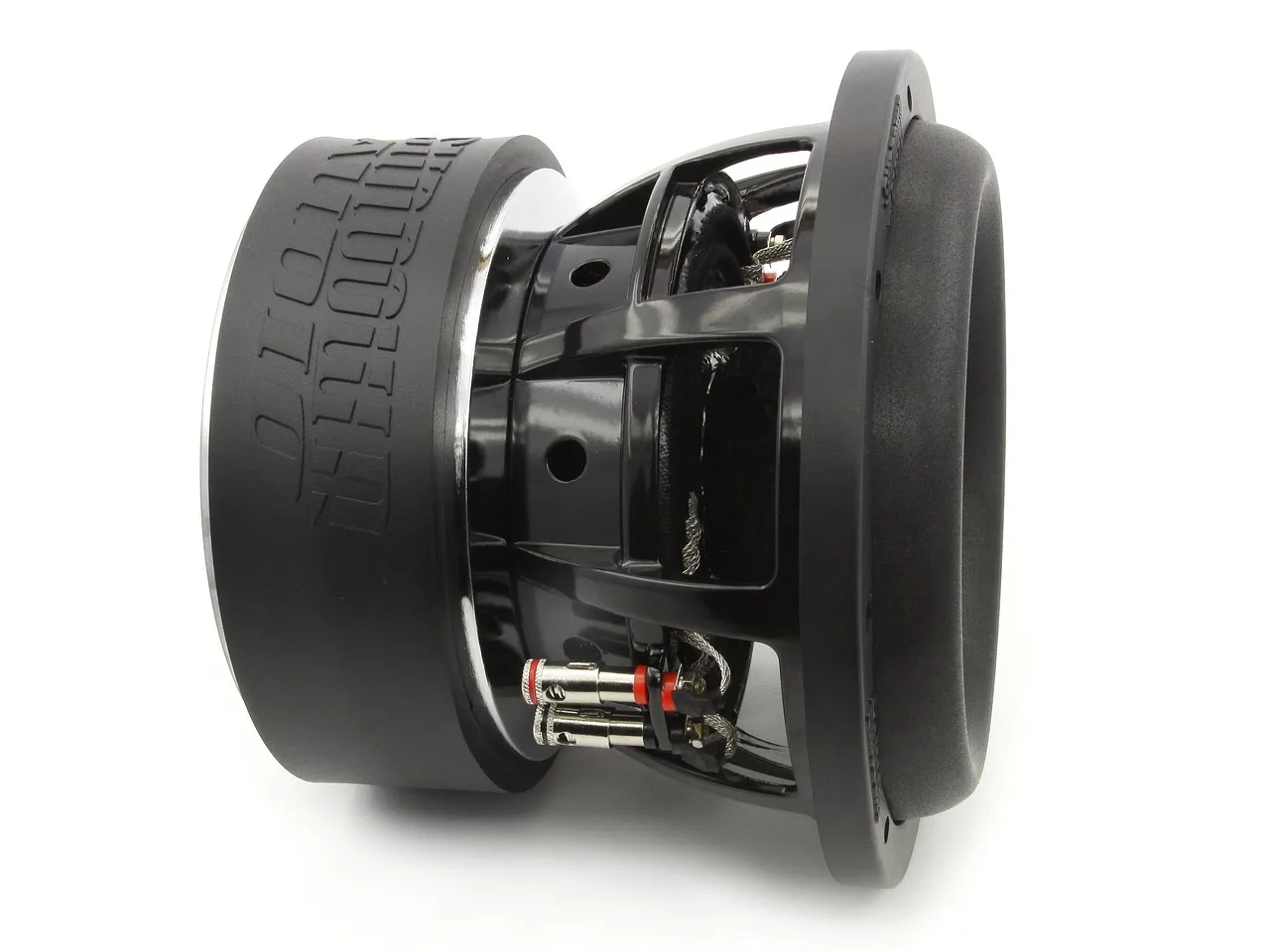
3 Best Subwoofers for Cars (2026): Based on Specs and Reviews
The Rockford Fosgate P3D4-12 is the strongest overall pick for deep, controlled bass in a normal trunk because it gives you a full-size 12-inch driver with flexible wiring and sealed-or-ported enclosure options. If you need faster install or less space, the powered and shallow-mount picks fit better. Start with cabin space, then power, then box type.
Quick comparison
| Product | Badge | Best for | Price | ||
|---|---|---|---|---|---|
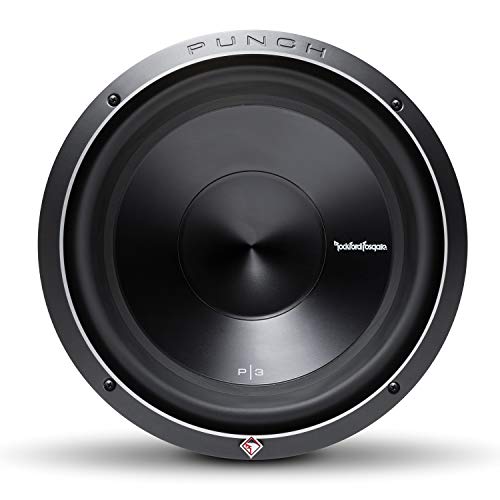 |
Rockford Fosgate P3D4-12 Punch P3 DVC 4-Ohm 12-InchRockford Fosgate | Our pick | 12-inch · 600W RMS · DVC 4-Ohm | $259.99
Price as of 16 Oct 2026
|
View |
 |
Skar Audio Single 10" Loaded Sealed Subwoofer EnclosureSkar Audio | Also great | 10-inch · Loaded Sealed · Jeep Wrangler | View | |
 |
KICKER 48CWRT124 CompRT 12" Subwoofer, DVC, 4-ohm | TightKICKER | Upgrade pick | 12-inch · CompRT Series · DVC 4-Ohm | $212.96
Price as of 16 Oct 2026
|
View |
This comparison starts with fitment: trunks, SUVs, hatchbacks, and trucks need different boxes and driver sizes. It also separates clean RMS from peak power, because mismatched amp and sub ratings cause many bad installs.
How we chose
We compared the picks by three things that matter most in real installs: usable space, enclosure requirements, and how easy it is to match the amp and impedance without wasting output. We also weighed total cost to complete the setup, not just the sub price.
Published specs and buyer feedback matter here more than brand reputation. A sub that needs a large box, a specific amp load, or extra trim work is a poor fit if your vehicle cannot give it that space.
Pick the right subwoofer in 60 seconds
| Vehicle type | Available space | Music taste | Enclosure choice | Amp requirement | Recommended sub size | Typical cost to complete |
|---|---|---|---|---|---|---|
| Coupe or compact sedan trunk | Tight cargo room, shallow depth | Punchy bass, everyday listening | Sealed or powered | Built-in amp or 300 to 600 watts RMS | 8-inch or 10-inch | About $250 to $700 |
| Mid-size sedan with ski-pass opening | Moderate trunk volume | Balanced bass, clear kick drums | Sealed | 400 to 800 watts RMS | 10-inch or 12-inch | About $350 to $900 |
| SUV or hatchback | More cabin volume, variable load space | Deeper bass, mixed genres | Sealed or ported | 600 to 1,000 watts RMS | 12-inch or 13.5-inch | About $500 to $1,200 |
| Truck with under-seat limit | Low mounting height, narrow footprint | Compact bass, fast install | Shallow sealed or powered | Built-in amp or 300 to 600 watts RMS | 10-inch shallow-mount | About $300 to $900 |
| Rear-deck or infinite-baffle setup | No traditional box space | Clean, low-distortion bass | Free-air / IB | Match the driver’s free-air rating | 12-inch free-air | About $250 to $800 |
Rockford Fosgate P3D4-12: best for deep bass

The Rockford Fosgate P3D4-12 is the best fit for buyers who want a clear step up in low-end extension and have room for a proper enclosure. It is a 12-inch DVC 4-ohm sub with 600 watts RMS and 1200 watts peak, and Rockford supports it in sealed or vented installs. That makes it a strong match for trunks and larger SUVs where output matters more than saving every cubic inch.
The drawback is simple: a 12-inch driver needs more box space, and the wrong enclosure will waste what the driver can do. A sealed box gives tighter control and smaller volume needs; a ported box gives more output but takes more room and demands more careful tuning. If your cargo area is already crowded, this is not the first place to start.
Why a 12-inch suits trunk space
A 12-inch sub is the middle ground for people who want both punch and extension. It usually reaches lower than an 8-inch or 10-inch, while still fitting common sedan trunks better than a 13.5-inch setup.
For daily music, that matters more than peak watt bragging rights. Bass lines, kick drums, and low synth notes all benefit from cone area and enclosure control, not just raw power.
Recommended enclosure and amp range
Use a sealed box if you want cleaner transient response and less cargo loss. Use a ported box if the vehicle has the room and you want stronger output around the tuning frequency.
Match the amp to the sub’s clean RMS rating, not the peak number. For this class of driver, that usually means a real amplifier in the same general power band as the sub’s RMS handling, with wiring that supports the final load you plan to run.
Who should skip a 12-inch sub?
Skip it if you need under-seat fitment, if your trunk height is low, or if you want the fastest possible install. A 12-inch can still work in many sedans, but it is the wrong first choice when depth and cargo space are limited.
Kicker CompRT 10-inch: best for small spaces
The Kicker CompRT 10-inch is the better choice when the vehicle is tight and you still want real bass, not a token low-end bump. Shallow-mount drivers are built for compact sealed boxes and truck-friendly installs, and this model’s dual voice coils add wiring flexibility for different amp setups.
The tradeoff is output. A 10-inch shallow-mount sub will not move as much air as a bigger 12-inch or 13.5-inch system, so deep bass at higher volumes is limited by size and box volume. That said, for daily use in a truck, hatchback, or small sedan, the space savings are often worth it.
Shallow-mount fitment and under-seat use
Shallow-mount subs are the fix for vehicles where mounting depth is the problem, not just box footprint. They are especially useful in trucks with low under-seat clearance and in cars where the trunk floor or rear seat braces leave little room for a deep magnet structure.
Measure mounting depth, box height, and available width before buying. A shallow driver still needs enough clearance to move air properly, and the box has to fit the vehicle, not the other way around.
Why sealed boxes work well here
Sealed boxes are usually the best partner for shallow subs because they are compact and easier to place. They also help keep bass tight in small cabins, where too much port output can sound boomy fast.
For a daily driver, that usually means better balance and fewer fitment headaches. It also keeps total install cost lower because the enclosure is smaller and easier to build or buy.
Truck and hatchback use cases
In a truck, a shallow 10-inch can sit under the rear seat when height is the limiting factor. In a hatchback, it can leave more cargo room than a full-size ported box while still adding clear bass.
Suppose a crew-cab truck has just enough room for a low-profile box but not a deep enclosure. A shallow 10-inch in a sealed box is the safer buy; a deeper 12-inch would force the wrong fit or a trim compromise.
JBL BassPro Hub: best for fast installs
The JBL BassPro Hub is the pick for buyers who want powered-sub simplicity and less separate hardware to mount. A powered subwoofer combines the driver and amplifier in one unit, which cuts install time and usually saves space in a trunk or cargo area.
The drawback is flexibility. Powered subs are faster to install, but you do not get the same freedom to choose a separate amp, separate enclosure, or a bigger future upgrade path. They work best when convenience matters more than system expansion.
What built-in amplification changes
A built-in Class-D amp means fewer pieces to mount and fewer wiring decisions to make. That can be a real advantage for first-time buyers or leased vehicles where a reversible install is the goal.
The tradeoff is output ceiling. Once the built-in amp and enclosure are set, that is the system. If you want later growth, a component/raw driver setup is more flexible.
Best fitment scenarios and limits
Powered subs fit best in tight trunks, small sedans, and vehicles where you want bass without building a full system. They are also useful when you do not want to give up a large amount of cargo space.
They are less ideal if you want the deepest possible bass or plan to run a large amp and custom box later. If your priority is maximum output per dollar, a separate driver, box, and amp usually makes more sense.
Car subwoofer decision table
Use this table to match vehicle space and music taste to the least troublesome path. It also includes a simple cost-to-complete estimate so you can compare the real total, not just the sub price.
| Use case | Best subwoofer type | Enclosure | Amp requirement | Approx. total cost to complete |
|---|---|---|---|---|
| Tight trunk, simple install | Powered subwoofer | Integrated sealed box | Built-in Class-D amp | About $300 to $700 |
| Truck, hatchback, or small cabin | Shallow-mount 10-inch | Compact sealed box | 300 to 600 watts RMS | About $350 to $900 |
| Trunk with space for real bass | 12-inch raw driver | Sealed or ported | 500 to 800 watts RMS | About $450 to $1,100 |
| Large cabin, strongest output goal | 13.5-inch raw driver | Ported if space allows | 700 watts RMS and up | About $600 to $1,500 |
| Rear-deck or no-box install | Free-air / IB driver | No traditional box | Free-air matched amp | About $250 to $800 |
What size subwoofer do you need?

The right size depends on cabin volume, mounting depth, and how much low-end extension you want. In general, 8-inch subs give more punch than depth, 10-inch subs balance size and output, 12-inch subs reach lower with more authority, and 13.5-inch subs are for buyers who want the most air movement and have the room for it.
8-inch, 10-inch, 12-inch, and 13.5-inch tradeoffs
An 8-inch is the easiest to fit and often works best when space is the main constraint. It is not the best choice for deep bass in a larger cabin, but it can sound surprisingly quick in a small car.
A 10-inch is the practical middle ground. A 12-inch usually gives the better deep-bass result for a sedan or SUV. A 13.5-inch is for people who already know they want bigger output and can give up more space for the enclosure.
Cabin size and trunk versus SUV guidance
Trunks usually reward sealed 10-inch or 12-inch setups because the cabin helps reinforce bass without needing a giant box. SUVs and hatchbacks often need more output because the open cabin absorbs more bass energy, so larger drivers or ported boxes make more sense there.
That difference is why one sub size does not fit every vehicle. A 12-inch in a sedan trunk can sound larger than the same sub in a big open cargo area if the box and amp are matched well.
Subwoofers checklist
- Measure the available height, width, and depth where the box will sit.
- Check mounting depth behind the baffle, not just cone diameter.
- Measure the final box volume the enclosure will occupy.
- Confirm terminal and grill clearance if the box will sit close to a seat or trim panel.
- Verify the amp’s final impedance load before buying wiring.
A common first-timer mistake is ordering the sub first and the box second. That reverses the safer order. Start with vehicle space, then the enclosure, then the driver and amp.
Sealed or ported box?
Sealed boxes make more sense when you want tighter bass, a smaller footprint, and fewer fitment problems. Ported boxes are worth the extra space when you want louder output and deeper energy around the tuning point. Free-air or IB systems are a separate case because they do not use a traditional box at all.
When sealed boxes make more sense
Sealed boxes are the safer choice for small cars, trucks, and buyers who want cleaner daily bass. They usually need less internal volume, which makes packaging easier and reduces the odds of a bad fit.
They are also easier to tune. If the amp gain and crossover are set correctly, sealed systems are less likely to sound exaggerated in small cabins.
When ported boxes are worth the space
Ported boxes are best when output matters more than cargo space. They can make a sub feel larger at the same power level, but only if the enclosure is built for the driver and the vehicle can spare the room.
Skip ported if the box will block storage or force a cramped install. A bad ported fit is worse than a good sealed fit.
Why free-air/IB is a special case
Free-air or infinite-baffle subs use the vehicle structure as the enclosure, often on a rear deck or similar mounting surface. That can save space, but it is much more sensitive to installation quality and mounting location than a normal box.
The Infinity Kappa 123WDSSI is CarAudioNow’s best free-air pick, listed as a 12-inch free-air driver with 500 watts and 250 to 350 watts in free-air use. That kind of setup fits a narrow use case, not a general one.
Which one should you buy?
Choose the Rockford Fosgate P3D4-12 if you want the best path to deeper bass in a trunk and you have room for a real enclosure. Choose the Kicker CompRT 10-inch if your vehicle is tight and you need shallow-mount flexibility. Choose the JBL BassPro Hub if you want the fastest install and the least separate hardware.
For budget buyers, a powered sub is usually the cheapest complete route once you count the amp, wiring, and box together. For trucks and small cars, the shallow 10-inch is often the smartest balance of fit and output. For sound quality and future expansion, a raw driver like the Rockford gives you more control over enclosure and amplifier choice.
CarAudioNow names the JL Audio W7AE its best overall pick in its 2026 guide, with sizes from 8 to 13.5 inches and a 500 to 1500 watt range depending on size. That tells you the general direction of the market: more flexibility and more enclosure choice for buyers with room to spare. For most readers, though, the safer buy is still the one that fits the cabin first.
Say your sedan trunk can fit a sealed 12-inch box but not a ported one. The 12-inch sealed route will usually give more satisfying low-end extension than forcing a smaller sub just to save a few inches. The opposite is also true: if the truck has only a shallow under-seat pocket, a deep 12-inch box becomes the wrong tool.
Frequently asked questions
What are the best subwoofers for cars right now?
The best subwoofers right now depend on use case. A deep-bass 12-inch raw driver, a shallow-mount 10-inch for tight spaces, and a powered sub for fast installs cover most buyers. The right one is the one that fits your vehicle, your amp, and your cargo space.
Which car subwoofer is best for deep bass?
A 12-inch or 13.5-inch driver in the right enclosure is usually the best path to deep bass. Ported boxes increase output, while sealed boxes trade some loudness for tighter control. If space is limited, a 12-inch sealed setup is often the most practical compromise.
Should I buy a powered or component car subwoofer?
Buy a powered sub if you want the simplest install, fewer parts, and less space used. Buy a component or raw-driver setup if you want more control over box type, amplifier choice, and future upgrades. Powered models are easier; component systems are more flexible.
What size subwoofer do I need for my car?
Most compact cars do well with 8-inch or 10-inch subs, while many sedans and SUVs handle 12-inch or 13.5-inch models better. The right size depends on trunk depth, cabin volume, and whether you want punch or extension. Measure first, then choose the size.
Is a sealed or ported box better for a car subwoofer?
Sealed is better if you want a smaller box, tighter bass, and easier fitment. Ported is better if you want more output and can spare the extra volume. Free-air is a different category and only works when the vehicle and driver are both suited for it.
How much RMS power do I need for a car subwoofer?
Match the amp to the sub’s clean RMS rating, not the peak number on the label. Many small daily-driver setups live in the 300 to 600 watt RMS range, while bigger 12-inch and 13.5-inch systems often want more. The final load matters as much as wattage.
Products related to this article
Sponsored / affiliate links. As an Amazon Associate I earn from qualifying purchases. I may earn additional commission from eligible campaigns.