How Long Can You Go Without Starting Your Car: Essential Guide
You can typically go a few weeks to a couple of months without starting your car before experiencing potential battery issues, but it depends heavily on the battery’s age, health, and ambient temperature. Regular short trips also drain the battery faster than letting a car sit.
We’ve all been there – life gets busy, and your trusty car sits patiently in the driveway. You might wonder, “How long can I actually go without starting my car before something goes wrong?” It’s a common question, and the answer isn’t a simple one-size-fits-all number. Lots of small things can happen when a car sits too long, but the biggest culprit is usually the battery. Don’t worry, though! This guide is here to demystify the process, explain what happens when your car is parked for extended periods, and give you practical tips to keep your wheels ready to roll. We’ll break down the science in simple terms, so you can feel confident about your car’s health.
Understanding Your Car’s Battery While It’s Parked
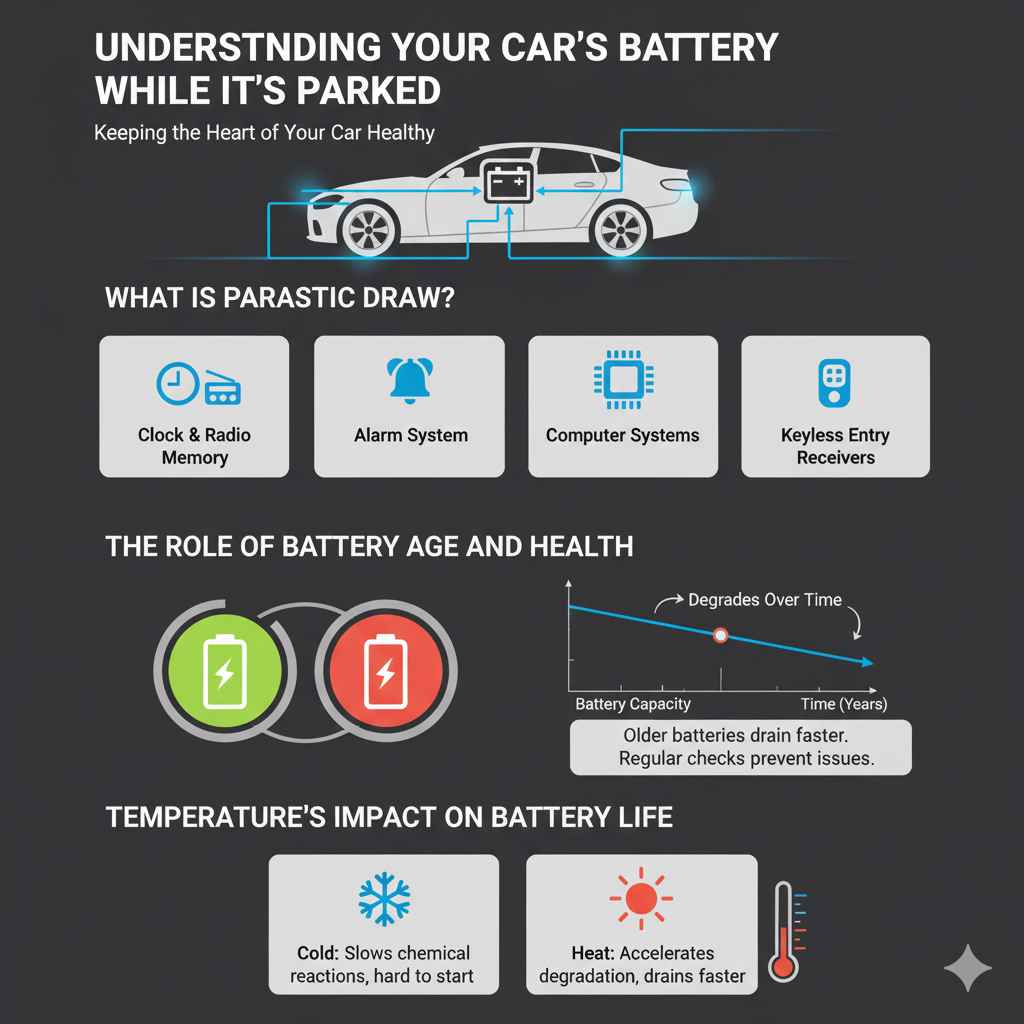
Your car’s battery isn’t just for starting the engine. It’s a complex power source that keeps many systems running, even when the car is off. Think of it as your car’s heart; it needs a little attention to stay healthy. When your car is parked, several components draw a small amount of power, known as “parasitic draw.” This constant drain might seem tiny, but over time, it can weaken and eventually deplete your battery.
What is Parasitic Draw?
Parasitic draw refers to the small electrical current that continues to flow from your car’s battery even when the ignition is off and the engine isn’t running. This isn’t necessarily a sign of a problem; many modern cars need to maintain power for certain systems. These systems include:
- Clock and Radio Memory: Keeps your preset radio stations and clock settings intact.
- Alarm System: Ensures your car’s security is always active.
- Computer Systems: Allows the car’s computers to boot up quickly when you turn the key.
- Keyless Entry Receivers: Enables your remote to unlock the doors.
While these draws are normal, they are cumulative. The more systems that draw power, the faster your battery will drain.
The Role of Battery Age and Health
The lifespan of your car’s battery is crucial. A brand-new battery will hold a charge much longer than one that’s a few years old. Batteries degrade over time due to chemical reactions and constant charging and discharging cycles. An older battery is more susceptible to the effects of parasitic draw and extreme temperatures.
A healthy battery, typically tested with a multimeter or a dedicated battery tester, can withstand longer periods of inactivity. Signs of a weakening battery include slow cranking when starting, dimming lights, and electronics acting strangely. Regularly checking your battery’s health can prevent unexpected problems.
Temperature’s Impact on Battery Life
Extreme temperatures, both hot and cold, can significantly affect battery performance and longevity. Cold weather slows down the chemical reactions inside the battery, making it harder for it to deliver power and thus harder for the engine to start. However, repeated exposure to high temperatures can degrade the battery more rapidly and permanently. A battery already stressed by heat will deplete faster when left unused.
What Happens When You Don’t Start Your Car for a While?
Leaving your car untouched for extended periods can lead to several issues, primarily related to the battery and other components that require occasional use. It’s not just about the battery dying; other parts can suffer too.
Battery Depletion and “Dying”
The most common issue is a dead battery. When the parasitic draw exceeds the battery’s capacity to hold a charge, it will eventually die. A “dead” battery means there isn’t enough electrical power to crank the engine or operate any of the car’s electrical systems. This can leave you stranded and require a jump-start or a new battery.
Tire Flat Spots
When a car sits stationary for a long time, the weight of the vehicle can cause the tires to develop “flat spots.” This happens because the air pressure inside the tire is no longer evenly distributed. Instead, prolonged pressure on one area of the tire can cause it to deform. These flat spots can lead to vibrations while driving, reduced tire longevity, and a less comfortable ride. The longer the car sits, the more pronounced these can become.
Fluid Issues
Several vital fluids in your car need to circulate to keep things lubricated and prevent degradation. When a car sits, these fluids can settle:
- Engine Oil: Oil can drain from the engine walls, leaving metal parts exposed and vulnerable to corrosion. Starting the engine helps redistribute oil, ensuring proper lubrication.
- Brake Fluid: Brake fluid can absorb moisture over time, which can lead to corrosion in the brake lines and master cylinder.
- Coolant: While less affected by sitting than oil, the coolant system benefits from occasional circulation to prevent sediment buildup.
Corrosion and Seals
Even small amounts of moisture in the air can lead to corrosion on electrical connections, metal components, and in the fuel system. Rubber seals and hoses can also dry out and crack if they aren’t kept pliable by regular use and the circulation of oils and fluids.
How Long is Too Long? Factors to Consider
The timeframe for how long a car can sit without starting depends on several factors. There’s no single answer, but we can look at general guidelines and common scenarios.
General Timeline Estimates
Here’s a general idea of what to expect:
- 1-2 Weeks: Most modern cars can sit for this period without significant issues. Battery drain will be minimal for a healthy battery.
- 2-4 Weeks: You might start to notice a bit more drain on the battery. It’s still likely to start, but it’s a good time to consider a periodic start-up or a trickle charger.
- 1-3 Months: Battery drainage becomes a significant concern. A jump-start might be needed. Fuel can start to go stale, and tires might develop minor flat spots.
- 6+ Months: You’re highly likely to need a jump-start, and you’ll want to inspect tires, fluids, and potentially the fuel system. Components like brake rotors can start to rust.
Breakdown of Factors Influencing How Long
Let’s dive deeper into what makes one car behave differently from another when parked:
1. Battery Age and Condition
A strong, recently replaced battery (within 2-3 years) will last much longer than an older one nearing the end of its typical 3-5 year lifespan. A weak battery might struggle after just a week or two.
2. Temperature Extremes
Cars stored in very cold climates will have their batteries drain faster than those stored in milder temperatures. Conversely, very hot climates can also degrade batteries over long periods of inactivity.
3. Parasitic Draw Level
Some cars have higher inherent parasitic draws due to more complex electronics (e.g., modern luxury cars with lots of features). If there’s an actual electrical fault causing a larger-than-normal draw, a car might not even last a few days.
4. Type of Driving (if any)
If the car was last used for very short trips, the battery may not have been fully recharged. This means it starts its “sitting” period with less than a full charge, making it more vulnerable to draining quickly.
5. Battery Maintenance
Simply removing the ground terminal can sometimes help prevent battery drain if the car is to be stored for a very long time, though this requires careful handling and should be done with caution. For modern cars, this can sometimes reset modules, so it’s not always recommended without research.
Signs Your Car Needs to Be Started
Even if you’re within the “safe” timeframe, your car might give you subtle hints that it’s time for a run. Paying attention to these signs can help you avoid a no-start situation.
Subtle Indicators
- Dimming Headlights: When you turn on your car, if your headlights seem dimmer than usual, it could indicate a weak battery.
- Slow Engine Crank: The engine might sound like it’s struggling to turn over, taking longer than normal to start.
- Warning Lights: Sometimes, a battery warning light might flicker on, or other dashboard lights might behave erratically.
- Electrical Glitches: Power windows might seem slower, radio presets could be lost, or the clock might reset.
When to Act Immediately
If you see any significant electrical issues, especially if the car seems to struggle to start, it’s a strong sign that the battery is significantly depleted. At this point, it’s best to address it promptly with a jump-start or by connecting a battery charger rather than risk not being able to start it at all.
How to Keep Your Car Healthy While It’s Parked
Preventing problems is always easier (and cheaper!) than fixing them. Here are some simple strategies to keep your car in good shape, even if it’s not driven daily.
Regular Start-Ups and Short Drives
The easiest method is to start your car periodically. A good rule of thumb is to start it up and let it run for at least 15-20 minutes every 2-4 weeks. Even better is to take it for a short drive, ideally at least 10-15 miles. This allows the alternator to fully recharge the battery and circulates all the vital fluids, lubricating seals and preventing component issues.
Using a Battery Tender or Trickle Charger
For cars that sit for longer periods, a battery tender (also called a trickle charger) is an excellent investment. These devices connect to your battery and provide a continuous, low-level charge, keeping the battery topped up without overcharging it. This is far better than a standard charger, which can damage the battery if left connected for too long. Many modern battery tenders are “smart” and will only charge when needed, maintaining the optimal voltage. You can find good quality battery tenders from brands like CTEK or NOCO online, often for under $50.
For more information on battery maintenance, the U.S. Department of Energy provides excellent resources on keeping your vehicle running efficiently.
Fuel System Protection
Gasoline can degrade over time, leading to fuel system problems, especially if the car sits for months. If you know your car will be parked for an extended period (over 3 months), consider using a fuel stabilizer. Add it to a nearly full tank of gas and run the engine for about 10-15 minutes to ensure the stabilizer circulates through the entire fuel system. This helps prevent the fuel from oxidizing and forming gummy deposits.
Tire Care
To combat flat spots, you can try over-inflating your tires slightly (just a few PSI above the recommended pressure, but do not exceed the maximum pressure listed on the tire sidewall). This can help the tire maintain its shape. Alternatively, if you’re storing the car for a very long time, consider using car stands or “tire savers” – specialized ramps designed to support the tires and take the weight off them.
What to Do if Your Car Won’t Start
So, you turn the key, and… nothing. Or maybe just a clicking sound. Don’t panic! Here’s what you can do when your car won’t start after sitting.
Step-by-Step Guide to Troubleshooting
- Check the Battery Terminals: Ensure they are clean and tight. Corrosion can prevent a good connection, even with a charged battery. You can often clean them with a wire brush and a baking soda/water paste.
- Try a Jump-Start: This is the most common solution for a dead battery. You’ll need jumper cables and another vehicle. Remember to connect the positive (+) to positive and negative (-) to negative, with the final connection on a clean metal surface away from the battery on the dead car. Always follow the correct jumper cable connection procedure to avoid damage or injury. Resources like NHTSA offer safety guidelines.
- Use a Battery Charger: If you have a battery charger, connect it according to its instructions. This is a safer and often more effective way to recharge a deeply discharged battery than relying on a jump-start alone.
- Check the Fuel Level: It sounds basic, but sometimes the fuel gauge can be inaccurate, or you might have simply forgotten to fill up.
- Listen for Sounds: A clicking sound usually means the battery has some power but not enough to turn the starter motor. A single, solid click might indicate an issue with the starter motor itself or the solenoid. No sound at all often points to a completely dead battery or a connection issue.
When to Call a Professional
If a jump-start or charging the battery doesn’t work, or if you suspect a more complex issue, it’s time to call a mechanic or roadside assistance. Problems with the starter motor, alternator, fuel pump, or ignition system require professional diagnosis and repair.
Common Scenarios and Answers
Let’s look at some typical situations drivers face and quickly answer those burning questions.
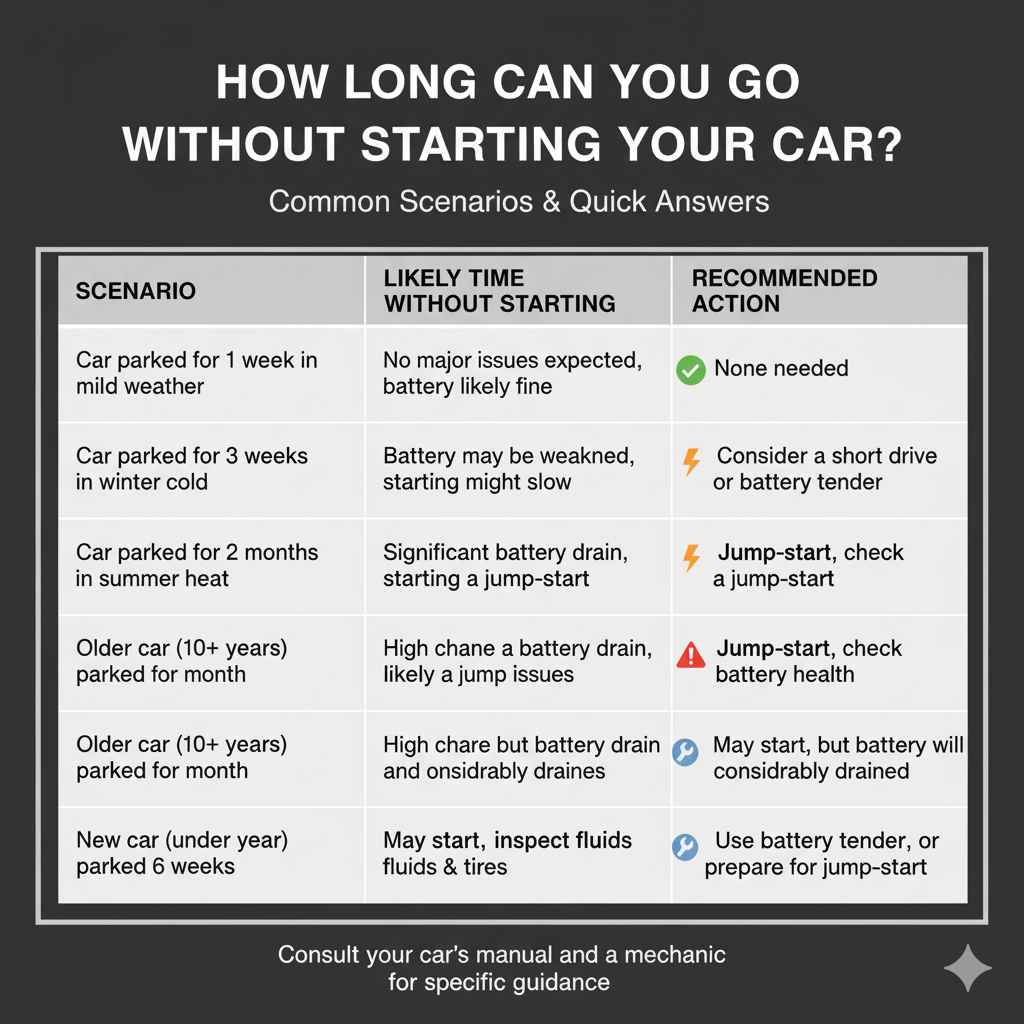
| Scenario | Likely Timeframe Without Starting | Recommended Action if Applicable |
|---|---|---|
| Car parked for 1 week in mild weather | No major issues expected, healthy battery likely fine. | None needed, but a quick visual check is always good. |
| Car parked for 3 weeks in winter cold | Battery may be weakened, starting might be slow. | Consider a short drive or using a battery tender. |
| Car parked for 2 months in summer heat | Significant battery drain, likely needs a jump-start or charge. | Jump-start, check battery health, consider fuel stabilizer if sitting much longer. |
| Older car (10+ years) parked for 1 month | High chance of battery drain and potential other issues. | Jump-start, check tires for flat spots, inspect fluids. |
| New car (under 1 year) parked for 6 weeks | May start, but battery will be considerably drained. | Battery tender is ideal. Otherwise, be prepared for jump-start. |
Frequently Asked Questions (FAQ)
Q1: How long can my car battery realistically last without starting the engine?
A: A healthy car battery can typically last anywhere from a few weeks to a couple of months without starting. However, factors like battery age, temperature, and electronic accessories constantly drawing power can significantly shorten this time.
Q2: Will my car tires go flat if I don’t start it?
A: Your tires won’t go completely flat on their own just from sitting, but they can develop “flat spots” where the tire is deformed due to the car’s weight pressing down on one area for too long. These usually disappear after driving a bit, but can be permanent if the car sits for many months.
Q3: Is it bad to let my car sit for a long time without starting it?
A: Yes, letting a car sit for extended periods isn’t ideal. It can lead to battery drain, tire deformation, fuel degradation, and potential corrosion of components. Regular use or proper storage methods are recommended.
Q4: What’s the best way to keep my car’s battery charged when it’s not being driven?
A: The best method is to use a battery tender or trickle charger. These devices provide a continuous, safe charge to keep the battery topped up. Alternatively, driving the car for at least 20-30 minutes every few weeks is a good practice.
Q5: My car has been sitting for over a year. What should I check before trying to start it?
A: Before attempting to start, check your battery’s condition and charge, inspect tires for flat spots and proper inflation, check all fluid levels (oil, coolant, brake fluid, etc.), and look for any signs of corrosion on electrical connections or animal nesting in the engine bay. You may also want to use fuel stabilizer beforehand or consider draining old fuel.
Q6: I just tried to start my car after it sat for a month, and it won’t start. What’s the most likely problem?
A: The most likely culprit is a dead or significantly drained battery. Try jump-starting it. If it starts with a jump but dies again soon after, your battery might not be holding a charge, or your alternator might not be recharging it properly.