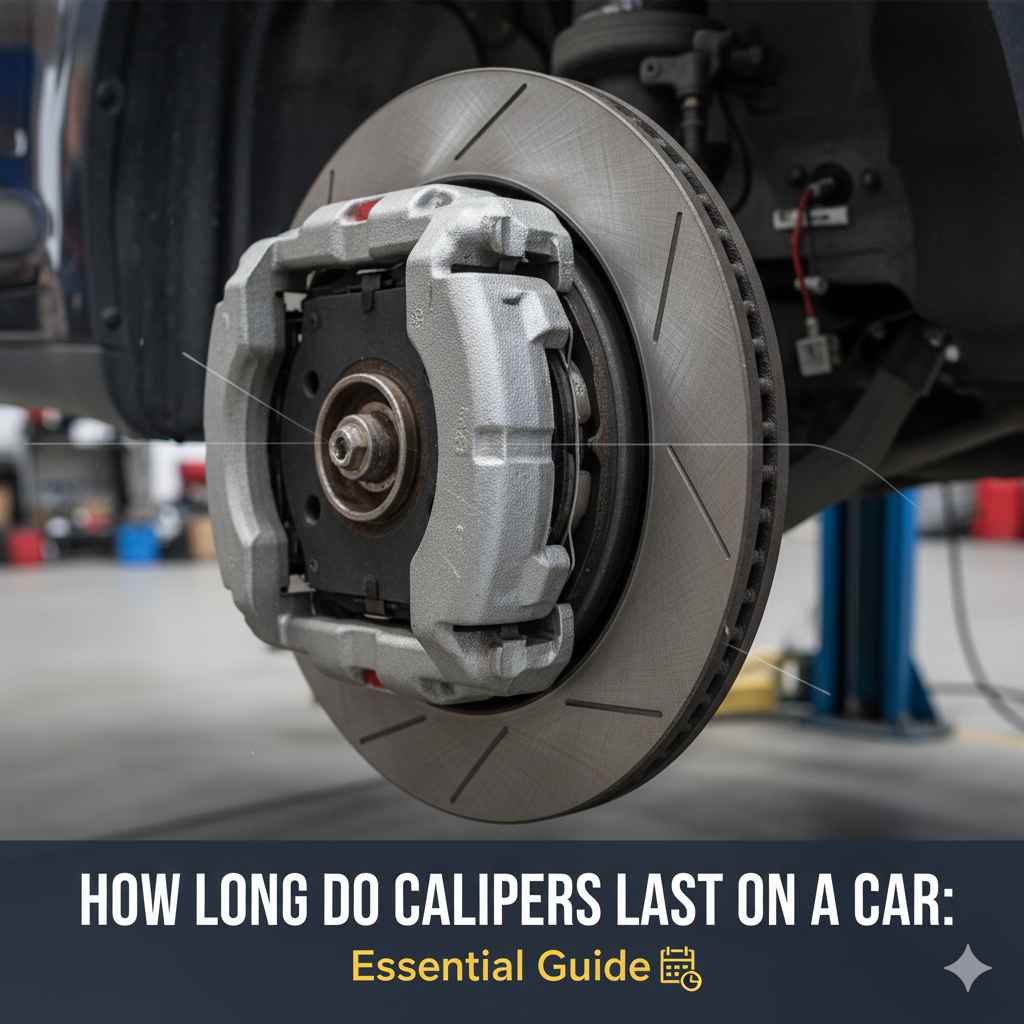
How Long Do Calipers Last On A Car: Essential Guide
Calipers on a car typically last between 50,000 to 100,000 miles, but this can vary greatly. Factors like driving habits, climate, and maintenance play a huge role. Regular checks and proper care can extend their life, ensuring your brakes work safely.
Brakes are one of the most important safety systems in your car, and the brake calipers are a key part of that system. You press the brake pedal, and several components work together to slow down or stop your vehicle. When something goes wrong with your brakes, it can be a bit scary. One common question beginner drivers and car owners have is: “How long do calipers last on a car?” It’s a great question, and understanding the answer can help you keep your car running safely and avoid unexpected repair bills. We’re here to make it simple!
Many people aren’t sure what brake calipers are or why they matter. Think of them as the clamps that squeeze your brake pads onto the rotor. This squeezing creates friction, which is what stops your car. Since they’re so crucial for stopping power, knowing their lifespan is super helpful. Let’s dive into what affects how long they last and what you can do to help them perform their best for as long as possible.
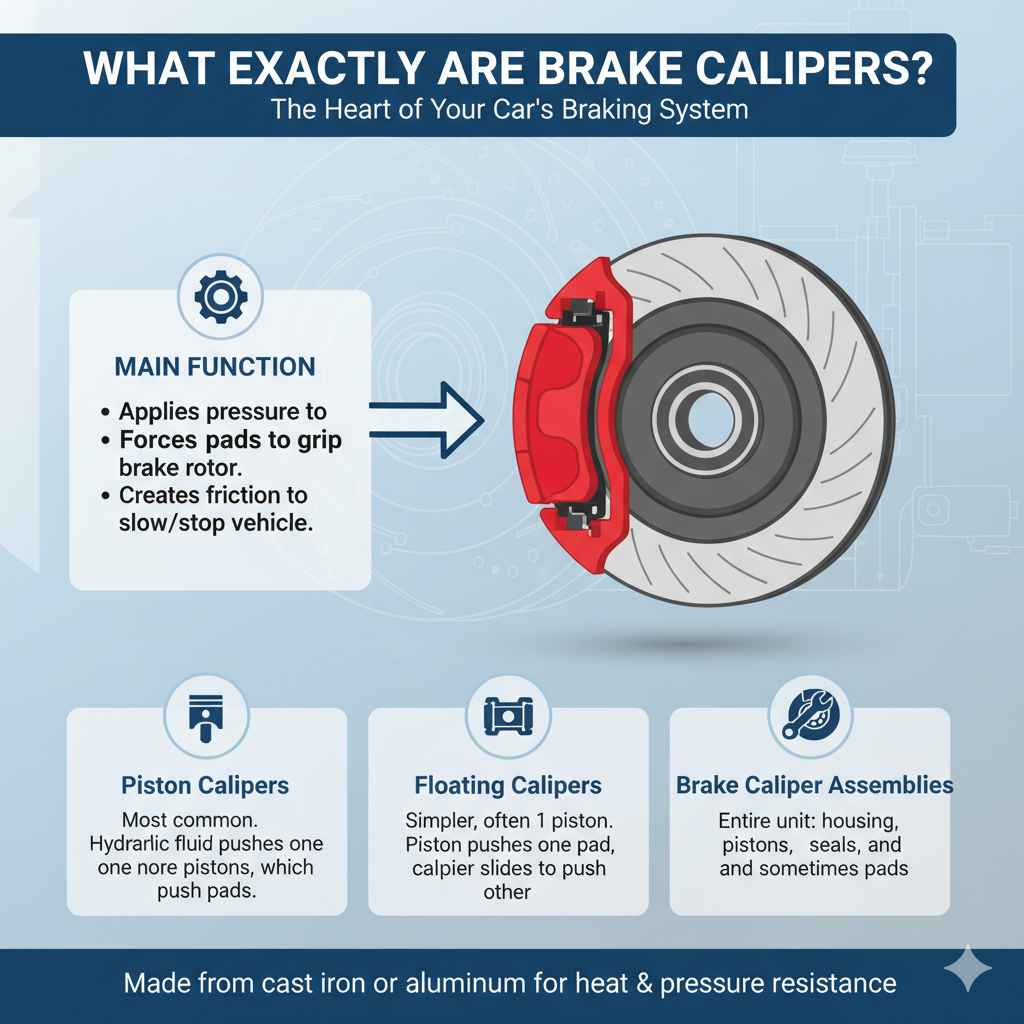
What Exactly Are Brake Calipers?
Your car’s brake caliper is a vital component of the braking system. Its main job is to apply pressure to your brake pads, forcing them to grip the brake rotor. This friction is what slows down your wheels and ultimately stops your vehicle. Imagine a powerful hand squeezing two things together – that’s essentially what a caliper does to your brake pads against the spinning rotor.
There are a few common types of brake calipers you might hear about:
- Piston Calipers: These are the most common. When you press the brake pedal, hydraulic fluid pushes one or more pistons inside the caliper. These pistons, in turn, push the brake pads against the rotor.
- Floating Calipers: These are simpler and often found on less performance-oriented vehicles. They have one piston. When you brake, the piston pushes one brake pad, and the caliper itself slides or “floats” to push the other brake pad against the rotor.
- Brake Caliper Assemblies: This term refers to the entire unit, including the housing, pistons, seals, and sometimes even the brake pads themselves.
Each type works to achieve the same goal: safe and effective braking. They are typically made from strong materials like cast iron or aluminum to withstand the high heat and pressure generated during braking.
How Long Do Calipers Last on a Car? The Typical Lifespan
So, how long can you expect your brake calipers to last? The honest answer is that there’s no single, exact number. However, most automotive experts suggest that brake calipers can typically last between 50,000 to 100,000 miles. This is a wide range, and many factors influence where your car’s calipers will fall on this spectrum.
Think of it like tires. Some people go through tires much faster than others, even with the same make and model of car. The same applies to brake calipers. While 50,000 to 100,000 miles is a good general guideline, it’s not a rule set in stone. Your driving habits, the conditions your car is exposed to, and how well you maintain your brake system all play a significant role in how long your calipers will reliably serve you.
Factors Affecting Caliper Lifespan
Understanding what influences how long your calipers last can help you take better care of them. It’s not just about mileage; other daily factors make a big difference.
Here are the key elements that can impact the lifespan of your brake calipers:
- Driving Habits: Aggressive driving, like frequent hard braking or “riding” the brake pedal, puts more stress and heat on the entire braking system, including the calipers. Gentle, smooth braking is much easier on your components.
- Climate and Road Conditions: Living in areas with a lot of rust, salt (used on roads in winter), or extreme humidity can accelerate wear. Corrosive elements can attack the caliper’s metal components and seals, leading to premature failure.
- Brake Pad Quality and Type: Using high-quality brake pads that are compatible with your vehicle is important. Some cheaper or performance pads can create more heat or dust that might affect caliper seals over time.
- Regular Maintenance: Performing routine brake inspections and fluid flushes is crucial. Over time, brake fluid can become contaminated, and dirt or debris can get into the caliper mechanism, causing wear and tear.
- Caliper Overheating: While designed to handle heat, consistent, extreme overheating (often from heavy braking on long descents or towing heavy loads) can damage seals and internal components, shortening their life.
- Component Wear: If other brake components, like worn-out brake pads or rotors, are left unaddressed, they can put extra strain on the calipers. For example, a stuck caliper piston can cause uneven pad wear and potentially damage the rotor.
By being mindful of these factors, you can make small adjustments to your driving and maintenance routine that can significantly extend the life of your brake calipers.
Signs Your Brake Calipers Might Need Attention
Your car often gives you clues when something isn’t quite right. Paying attention to these signs is the best way to catch potential problems early and prevent minor issues from becoming costly repairs. When it comes to your brake calipers, here are some common things to listen, look, and feel for:
Audible Clues (What You Hear)
Sounds are often the first warning signs. If you hear these, it’s time to get your brakes checked:
- Screeching or Squealing: While sometimes this can be worn brake pads, if it’s persistent and seems to come from a specific wheel, it could indicate a caliper issue.
- Grinding Noise: This is a more serious sound and usually means your brake pads are completely worn down, and metal is grinding against the rotor. This can damage the caliper, so it’s an urgent concern.
- Clicking Sounds: A clicking noise when applying or releasing the brakes, especially during turns, could point to a caliper that’s not properly secured or has loose components.
Visual Clues (What You See)
A quick visual inspection can reveal important clues about your brake system’s health:
- Brake Fluid Leaks: Look under your car for dark, oily puddles, especially around the wheels. This is usually brake fluid, which is essential for your brakes to work. Leaks often signal problems with caliper seals. You can learn more about brake fluid at the U.S. Department of Energy’s FuelEconomy.gov, which offers great general car maintenance advice.
- Uneven Brake Pad Wear: If you can see your brake pads (sometimes through the wheel spokes), check for uneven thickness from one side to the other. This is a classic sign of a caliper piston sticking.
- Rotor Discoloration or Grooves: If the brake rotor (the shiny metal disc) looks discolored (e.g., bluish tint indicating overheating) or has deep grooves, it could be related to uneven caliper pressure.
- Pulled to One Side: If your car consistently pulls to one side when you brake, it often means one caliper isn’t applying the same pressure as the others, or one is sticking.
Tactile Clues (What You Feel)
How your brakes feel when you use them is critical:
- Spongy or Soft Brake Pedal: If your brake pedal feels mushy or goes down further than usual before engaging, it could be an issue with brake fluid, air in the lines, or a faulty caliper.
- Vibrating or Pulsating Pedal: While sometimes due to warped rotors, a pulsating brake pedal during braking can also be caused by a caliper that’s not engaging smoothly or evenly.
- Stiff or Hard Brake Pedal: If you have to push much harder than normal to get your brakes to engage, it might mean a caliper is sticking or not moving freely.
If you notice any of these symptoms, it’s best to have your brakes inspected by a qualified mechanic as soon as possible. Driving with faulty brakes is dangerous for you and others on the road.
Can You Extend the Life of Your Brake Calipers?
Absolutely! While you can’t stop the natural wear and tear that comes with any mechanical part, there are definitely things you can do to help your brake calipers last longer and perform better. It’s all about proactive care and smart driving.
Here are some practical tips:
1. Drive Smart and Smoothly
This is the most impactful thing you can do. Avoid sudden braking whenever possible. Anticipate traffic lights, stop signs, and slowdowns. Gentle, gradual stops put far less stress and heat on your entire braking system, including the calipers.
2. Regular Brake Inspections are Key
Don’t wait for a problem to occur. Schedule regular brake checks as part of your car’s routine maintenance. A mechanic can visually inspect your calipers, check for leaks, ensure the caliper pins are moving freely, and assess the condition of your brake pads and rotors. Early detection of minor issues can prevent major damage to your calipers.
3. Keep Your Brake System Clean
Dirt, road salt, and grit can find their way into the caliper assembly, especially around the pistons and seals. While you can’t always prevent this entirely, avoiding driving through deep puddles and ensuring your car is washed regularly (paying attention to wheel wells) can help. If you live in an area with heavy road salt use, consider an undercarriage wash during winter months.
4. Use Quality Brake Components
When it’s time to replace brake pads or have other brake work done, opt for reputable brands and quality parts. Cheap brake components may not last as long and can sometimes cause premature wear on other parts of the system, like the calipers.
5. Don’t Ignore Warning Signs
As we’ve discussed, listen for strange noises, watch for leaks, and pay attention to how your brake pedal feels. Addressing any changes or concerning symptoms promptly is crucial. A minor issue that seems insignificant now could lead to accelerated wear on your calipers if ignored.
6. Consider Brake Fluid Flushes
Brake fluid absorbs moisture over time, which can lead to corrosion within the braking system, including the calipers. Following your car manufacturer’s recommendations for brake fluid flushes (typically every 2-3 years) helps protect these components from internal damage.
By incorporating these simple practices, you can significantly contribute to the longevity and reliable performance of your car’s brake calipers.
When It’s Time for Caliper Replacement
Even with the best care, brake calipers will eventually wear out or develop problems that warrant replacement. Knowing when it’s time is crucial for safety and to avoid more extensive damage to your braking system.
Here are the main indicators that point towards caliper replacement:
- Persistent Leaks: If you repeatedly find brake fluid leaks around your wheels, particularly near the caliper housing, it strongly suggests a failing seal. This compromises the hydraulic system and makes the caliper unsafe.
- Stuck Pistons: If a caliper piston is seized and won’t move properly, it can cause issues like the brake pad constantly dragging on the rotor. This leads to overheating, rapid pad wear, and can eventually damage both the rotor and the caliper itself beyond repair.
- Corrosion and Damage: Severe rust or physical damage to the caliper housing can weaken its structure. This is especially true for calipers in areas with heavy road salt use or if they’ve suffered impact damage.
- Uneven Braking Performance: If your car consistently pulls to one side when braking, and it’s not an issue with brake pads or rotors, a faulty caliper is a likely culprit.
- Grinding or Loud Noises Persist After Pad Replacement: If you replace brake pads and rotors but still experience grinding or severe noises, the caliper might be the source of the problem, not applying pressure correctly or having internal wear.
The good news is that caliper replacement is a common repair. It’s often done in conjunction with replacing brake pads and rotors, as it’s logical to address the entire braking mechanism on a wheel simultaneously.
The Replacement Process (A Quick Look)
While it’s often best left to professionals, understanding the process can be reassuring:
- Safety First: The car is securely lifted on a lift or jack stands, and the wheel is removed.
- Brake Line Disconnection: The brake line is disconnected from the caliper. This is where brake fluid will leak, so it needs to be managed.
- Mounting Hardware Removal: The bolts holding the caliper to the bracket are removed.
- Old Caliper Removal: The old caliper is carefully removed.
- Installation of New Caliper: The new caliper is bolted into place, and the brake line is reconnected, ensuring a tight seal. Sometimes, a new bracket comes with the caliper, or the old one is reused.
- Brake System Bleeding: This is a crucial step. After the new caliper is installed, the brake system must be “bled” to remove any air that entered the lines. This is done by pressing the brake pedal while opening a bleed screw on the caliper, allowing fluid and air to escape, and then closing the screw. This process is repeated until only clear brake fluid comes out.
- Wheel Reinstallation and Test Drive: The wheel is put back on, and the car is taken for a careful test drive to ensure the brakes are working correctly and feel firm.
Replacing brake calipers is a job that requires proper tools and a good understanding of brake system hydraulics. If you’re not comfortable with this type of work, it’s definitely a job for a qualified technician. You can find resources on brake system maintenance on sites like the National Automotive Technicians Education Foundation (NATEF), which sets standards for automotive training programs.
Calipers vs. Brake Pads vs. Rotors: What’s the Difference?
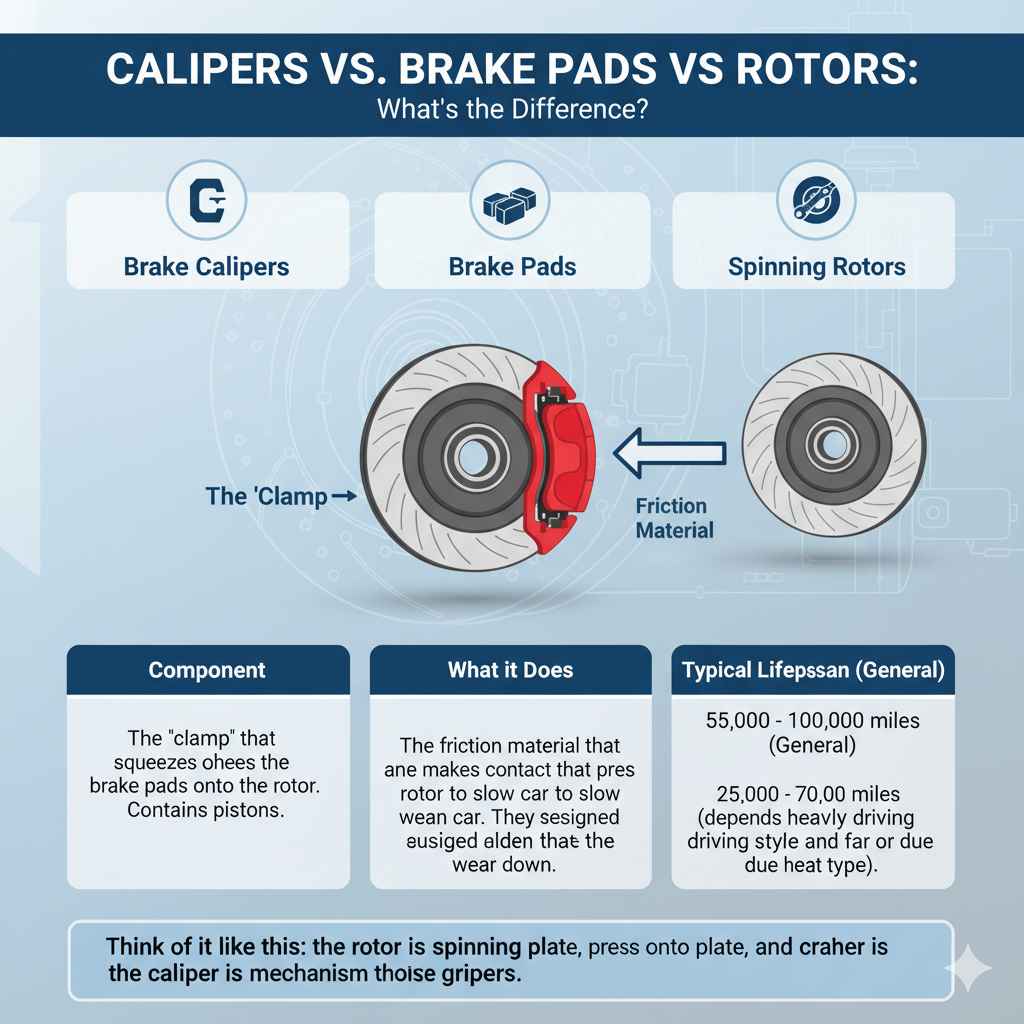
It’s easy to get brake components mixed up. Here’s a quick breakdown of how calipers, pads, and rotors work together:
| Component | What it Does | Typical Lifespan (General) |
|---|---|---|
| Brake Calipers | The “clamp” that squeezes the brake pads onto the rotor. Contains pistons. | 50,000 – 100,000 miles |
| Brake Pads | The friction material that makes contact with the rotor to slow the car. They are designed to wear down. | 25,000 – 70,000 miles (depends heavily on driving style and pad type) |
| Brake Rotors | The large, metal disc that spins with the wheel. The pads clamp onto this to create friction. | 50,000 – 70,000 miles (can be shorter if pads wear too far or due to heat) |
Think of it like this: the rotor is the spinning plate, the pads are the grippers that press onto the plate, and the caliper is the mechanism that powers those grippers.
It’s common for brake pads to wear out and need replacement several times during the life of a set of rotors and calipers. When a problem arises, it’s important to diagnose whether the issue lies with the pads, rotors, calipers, or a combination. A mechanic will inspect all these parts to give you the most accurate recommendation.
Frequently Asked Questions About Brake Calipers
Q1: Can I drive with a faulty brake caliper?
A: It is unsafe to drive with a faulty brake caliper. A malfunctioning caliper can lead to significantly reduced braking power, uneven stopping, and potential loss of control. It can also cause further damage to other brake components. It’s best to get it inspected and repaired immediately.
Q2: Do I need to replace all my brake calipers at once?
A: Generally, no. Calipers are typically replaced in pairs (both front calipers or both rear calipers) on the same axle when a problem is found. This ensures consistent braking performance between the left and right sides of the vehicle. However, if only one caliper is failing, a mechanic might recommend replacing just that one, with careful inspection of the opposing side.