How Long Should You Plug in a Block Heater?
Most block heaters are commonly said to need about 2 to 4 hours; at around 0°F to -20°F, a common rule of thumb is 3 to 4 hours, and above about 20°F, 1 to 2 hours is usually enough. After the coolant is warm, extra plug-in time mostly wastes electricity and can wear cords, timers, and outlets. This guide gives a temperature-by-temperature cheat sheet for pad, cartridge, and coolant heaters, plus when extra plug-in time stops helping.
This guide is part of our Winter Car Care: The Complete Cold-Weather Guide series.
What a block heater does


An engine block heater is an electric warming device for the engine block, coolant, or oil. It works while the vehicle is parked and the engine is off. The point is simple: warm fluids move more easily, so the engine turns over with less resistance in freezing weather.
Why warm fluids start easier
Cold oil thickens and resists movement, so the starter must work harder. Battery output also drops in freezing temperatures, so the engine gets less cranking power at the same time it needs more. A block heater helps on both fronts by warming what the starter has to move.
That is why block heaters can reduce hard starts and help limit cold-start wear. Starting the car and idling for 5-10 minutes does not replace a block heater.
What it can and cannot do
A block heater does not make a cold engine behave like a warm one in every respect. It mainly reduces the first few painful minutes of startup. Cabin heat, defrost performance, and oil flow can still lag in deep cold, especially if the battery is weak or the vehicle sits outside all night.
Why cold weather changes plug-in time
Cold weather changes how fast a heater can do useful work. In mild cold, the engine only needs a short warm-up before startup. In a deep freeze, the same heater may need several hours to move enough heat into the coolant, block, or oil. After that point, more runtime usually adds little.
Battery output and heat payoff
As temperatures fall, batteries lose cranking power and thick oil slows internal movement. That is why the heater’s benefit depends on both ambient temperature and heater type. Heat added early in the window matters most; heat added after the fluid has already warmed is often wasted.
Say your truck sits outside at 15°F with a pan heater and a healthy battery. A timer set for 2 to 3 hours before departure can be enough before an early commute. Now suppose the same truck faces -15°F after a wind event. The longer preheat window matters because the cold soak is deeper and the engine loses heat faster.
Which heater type do you have?
Not every heater behaves the same. A freeze-plug style unit heats coolant directly, an oil pan heater warms the oil, and an inline coolant heater can move heat through the system faster than a dipstick-style unit. The best plug-in time depends on where the heat starts and how the unit transfers it.
Engine block heater
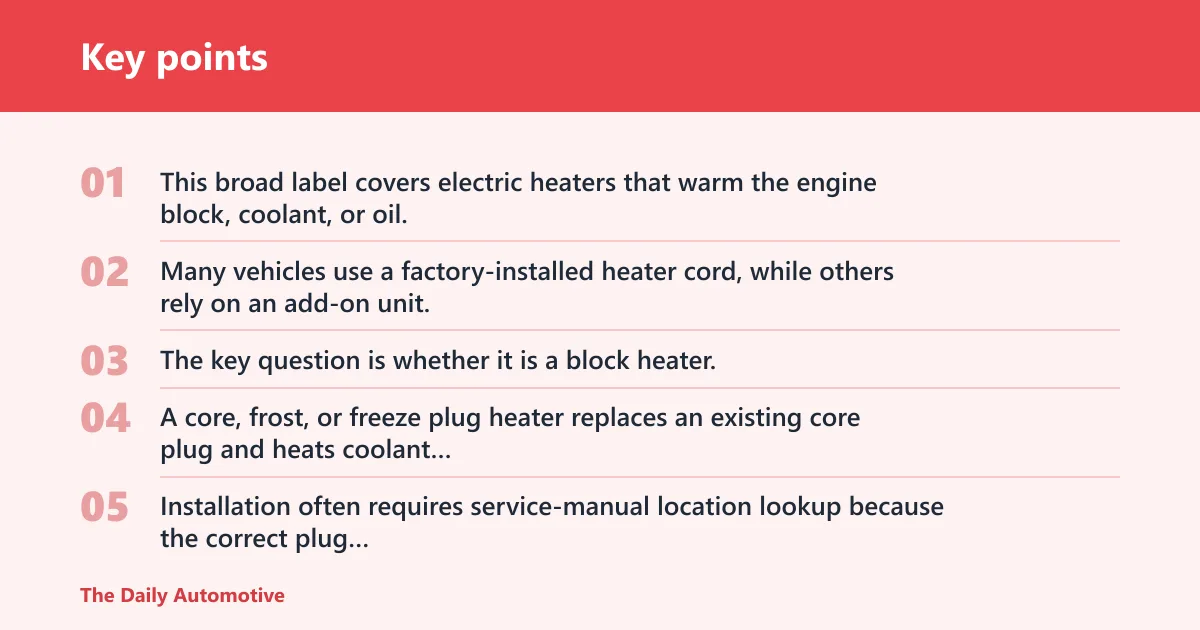
This broad label covers electric heaters that warm the engine block, coolant, or oil. Many vehicles use a factory-installed heater cord, while others rely on an add-on unit. The key question is whether it is a block heater, and what fluid or surface it is actually warming.
Core, frost, or freeze plug heater
A core, frost, or freeze plug heater replaces an existing core plug and heats coolant directly. Installation often requires service-manual location lookup because the correct plug location is vehicle-specific. These heaters can work well in severe cold, but they also depend on proper fit and correct installation.
Oil pan heater
An oil pan heater attaches to the oil pan and may use magnets or adhesive pads. It warms the oil, which can help cranking in cold weather because the starter does not have to fight thick lubricant as much. These units often benefit from a timer because their job is mainly to warm the oil before departure.
Inline coolant heater
An inline coolant heater is spliced into a heater hose and may be circulating or non-circulating. Because it warms coolant directly, it can raise temperature faster than dipstick-style units. That faster transfer means a shorter preheat window may be enough compared with slower, localized heaters.
Battery warmer
A battery warmer is not a block heater, but it is often paired with one in severe cold weather. It helps the battery deliver greater cranking power, which matters because cold batteries are weaker just when the engine needs more effort to turn over.
How long to plug in by temperature and heater type
The right window changes with outside temperature and heater type. In mild cold, shorter preheat times are usually enough. In deep freeze conditions, use a longer but targeted window. In extreme cold, an all-night plug-in still often gives little extra benefit after the heater has done its job.
| Temperature band | Heater type | Suggested preheat window | Is a timer enough? | Red flags |
|---|---|---|---|---|
| Above 20°F | Engine block, oil pan, or inline coolant heater | 1 to 2 hours | Yes, for early morning use | Engine still cranks slowly; heater hose or cord feels damaged; outlet trips |
| About 0°F to -20°F | Freeze-plug or inline coolant heater | 3 to 4 hours | Usually yes, if departure time is predictable | Cabin heat is weak, engine starts rough, or the cord shows heat damage |
| Below -20°F | Oil pan heater plus block heater or battery warmer | 3 to 4 hours, sometimes a little longer by manual guidance | Often yes, but only if timed close to departure | Battery turns sluggish, coolant line stays cold, or extra hours do not improve starting |
In deep freezes, it is best to turn the heater on 3-4 hours before driving. Two hours are described as sufficient to raise the engine’s temperature to optimal levels in many cases, but colder ambient temperatures can justify the longer end of that range. Family Handyman notes that block heaters were primarily designed for climates below 0 degrees F, and manufacturers such as Ford, GM, Toyota and Subaru recommend plugging in around freezing conditions.
How long should you plug in a block heater?
The short answer is that most drivers should plan on 2 to 4 hours, then adjust for temperature and heater type. If the weather is only mildly cold, 1 to 2 hours is often enough. If the forecast is around 0°F or colder, plan on 3 to 4 hours before departure.
Rule of thumb by departure time
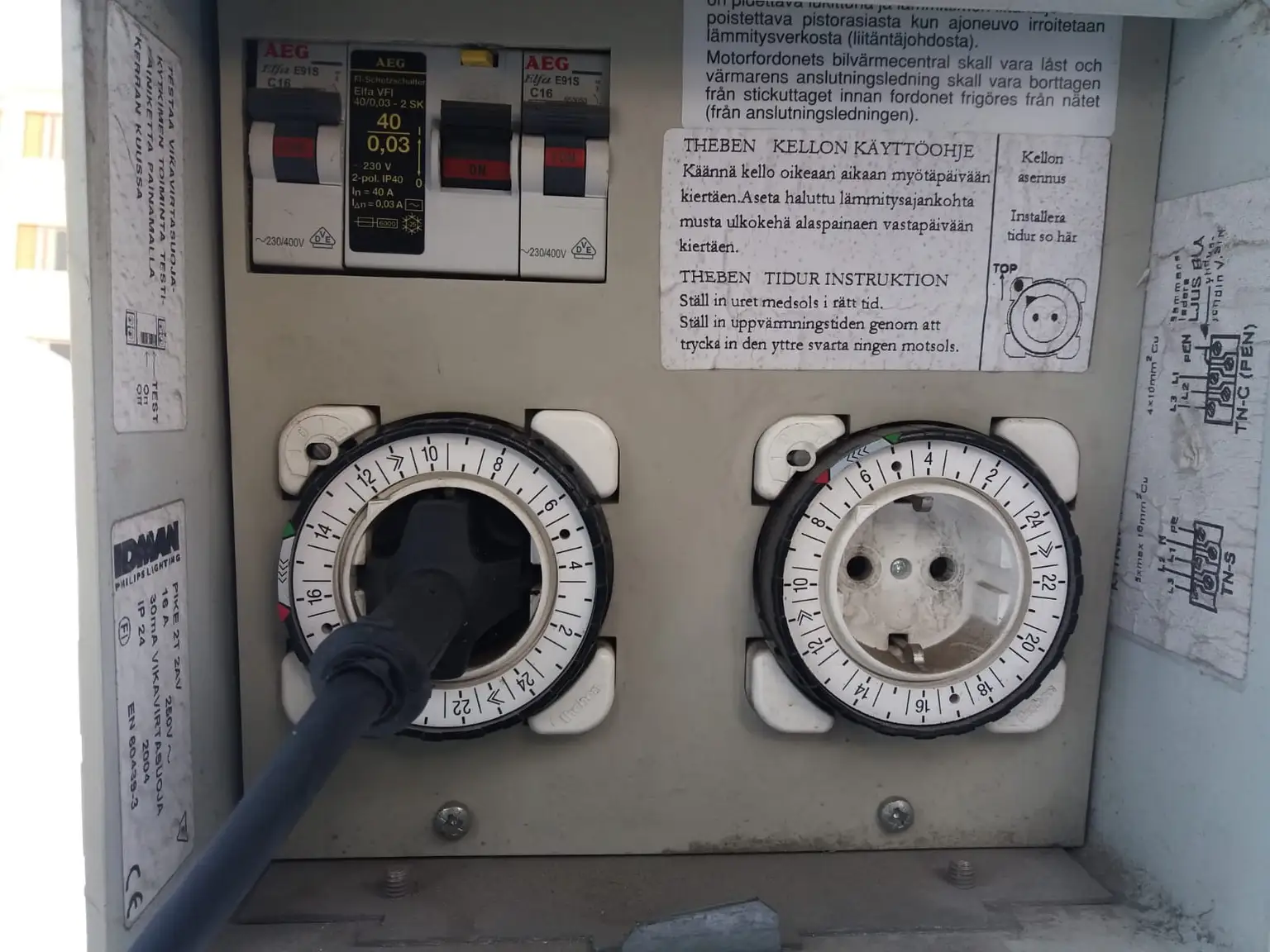
If you know when you will leave, set the heater to finish warming shortly before start-up. A timer switch is a good fit for early morning use because it starts the heater only when needed and reduces wasted electricity. Longer plug-in time after that point usually adds little.
When to lengthen the window
Lengthen the plug-in time when the vehicle sits in extreme cold, when the heater type warms more slowly, or when a battery warmer is not helping enough. A 110V block heater can use as much as 1500 watts, so extra hours can add cost without improving the start if the fluids are already warm.
Suppose a sedan sits outside at 25°F overnight, but the driver leaves at 7 a.m. A timer set for a 90-minute or 2-hour preheat is usually smarter than leaving the heater on all night. That keeps the engine warm enough for easier cranking without feeding power to a heater that has already finished its job.
Should you leave it plugged in overnight?
Usually, no. It is not necessary to keep an engine block heater plugged in overnight, and all-night use often wastes electricity. Once the coolant or oil is warm enough for easier starting, extra runtime brings little benefit. The better move is to use a timer or plug it in closer to departure.
When overnight use may still happen
Some drivers in severe cold leave a heater plugged in longer because the vehicle cools very quickly outdoors. Even then, the better practice is usually to shorten the inactive time before departure rather than feed the heater all night. If the car is parked outside all winter, a timer and battery warmer are often a smarter pair.
How do you use it safely?
Use the correct cord, keep it in good shape, and remove it before driving away. The cord must match the heater’s electrical draw, and gauge matters for safety. Inspect the cord for cuts, heat damage, loose connections, or signs of arcing before each use.
Extension cord gauge and load
The smallest extension cord gauge mentioned for this use is 16AWG, but a safer extension cord target mentioned is 14AWG. Some experts advise limiting block-heater extension cords to 25 feet. That shorter run helps reduce voltage drop and heat buildup.
Inspection and trip hazards
- Check the heater cord and extension cord for cracks, exposed wire, or scorched plugs.
- Make sure the cord lies where tires, doors, and snow-clearing tools will not snag it.
- Confirm the outlet is supplying power before relying on the timer.
- Unplug the cord before driving away and store it where it will not get damaged.
Never drive away while the block heater is still plugged in. If the cord is left connected, it can tear, arc, or wrap around moving parts. A damaged cord is more than an inconvenience; it is a fire and shock risk.
A common first-timer mistake is to treat a cord the same way all winter. After one thaw-freeze cycle, ice can hide a crack in the jacket, and a cord that looked fine at night may show damage in daylight. If the cord feels warm, smells burnt, or trips the breaker, stop using it until it is checked.
Frequently asked questions
How long can you leave a block heater plugged in?
You can leave it plugged in longer, but that does not mean you should. It is not necessary to keep an engine block heater plugged in overnight, and extra hours often add little once the coolant or oil has reached useful temperature. A timer is the cleaner answer.
How long before driving should you plug in a block heater?
Plug it in long enough to warm the fluid path before startup, usually 1 to 2 hours in mild cold or 3 to 4 hours in deep freeze. If your departure time is fixed, set the timer to finish close to when you leave rather than early in the night.
What temperature should you plug in a block heater?
Temperatures below 10 degrees Fahrenheit are a strong reason to consider a block heater, and below 0°F is the classic use case. Around freezing, many manufacturers still recommend using one. If the engine cranks slowly or the oil feels heavy, shorter preheat windows may not be enough. (Thedrive)
Can you use a timer with a block heater?
Yes. A timer switch is often the best choice for early morning use because it reduces wasted electricity and starts heating only when needed. It works especially well when you leave at a predictable time and want the heater warm shortly before the first start of the day.
How do you know if your block heater is working?
If the engine starts more easily after the recommended preheat time, that is the first sign. If there is no change, check the heater function, cord condition, outlet power, and the vehicle-specific manual guidance. A dead outlet, damaged cord, or failed heater can all mimic a bad preheat plan.
Is it safe to drive away while the block heater is still plugged in?
No. Disconnect the cord before moving the vehicle. Driving away with the heater still connected can damage the cord, pull the plug, or create an arcing hazard. Make the unplug step part of the same routine as closing the hood and checking mirrors.
Products related to this article
Sponsored / affiliate links. As an Amazon Associate I earn from qualifying purchases. I may earn additional commission from eligible campaigns.