Signs of Mice in Your Car Engine
Signs of mice in your car engine include gnaw marks, droppings, shredded nesting material, chewed wiring, and a musky odor; if you find chewed wires, warning lights, or a dead battery, treat it as a no-drive issue. Ignoring rodent damage can strand you and turn a small intrusion into an expensive electrical repair. This guide shows the fastest checks, how to judge severity, and when it is safe to drive.
What should you inspect first?
Start with the engine bay, then move to the cabin air filter area, glovebox, under-seat spaces, and trunk. Look for fresh droppings, shredded material, chewed insulation, and odor near the vents. If you find exposed copper, fluid leaks, or a nest near hot parts, do not drive until the car is checked.
Start at the easiest evidence
Open the hood and scan the battery area, air box, firewall, and corners that stay sheltered after driving. Mice seek warmth and cover. A quick visual sweep often shows the first clue before you pull any trim or covers.
Use the result to sort the risk
Minor evidence usually means a few droppings or a small amount of nesting material in one place. Active infestation means fresh droppings, odor, or repeated signs in more than one area. Urgent damage means chewed wiring, hose damage, warning lights, or anything that could stop the car or create heat-related risk.
Mouse triage checklist
This checklist helps you sort a suspected rodent problem by location and severity. Use the action level to decide whether you can continue inspecting, whether a mechanic should look next, or whether the car should stay parked.
| Sign found | Where to look next | Action level | Do not drive? | Notes |
|---|---|---|---|---|
| Small dark pellets | Battery tray, air box, firewall, under hood corners | Yellow | No | Engine-bay clue; mouse droppings are rice-grain sized and smaller than rat droppings. |
| Fresh droppings that look dark and moist | Glovebox, under seats, trunk, cabin air filter housing | Yellow | No | Cabin or trunk clue; fresh signs point to recent activity. |
| Gray, older droppings | Same area plus nearby trim seams | Yellow | No | May be older activity; confirm with odor or nesting material. |
| Shredded paper, fabric, leaves, foam, or insulation | Engine bay, cabin filter housing, behind dashboard | Yellow | No | Possible nest; can block airflow or hide in protected cavities. |
| Musty or musky odor | Vents, cabin filter area, under dash | Yellow | No | HVAC clue; smell often gets stronger when heat or AC runs. |
| Urine or ammonia smell | Cabin, trunk, HVAC intake, carpet edges | Yellow | No | Could mean active rodent traffic or a hidden nest. |
| Chewed wiring with frayed insulation or exposed copper | Harnesses near battery, air box, firewall, behind dash | Red | Yes | Engine-bay or cabin clue; can trigger starting problems and warning lights. |
| Fluid leak near a hose | Coolant hoses, washer fluid lines, lower bay | Red | Yes | Engine-bay clue; overheating or visibility risk. |
| Warning light with no clear cause | Scan wiring paths, connectors, and nearby harnesses | Red | Yes | Electrical fault may come from chewed wires even when damage is not obvious. |
| Scratch marks, scurrying, or a nest near hot parts | Near exhaust-adjacent areas, battery, air box, firewall | Red | Yes | Fire risk if dry nesting material sits near hot engine parts. |
Quick read guide
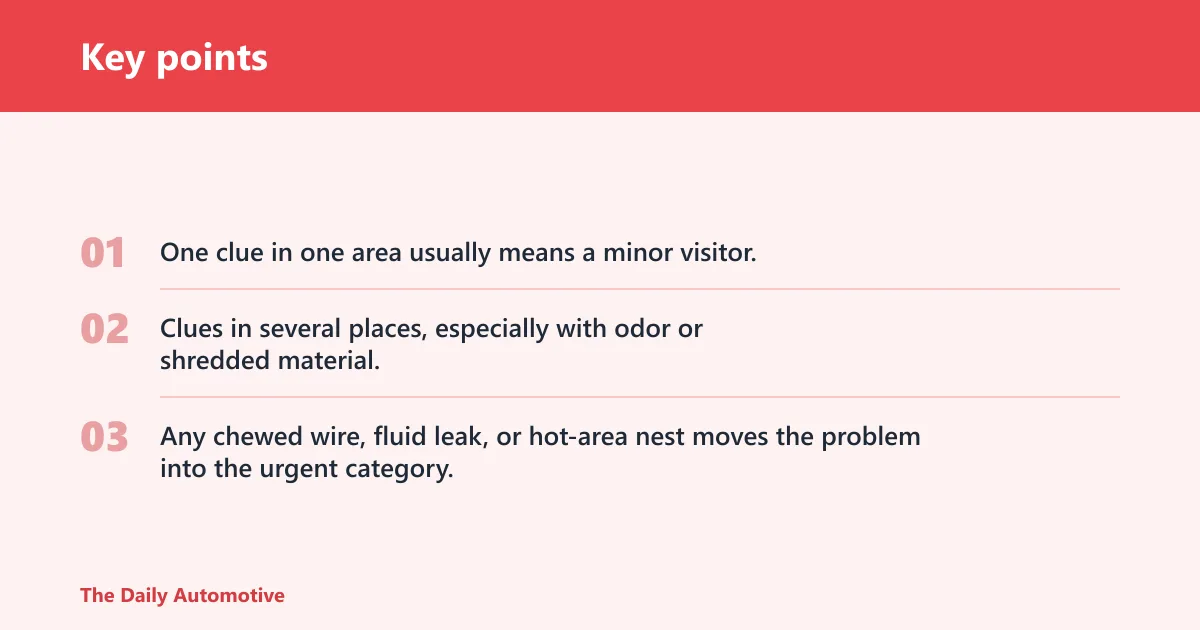
One clue in one area usually means a minor visitor. Clues in several places, especially with odor or shredded material, suggest active use of the car. Any chewed wire, fluid leak, or hot-area nest moves the problem into the urgent category.
What signs point to mice?
The strongest early signs are small dark droppings, shredded nesting material, and a musty or musky smell. Mice may also leave rice-grain-sized droppings in the engine compartment, glovebox, under seats, or trunk. Fresh droppings are dark and moist; older ones are gray.
Droppings are the fastest clue
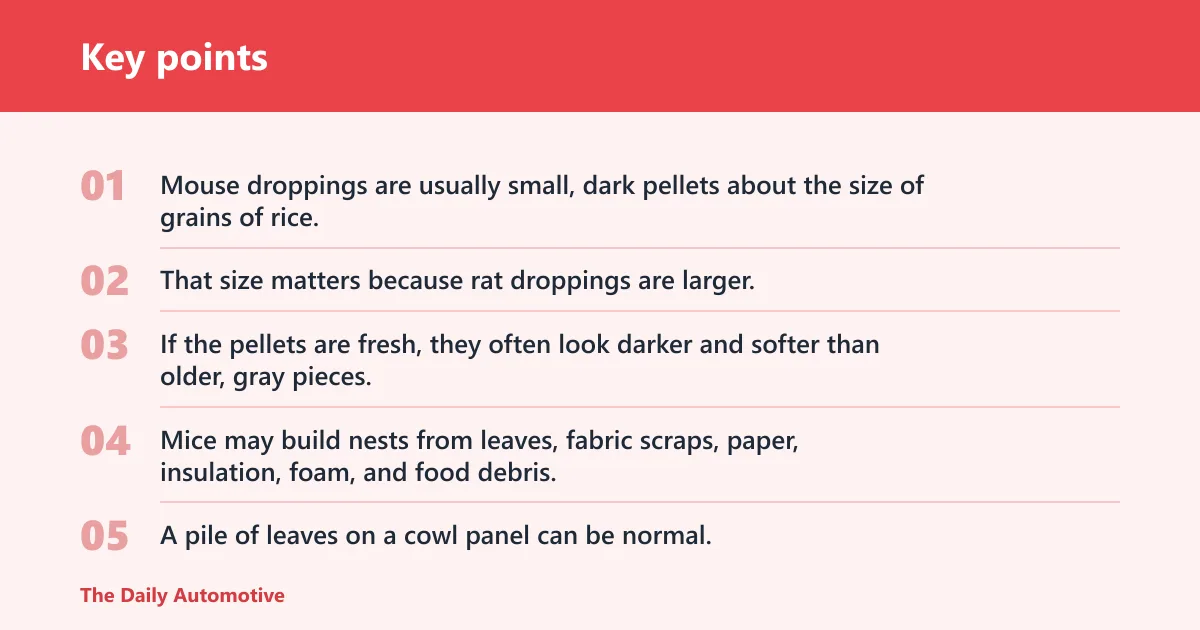
Mouse droppings are usually small, dark pellets about the size of grains of rice. That size matters because rat droppings are larger. If the pellets are fresh, they often look darker and softer than older, gray pieces.
Nesting material tells you more than dirt does
Mice may build nests from leaves, fabric scraps, paper, insulation, foam, and food debris. A pile of leaves on a cowl panel can be normal. A tight ball of shredded paper or insulation tucked into a protected cavity is not normal and deserves a closer look.
Odor can point to hidden activity
A musty, musky, urine-like, or decaying smell often means rodents have spent time in the car. The smell can get stronger when heat or AC runs because airflow moves it through the vents. If the odor changes after the HVAC starts, check the cabin filter housing and ducts first.
Say your glovebox has three dark pellets and a sour, urine-like smell that grows when the fan is on. That points more toward active cabin use than old outdoor debris. The next step is to check the cabin air filter housing, under-seat carpet edges, and nearby trim for shredded material.
How do you check the engine bay?
Look near the battery, air box, and firewall first. These areas stay warm after driving, remain sheltered from weather, and give mice cover. Check around covers, brackets, and corners where nests can hide beside wiring, hoses, and plastic parts.
Follow the warm, hidden edges
The engine compartment gives mice warmth and shelter. Focus on the battery tray, the intake air box, and the firewall side of the bay. Those spots collect debris and hide damage better than open metal panels do.
Look for signs near moving and hot parts
Inspect around belts, fans, and heat-adjacent surfaces without reaching into blind spots. Dry nesting material near hot parts matters because it can ignite after startup. Damage can also spread to wiring, hoses, insulation, and plastic components.
Watch for stored food clues
Mice may stockpile seeds, nuts, acorns, pet food, birdseed, dog food, wrappers, and even small food scraps in the engine bay. Food clues do not prove damage by themselves, but they often sit near a nest or a repeated entry path.
Where else do mice hide?
Mice do not stay in the engine bay alone. Common hiding spots include the cabin air filter housing, behind the dashboard, under seats, in the glovebox, and in the trunk. These areas offer quiet, protected cavities where nesting material can collect out of sight.
Cabin filter and vents
The cabin air filter housing is a common nesting site. It can be shredded or clogged, and it can trap leaves, paper, fabric, and insulation. If the odor gets worse when the fan runs, check this area early.
Under seats, glovebox, and trunk
Droppings under seats or in the glovebox often point to cabin access rather than a lone engine-bay visitor. The trunk can also hold food debris, insulation bits, or a compact nest. Look along carpet edges, spare-tire wells, and trim seams.
Behind trim and in protected cavities
Rodents often use hidden storage spaces behind trim panels or under dashboard covers. Those spots can hold shredded paper and fabric without leaving a big mess outside. If you see repeated evidence in more than one location, treat it as an active problem.
What damage means do not drive?
Do not drive if you find chewed wiring, exposed copper, fluid leaks, starting problems, or a warning light that may be tied to rodent damage. Those findings can mean electrical faults, overheating risk, or a fire risk near hot engine parts. A dead battery can also be part of the same problem.
Chewed wires are a hard stop
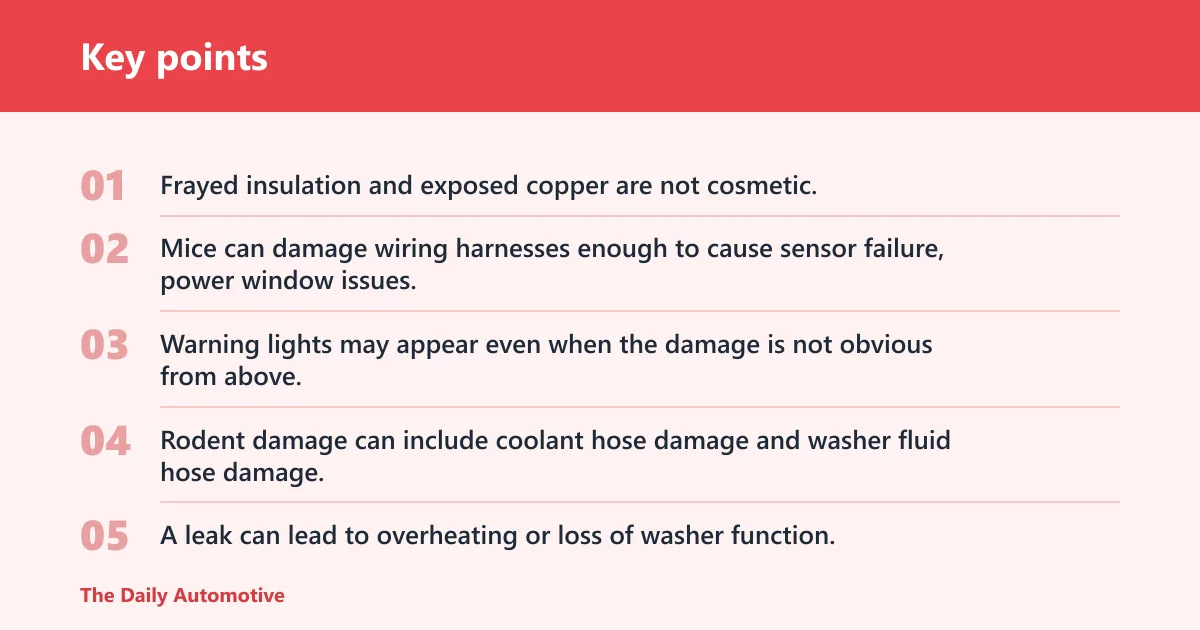
Frayed insulation and exposed copper are not cosmetic. Mice can damage wiring harnesses enough to cause sensor failure, power window issues, headlight trouble, AC problems, or a no-start condition. Warning lights may appear even when the damage is not obvious from above.
Fluid leaks raise the risk fast
Rodent damage can include coolant hose damage and washer fluid hose damage. A leak can lead to overheating or loss of washer function, depending on which line is affected. If you see wet spots, dripping, or a split hose, stop the inspection and arrange service.
Fire risk is part of the decision
Dry nesting material near hot parts can ignite after starting. That is why a nest on top of or beside the engine area is not a small cleanup item. It is a reason to pause, inspect more fully, and avoid driving until the area is cleared.
Suppose a warning light comes on after a rough start, and you later find frayed insulation near the battery. That is not a case for a quick drive to “see if it clears.” The right move is to keep the car parked and have the wiring checked before the next trip.
How do mice get in cars?
Mice enter through small gaps, open pathways, and parked-car access points. They can move through underbody openings, wheel well areas, or gaps around trim and seals. A parked car gives them shelter, and a warm engine bay makes the vehicle more appealing after it has been driven.
Why the engine compartment attracts them
The engine compartment stays warmer than the outside air after a drive and is shielded from wind and rain. Battery areas, air boxes, and the firewall create sheltered corners that feel safer than open ground. That is why the bay often becomes the first place to check.
Food and clutter help the problem spread
Wrappers, pet food, nuts, birdseed, and dog food can draw rodents toward the vehicle or keep them returning. Even if the car itself is clean, stored food in the cabin or trunk can give mice a reason to settle in. Remove that food source before they settle further.
Why do mice chew on car wires?
Mice chew on wires because gnawing is a normal behavior for them, and the car offers soft insulation around electrical conductors. The result can be frayed insulation, exposed copper, and faults that trigger starting problems or warning lights. The damage may spread before it is obvious from the outside.
What the damage looks like
Wire damage can appear as missing insulation, bite marks, or a harness that looks roughened in one section. Sometimes the car still starts, but accessory systems fail later. That is why headlight, power window, and AC issues can be part of the same pattern.
Why the clue may appear in more than one system
A mouse can damage one harness and leave a second path nearby. That is why a single electrical fault should lead you back to the engine bay, the cabin filter area, and under-dash wiring. One bad spot is often only part of the picture.
How do you prevent mice in a car engine?
Prevent mice by removing food, reducing clutter, and closing easy entry points. Keep birdseed, dog food, nuts, and wrappers out of the car. Park in a cleaner area when possible, and inspect the engine bay and cabin filter area regularly so a small intrusion does not become a nest.
Make the car less inviting
Clean up crumbs and packaging. Store pet food and seed away from the vehicle. If the car has already shown signs, look for the entry path rather than waiting for more droppings to appear. Prevention works better when the vehicle is not giving rodents a reason to stay.
Check the usual hiding places again
Recheck the battery area, air box, firewall, cabin filter housing, glovebox, under seats, and trunk after the first cleanup. Rodents often return to the same protected cavities. A second sweep catches the clue that the first pass missed.
How to clean rodent droppings and nests safely
Wear gloves and use disinfectant before touching droppings or nesting material. Do not sweep dry debris into the air. Bag the waste, clean the surrounding surfaces, and replace a damaged cabin air filter if it is shredded or clogged. If wiring, hoses, or heat-adjacent areas are involved, let a mechanic handle the repair.
Keep the first pass simple
Remove loose nesting material, then inspect for the source of the mess. If the odor remains after cleanup, the problem may still be hidden in the cabin filter housing, vents, or behind trim. Persistent smell usually means something was missed.
Know when to stop and hand it off
If you find exposed copper, fluid leaks, or a nest near hot parts, stop the DIY cleanup. Those are no-drive findings. A mechanic and, when needed, a pest pro can handle the repair and the source of the infestation.
Frequently asked questions
How do you know you have mice in your car?
Look for small dark droppings, shredded nesting material, a musty or urine-like smell, and signs of chewing. Check the engine bay first, then the cabin filter housing, glovebox, under seats, and trunk. Fresh droppings and repeated evidence in more than one place point to active mouse use.
What are the signs of mice in your car engine?
The main signs are droppings, nests, chewed wiring, odor, and possible warning lights or starting problems. Mice may also stockpile seeds, nuts, acorns, or pet food in the engine bay. A nest near hot parts raises the risk level because dry material can ignite after startup.
Products related to this article
Sponsored / affiliate links. As an Amazon Associate I earn from qualifying purchases. I may earn additional commission from eligible campaigns.