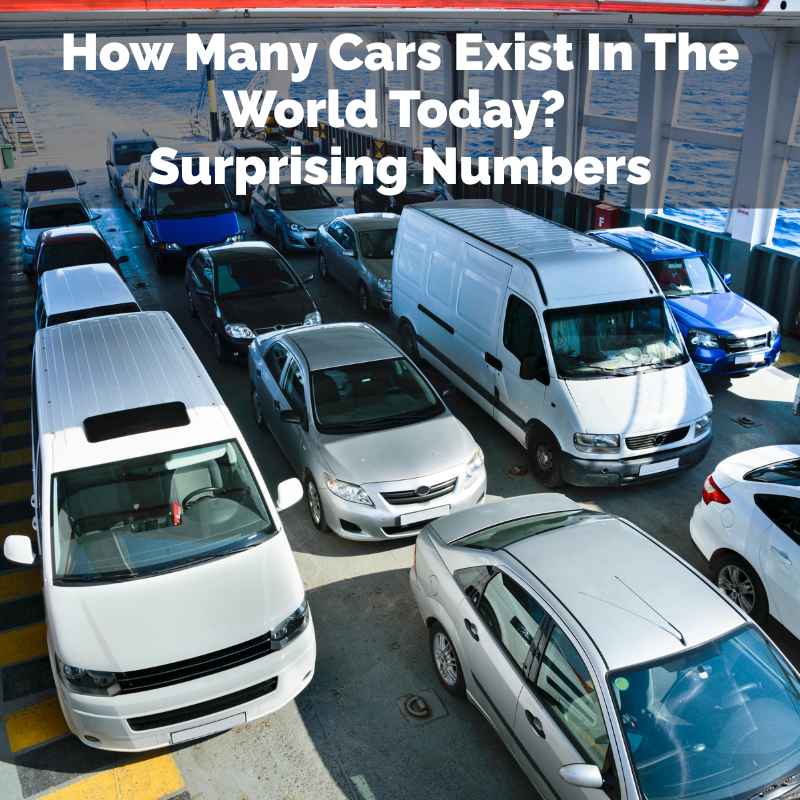
How Many Cars Exist In The World Today? Surprising Numbers
The world has over 1.4 billion registered motor vehicles, with cars making up a significant portion. This number is constantly growing, driven by developing economies and new vehicle sales each year.
The Ever-Growing Global Car Fleet
Counting cars worldwide is a huge task. Different countries track vehicles in various ways. Some count all registered cars.
Others might include trucks and buses in their totals. But the general picture is clear: the number of cars has grown a lot. It keeps on climbing year after year.
This growth shows our reliance on personal transport. It also points to economic changes around the world.
In recent years, the global vehicle fleet has moved past the one billion mark. Many experts now estimate the total number of motor vehicles to be around 1.4 to 1.5 billion. This is not just cars.
It includes motorcycles, trucks, buses, and other specialized vehicles. However, passenger cars are the largest group within this vast fleet. They make up the bulk of registered vehicles in most nations.
The trend is upward. Each year, millions of new cars are manufactured and sold. While older cars are retired, the rate of new vehicle production outpaces retirement.
This means the total number of cars on the road continues to increase. It’s a dynamic and ever-changing landscape. The demand for personal mobility fuels this constant expansion.
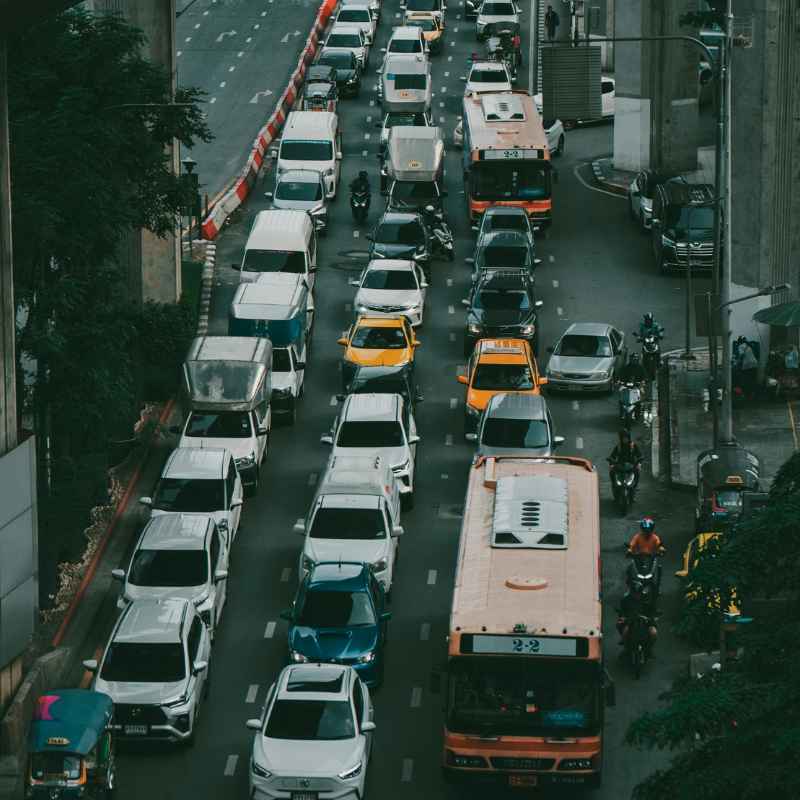
A Look Back: How We Got Here
Think about how cars became so common. It wasn’t always this way. For most of human history, travel was slow.
It relied on walking, horses, or boats. The invention of the automobile changed everything. Henry Ford’s Model T in the early 1900s made cars more affordable.
This was a big turning point. Cars moved from a luxury item to a necessity for many.
In the mid-20th century, car ownership exploded in places like the United States. This led to building highways and suburbs. Car culture took root.
More people could live farther from work. They could travel for leisure more easily. This era saw a dramatic rise in the number of cars on the road.
It reshaped cities and daily life.
As economies grew in Europe and Asia, car ownership there also increased. Japan became a major car producer and consumer. European countries saw similar booms.
Now, rapidly developing nations are seeing the fastest growth in car numbers. This global spread of car culture has led to the massive numbers we see today.
Who Has the Most Cars?
When we talk about car numbers, some countries stand out. The United States has historically had one of the highest rates of car ownership per capita. China has seen a massive surge in car ownership over the last two decades.
Its sheer population means even a moderate ownership rate results in millions of cars.
Other major players include Europe as a whole, with countries like Germany, France, and the UK having large fleets. Japan and South Korea are also significant. India is another country where car ownership is rapidly increasing.
These regions, with their large populations and growing economies, account for the vast majority of the world’s cars.
It’s interesting to look at the numbers per person. The U.S. still leads in many metrics for car ownership.
But countries like Italy and Australia also have very high numbers. This shows that car ownership is a widespread phenomenon in developed and many developing nations.
Regional Car Ownership Snapshot
North America: High ownership rates. Large number of vehicles in the US and Canada.
Europe: Significant fleet size. Diverse ownership patterns across different countries.
Asia: Rapidly growing numbers, especially in China and India. Manufacturing hub.
South America: Growing, but generally lower per capita ownership than North America.
Africa: Lowest ownership rates globally, but showing potential for future growth.
Tracking the Numbers: Challenges and Sources
Getting exact, up-to-the-minute figures for global car ownership is tough. There isn’t one single global registry. Different organizations try to collect this data.
International bodies like the International Organization of Motor Vehicle Manufacturers (OICA) publish statistics. National transportation departments and statistical agencies also provide data for their countries.
These numbers are usually based on vehicle registrations. This means a car is counted when it’s legally registered to drive. It doesn’t always account for cars that are off the road but not yet de-registered.
It also means that numbers can lag behind real-time sales and retirement figures. We often work with estimates and projections.
For example, data from 2022 or 2023 is often the latest we have for a global picture. These figures are compiled from national reports. They are then analyzed by market research firms and industry groups.
The trend is always toward more cars. The exact number is less important than understanding the direction and the forces driving it. My own experience in researching industry reports shows how complex it is to get a unified global number.
You’re always piecing together different national statistics.
The Car Population by Type
While we often think of “cars” as sedans and SUVs, the global fleet is diverse. Passenger cars are the most numerous category. This includes compact cars, sedans, hatchbacks, coupes, and convertibles.
These are the vehicles most people picture when they think of a “car.”
Then there are sports utility vehicles (SUVs) and crossover vehicles. Their popularity has surged in recent years. They now make up a huge chunk of new car sales in many markets.
Light commercial vehicles (LCVs) are also a large category. These include pickup trucks, vans, and minivans. They are used for business and personal transport.
Heavy-duty vehicles are less numerous but crucial. This group includes large trucks, buses, and coaches. They move goods and people on a massive scale.
Finally, we have motorcycles, scooters, and other two-wheeled vehicles. In some parts of the world, these are more common than cars. They are often more affordable and easier to navigate in crowded cities.
Breakdown of Global Motor Vehicles (Estimated)
- Passenger Cars: ~800 million to 900 million
- SUVs & Crossovers: A significant portion of passenger cars, growing fast.
- Light Commercial Vehicles (LCVs): ~150 million to 200 million
- Heavy-Duty Vehicles (Trucks, Buses): ~70 million to 100 million
- Motorcycles & Scooters: ~200 million to 300 million (estimates vary widely)
Note: These are rough estimates and include all types of registered vehicles.
Emerging Markets Drive Growth
The biggest driver for the increasing number of cars globally is the growth in emerging economies. As countries in Asia, Africa, and Latin America develop, more people can afford to buy cars. This isn’t just about luxury; it’s about mobility and opportunity.
Cars allow people to travel to better jobs.
They enable businesses to move goods more efficiently. For families, a car can mean access to better schools or healthcare. This is a powerful aspirational goal.
I’ve seen firsthand in developing regions how having a car can transform a family’s life. It’s not just about convenience; it’s about economic progress.
China’s automotive market is a prime example. Just two decades ago, car ownership was low. Today, it’s the world’s largest auto market.
India is on a similar trajectory. As billions of people in these regions enter the middle class, their demand for personal transportation will only grow. This will continue to push the global car count higher.
The Impact of Technology and Trends
The type of cars being produced is also changing. Electric vehicles (EVs) are becoming more common. While they still represent a smaller portion of the total fleet, their growth is rapid.
This shift to electric power will change the composition of the global car population in the coming years.
We also see trends like ride-sharing and car-sharing services. These services might slow the rate of individual car ownership in some urban areas. People might choose to use a shared car when they need one, rather than owning their own.
However, this doesn’t necessarily mean fewer cars overall.
Autonomous driving technology is also on the horizon. Self-driving cars could change how we use vehicles. They might increase vehicle utilization rates.
A car could be used for multiple purposes throughout the day, perhaps even earning money for its owner when not in use. This could also influence the total number of vehicles needed.
Key Trends Affecting Car Numbers
- Electrification: Growing EV sales are changing the mix.
- Shared Mobility: Ride-sharing might reduce individual ownership in cities.
- Autonomous Driving: Could lead to higher vehicle utilization.
- Urbanization: More people in cities may prefer public transit or smaller vehicles.
- Economic Development: Rising incomes globally drive demand for cars.
When is a “Car” a Car? Defining the Numbers
One of the reasons numbers can vary is how we define “car.” Are we talking only about passenger cars? Or do we include all motor vehicles? Most global statistics try to break this down.
But sometimes, categories can overlap or be interpreted differently by national agencies.
For instance, in some regions, a heavy-duty pickup truck might be registered as a commercial vehicle, not a passenger car. In others, it might be treated more like a car. When I look at reports, I always check their definitions.
This helps me understand the data better. It prevents confusion when comparing different sources.
The focus on passenger cars is usually around 800-900 million. But the total number of registered motor vehicles, including trucks, buses, and motorcycles, pushes the figure closer to 1.5 billion. It’s a massive number either way.
The key takeaway is the sheer scale of personal and commercial mobility enabled by these vehicles.
The Environmental Footprint of So Many Cars
Having over a billion cars on the planet has significant environmental consequences. The most obvious is air pollution. Burning fossil fuels in internal combustion engines releases harmful emissions.
These include carbon dioxide (CO2), a major greenhouse gas contributing to climate change. They also release nitrogen oxides (NOx) and particulate matter, which harm human health.
Traffic congestion is another major issue. More cars mean more traffic jams. This leads to wasted fuel, increased emissions, and lost productivity.
Noise pollution from traffic is also a problem in urban areas. The constant hum of engines and horns affects the quality of life for millions.
Beyond emissions, there are other environmental impacts. The manufacturing of cars requires vast amounts of resources. Mining for metals, producing plastics, and assembling vehicles all consume energy and generate waste.
The disposal of old vehicles also presents challenges, with millions of cars needing to be recycled or scrapped each year.
Environmental Concerns of a Large Car Fleet
Air Pollution:
Greenhouse gases (CO2) contributing to climate change.
Harmful pollutants (NOx, PM) affecting health.
Congestion:
Wasted fuel and lost time in traffic.
Increased stress and reduced efficiency.
Resource Use:
Heavy reliance on fossil fuels.
Materials extraction for manufacturing.
Waste:
End-of-life vehicle disposal.
Tire wear and road debris.
Economic Significance of the Global Car Fleet
The automotive industry is a giant in the global economy. It creates millions of jobs. These range from factory workers and engineers to salespeople and mechanics.
The industry also supports many other sectors, such as steel production, rubber manufacturing, and electronics. It’s a huge economic engine.
Car sales represent a significant portion of consumer spending in many countries. The taxes collected from car sales, fuel, and registrations are also a major source of government revenue. These funds are often used to build and maintain roads and other infrastructure.
The economic impact is not just about jobs and revenue. Cars enable commerce. They allow goods to be transported from factories to consumers.
They allow people to commute to work and participate in the economy. Without the current scale of personal and commercial vehicle use, our modern economies would look very different.
Looking Ahead: What Does the Future Hold?
The number of cars is likely to continue to grow for some time. Developing nations will see more people gaining access to personal transportation. However, the nature of this growth might change.
The transition to electric vehicles is a major factor. As EV technology improves and costs decrease, they will become more dominant. This will help reduce tailpipe emissions, though the environmental impact of battery production and electricity generation remains a consideration.
We might also see a shift in mobility patterns. In dense urban areas, public transportation, cycling, and walking may become more appealing. Shared mobility services could reduce the need for every household to own a car.
But in suburban and rural areas, personal car ownership is likely to remain the norm for the foreseeable future.
The Evolving Landscape of Mobility
Vehicle Types:
Trend: Shift towards EVs and more sustainable options.
Impact: Reduced reliance on fossil fuels for power.
Ownership Models:
Trend: Rise of shared mobility and subscription services.
Impact: May alter the definition of car ownership.
Urban Planning:
Trend: Focus on pedestrian-friendly cities and integrated transport.
Impact: Potential decrease in car dependence in dense areas.
Technology:
Trend: Advancements in autonomous driving and connectivity.
Impact: Could change how cars are used and their efficiency.
When Is the Number of Cars a Concern?
The sheer scale of over 1.4 billion motor vehicles is a cause for concern in several ways. Firstly, the environmental impact is immense. Climate change is a pressing issue.
The contribution of transportation to greenhouse gas emissions cannot be ignored. We need to reduce our reliance on fossil fuels.
Secondly, resource depletion is a factor. The materials and energy needed to produce and maintain this many vehicles are substantial. As global populations grow, demand for resources will only increase.
We must find more sustainable ways to produce and use vehicles.
Thirdly, the infrastructure burden is significant. Roads, bridges, parking lots – these all require land and resources. Urban sprawl, often driven by car dependency, consumes valuable natural habitats and agricultural land.
We need smarter urban planning that prioritizes efficient transport over car-centric development.
I remember visiting a city that had invested heavily in public transit. It was a revelation. Fewer cars meant less noise, cleaner air, and more space for people.
It showed me that we have choices in how we shape our transportation future. The number of cars doesn’t have to keep growing unchecked if we make different decisions.
My Experience: Witnessing the Growth
I’ve traveled to many parts of the world over the years. I’ve seen the undeniable growth in car ownership firsthand. In some cities, the increase in traffic has been dramatic.
What used to be a quick drive can now take hours. The air quality has noticeably worsened in certain regions.
I recall a trip to Southeast Asia about fifteen years ago. Motorcycles and scooters were the dominant forms of transport. The roads were busy but somehow manageable.
On a more recent visit, cars were everywhere. The streets were clogged with traffic jams that seemed to last all day. It was a stark reminder of how quickly this trend can take hold.
This personal observation reinforces what the statistics show. The demand for personal mobility is powerful. As economies develop, people naturally gravitate towards car ownership.
My own frustration in those traffic jams made me think about alternatives. It’s a complex problem with no easy answers, but seeing it firsthand makes the numbers feel much more real.
Quick Checks for Your Own Situation
While we’ve been looking at global numbers, it’s worth considering your own situation. Is your household’s car use contributing to the global count in a way that feels manageable? Here are some simple checks:
- How many cars do you actually need? Many households have more than one car but don’t use them equally.
- Are your trips necessary? Could some errands be combined? Could you walk or bike?
- What’s your commute like? Is there a public transport option that could work?
- When was your car last serviced? A well-maintained car is more fuel-efficient and pollutes less.
- Are you considering an EV for your next purchase? Even one EV on the road makes a difference.
Thinking about these questions can help you understand your personal impact. It’s not about guilt, but about awareness. Every car is a part of that 1.4 billion total.
Making conscious choices can help steer the future in a more sustainable direction.

Frequently Asked Questions
What is the most recent estimated total number of motor vehicles in the world?
The most recent estimates suggest there are over 1.4 billion registered motor vehicles globally. This number includes passenger cars, trucks, buses, and motorcycles.
Which country has the most cars?
While China has the largest number of registered motor vehicles, the United States historically has had very high car ownership rates per capita. Both countries contribute significantly to the global total.
Is the number of cars still increasing?
Yes, the global car fleet continues to increase. This is largely driven by growing economies in developing countries where more people are able to afford vehicles.
How do electric vehicles (EVs) fit into the global car count?
Electric vehicles are a growing segment of the global fleet, but they still represent a relatively small percentage of the total 1.4+ billion vehicles. Their numbers are increasing rapidly each year.
What are the main environmental concerns related to so many cars?
The main concerns include air pollution from emissions, greenhouse gas contributions to climate change, traffic congestion, noise pollution, and the extensive use of resources for manufacturing and maintenance.
Will ride-sharing services reduce the total number of cars in the future?
Ride-sharing and car-sharing services may reduce individual car ownership in some urban areas. However, it’s not guaranteed to reduce the total number of vehicles, as usage patterns might change vehicle utilization rates.
The Big Our Road Ahead
So, how many cars exist in the world today? The number is massive, easily over 1.4 billion. It’s a figure that highlights human mobility and economic progress.
But it also points to significant environmental and social challenges.
As we look forward, the automotive landscape is changing. New technologies and evolving consumer habits will shape the future. The trend is toward more sustainable transport.
Understanding the current scale of car ownership is the first step. It helps us make informed choices about the road ahead.
Products related to this article
Sponsored / affiliate links. As an Amazon Associate I earn from qualifying purchases. I may earn additional commission from eligible campaigns.