Registered Vehicles in the U.S.: 1900–2023 Data
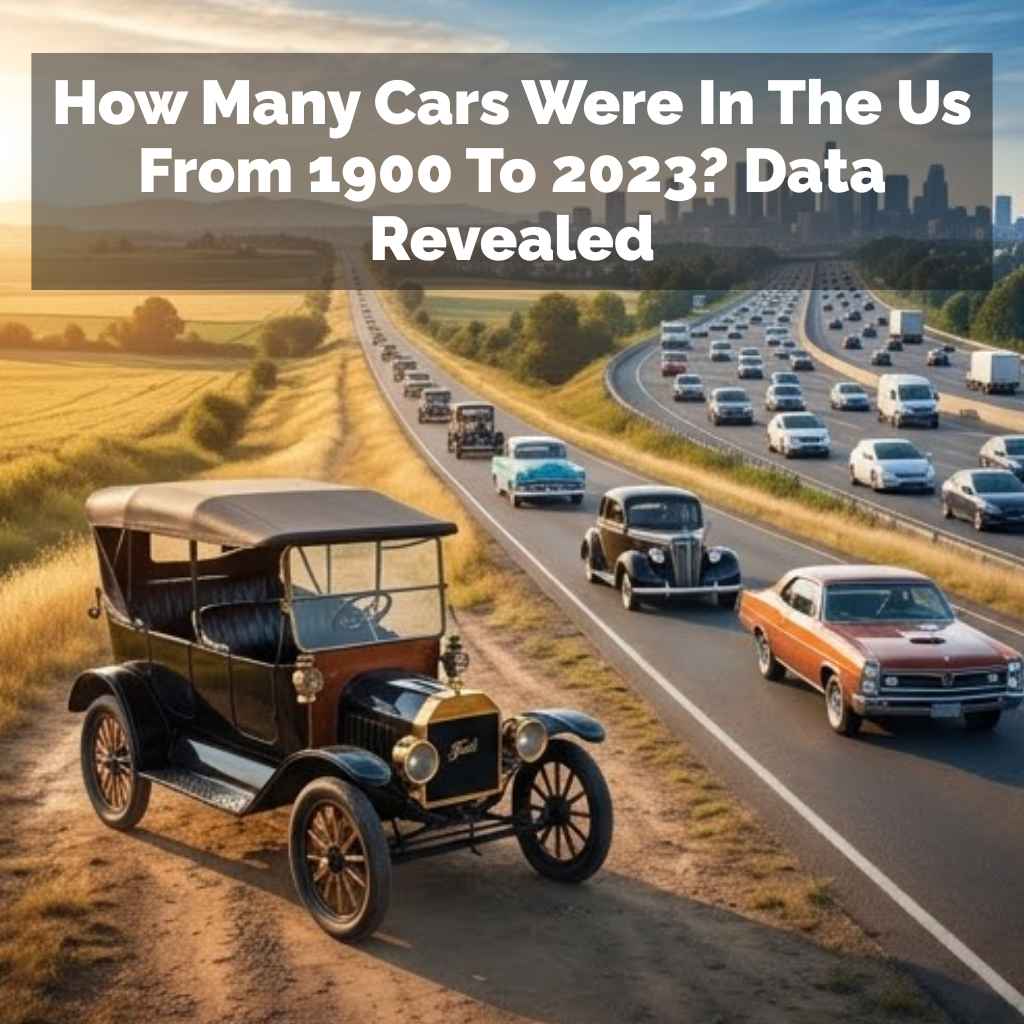
It’s a question that pops up when you’re stuck in traffic or just thinking about how much things have changed. How many cars were actually on the road in the United States over the years? From the very first sputtering automobiles to the millions we see today, tracing this history helps us understand so much about our country’s growth and our own lives.
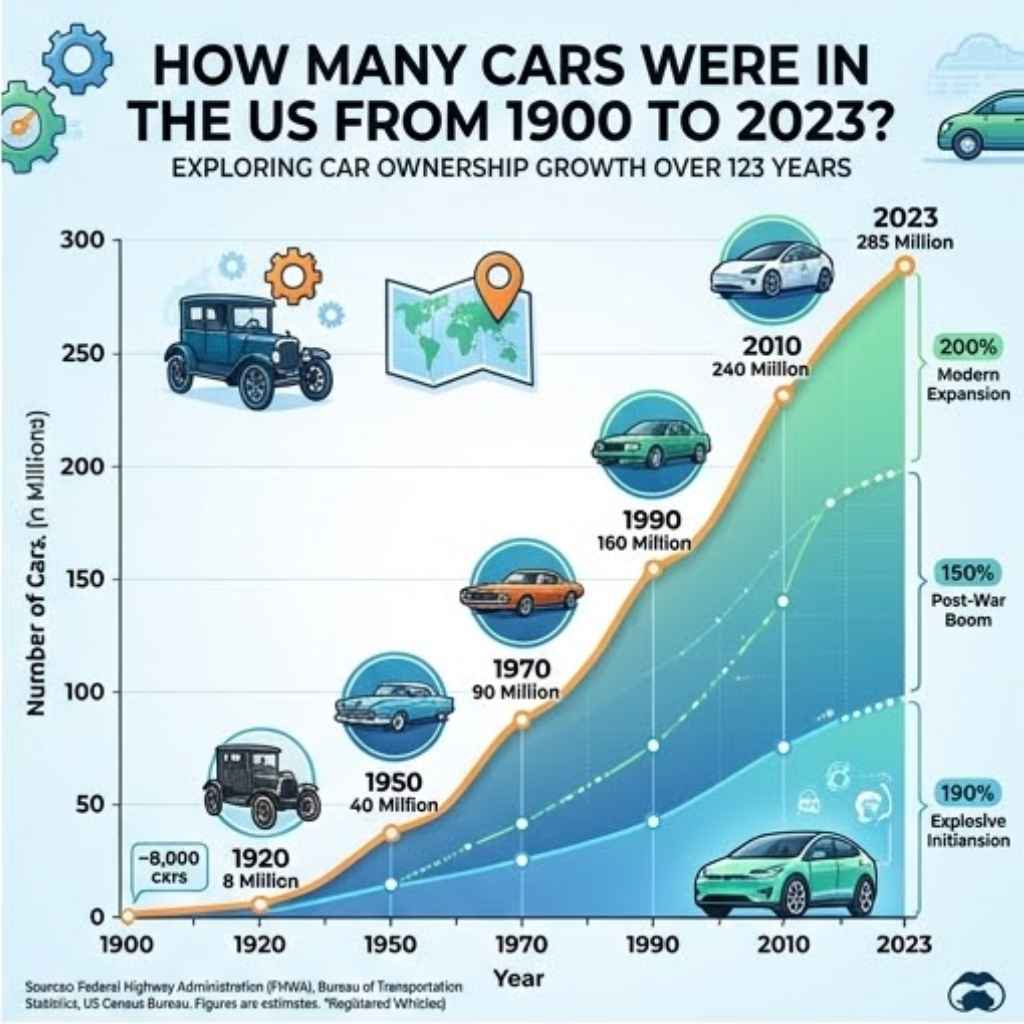
The number of registered cars in the U.S. has grown from under 500 in 1900 to over 280 million by 2023. This massive increase reflects major technological, economic, and social changes that made personal car ownership accessible and desirable for most Americans over more than a century.
The Dawn of the Automobile Age
Imagine a time when a car was a rare sight. In the early 1900s, cars were more like expensive toys for the wealthy. They were noisy, unreliable, and often seen as a passing fad.
People were used to horses and buggies. Roads weren’t built for cars, and fixing them was hard.
The first count we have for cars is tiny. In 1900, the U.S. had fewer than 500 registered automobiles.
Think about that! It’s less than one car for every town in America back then. These early cars were made by hand.
Companies like Ford and General Motors weren’t big yet. It was a time of invention and dreaming.
Early car makers had to figure out everything. How to make an engine that wouldn’t break? How to build something that wouldn’t scare horses?
How to convince people this new machine was safe? It was a big challenge. But they kept working.
They knew something special was happening.
The Roaring Twenties and Mass Production
Then came a big change. Henry Ford’s Model T changed everything. He didn’t invent the car, but he made it for everyone.
The moving assembly line made cars cheaper. Suddenly, more people could afford a car. Owning a car became a real possibility for many families.
In 1910, the number of cars in the U.S. hit about 469,000. That’s a huge jump from just a few hundred!
By 1920, it was over 8 million. The country was getting ready for wheels. Cities started building better roads.
Gas stations began to appear.
This was the start of car culture. People could travel farther. They could visit family more easily.
They could go on road trips. The car gave them freedom. It changed how they lived and worked.
The 1920s were roaring, and cars were a big part of that excitement.
Car Ownership Milestones
1900: Less than 500 cars registered.
1910: Around 469,000 cars on the road.
1920: Surpassed 8 million cars.
1930: Crossed the 20 million mark.
The Great Depression and World War II
Things got tough during the Great Depression in the 1930s. Money was tight. Many people couldn’t afford new cars.
Car sales dropped. People kept their old cars running as long as they could. Fixing cars became a common skill.
In 1930, there were about 23 million cars in the U.S. That’s still a lot, but the growth slowed down. People learned to be very careful with what they had.
Making something last was important.
Then came World War II. Car production changed. Factories that made cars started making tanks and planes instead.
Rubber and metal were needed for the war effort. Many cars were stored away. Gas was rationed, so people drove less.
After the war, things changed again. Soldiers came home. The economy grew.
People wanted new things. They wanted new cars. The car became a symbol of success and freedom once more.
Impact of Major Events on Car Numbers
- Great Depression (1930s): Slowed growth, focus on repairs.
- World War II (1940s): Production halted, rationing limited driving.
- Post-War Boom (late 1940s-1950s): Rapid increase in ownership.
The Post-War Boom and the Interstate Highway System
The years after World War II were a golden age for cars. Families had more money. Suburbs grew.
People moved away from cities and needed cars to get around. The number of cars on the road shot up.
In 1950, there were about 47 million cars. Just ten years later, in 1960, that number doubled to over 70 million! This was a time when the car was king.
Drive-in theaters, fast-food restaurants, and motels all grew because of cars.
The Interstate Highway System, started in the 1950s, made driving even easier. These long, smooth roads connected the country. People could travel across states quickly and safely.
This led to even more car ownership. It was easier than ever to go anywhere.
By 1970, the U.S. had over 90 million cars. The car was a central part of American life.
It shaped our cities, our jobs, and our leisure time. It was a huge part of the economy.
Driving Trends in the Mid-20th Century
Rise of Suburbia
More people moving out of cities meant more need for personal transport.
Highway System
Interstates made long-distance travel and commuting more feasible.
Economic Growth
Higher incomes allowed more families to buy their first car.
Car Culture
Cars became symbols of freedom, status, and the American Dream.
The Late 20th Century: Growth Continues
The trend of growing car numbers continued through the rest of the 20th century. Even with gas crises in the 1970s and economic ups and downs, more cars kept appearing. People found ways to adapt.
Smaller, more fuel-efficient cars became popular for a time.
In 1980, the U.S. had over 120 million registered vehicles. By 1990, it was around 140 million.
This steady rise showed how essential cars had become for daily life. For many, having a car wasn’t a luxury; it was a necessity.
The automotive industry kept innovating. Safety features improved. Comforts like air conditioning became standard.
Cars became more reliable. This made them a more attractive purchase for more people. The idea of one car per family was common, but more households started having two or even three cars.
By the year 2000, the number of cars had reached over 190 million. This was a huge number, more than double what it was just 30 years prior. See our full breakdown of how many people own cars in the US today. It showed how deeply cars were woven into the fabric of American society.
The 21st Century: Peak Car Ownership?
As we entered the 21st century, car ownership continued to climb. People relied on their cars for commuting, errands, and leisure. The internet and online shopping hadn’t yet significantly reduced the need for physical travel for many tasks.
In 2010, the U.S. had roughly 230 million registered vehicles. The number kept growing, though perhaps at a slightly slower pace than some earlier decades.
Some areas became more congested, and discussions about public transit and environmental impact started to gain more attention.
The years that followed saw continued growth. By 2020, the number of registered vehicles in the U.S. was approaching 270 million.
This number includes cars, trucks, and other motor vehicles. It’s a staggering amount of metal and rubber moving on our roads every day.
What’s interesting is that while the total number of vehicles is high, the number of vehicles per capita has sometimes leveled off or even slightly decreased in recent years, especially in urban areas where ride-sharing and public transport are more common. However, the sheer volume of cars remains a defining feature of American life.
Looking at the Numbers: A Detailed Breakdown
To really see the journey, let’s look at the numbers more closely. It’s not just about how many cars were made, but how many were registered and in use.
U.S. Vehicle Registrations: A Snapshot
| Year | Approximate Registered Vehicles (Millions) |
|---|---|
| 1900 | < 0.001 |
| 1910 | 0.47 |
| 1920 | 8.1 |
| 1930 | 23.0 |
| 1940 | 27.5 |
| 1950 | 47.2 |
| 1960 | 71.4 |
| 1970 | 91.9 |
| 1980 | 121.6 |
| 1990 | 140.8 |
| 2000 | 191.6 |
| 2010 | 230.0 |
| 2020 | 270.0 (approx) |
| 2023 | 280.0+ (estimate) |
These numbers show a clear trend. From almost zero, we went to millions, then tens of millions, and now hundreds of millions. It’s a story of progress, industrial might, and changing lifestyles.
Each number represents countless journeys, commutes, and experiences.
Factors Influencing Car Numbers
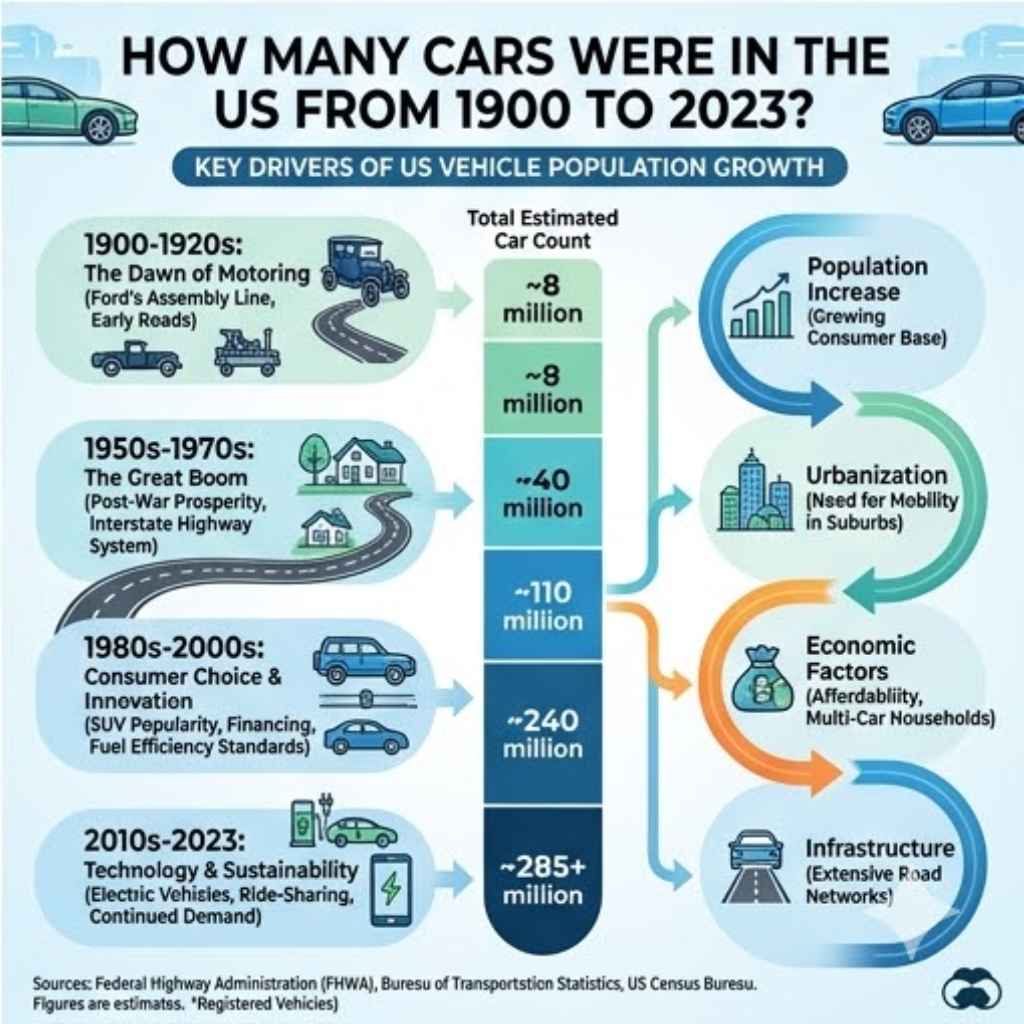
So, what made these numbers go up so dramatically? It wasn’t just one thing. Many forces shaped the history of car ownership in the U.S.
Key Drivers of Vehicle Growth
Technological Advancements
Improvements in engine design, safety, and fuel efficiency.
Economic Prosperity
Higher incomes and access to credit made cars more affordable.
Infrastructure Development
Building of roads, highways, and supporting services like gas stations.
Urban Sprawl and Suburbia
Growth of communities that require personal vehicles for daily life.
Cultural Significance
The car as a symbol of freedom, independence, and the American Dream.
Demographic Shifts
Growing population and changing family structures.
For example, the development of the affordable internal combustion engine was crucial. Then, mass production techniques made cars accessible. The rise of suburbs meant people lived farther from work and shops, making cars a necessity rather than a luxury.
Also, government policies played a role. The creation of the Interstate Highway System in the mid-1950s was a massive undertaking that directly encouraged car use and ownership. It made long-distance travel practical and paved the way for the modern road network.
What This Means for Today and the Future
So, why does knowing the history of car numbers matter today? It helps us understand the massive impact automobiles have had on our environment, our economy, and our way of life. The sheer volume of cars has led to concerns about pollution, traffic congestion, and the need for sustainable transportation.
As we look forward, trends are shifting. Electric vehicles (EVs) are becoming more common. Ride-sharing services have changed how some people get around.
Cities are investing more in public transport. However, for many parts of the U.S., the car remains the primary mode of transport.
The number of cars on the road is unlikely to disappear soon. But the type of cars and how we use them might change. The journey from a few hundred cars to over 280 million tells a powerful story about innovation and human needs.
It’s a story that continues to unfold with every new model and every new road built.
The U.S. has the highest number of registered vehicles globally, and this has shaped infrastructure, culture, and daily life for over a century. Understanding this history provides context for current discussions about sustainability, urban planning, and the future of personal mobility.
Frequently Asked Questions About U.S. Car Numbers
What was the very first year cars were counted in the U.S.?
While exact tracking was difficult in the very early days, the first widespread attempts to count automobiles in the U.S. began around the turn of the 20th century. By 1900, there were fewer than 500 registered cars.
Official statistics became more robust as car ownership grew.
When did car ownership really take off in America?
Car ownership really began to take off in the 1910s and 1920s, thanks to Henry Ford’s mass production of the Model T. This made cars much more affordable for the average family. By 1920, there were already over 8 million cars on the road.
How did the Great Depression affect the number of cars?
During the Great Depression of the 1930s, the growth in car ownership slowed significantly. People had less money, so they kept their older cars running longer and bought fewer new ones. The focus shifted to maintenance and repair rather than purchasing new vehicles.
Why did car numbers increase so rapidly after World War II?
After World War II, there was a boom in the U.S. economy. Families had more disposable income, and the suburbs were growing rapidly.
Cars were essential for commuting and daily life in these new suburban areas. This led to a huge surge in car sales and registrations throughout the 1950s and 1960s.
Are there more cars now than ever before?
Yes, the total number of registered vehicles in the U.S. has continued to increase over time. By 2023, estimates place the number at over 280 million.
While the rate of growth might fluctuate, the overall trend has been upward for over a century.
What is the current number of registered vehicles in the U.S. as of 2023?
As of 2023, estimates suggest there are over 280 million registered vehicles in the United States. This figure includes cars, trucks, SUVs, and other motor vehicles. The exact number can vary slightly depending on the reporting agency and the precise cut-off date for data.
How many cars were there in the U.S. in 1900?
In 1900, the number of registered automobiles in the U.S. was very small, estimated to be less than 500. It was a time when cars were rare, expensive, and considered more of a novelty than a common mode of transportation.
The Journey of the American Automobile
Tracing the number of cars in the U.S. from 1900 to today is like watching a country transform. From a handful of curious machines to a vast fleet that shapes our landscape, the automobile’s journey is remarkable.
It’s a story of innovation, economy, and how we choose to live our lives.
Products related to this article
Sponsored / affiliate links. As an Amazon Associate I earn from qualifying purchases. I may earn additional commission from eligible campaigns.