How Much Does a Car Safety System Cost?
A basic car safety or security system usually costs roughly $150 to $500 installed; factory-style driver-assist retrofits can often run about $500 to $2,500+, and connected trackers often add about $5 to $30 a month. Skip the wrong system and you can end up paying for theft recovery, failed inspections, or gear that never works with your vehicle. This guide breaks down prevention, recovery, and compliance costs, including hardware, labor, subscriptions, and which setup matches your car and budget.
Car safety cost matrix
This matrix separates the purchase price from labor and recurring fees, which is the only fair way to compare systems. A cheap box can turn expensive once you add wiring, bypass modules, GPS service, or the install time a complex vehicle demands.
| System type | Typical upfront price | Install labor | Recurring fee | Compatibility risk | Problem it solves |
|---|---|---|---|---|---|
| Basic one-way alarm | $60–$300 parts; $150–$350 installed | Low to moderate | Usually none | Low on older vehicles, higher on CAN-bus cars | Deter theft, break-ins, and tampering |
| Two-way alarm | Installed total often $250–$550 | Moderate | Usually none | Moderate; range can shrink in dense areas | Alerts you when the system triggers |
| Advanced security system | $500–$1,200 | $300–$700 | Often $5–$20 per month | Moderate to high on newer trims | Alarm, remote monitoring, GPS tracking |
| Remote start module | Often bundled; can push a total to $500–$1,000 or more | Moderate to high | Sometimes app service | High on push-button-start vehicles | Starts the vehicle from a distance |
| GPS tracking module | $200–$500+ installed | Moderate | $5–$20 monthly, or annual plans such as $59.88 to $479.88 | Moderate | Recovery after theft |
| Data bypass module | Typically an added $50–$200+ | Raises labor time | Usually none | High on modern vehicles | Allows integration with factory electronics |
| Shock, glass-break, tilt sensors | About $25–$75 per sensor | Small to moderate add-on labor | Usually none | Low to moderate | Detect impact, entry, or towing |
| Factory-style driver-assist retrofit | $500–$2,500+ | High | Sometimes app or calibration fees | High | Parking or active-safety functions tied to vehicle electronics |
How much does installation add?
Professional installation usually adds $150–$350 for a basic alarm and $300–$700 for a more complex system. Those ranges reflect wiring time, module placement, and testing. A shop quote should also account for whether the vehicle needs integration with factory security, locks, or ignition logic.
Vehicles with CAN-bus wiring, push-button start, or complex factory electronics take longer because the installer has to connect through modules rather than simple analog wires. That can raise both labor time and the chance of a quote changing after the shop confirms fitment.
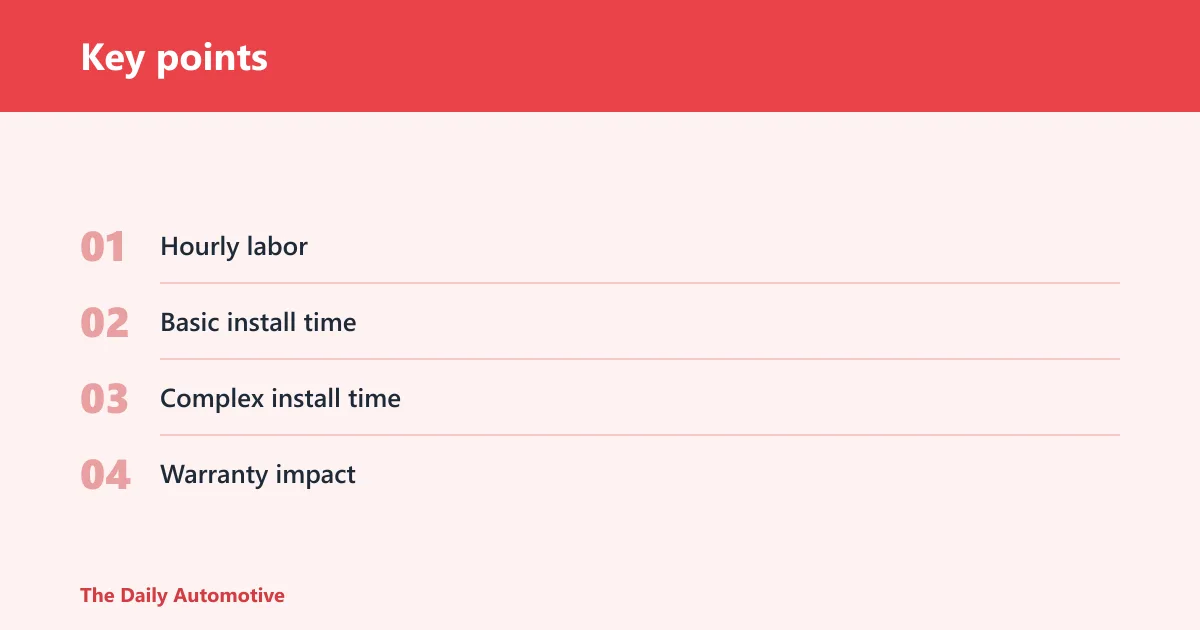
Professional installation assumptions
- Hourly labor: many alarm and remote-start quotes effectively assume about $100 to $150 per hour once diagnostic time and bay time are folded in.
- Basic install time: a straightforward alarm on an older car can take a morning or an afternoon, depending on access and wiring condition.
- Complex install time: remote start, GPS, and bypass modules can take most of a day.
- Warranty impact: improper tapping into factory wiring can create warranty disputes or electrical faults.
Basic alarm system costs

A basic aftermarket car alarm usually sits in the $150 to $450 installed band, with DIY kits lower at the parts counter. It is the lowest-cost prevention option, and it mainly deters opportunistic theft, break-ins, and nuisance tampering rather than stopping professional thieves.
Hardware price and installed price range
Basic professionally installed car alarms can cost about $250–$450 in the U.S., while DIY alarm kits can run from $60–$300 before installation. A typical installed aftermarket car alarm budget is $200–$500, and car alarm totals can range from $150 to over $800 including hardware and labor.
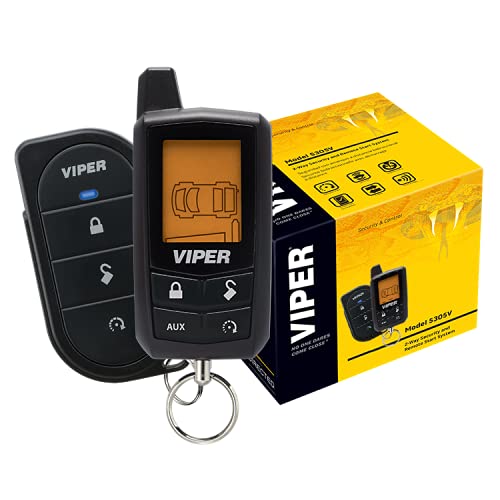
The Viper 3108V security kit was listed at $159.99 before installation, which shows how a low kit price can still turn into a much larger total once labor is added.
Common features and deterrence value
Common features include door triggers, siren output, starter disable, shock detection, and flashing status LEDs. Those features help with prevention. They do not help recovery the way GPS does, so the value is mostly in stopping a theft attempt before the vehicle is driven away.
Say your 10-year-old sedan sits on a street overnight. A basic alarm with shock and door sensing may be enough to deter a quick smash-and-grab because the goal is noise and attention, not remote tracking.
One-way versus two-way alarm pricing
A basic one-way alarm may total $150–$350 installed. A mid-tier two-way alarm may total $250–$550 installed. The premium buys feedback to your remote, so you can see that the alarm tripped, but the range depends on buildings, interference, and line of sight.
Two-way systems are a better fit when the vehicle often parks far from the driver, such as in a garage or large lot. They are less useful if the driver is rarely close enough to hear the confirmation signal.
Advanced system costs
Advanced car security systems cost more because they combine prevention and recovery tools. Once you add remote start, app control, or GPS, the price rises from a simple alarm quote into a connected ownership cost that can include monthly or yearly service fees.
Remote start, smartphone control, and GPS tracking
Remote start plus alarm installations can cost $500–$1,000 or more. Advanced alarm systems can reach $500–$1,200 with extra features. Advanced smart GPS systems may cost $200–$500+ installed. Those figures climb further when the vehicle needs a bypass module or extra integration hardware.
Connected systems often include app-based lock, unlock, location, and alert functions. That convenience is useful, but it also means the owner is paying for hardware, installation, and the service layer that keeps the connection alive.
Monthly or annual fees
Smartphone or GPS tracking modules may add a monthly fee of $5–$20. DroneMobile’s annually billed cellular plans range from $59.88 to $479.88 per year. Those fees matter because a low entry price can become a recurring line item for as long as the service is active.
GPS is a recovery tool, not just a convenience feature. If the vehicle is stolen, live location data can shorten recovery time and improve the odds of finding it before damage or resale stripping gets worse.
Vehicle compatibility limits
Modern push-button-start vehicles often need a data bypass module to make remote start or alarm integration work correctly. That module adds cost and complexity, especially on luxury trims and late-model vehicles with tighter factory electronics.
EVs and some high-security trims can be harder still. The installer may need vehicle-specific firmware, more labor, or a different product line entirely. That is why the same alarm can be a bargain on one vehicle and a poor fit on another.
What changes the final price?
The final bill depends on vehicle age, trim, wiring architecture, and what the system is supposed to do. Prevention-only alarms are usually cheaper than systems that must talk to factory electronics, report to an app, or recover a stolen vehicle.
Factory equipment, bypass modules, and add-on sensors
Data bypass modules commonly add $50–$200+ and increase install time because the system has to communicate with factory security and ignition logic. Add-on sensors usually cost about $25–$75 each for shock, glass-break, or tilt detection. Each sensor adds another wire path, test step, and possible adjustment.
Factory-installed security equipment can also change the quote. If the car already has a decent alarm or immobilizer, the shop may need to work around it rather than duplicate it, which can affect both parts and labor.
Why the quote changes by vehicle
- Older vehicles often accept a basic alarm with simpler wiring.
- Newer cars may require a data interface or bypass module.
- Push-button-start models often need more integration work.
- Luxury trims can carry extra electronics and tighter packaging.
- EVs may need different procedures because of their control architecture.
Is professional installation worth it?
Professional installation is worth the extra cost when the system ties into ignition, factory locks, CAN-bus wiring, or remote start. DIY can save money on simple alarm kits, but a mistake can create electrical faults, trigger warning lights, or leave a feature dead on arrival.
When DIY saves money
DIY is most realistic with basic kits, older vehicles, and owners who only want a siren, door triggers, and a starter interrupt. Even then, the total savings should be measured against your time and the risk of a bad wire splice.
When pro install reduces risk
Professional installation is the safer bet for remote start, GPS, and modern vehicles with a lot of factory electronics. A clean install lowers the chance of parasitic drain, false alarms, and warranty friction. It also makes troubleshooting easier if something later stops working.
How to compare quotes
Ask each shop to separate hardware, labor, bypass modules, sensors, and any subscription service. That avoids comparing a bare-bones alarm quote with a connected package that includes more features. A lower number is not a better deal if it leaves out the parts your vehicle actually needs.
Picture a 2021 SUV with push-button start and factory remote lock. One quote may look cheaper until the installer adds the bypass module, a remote-start interface, and app service. At that point, the “budget” quote is no longer the same product.
Ownership examples
These examples show how prevention, recovery, and compliance costs stack up. They are not universal prices, but they do reflect the way total cost changes with vehicle age and electronics complexity.
| Ownership scenario | Likely setup | Total upfront range | Recurring cost | Why this setup fits |
|---|---|---|---|---|
| Budget used car | Basic one-way alarm with one or two sensors | $150–$450 | Usually none | Low-cost deterrence on an older car with simpler wiring |
| Family SUV | Two-way alarm or advanced security package | $250–$1,000+ | $5–$20 per month if connected | Better feedback, added convenience, and possible recovery tools |
| Modern push-button-start vehicle | Alarm plus bypass module, often with remote start | $500–$1,000 or more | $5–$20 per month if app or GPS is included | Factory electronics need more integration and testing |
Frequently asked questions
How much does a vehicle safety cost?
If you mean an aftermarket alarm or security system, a basic installed setup often lands around $150 to $500. Advanced systems, remote start packages, and GPS can push the total higher. If you mean state vehicle safety compliance, that is a separate cost tied to inspection rules, not theft prevention hardware.
How much is a vehicle safety?
That wording usually refers to the same security hardware question, and the answer depends on the vehicle and features. Basic alarms are the cheapest entry point. If you want smartphone control, tracking, or remote start, the price climbs because of extra modules, labor, and possible subscription fees.
How much is a car safety inspection?
A safety inspection is not the same as a car alarm install. Inspection pricing is a compliance cost, while alarms are a prevention cost. Fees vary by state or province, and the owner should check local requirements before assuming a security system has anything to do with inspection pricing.
What does it cost to get an aftermarket car safety system installed?
Labor can be a large share of the bill. Vehicle wiring complexity, remote start, GPS, and bypass modules are the biggest price multipliers.
Do advanced car safety systems have monthly fees?
Yes. Connected systems often do. Smartphone or GPS tracking modules may add $5 to $20 per month, and some plans are billed annually instead. If the package depends on cellular service, treat that fee as part of the ownership cost, not an optional afterthought.
Is professional installation worth the extra cost?
For basic alarms on older cars, DIY can make sense if the owner is comfortable with wiring. For modern vehicles, remote start, GPS, or anything that touches factory electronics, professional installation is usually the safer purchase. It lowers the odds of integration errors and a quote that turns into a repair bill.
Products related to this article
Sponsored / affiliate links. As an Amazon Associate I earn from qualifying purchases. I may earn additional commission from eligible campaigns.