How Much Does a Car Service Cost in the USA?
A routine car service in the USA is often reported to cost about $150 to $500. Oil changes sit at the low end, while full or major service often runs about $300 to $1,000+ depending on the vehicle and the shop. Skip it, and you can pay more later for worn brakes, dirty fluids, missed inspections, and preventable breakdowns. Here’s how basic, full, and major service differ, plus realistic dealer, independent-shop, and specialty pricing.
How much does a car service cost in the USA?
Car service cost breakdown
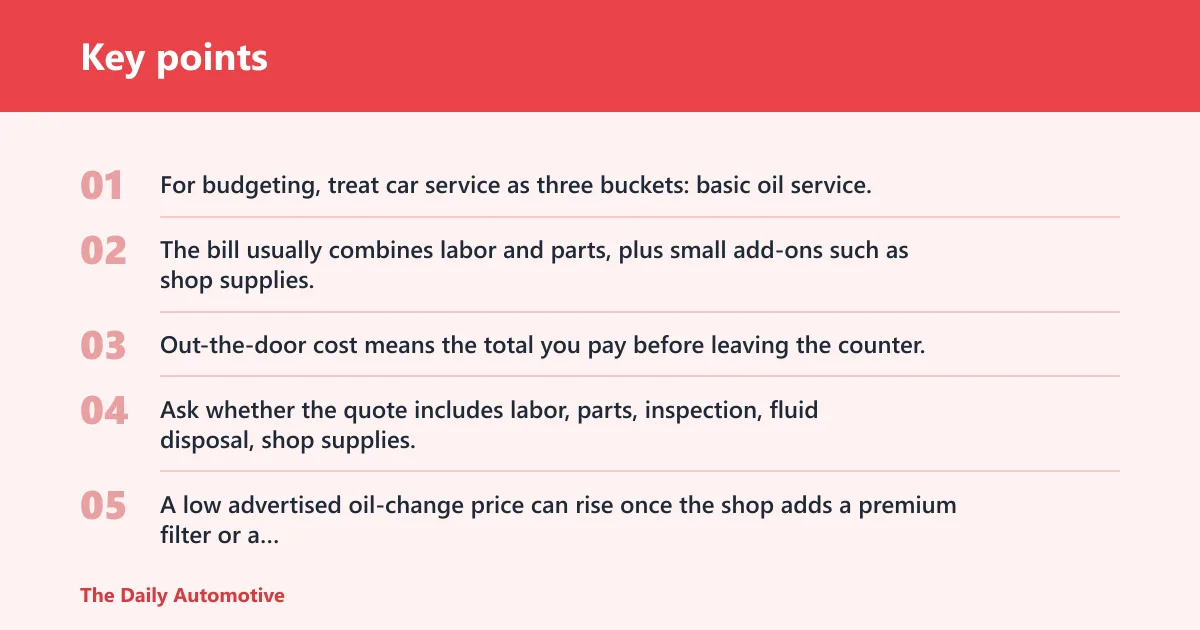
For budgeting, treat car service as three buckets: basic oil service, minor scheduled service, and full or major mileage service. The bill usually combines labor and parts, plus small add-ons such as shop supplies, disposal fees, and sales tax where the state applies it.
| Service tier | Low | Typical | High | Common invoice line items |
|---|---|---|---|---|
| Basic oil service | $50 | $80 to $130 | $180 | Oil, filter, labor, drain-plug washer, shop supplies, oil disposal fee, tax |
| Minor scheduled service | $120 | $180 to $300 | $400 | Oil and filter, multi-point inspection, tire rotation, fluid top-off, cabin or engine air filter, labor, tax |
| Full annual service | $250 | $350 to $600 | $850 | Oil and filter, brakes inspection, tire rotation and balancing, fluid checks, battery test, wiper blades, shop supplies, tax |
| Major mileage service | $450 | $700 to $1,200 | $1,800+ | Oil and filter, spark plugs if due, brake fluid service, coolant service, transmission fluid service, serpentine belt check, filters, diagnostics, labor, supplies, tax |
What counts as out-the-door cost
Out-the-door cost means the total you pay before leaving the counter, not the menu price on a website. Ask whether the quote includes labor, parts, inspection, fluid disposal, shop supplies, diagnostics, and local tax. A low advertised oil-change price can rise once the shop adds a premium filter or a vehicle-specific oil requirement.
Why the same service can cost much more at another shop
Two shops can quote the same service and still land far apart. One may use OEM parts, another may offer aftermarket parts, and labor rates can swing sharply by city, county, and brand. A dealer may also follow model-specific procedures that add time, while a basic lube shop may quote only the oil change itself.
What does a full car service include?
A full car service usually means more than an oil change. It often includes an oil and filter change, a multi-point inspection, tire checks, brake checks, fluid checks, and a reset of the maintenance reminder. For many cars, it is closer to a preventive maintenance visit than a repair appointment.
Oil and filter change
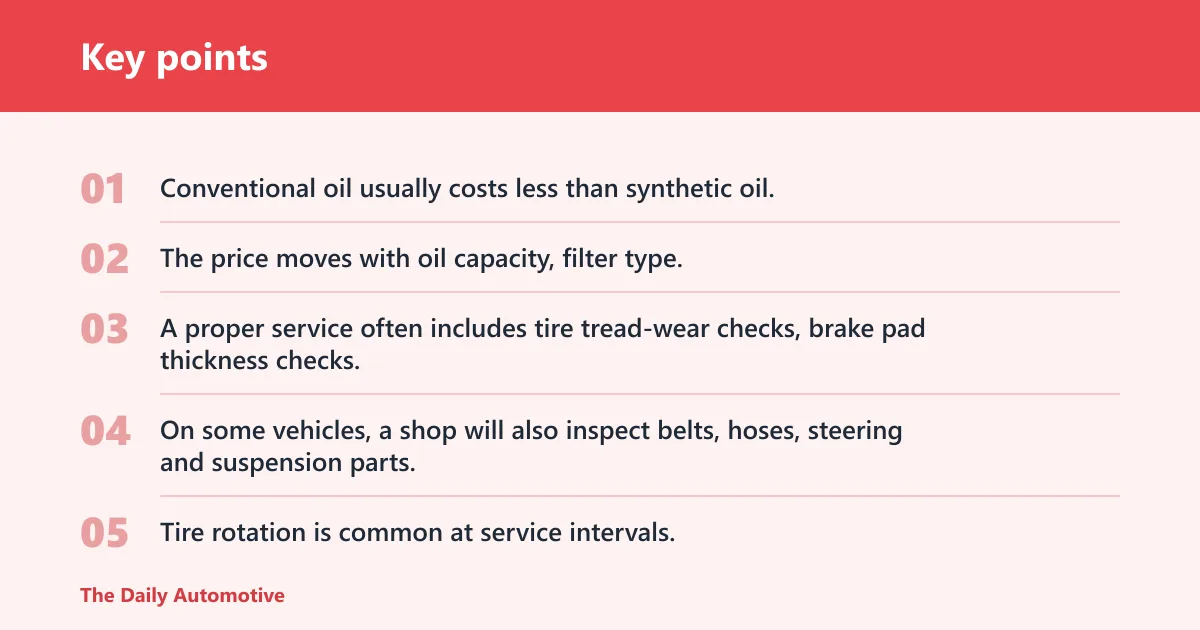
This is the core of most service visits. Conventional oil usually costs less than synthetic oil, and many newer engines specify synthetic from the start. The price moves with oil capacity, filter type, and whether the shop uses a standard filter or a vehicle-specific part.
Inspection points and fluids
A proper service often includes tire tread-wear checks, brake pad thickness checks, battery testing, coolant level checks, washer-fluid top-off, and a look for leaks under the car. On some vehicles, a shop will also inspect belts, hoses, steering and suspension parts, and the air intake system.
Tire checks and brake checks
Tire rotation is common at service intervals, and balancing or alignment may be added if wear, vibration, or steering pull shows up. Brake service can stay simple if the pads still have life left. If rotors are worn or warped, the bill rises fast because parts and labor jump on each axle.
Common add-on fees
Many invoices include line items that drivers miss when comparing quotes. Those often include multipoint inspection charges, scan-tool diagnostics, shop supplies, hazardous-waste disposal, and tax. Some shops waive a small inspection fee if you approve the follow-up work, while others charge it regardless.
What factors change car service prices in the USA?
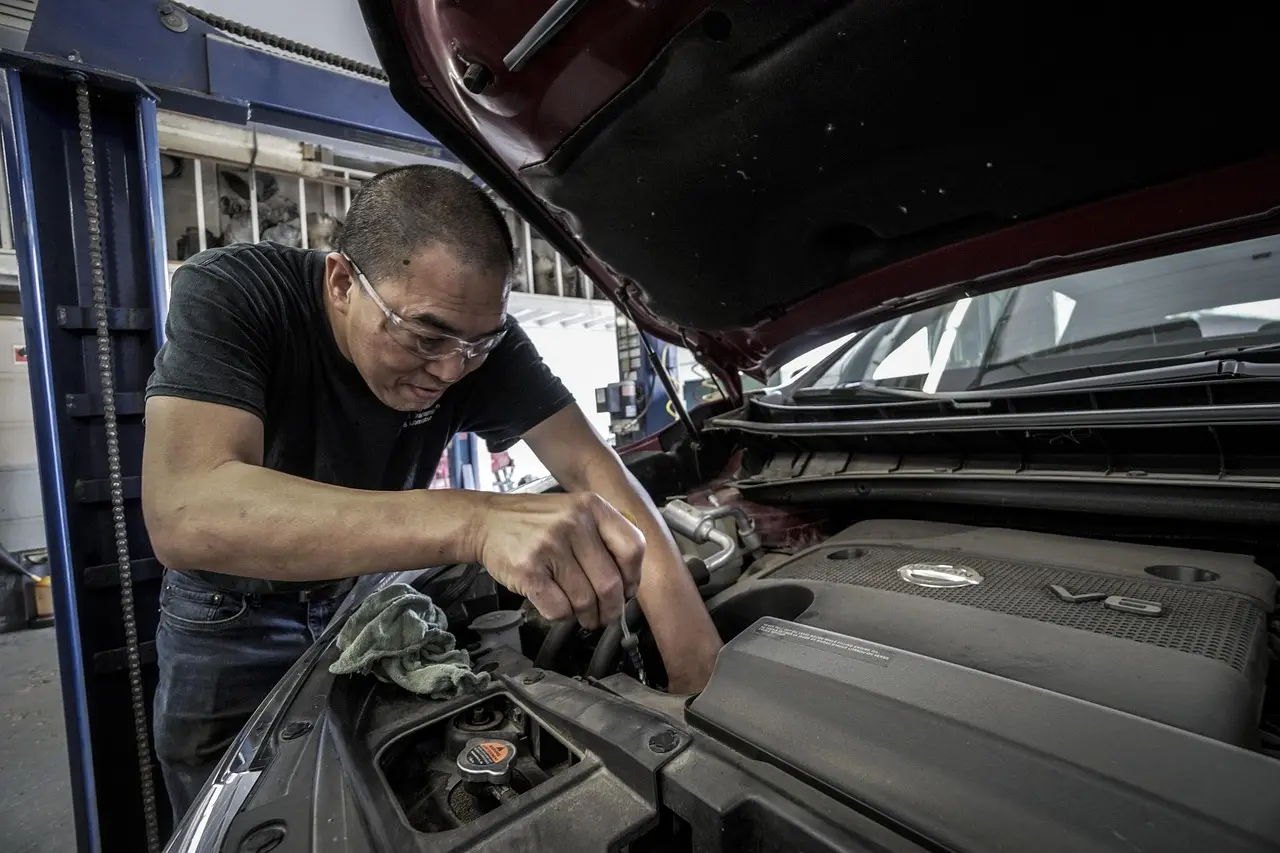
Car service prices change with the vehicle’s size, mileage, age, where the shop is located, and which shop you pick. A compact sedan is often cheaper to service than a large SUV or truck, while luxury brands, hybrids, and EVs can carry higher parts prices or more specialized labor. Regional labor rates matter just as much as the service menu.
Make, model, age, and mileage
Older and higher-mileage cars usually need more inspection time and more replacement parts. A 100,000-mile vehicle may need fluid services, belts, spark plugs, or brake work that a newer car can skip. The owner’s manual still matters, because the listed intervals tell you what should be replaced and when.
Sedan, SUV, truck, luxury, hybrid, and EV differences
Luxury vehicles often cost more because the parts are pricier and the procedures can take longer. SUVs and trucks may use larger tires, more oil, or heavier brake components, which raises the total. Hybrids and EVs can reduce some routine engine service, but they still need brake checks, tire service, cabin filters, cooling-system attention, and high-voltage-safe procedures when work touches those systems.
Say your midsize sedan needs a basic oil service at a quick-lube shop. That visit may stay near the low end if the car uses standard oil and nothing else is due, but the same car can cross into full-service pricing once the shop adds a tire rotation, cabin filter, and brake inspection.
Urban versus rural labor rates
Urban shops often charge more than rural shops because rent, payroll, and local customer demand are higher. State rules can also change the total through sales tax, environmental fees, and inspection requirements. Even outside service, location changes car costs; for context, a full coverage car insurance policy costs an average of $2,304 per year, or about $192 per month, and insurers consider where you live when setting rates.
Seasonal demand and regional pricing
Prices can move during busy periods, especially when winter prep or summer travel pushes more drivers into the bay. In the same way that car shipping tends to cost more during spring and summer months, service shops can also see higher demand in peak travel and weather-change seasons. Some areas also price maintenance differently because of salt exposure, heat, or state inspection rules.
Dealer service vs independent mechanic
Dealer service usually costs more than an independent mechanic, but it can make sense for warranty work, recall-related repairs, or a brand that needs model-specific software and procedures. Independent shops often win on labor rate and parts flexibility, while dealers usually lean on OEM parts and factory workflows.
OEM parts and brand procedures
Dealers typically use OEM parts and follow the manufacturer’s service steps closely. That can matter on newer cars, on vehicles still under warranty, or on brands with special reset procedures, software updates, or torque specs that ordinary shops may not handle as often.
Labor rate differences
The labor rate is often the biggest gap. A dealer rate may be higher because of training, equipment, and brand requirements. An independent mechanic may charge less per hour, and a specialty shop can land anywhere in between depending on the vehicle line they work on most.
Warranty and recall-related work
If a job is warranty-covered, the dealer or authorized repair path can be the safer choice. That said, routine maintenance does not have to happen at the dealer unless the warranty terms or the repair itself require it. Keep records either way so you can prove the work was done on time.
When an independent shop makes sense
An independent shop makes sense for routine service, brake work, tire-related checks, fluid changes, and most inspections. It is also a good option when you want a second estimate before approving a larger repair. For many drivers, the right move is to compare a dealer quote with one or two local shops before booking.
Common service items and what they cost
Oil changes, brakes, tires, and fluid services make up most routine bills. The total swings with parts quality, vehicle size, and whether the job is preventive maintenance or a symptom-driven repair. Once parts wear past inspection limits, service becomes repair and the cost climbs.
Oil changes: conventional vs synthetic
Conventional oil changes usually sit at the lower end of the service scale. Synthetic oil changes cost more because the oil itself costs more and some engines require a larger volume or a specific viscosity. Add a premium filter, and the bill moves up again.
Brake service: pads, rotors, and axle pricing
Brake pads alone cost less than pads plus rotors. Pricing is often quoted by axle, not by wheel, because shops usually replace both sides together. A simple inspection may reveal that only the pads are due, while grinding, pulsation, or rotor wear can turn a basic job into a bigger one.
Picture a compact SUV with a brake squeal on the front end. If the pads are worn but the rotors are still within spec, the invoice stays much smaller than if the rotors also need replacement. The symptom is the same, but the parts list changes the total quickly.
Tire service: rotation, balancing, and alignment
Tire rotation is one of the cheapest preventive items on the list. Balancing costs more because it uses extra equipment and time. Alignment usually costs the most of the three because it requires setup and adjustment, and shops may recommend it after suspension work, tire wear, or a steering pull.
Fluid services: coolant, transmission, brake, and power steering
Coolant service, transmission fluid service, brake fluid flushes, and power steering fluid service all vary by vehicle design. Some cars need these at fixed intervals, while others call for them based on condition or mileage. Hybrids and EVs may need less engine-related fluid work, but they still use fluids in key systems.
The best savings usually come from doing routine work on time. Follow the owner’s manual intervals, compare quotes, and approve only the work that is due. A cheap skipped service can cost more later if it turns into tire wear, brake damage, or a failed inspection.
- Use the owner’s manual for the service interval, not a guess.
- Get multiple quotes for the same line items.
- Ask whether the quote includes tax, supplies, disposal, and inspection fees.
- Decline add-ons that do not match the car’s mileage, symptoms, or maintenance plan.
- Fix small problems early before they stack into larger repairs.
What to ask before you approve work
Ask which items are required now, which are optional, and which can wait until the next interval. A good estimate should separate routine maintenance from repair. If a shop cannot explain the difference, ask for the inspection notes and a second quote.
When service becomes a repair
Service becomes repair when the shop finds worn or failed parts, not just scheduled maintenance. Warning signs such as brake noise, fluid leaks, vibration, warning lights, steering pull, or overheating can trigger diagnostics and higher costs. That is where scan-tool fees, extra labor, and replacement parts start to matter.
Diagnostic fees and scan-tool charges
A diagnostic fee is common when the complaint is vague or the warning light is on. The shop may charge to scan codes, inspect the system, and verify the cause before quoting repair. That fee can be small on its own, but it often sits on top of the final bill if the car needs parts.
Signs a problem should be fixed now
If the car is grinding, leaking, overheating, or lighting up the dash with a warning that points to brakes, oil pressure, or charging problems, do not stretch the interval. Waiting can turn a service visit into a much larger repair, especially on higher-mileage cars where one failed part can affect several others.
Frequently asked questions
How much does a full car service cost in usa?
A full car service is commonly reported at about $350 to $600 for many mainstream cars, with some vehicles landing below or above that range depending on labor rates, parts, and mileage. If the service adds brake work, fluid exchanges, or specialty filters, the bill can move into the $700-plus range quickly.
Is dealer service more expensive than an independent mechanic?
Yes, dealer service is usually more expensive than an independent mechanic because dealer labor rates are often higher and OEM parts are more common. The dealer can be the better choice for warranty work, brand-specific software, or recall-related jobs, while an independent shop often makes more sense for routine maintenance.
How can I lower my car service bill?
Keep up with the maintenance schedule, compare quotes, and say no to extras that are not due yet. Ask for the full out-the-door price, including supplies, disposal, diagnostics, and tax. The cheapest bill is usually the one that prevents bigger repairs later without paying for unneeded work now.
Products related to this article
Sponsored / affiliate links. As an Amazon Associate I earn from qualifying purchases. I may earn additional commission from eligible campaigns.