Car Service Cost
Car service cost usually ranges from about $150 to $400 for a basic routine visit, with brake work, fluids, and powertrain-specific jobs pushing much higher. Ignore the spread, and you can overpay for the same maintenance or miss repairs that get more expensive fast. This guide breaks down costs by job, vehicle type, and shop type so you can compare quotes with confidence.
Routine maintenance vs. wear part costs
Routine car service is maintenance, not one fixed package. A basic visit may be a quick inspection, an oil change, a tire rotation, or a fuller check that includes filters and fluids. The final bill moves with vehicle class, location, labor rate, and what the shop finds during the inspection.
What counts as routine service
Routine service usually includes wear checks, fluid checks, scheduled replacements, and basic safety items. It may include an oil and filter change, tire rotation, brake inspection, top-offs, cabin or engine air filter replacement, and a multipoint inspection. It does not always include pads, rotors, or other wear parts.
That distinction matters. A low quote can cover only inspection labor, while the real cost arrives once the shop adds filters, pads, rotors, or specialty fluids.
Typical budget bands for a basic visit
A basic car service can cost roughly $40 to $600 or more. At the low end, a simple inspection or tire rotation may sit close to the floor. At the higher end, the bill can jump when a service includes fluids, brake work, or labor on a luxury or specialty vehicle.
As a budgeting rule, set aside separate amounts for inspection, fluids, and wear items. That keeps a “cheap” quote from looking cheaper than it really is.
When a quote stops being a routine service quote
If the estimate includes pads, rotors, belts, battery testing, software updates, or transmission or brake fluid, it is no longer just a basic visit. Those items change both parts cost and labor time. A fair quote should show each line separately so you can see what is preventive and what is corrective.
What affects car service cost most?
The biggest cost drivers are vehicle class, the work requested, the shop type, and where you live. A compact petrol car and a luxury diesel sedan do not share the same parts prices or labor time. City shops also tend to charge more than rural shops because rent, wages, and overhead are higher.
Vehicle class and parts pricing
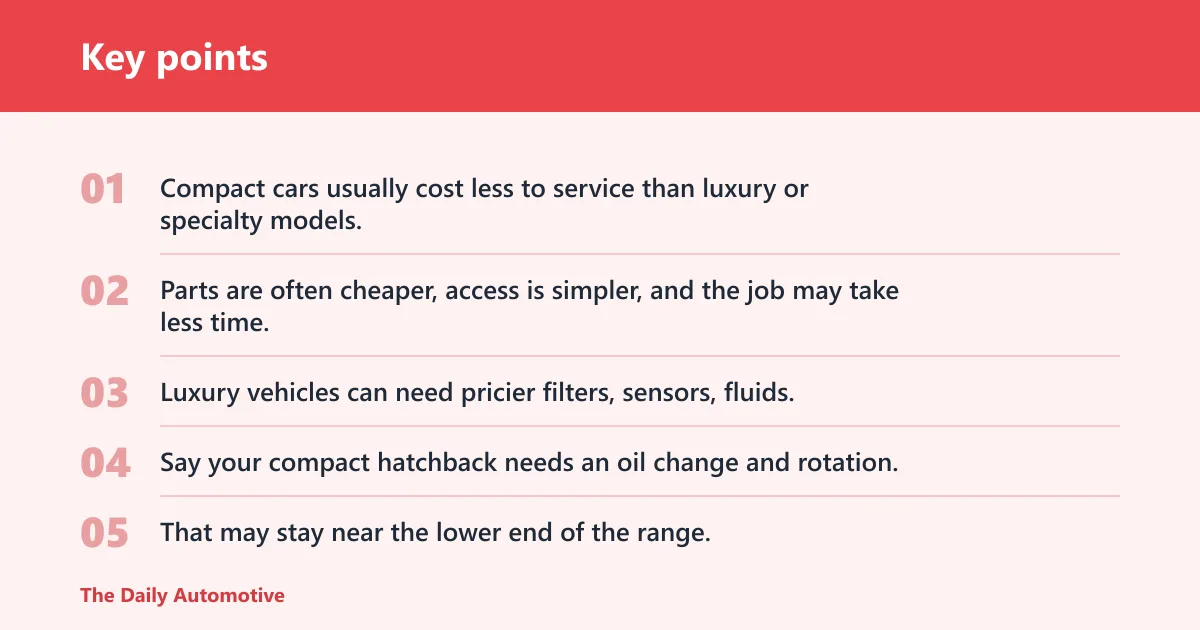
Compact cars usually cost less to service than luxury or specialty models. Parts are often cheaper, access is simpler, and the job may take less time. Luxury vehicles can need pricier filters, sensors, fluids, and more specialized technicians, which raises both parts and labor.
Say your compact hatchback needs an oil change and rotation. That may stay near the lower end of the range. Put the same maintenance on a European luxury sedan with larger wheels and specialized oil, and the total climbs fast.
Powertrain differences: petrol, diesel, hybrid, and EV
Petrol cars are usually the simplest and cheapest to maintain for routine service. Diesel cars often cost more because filters, oil spec, and emissions-related parts can be pricier. Hybrids add complexity because the service can involve both engine and electric-drive systems. EV service often costs less for oil-related items because there is no engine oil change, but brake, tire, coolant, and software-related checks still matter.
For a buyer comparing budgets, the key point is this: the same “service” label can mean very different work depending on the powertrain.
Location, labor rates, and shop type
Shop type changes the bill as much as the job itself. Independent shops often price routine maintenance below dealerships. ProCarManuals places independent labor at $80 to $120 per hour and dealer labor at $130 to $180 per hour. In many markets, city labor sits above rural labor for the same reason: higher overhead.
Dealer shops can also bill for brand-specific diagnostic time, software updates, and approved parts sourcing. That does not always mean the dealer is overpriced. It means the quote may include more than a local independent would add.
Common service costs by job
Routine service costs are easier to judge when each job stands alone. Oil changes, rotations, brakes, and annual checks sit in different price bands because the labor time and parts mix are different. Compare each line item, not the total alone.
Oil and filter change
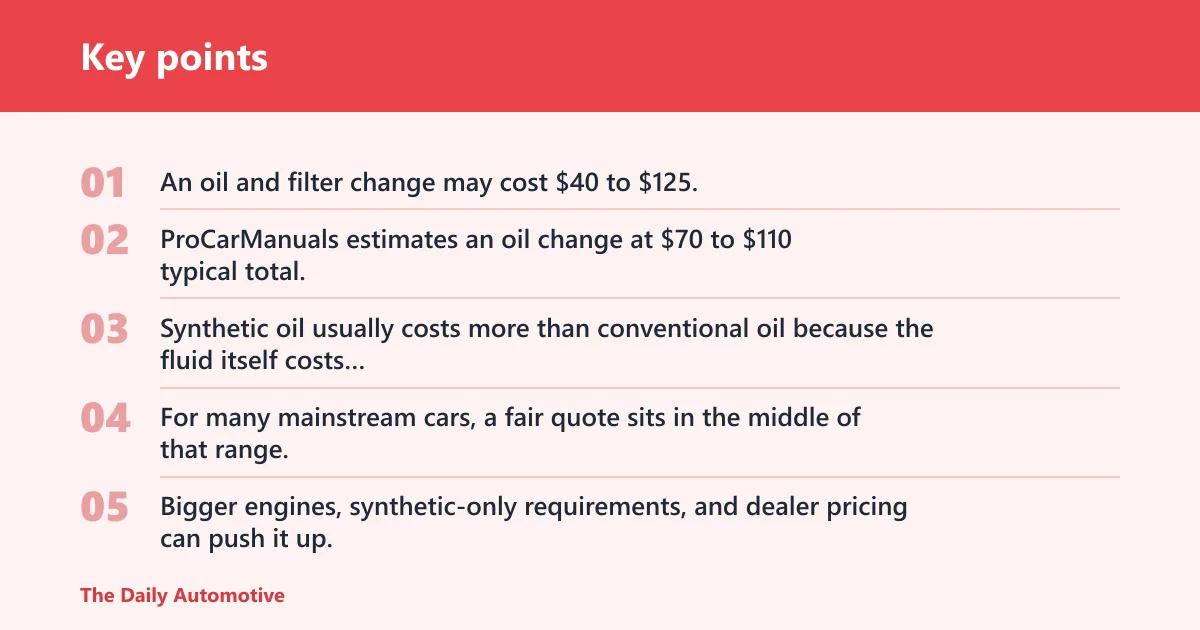
An oil and filter change may cost $40 to $125. ProCarManuals estimates an oil change at $70 to $110 typical total. Synthetic oil usually costs more than conventional oil because the fluid itself costs more and many shops price the service higher for the spec and disposal requirements.
How much does an oil change cost? For many mainstream cars, a fair quote sits in the middle of that range. Bigger engines, synthetic-only requirements, and dealer pricing can push it up.
Tire rotation
Tire rotation services average about $20 to $100. Rotation often stays near the lower end when booked with another service, and it can cost more if the shop checks alignment, removes stuck wheels, or deals with large tires. The job matters because uneven wear shortens tire life and can create handling problems.
Rotation is a small bill that protects a larger one. If front tires wear much faster than rear tires, skipping rotations can force a full replacement earlier than planned.
Brake pad replacement
Brake pad service may cost $150 to $350 per axle. Brake rotor replacement can add around $100 to $300. ProCarManuals estimates front brake pads and rotors at $300 to $500 typical total. The final price rises when rotors are worn, seized hardware needs replacement, or the car uses larger or premium brake components.
How much does brake pad replacement cost during a service? If the quote is pads only, it should be below the pads-and-rotors total. If the rotor thickness is below spec or the surface is heavily grooved, the added rotor cost is justified and should be listed clearly.
Full service versus inspection-only visit
What is included in a full car service? A full service is usually an annual 12-month check that can include oil and filter change, fluid top-offs or changes, brake inspection, tire inspection, filter checks, battery test, and a general safety review. Kia says a full car service is an annual 12-month check and that an interim car service occurs every 6 months.
An inspection-only visit costs less because it does not include the replacement parts or fluids themselves. Service history matters too. A car with a complete maintenance record may need fewer overdue items at the next visit, while a neglected car can turn a routine appointment into a repair list.
Car service cost by vehicle type
Vehicle type changes the bill because size, component access, and parts pricing are different. Compact and mainstream cars usually stay lower. Luxury, diesel, hybrid, and electric models can sit higher when the work needs special fluids, more labor, or brand-specific parts.
Compact and mainstream cars
Compact and mainstream cars usually offer the most predictable service cost. Parts are widely available, labor is simpler, and the job often fits a standard maintenance slot. For owners budgeting a year ahead, these vehicles are easier to plan because the most common tasks stay in familiar price bands.
Luxury and specialty vehicles
Luxury and specialty vehicles often cost more because the parts are pricier and the labor can take longer. A service may need specialized filters, larger brake components, or a technician trained on the brand’s systems. That is why the same oil change can look ordinary on paper and expensive on the invoice.
Diesel, hybrid, and electric models
Diesel service can cost more than petrol service, especially when the vehicle needs specific oil grades or additional emissions-system attention. Hybrid maintenance often falls between petrol and EV patterns because it still has a combustion engine plus electrical components. EV service may skip engine oil changes, but it still needs brake, tire, coolant, and software checks.
Car service cost petrol vs diesel usually tilts higher for diesel once filter and fluid requirements are added. Electric car service cost vs petrol is often lower for oil-related work, but not necessarily lower overall if diagnostics or battery-related checks are needed. Hybrid car maintenance cost vs gas depends on how much of the visit is engine-related versus system-related.
Dealer vs independent mechanic
Dealer service usually costs more than independent shop service. That is mainly a labor-rate and overhead story, not always a quality story. Dealers may also include brand-specific diagnostics, software updates, and OEM parts sourcing, which can make the bill higher even when the work seems similar.
Why dealer service usually costs more
Dealer labor rates are typically higher. Dealers may also have higher parts prices and more rigid service procedures, which adds cost but can help on warranty or software-related work.
When dealer pricing can make sense
Dealer service can make sense when the car is under warranty, when the issue may involve software or a brand-specific bulletin, or when a recall or update is part of the visit. It can also be the safer choice for some complex diagnosis jobs where the brand toolset matters.
Where independent shops usually save money
Independent mechanics often save you money on routine maintenance such as oil changes, rotations, filters, and brake pads. For common work, they can offer the better price if they use quality parts and itemize the quote well. For many owners, that is the best balance for regular upkeep.
Car service price comparison table
This table turns car service cost into a budget tool. Use it to compare the line items in a quote, not just the total. Low, mid, and high bands shift with vehicle class, region, shop type, and parts grade.
| Line item | Low | Mid | High | Likely service interval | What moves the price up or down |
|---|---|---|---|---|---|
| Oil and filter change | $40 | $70 to $110 | $125 | About every 5,000 to 10,000 miles, or per owner’s manual | Synthetic vs conventional oil, engine size, dealer vs independent, city vs rural labor, luxury or diesel spec oil |
| Tire rotation | $20 | $40 to $60 | $100 | About every 5,000 to 8,000 miles | Tire size, stuck wheels, wheel balancing, shop type, bundled service discount |
| Brake pad replacement, per axle | $150 | $225 to $300 | $350 | When wear indicator shows need or during brake inspection | Compact vs luxury vehicle, pad material, caliper hardware, labor time, axle type |
| Brake rotor replacement add-on | $100 | $175 to $250 | $300 | When rotors are worn, warped, or below spec | Rotor size, corrosion, performance brakes, OEM vs aftermarket parts, labor rate |
| Inspection-only visit | $40 | $75 to $150 | $200 | Annual or pre-trip check | Depth of inspection, diagnostic time, scan tools, dealer rates, region |
| Full service | $150 | $250 to $400 | $600+ | Every 12 months | Fluid replacements, filters, brake inspection, age of vehicle, missing service history |
| Air filter or cabin filter replacement | $25 | $50 to $100 | $150 | Often every 12 months or as needed | Filter type, cabin access, luxury packaging, OEM part pricing |
| Battery test or replacement check | $0 | $25 to $75 | $150 | During annual service or starting issues | Test only vs replacement, hybrid or EV system checks, dealer diagnostics |
| Brake fluid service | $80 | $120 to $180 | $250 | Commonly every 2 years | Flush procedure, ABS complexity, labor rate, premium fluid spec |
| Software update or diagnostic labor | $0 | $100 to $180 | $300+ | Only when needed | Dealer tool access, warranty work, module programming, brand-specific procedures |
How often should you service a car?
How often should a car be serviced? A common answer is every 12 months for a full service, with interim checks around every 6 months if the manufacturer recommends them. Mileage matters too. Many maintenance items are tied to driving distance, not just the calendar.
Annual service intervals
The same source recommends servicing regularly and on time every 12 months. The same source says an interim car service occurs every 6 months, while a full car service is an annual 12-month check. That split helps owners budget for a smaller visit mid-year and a more complete service later.
Mileage-based service intervals
Oil changes and rotations often follow mileage bands. A car that sees heavy commuting or short-trip driving may need attention sooner than one used lightly. The exact interval depends on the manufacturer schedule, oil type, and driving conditions, so the owner’s manual should set the baseline.
How service history changes the next visit
Service history matters because missed work accumulates. A car that has had regular oil changes, rotations, and fluid checks is less likely to need a long catch-up list. A spotty record often leads to extra filters, overdue fluids, and more inspection time at the next service.
How to judge a fair quote
A fair quote is itemized, matches the car’s schedule, and separates inspection from replacement work. If the estimate only gives one total, ask what parts, fluids, labor hours, and taxes are included. The best comparison is not just price, it is price for the same work.
What should be itemized?
At minimum, the quote should list labor, parts, fluids, shop supplies, taxes, and any diagnosis fee. It should also say whether the brake job is pads only or pads plus rotors, and whether the oil service uses conventional or synthetic oil. Those details explain most quote gaps.
Suppose a midsize SUV gets a “$99 brake special.” If rotors, brake fluid, and hardware are not included, the final total may still land near a standard quote once the missing items are added.
Signs a quote needs a second opinion
Get a second opinion if the quote combines unrelated jobs into one number, adds parts without showing wear measurements, or recommends immediate replacement of several systems with no inspection details. A second estimate is also smart when the bill is far above the ranges in this guide.
- Check whether the quote lists each job separately.
- Compare the parts grade and labor hours to the job requested.
- Ask whether any item is safety-related or can wait until the next visit.
- Compare the total to independent-shop and dealer pricing for the same work.
- Approve only the urgent items if the rest are maintenance, not repairs.
When to approve, compare, or defer work
Approve urgent safety work such as brake pads that are at the wear limit, leaking fluids, or items that can cause further damage. Compare quotes when the estimate includes non-urgent filters, fluids, or wear items that are not yet due. Defer work only when the item is clearly not urgent and the schedule supports waiting.
Frequently asked questions
How much does a car service cost?
A basic car service can cost roughly $40 to $600 or more, depending on what is included. A simple inspection or rotation sits near the lower end, while a full service with fluids, brake work, or luxury-vehicle labor can push much higher.
How much does an oil change cost?
An oil and filter change may cost $40 to $125. A typical total of $70 to $110 is common for many mainstream cars. Synthetic oil, larger engines, and dealer labor often move the price higher than a basic conventional-oil service.
How much does brake pad replacement cost during a service?
Brake pad service may cost $150 to $350 per axle. If rotors also need replacement, add around $100 to $300 more. The total climbs when the car is larger, the parts are premium, or the work includes extra hardware.
Is dealer service worth the higher cost?
Dealer service can be worth the higher cost for warranty work, software updates, recalls, and brand-specific diagnosis. For routine items like oil changes, rotations, and brake pads, an independent shop often gives the better price if the quote is itemized and the parts are suitable.
Car service cost petrol vs diesel
Petrol service is often cheaper for routine work because parts and fluids are usually simpler. Diesel service can cost more because the oil spec, filters, and emissions-related maintenance may be pricier. The difference grows when the quote includes brand-specific diesel parts or diagnostics.
Electric car service cost vs petrol
EV service can be lower for oil-related work because there is no engine oil change. That does not mean every EV visit is cheap. Tires, brakes, coolant checks, cabin filters, and software-related labor still affect the bill, especially at a dealer.
Hybrid car maintenance cost vs gas
Hybrid maintenance often sits between petrol and EV patterns. The car still needs engine-related service, but it also has electric components and control systems. That mix can raise diagnostic time, though routine tasks may still be close to a normal gas car if the hybrid is straightforward.
Tata car maintenance cost vs maruti
Tata and Maruti service costs can differ because of model, parts pricing, dealer rate, and city location more than badge alone. The better comparison is model by model. Compare the quoted line items for oil, filters, brakes, and labor instead of assuming one brand is always cheaper.
Products related to this article
Sponsored / affiliate links. As an Amazon Associate I earn from qualifying purchases. I may earn additional commission from eligible campaigns.