How Much Does It Cost to Fix AC in a Car? (2026 Price Guide)
Fixing a car’s air conditioner typically costs between $150 and $2,800, depending on what actually failed.
A simple refrigerant recharge runs $150 to $500, a leak repair adds $200 to $800 once the leak is found, and a compressor replacement runs $900 to $1,500 with warranty coverage or up to $2,800 without it. The exact price depends on your refrigerant type, your vehicle’s make and model, and how much labor it takes to reach the failed part.
Car AC Repair Cost by Type of Repair
BEST FOR A DIY AC RECHARGE
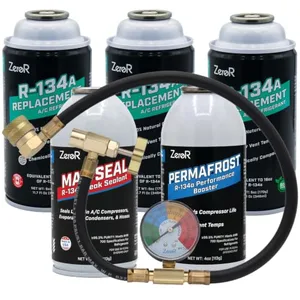 |
ZeroR Premium AC Repair & Recharge Kit – $89.99 This all-in-one kit lets you check and recharge low R-134a refrigerant yourself for a fraction of a shop’s $150-$500 recharge fee.
|
Here’s what shops typically charge for the most common car AC repairs in 2026, based on national repair-cost data:
| Repair | Typical Cost |
|---|---|
| Refrigerant recharge (R-134a, 2016 and older vehicles) | $150 – $350 |
| Refrigerant recharge (R-1234yf, 2017 and newer vehicles) | $200 – $500 |
| Refrigerant leak repair (hose, O-ring, or seal) | $200 – $800 |
| Compressor replacement | $900 – $1,500 (up to $2,800 without warranty) |
| Condenser replacement | $400 – $1,000 |
| Evaporator replacement | $700 – $2,000+ |
| Full AC system replacement | $1,500 – $4,000+ |
Evaporator work sits at the expensive end because the evaporator core is buried behind the dashboard on most vehicles. A shop often has to pull the dash apart just to reach it, and that labor can add several hours to the bill even though the part itself isn’t especially costly.
What Causes Car AC Problems
A leaking refrigerant line is the most common reason a car AC stops blowing cold. The system is sealed, so it doesn’t burn through refrigerant on its own — if the level is low, refrigerant is escaping somewhere, usually through a worn hose, a cracked O-ring, or a pinhole in the condenser. Repair shops use UV dye or an electronic sniffer to find the exact spot, then patch or replace that part and refill the system. Fixing a leak like this typically runs $200 to $800 depending on where it is and how easy it is to reach.
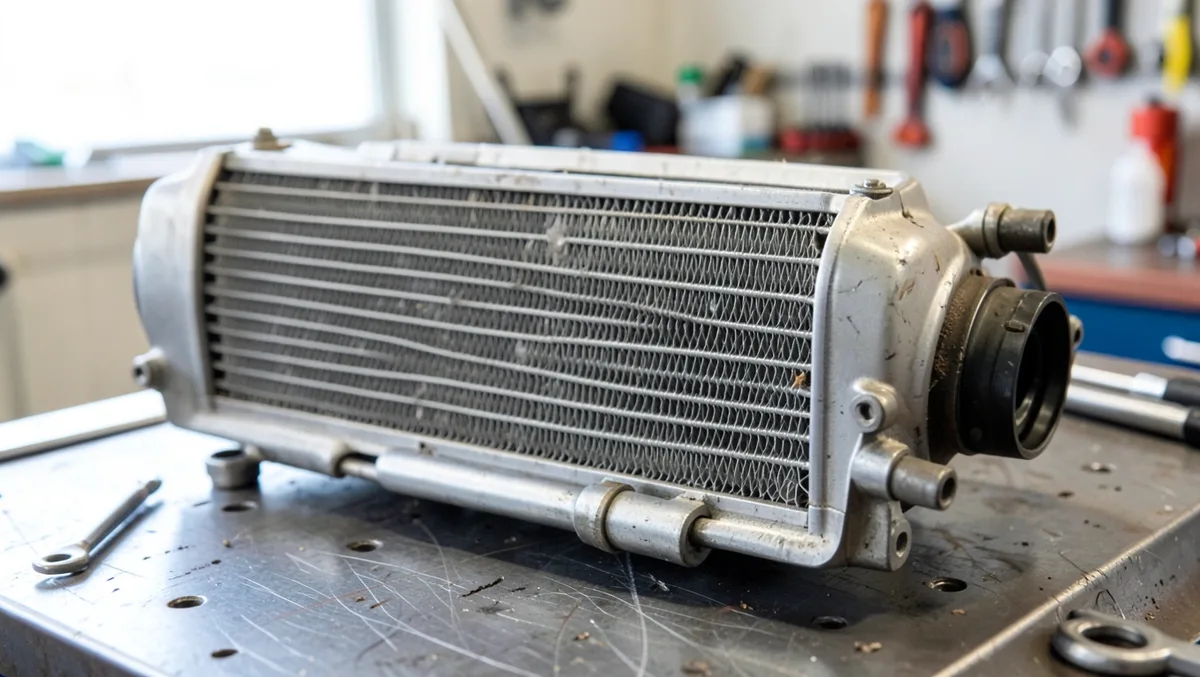
A failing compressor is the other big culprit. It’s the pump that pressurizes refrigerant so it can absorb heat, and once it wears out, the AC won’t cool at all no matter how much refrigerant is in the system. A bad compressor often announces itself with a loud grinding or clicking noise when the AC is switched on, and it can also seize and damage the drive belt or clutch around it. Replacing a compressor runs $900 to $1,500 with a warranted part, or up to $2,800 if the shop has to source it aftermarket without coverage.
Signs Your Car’s AC Needs Repair
Weak airflow is usually the first sign something’s off, even before the air stops being cold. A clogged cabin air filter is the cheapest possible cause and worth ruling out first — it’s a $15-$30 part most drivers can swap themselves in a few minutes. If the filter is clean, the problem may be a failing blower motor or a blocked vent, both of which need a mechanic to diagnose properly.
A grinding, squealing, or clicking noise when the AC compressor kicks on is a warning sign you shouldn’t ignore. It usually means the compressor clutch or internal bearings are wearing out, and running it longer can cause the compressor to seize and damage the serpentine belt or other components around it — turning a $900 repair into a much bigger one.
How Mechanics Diagnose an AC Problem
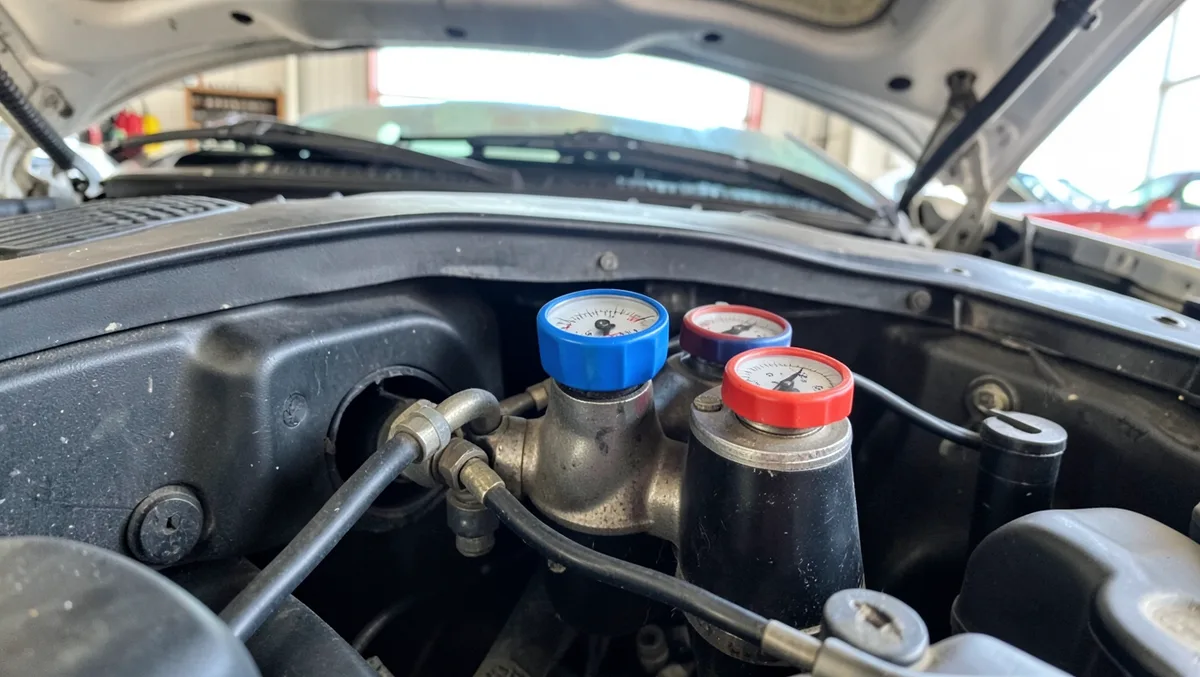
Diagnosis starts with a visual inspection — the mechanic checks belts, hoses, and connections for obvious damage, cracking, or an oily residue that points to a refrigerant leak. If nothing is visibly wrong, they’ll connect a manifold gauge set to the low- and high-pressure service ports to read the system’s actual pressure. Low pressure on both sides usually means a leak; unusually high pressure can point to a blockage or an overcharged system, which causes its own set of problems.
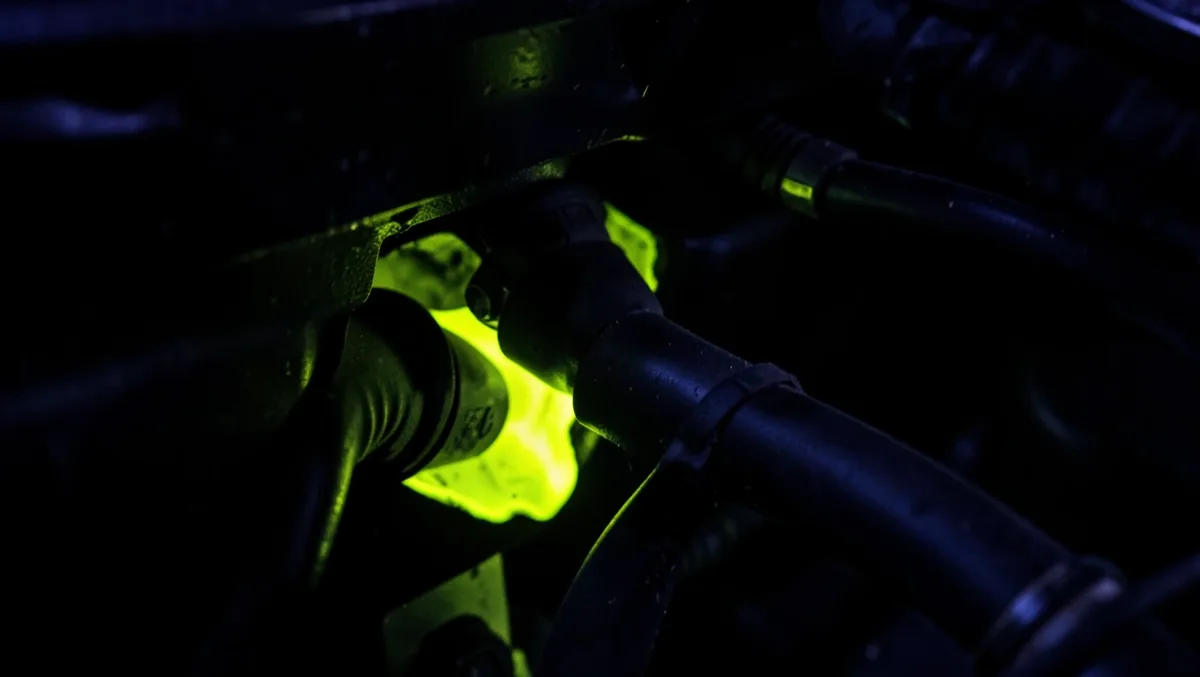
When a leak doesn’t show up on the pressure gauges alone, shops add a small amount of UV-reactive dye to the refrigerant and run the AC for a while. Shining a blacklight over the hoses and fittings afterward makes even a tiny leak glow bright green, which is often the only reliable way to find a slow leak that a visual check would miss. If you’re chasing one yourself, our step-by-step guide to fixing a refrigerant leak walks through the same process.
What Affects the Cost of AC Repair
Your refrigerant type makes a real difference in price. Vehicles from 2016 and earlier generally use R-134a, which is cheap and widely available. Most 2017-and-newer vehicles use R-1234yf instead — a refrigerant that’s still patent-protected and costs several times more per pound, which is why a recharge on a newer car runs $200 to $500 instead of $150 to $350.
The type of vehicle matters too. Luxury and European models often use proprietary parts that cost more and take longer to source, while a mainstream sedan or truck usually has cheaper, more readily available components. Vehicle age plays a role as well — an older car may need a part that’s been discontinued and only available used or reman’d, while a newer model’s parts are easier to get but sometimes pricier upfront.
Finally, the extent of the damage drives cost more than anything else. A small leak or a low refrigerant charge is a same-day, low-hundreds fix. A seized compressor that’s sent metal shavings through the system is a different story — the shop often has to flush the entire system, replace the receiver-drier or accumulator, and replace multiple parts at once, which is how a repair bill climbs into the $2,000-plus range.
DIY vs. Professional AC Repair
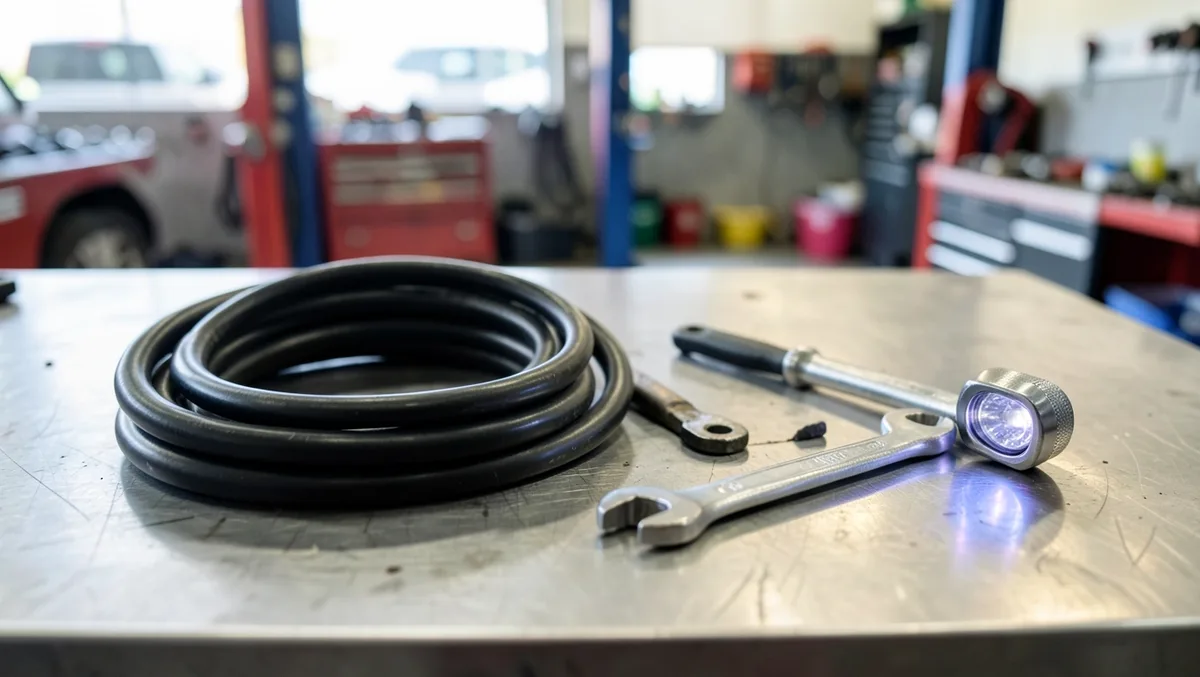
A basic refrigerant top-off is one of the few AC jobs a home mechanic can realistically do. A charging hose with a built-in gauge, a can of R-134a, safety glasses, and a UV leak-detection light are enough to check the level and add refrigerant if it’s just low — our guide to recharging refrigerant yourself covers the whole process. A DIY recharge kit runs $30 to $90, versus $150 to $500 for a shop to do the same job. Note that under-the-counter R-134a cans sold to consumers don’t require EPA certification to buy, but larger bulk refrigerant containers do, under Section 609 of the Clean Air Act.
Anything beyond a simple recharge is worth leaving to a professional. Compressor and evaporator work require a vacuum pump to properly evacuate the system, specialized recovery equipment to legally handle refrigerant, and often dashboard disassembly that’s easy to get wrong. A shop also backs its work with a warranty, so if the same problem comes back in a few months, you’re not paying twice.
How to Save Money on AC Repair
Repair shops often run seasonal discounts on AC service in spring and fall, right before and after the peak summer rush, since that’s when they’re trying to keep the bays full. It’s worth checking a shop’s website or calling ahead to ask if anything’s currently running before you book an appointment. Some shops also bundle AC work with a broader maintenance package — if you’re already due for other service, ask whether combining it with the AC repair brings the total down.
The single biggest way to save money, though, is catching a problem early. A slow leak caught and fixed at $200 is a lot cheaper than the same leak left alone until the compressor runs dry and seizes, which turns a small repair into a $1,500-plus one. Getting the AC checked at the first sign of weak airflow or a new noise is almost always the cheaper path.
Frequently Asked Questions
Is it worth replacing the AC in a car?
It’s worth it if the system keeps failing or the repair estimate approaches what a full system replacement would cost. A working AC matters for comfort and for visibility, since it keeps windows from fogging up in humid weather. Compare the quoted repair cost against a full replacement before deciding, especially on an older car where one part failing often means others aren’t far behind.
How much does it cost to replace the AC in a car?
Replacing a single major part like the compressor typically costs $900 to $1,500, or up to $2,800 without warranty coverage. Replacing the entire system — compressor, condenser, and evaporator together — runs $1,500 to $4,000 or more, mostly because of the labor involved in reaching the evaporator behind the dashboard. Get a written estimate before agreeing to a full system replacement, since the range is wide.
Why is car AC repair so expensive?
Part of the cost is the refrigerant itself, especially R-1234yf, which is still patent-protected and costs several times more than older R-134a. The rest is labor and equipment: technicians need an EPA Section 609 certification to legally purchase and handle bulk refrigerant, plus a vacuum pump and recovery machine that a basic home garage doesn’t have. On top of that, some parts — like an evaporator buried behind the dashboard — take hours of labor just to access.
How do you fix a car AC that’s not blowing cold air?
Start with the cheapest possible cause: check the cabin air filter and refrigerant level, since low refrigerant is the single most common reason for warm air. Next, check the compressor clutch engages when you turn the AC on, and inspect the condenser fan to make sure it’s spinning. If the system checks out mechanically but still won’t cool, have a shop pressure-test it for a slow leak.
Does R-1234yf refrigerant cost more to recharge than R-134a?
Yes. R-1234yf, used in most vehicles from 2017 onward, is still under patent and typically costs several times more per pound than the older R-134a used in vehicles from 2016 and earlier. That’s why a full recharge on a newer vehicle runs $200 to $500, compared to $150 to $350 for an older car using R-134a.
The Bottom Line
Most car AC repairs land somewhere between $150 for a simple recharge and $1,500 for a compressor replacement, with full system failures running higher. Get a written diagnosis before agreeing to any work, since “the AC is broken” can mean anything from a $20 fuse to a $2,800 compressor — and always ask whether the estimate is for the specific failed part or a broader guess.
Products related to this article
Sponsored / affiliate links. As an Amazon Associate I earn from qualifying purchases. I may earn additional commission from eligible campaigns.