Best Car Audio System: Top Picks for 2026 (By Category)
The best car audio system pairs a head unit sized for your dash — single-DIN or double-DIN — with speakers and, for bass, a subwoofer rated by RMS power, not the inflated peak-watt number on the box. Mismatching RMS ratings can burn out a voice coil within hours. This guide compares real single-DIN, double-DIN, speaker, and subwoofer picks, checks DIN-size fit, and breaks down installation costs.
Insert your Affiliate Disclosure reusable block here.
Quick Answer
The best car audio system matches your dash size — single-DIN or double-DIN — to a head unit with CarPlay or Android Auto, paired with RMS-rated speakers and, for bass, a subwoofer package. Budget single-DIN units start around $60; a full system with professional installation typically runs $400–$2,500.
Our Top Car Audio System Picks at a Glance
Every “car audio system” search covers different gear — a head unit, speakers, or a subwoofer package — so the table below compares one real pick from each category by its actual RMS/peak power rating rather than marketing copy.
| Category | Pick | Key Spec | Best For |
|---|---|---|---|
| Budget single-DIN head unit | Pioneer MVH-S110BT | 50W/channel built-in amp, Bluetooth | Simple dash swaps on a budget |
| CarPlay/Android Auto head unit | PLZ 7" Wireless Double-DIN | 240W max output, wireless CarPlay & Android Auto | Touchscreen navigation and phone mirroring |
| Component speakers | JBL GTO609C | 270W max, 3-ohm, Plus One woofer cone | Clearer mids/highs without swapping the head unit |
| Subwoofer package | Skar Audio Dual 12" SDR | 2,400W peak / 1,200W RMS, includes amp | Bass-focused builds |
1. Pioneer MVH-S110BT — Best Budget Single-DIN Head Unit
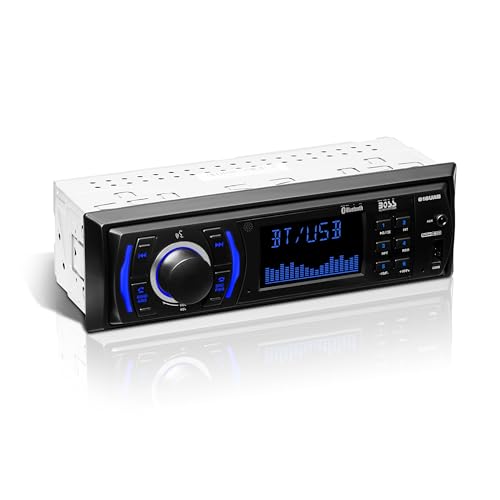
The Pioneer MVH-S110BT is a 1-DIN digital media receiver built around a MOSFET amplifier rated at 50 watts per channel, with Bluetooth for hands-free calling and wireless audio streaming from iPhone and Android devices.
- Brand: Pioneer
- Size: Single-DIN (short-chassis design for tight dash space)
- Connectivity: Bluetooth, front USB (FLAC/MP3/WMA), AM/FM
- Amplifier: Built-in MOSFET, 50W per channel to 4 speakers
What to Expect
This is a straightforward Bluetooth upgrade for a factory single-DIN slot — hands-free calling, wireless streaming, front USB playback, and dedicated bass/treble/balance EQ keys. There is no CD/DVD player and no touchscreen; if you want CarPlay or Android Auto, you need a double-DIN unit instead (see pick #2 below).
Best Car Audio System Pick
PLZ 7" Wireless Double-DIN Car Stereo (CarPlay & Android Auto)
A 7-inch touchscreen double-DIN receiver with wireless Apple CarPlay and Android Auto, a 4.2-channel 240W built-in DSP amp, and two subwoofer pre-outs for adding bass later.
- Best for: Drivers who want phone mirroring and navigation on a touchscreen without a separate phone mount
- Why we picked it: Wireless CarPlay/Android Auto plus steering-wheel control support covers the two features most 2026 buyers ask for first
- Main drawback: Requires at least a 6.69" x 3.81" dash opening — measure your slot before ordering
Compare more car audio system options
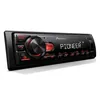 Budget Pick Pioneer MVH-S110BT Single-DIN
|
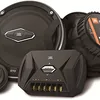 Sound Quality Pick JBL GTO609C Component Speakers
|
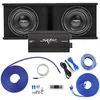 Bass Pick Skar Audio Dual 12" SDR Bass Package
|
As an Amazon Associate we earn from qualifying purchases.
2. PLZ 7" Wireless Double-DIN — Best for CarPlay & Android Auto
The PLZ 7" Wireless Double-DIN stereo adds a 7-inch IPS touchscreen (1024×600) with wireless Apple CarPlay and Android Auto, an independent Bluetooth 5.3 module with its own antenna, steering-wheel control (SWC) support, and a backup-camera input.
- Brand: PLZ
- Size: Double-DIN — needs a minimum 6.69" x 3.81" dash opening (extra frame included for larger openings up to 7.44" x 4.61")
- Connectivity: Wireless CarPlay/Android Auto, Bluetooth 5.3, FM/AM, backup camera input
- Amplifier: Built-in DSP pre-amp, 240W max across 4.2 channels, plus 2 subwoofer pre-outs
What to Expect
Because CarPlay and Android Auto both run wirelessly here, the phone connects automatically as soon as the car starts, and voice assistants, maps, and music apps stay on the phone rather than the head unit’s own software. The two dedicated subwoofer pre-outs mean you can add an amplifier and subwoofer later without swapping the head unit again — check whether your specific factory dash supports wireless CarPlay hardware before assuming any double-DIN unit will work the same way.
3. JBL GTO609C — Best Component Speakers
The JBL GTO609C is a 6.5-inch, 2-way component speaker system rated for 270 watts max, using JBL’s patented Plus One woofer-cone design and a low-impedance 3-ohm build so factory head units can still drive them with reasonable volume.
- Brand: JBL
- Size: 6.5" woofers with separate soft-dome tweeters
- Power: 270W max, 3-ohm impedance
- Mounting: Patented I-Mount system for flush- or surface-mounted tweeters, plus a 2-level tweeter volume switch
What to Expect
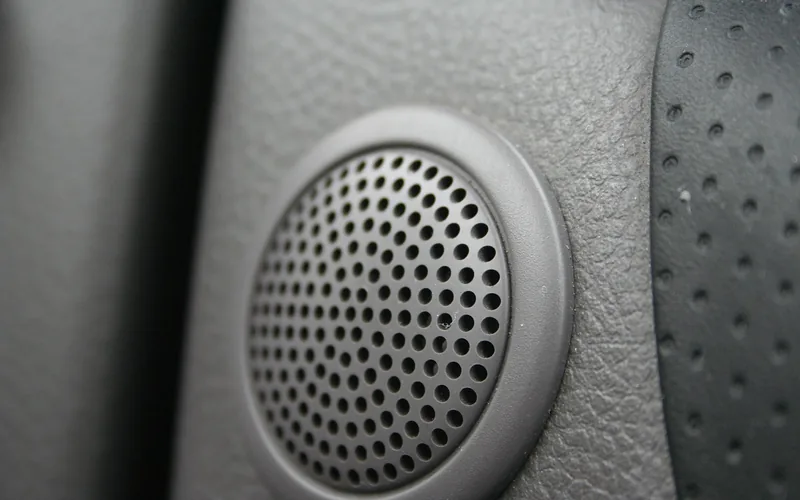
Component speakers split the woofer and tweeter into separate parts instead of stacking them in one driver, which is what actually gives clearer high-frequency detail compared to factory coaxial speakers. The 3-ohm rating specifically compensates for the thin factory speaker wiring in many vehicles, so you don’t necessarily need an aftermarket amplifier to hear a real difference — though one will still get you more clean headroom at higher volumes.
4. Skar Audio Dual 12" SDR Series — Best Subwoofer Package
The Skar Audio Dual 12" SDR bass package bundles a vented, loaded dual-12-inch subwoofer enclosure with a matching monoblock amplifier and a 4-gauge wiring kit, so there’s no guesswork matching separate components.
- Brand: Skar Audio
- Power: 2,400 watts peak / 1,200 watts RMS — the RMS figure is what the amp can deliver continuously
- Included: SDR-2X12D4 dual 12" vented enclosure, RP-1200.1D Class D monoblock amplifier, SKAR4ANL-OFC 4-gauge OFC wiring kit
- Install note: A subwoofer package this size needs its own dedicated power run — check whether you also need a battery isolator for car audio before wiring it in
What to Expect
Because the enclosure, amplifier, and wiring kit are matched by the manufacturer, there’s far less risk of underpowering or overdriving the subwoofers than buying each part separately. If you’re running the amp wiring yourself rather than paying for installation, our guide on wiring a subwoofer in your car covers the fuse, ground, and remote-turn-on connections this package still requires.
RMS vs. Peak Power: Why the Watts on the Box Can Mislead You
RMS power is the continuous, clean wattage a speaker, amp, or subwoofer can handle for as long as you play music — peak power is a brief burst it can survive for a fraction of a second and nothing more. The Skar Audio package above is a good real example: it’s marketed as “2,400 Watt,” but its actual continuous rating is 1,200 watts RMS — exactly half the headline number.
Connecting an amplifier channel rated well above a speaker’s RMS handling — or running any amp near clipping to compensate for an underpowered setup — is what actually burns out voice coils, not high volume by itself. When matching components, keep the amplifier’s RMS output within roughly 10–20% of the speaker or subwoofer’s RMS rating.
According to Crutchfield’s car amplifier buying guide, the specification that actually matters in power handling is the maximum RMS rating — not the peak number printed on the box — because RMS reflects what a speaker can handle on a continuous basis, not just for an instant.
Single-DIN vs. Double-DIN: Which Fits Your Car?
A single-DIN stereo slot measures about 2 inches tall by 7 inches wide; a double-DIN opening is roughly 4 inches tall by the same 7 inches wide. Most vehicles that fit a double-DIN unit can also take a single-DIN model with an adapter kit, but the reverse usually isn’t true — a single-DIN dash typically cannot be widened to fit a double-DIN touchscreen without a full dash-kit swap.
To check which size you have: measure the height of your current stereo’s control panel, or look up your specific year/make/model in an installation-kit lookup tool before buying either unit above. The PLZ double-DIN pick in this guide needs at least a 6.69" x 3.81" opening — smaller than that, and only a single-DIN unit like the Pioneer pick will physically fit.
Crutchfield’s single-DIN vs. double-DIN guide has a full lookup tool if you want to confirm compatibility by vehicle before ordering.
How Much Does It Cost to Install a Car Audio System?
A basic head-unit swap runs about $100 in labor on top of the unit’s price, while a full system with a new head unit, speakers, amplifier, and subwoofer can run $800 to $2,500 or more installed. DIY installation cuts the labor cost entirely but adds real risk — wiring a head unit or amp incorrectly can blow fuses, damage the factory harness, or trigger dashboard warning lights.
📊 Professional car stereo installation typically costs $100 for a basic head-unit swap up to $2,500+ for a full system with amp and subwoofer. — Source: ConsumerAffairs, Cost of Car Stereo Installation (2026)
If you’re installing anything yourself, start by confirming you can identify the positive and negative speaker wires correctly, since reversed polarity is one of the most common DIY mistakes and it noticeably weakens bass response even when everything still technically works. For a full breakdown of labor pricing by job type, see our guide on car radio installation costs.
Buying Guide: How to Choose the Best Car Audio System
Use this order to narrow down a car audio system without overspending or buying a unit that won’t fit your dash.
- Identify your priority: Decide whether clear vocals, deep bass, or phone/navigation features matter most to you — different systems are built around different strengths, and trying to max out all three at once usually blows the budget.
- Set a firm budget: Car audio systems range from about $60 for a basic single-DIN receiver to $2,500+ for a full amp-and-subwoofer install; decide the ceiling before you start comparing units.
- Check DIN size and wiring compatibility: Measure your dash opening (see the single-DIN vs. double-DIN section above) and confirm your car’s wiring harness and antenna adapter are compatible before ordering.
- Consider the brand: Established car audio brands (Pioneer, Kenwood, JBL, Alpine, Skar Audio) generally have more consistent quality control and easier-to-find replacement parts than unbranded listings.
- Match features to real use: Bluetooth, wireless CarPlay/Android Auto, USB ports, and steering-wheel control support are the features that get used daily — prioritize these over screen size alone.
- Read the actual product listing, not just the title: Amazon listing titles often lead with peak-watt numbers; check the product description or specs for the RMS rating before comparing power across units.
- Check the warranty terms: A longer manufacturer warranty is a reasonable signal of build confidence, but read what it actually covers — some exclude DIY-installed units.
- Decide between DIY and professional installation: Simple head-unit swaps are reasonable DIY jobs with basic tools; amplifier and subwoofer wiring involves more electrical risk and is usually worth the $100–$500 labor cost.
- Leave room for future upgrades: A double-DIN head unit with spare subwoofer pre-outs (like the PLZ pick above) lets you add an amplifier and subwoofer later without replacing the head unit again.
Frequently Asked Questions
What Is the Best Car Audio System?
The best car audio system depends on your dash size, budget, and priorities — there’s no single winner. A DIN-matched head unit with CarPlay or Android Auto covers most everyday needs; add RMS-rated component speakers for clearer sound or a subwoofer package for bass.
How Can I Improve My Car Audio Quality?
Upgrade your factory speakers to a component set rated for your car’s wiring, add an external amplifier so speakers aren’t underpowered by the head unit’s built-in amp, and check that your head unit’s EQ settings aren’t flattening the sound.
Do I Need an Amplifier for My Car Audio?
Not always. A factory or aftermarket head unit’s built-in amp (commonly 14–50 watts RMS per channel) is enough for casual listening at moderate volume. An external amp becomes worthwhile once you upgrade to higher-power component speakers or add a subwoofer, since factory power alone usually can’t drive them properly.
What Features Should I Look for in Car Audio?
Bluetooth for hands-free calling, wireless Apple CarPlay or Android Auto if you want phone mirroring, USB ports for charging and playback, steering-wheel control (SWC) support, and a power rating listed in RMS — not just peak watts.
Single-DIN or Double-DIN — Which One Fits My Car?
Measure your current stereo’s control panel: about 2 inches tall means single-DIN, about 4 inches tall means double-DIN. Most double-DIN-capable dashes also accept single-DIN units with an adapter kit, but single-DIN-only dashes generally cannot fit a double-DIN touchscreen without a full dash-kit replacement.
Does RMS or Peak Power Matter More When Comparing Car Audio Systems?
RMS matters far more. Peak power is a brief burst a component survives for a fraction of a second, while RMS is the continuous wattage it handles during normal listening. Always compare RMS-to-RMS when matching an amplifier to speakers or a subwoofer.
How Much Does It Cost to Install a Car Audio System?
A basic head-unit swap costs around $100 in labor on top of the unit price. A full system with a new head unit, speakers, amplifier, and subwoofer typically runs $800 to $2,500 or more installed, depending on the vehicle and components.
Conclusion
Choosing the best car audio system comes down to matching three things: your dash’s DIN size, your actual priorities (bass, clarity, or phone features), and RMS power ratings rather than peak-watt marketing numbers. The Pioneer, PLZ, JBL, and Skar Audio picks above cover the four most common starting points — a budget single-DIN swap, a CarPlay/Android Auto touchscreen upgrade, clearer component speakers, and a complete bass package.
Whichever you choose, confirm dash compatibility and wiring before you buy, and budget for professional installation if you’re not comfortable running amp wiring or diagnosing a blown fuse yourself.
Products related to this article
Sponsored / affiliate links. As an Amazon Associate I earn from qualifying purchases. I may earn additional commission from eligible campaigns.