
How Much Does a Tire Patch Cost?
A tire patch usually costs $20 to $50; if the puncture sits in the tread and the sidewall is intact, patching is often the right repair. Skip that check and you can pay for a roadside failure or a full tire replacement. This guide breaks down the quote line by line and shows when patching stops being safe.
Tire patch quote decoder
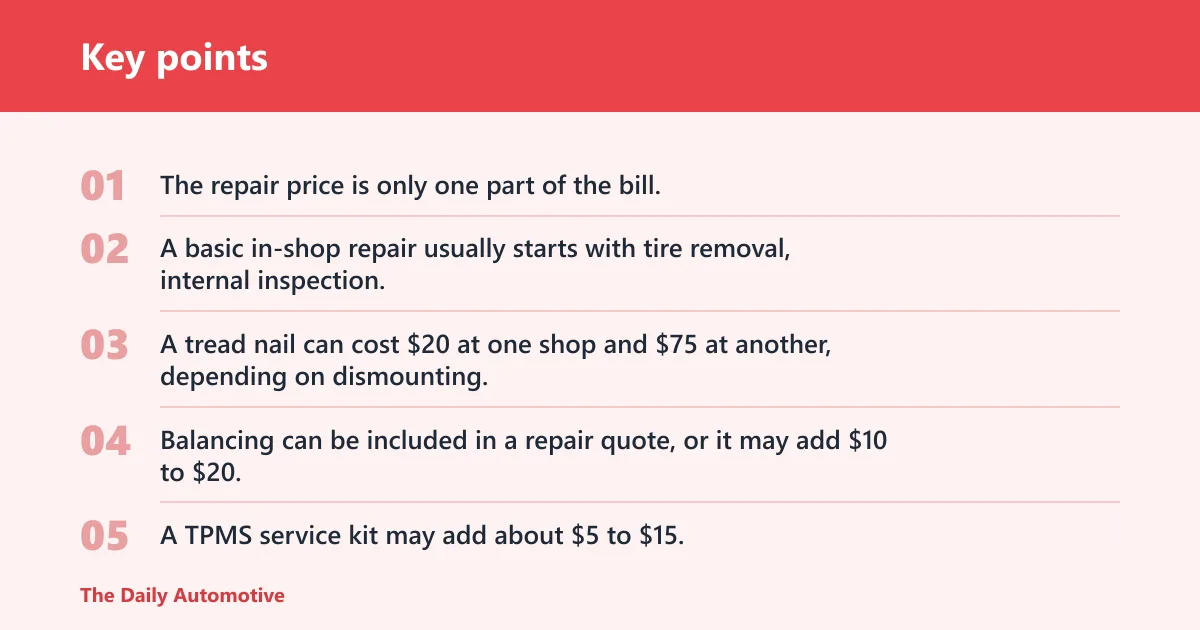


The repair price is only one part of the bill. A basic in-shop repair usually starts with tire removal, internal inspection, and an inside patch or plug-patch combo, then may add balancing, TPMS service parts, or replacement if the tire is not safe to save. A tread nail can cost $20 at one shop and $75 at another, depending on dismounting, inspection, and the extra work the tire needs after it comes off the wheel.
| Repair type | Likely line items | Normal add-ons | Red-flag upsells | When replacement is safer |
|---|---|---|---|---|
| Inside patch | Tire removed from wheel, internal inspection, patch installed on inner liner | Balancing fee, valve stem work, TPMS service kit | Full set replacement, wheel damage claim without proof | Sidewall or shoulder puncture, multiple injuries, driven-flat damage |
| Plug-patch combo | Plug inserted through injury, patch seals liner from inside | Balancing, sealant cleanup, TPMS relearn | Road-hazard package if you only asked for a repair | Hole larger than 1/4 inch, torn cords, puncture outside tread |
| DIY plug kit | Plug strips, insertion tool, cement or adhesive | Air refill, valve cap, temporary inflation check | Assurance that it is a permanent fix | Any sidewall or shoulder injury, or a tire that lost a lot of air while driven |
| Replacement | New tire, mounting, balancing | TPMS service kit, tire disposal fee | Needlessly replacing a repairable tread puncture | Leak in sidewall or shoulder, bead damage, multiple punctures, run-flat refusal by shop |
Normal add-ons you may see
Balancing can be included in a repair quote, or it may add $10 to $20. A TPMS service kit may add about $5 to $15, and sensor replacement may add about $50 to $150 if the sensor or valve hardware is damaged. If the tire is replaced, a disposal fee may add about $3 to $8.
Some shops also charge for valve stem work or sealant cleanup when the tire has run sealant or emergency goo inside it. Those items are small individually, but they explain why one tire costs $25 to fix and another ends up close to a modest replacement bill.
When replacement is safer than repair
Replacement is the safer call when the puncture is in the sidewall or shoulder, when the injury is bigger than 1/4 inch, or when there are multiple punctures close together. A tire that was driven flat can also have internal damage that makes a patch unsafe even if the outside hole looks small.
Say your compact sedan picks up a nail in the center tread and the tire stayed inflated. That is the classic patch case. Say the same nail lands near the shoulder on a low-profile tire after the car was driven on it for miles with low pressure. That is an inspect-or-replace case, not a simple patch.
How much does a tire patch cost?
A standard shop repair usually falls in the $10 to $40 range, while a plug-patch combo typically lands around $20 to $45 per tire. The exact number depends on whether the shop removes the tire, balances the wheel, and finds any extra damage that changes the job from a repair to a replacement.
Why labor and location move the total
The same tread puncture can cost more at a busy urban shop than at a slower suburban one. Local labor rates, tire inventory, and whether the retailer includes balancing all change the final bill. Kelley Blue Book’s reported average of $54 to $64 sits above the low-end repair price because averages pull in more complex visits, not just simple punctures.
Why the quote can jump for larger tires
Low-profile tires may add about $10 to $30 to the repair total, and the final bill may be around $40 to $75. Run-flat tires may cost even more, and some shops will refuse repair entirely. Truck, SUV, and van tires also tend to sit higher than passenger-car pricing because they are heavier and harder to handle.
What is included in the repair price?
A proper repair usually includes removing the tire from the wheel, checking the inside for hidden damage, and sealing the puncture from the inside. That work matters because a correct repair is not only about closing the hole from the outside, it also has to protect the inner liner and confirm the tire is still structurally sound.
Tire removal and internal inspection
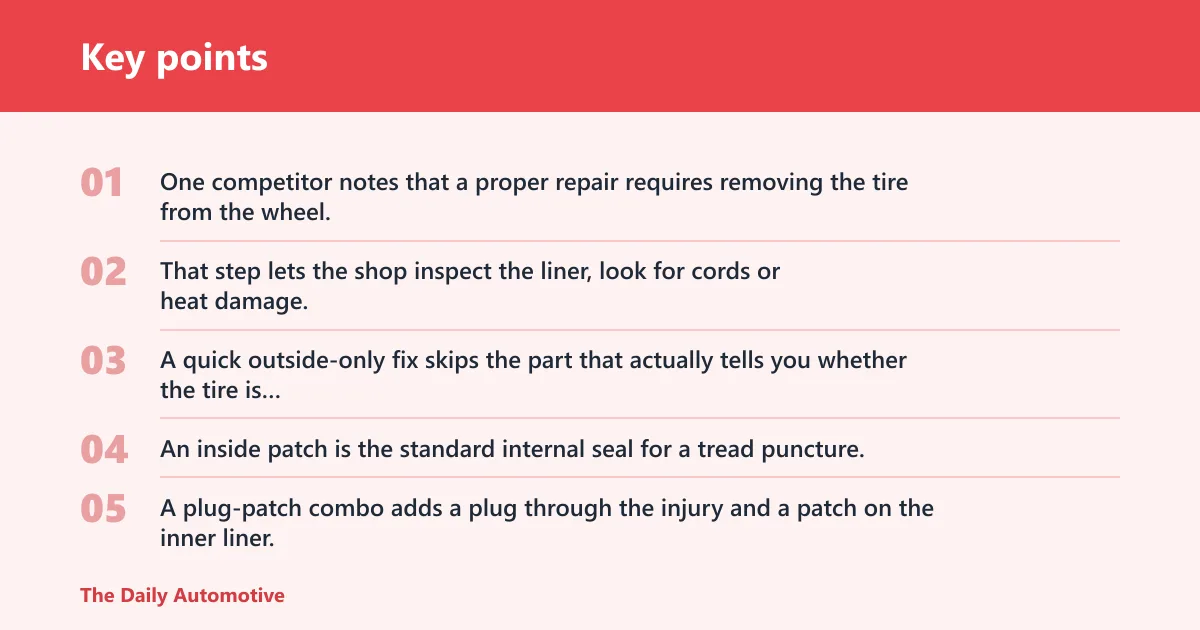
One competitor notes that a proper repair requires removing the tire from the wheel. That step lets the shop inspect the liner, look for cords or heat damage, and confirm the injury stayed within the tread area. A quick outside-only fix skips the part that actually tells you whether the tire is still safe.
Inside patch or plug-patch labor
An inside patch is the standard internal seal for a tread puncture. A plug-patch combo adds a plug through the injury and a patch on the inner liner, which is why it commonly costs more than a simple patch. That extra labor is what you are paying for, not just the rubber plug material.
Balancing, valve stem, and TPMS extras
Some shops include balancing in the repair, while others charge extra. If the wheel was removed, the shop may also recommend a new valve stem or a TPMS service kit. If the TPMS sensor needs replacement, the cost can jump sharply, and a relearn procedure may be part of the visit as well.
Patch, plug, or plug-patch?
A plug can seal a tread puncture from the outside, but shops usually treat it as temporary rather than the long-term fix. An inside patch seals the liner from the inside. The plug-patch combo is the common shop standard because it addresses the injury path and the inner liner in one repair.
What a plug fixes
A DIY plug kit usually costs $5 to $20, which makes it the cheapest option on the shelf. It can work for a tread puncture, but it is best treated as a temporary fix until a shop can inspect the tire and install a proper internal repair. It is not for sidewalls or shoulders.
What an inside patch fixes
An inside patch is used after the tire comes off the wheel and the injury is cleaned from the inside. That makes it the safer repair for a simple tread puncture, because the shop can verify the liner is intact and there is no hidden damage around the hole. It is the repair most drivers actually want when they ask for a patch.
Why the combo repair is the common shop standard
The plug-patch combo is widely used because it combines outside hole sealing with an internal liner patch. One competitor says that combo typically costs $20 to $45 per tire. That range is a useful benchmark when you are trying to separate the repair itself from add-ons that appear later on the invoice.
Can your tire be patched?
Most tire repairs are only safe in the tread area, not in the sidewall or shoulder. A common repairability limit is 1/4 inch, or 6 mm, and the tire also has to be free of major internal damage. If the injury fails those checks, replacement is the safer option.
Tread punctures and the usual 1/4-inch limit
Repairable punctures are generally small and centered in the tread. That is the zone where the tire flexes the least and where an internal patch can do its job. Once the hole grows past 1/4 inch, the case gets worse quickly, because the repair is no longer just closing a small path through the rubber.
Why sidewall and shoulder damage are different
Sidewall and shoulder injuries flex more and carry more stress, so they are not treated like tread punctures. A patch there is not a safe shortcut. If damage is in either area, the answer is usually replacement, even if the tire still holds air for the moment.
When multiple punctures push you toward replacement
Two or more punctures can make the casing unreliable, especially if they are close together or in a loaded section of the tread. A single clean tread hole is one thing. Several injuries, or a puncture plus a bead leak or driven-flat damage, move the tire out of repair territory.
Why some tires cost more to repair
Not every tire is equally easy to remove or fix. Low-profile designs have less sidewall flex and can be harder to mount and dismount, which often raises labor. Run-flat designs are even more likely to bring a higher quote, and some shops will not repair them at all.
Low-profile tire labor and fitment issues
Low-profile tires often cost more because the wheel and tire assembly is harder to service without damage. That extra care can add $10 to $30 to the quote and push the total repair into the $40 to $75 range. The tire itself is not always the problem; the handling time is.
Run-flat tire limits and higher repair totals
Run-flat tire repair often costs more, and some shops will refuse to patch them. One competitor says run-flat and foam-insert tires can cost $50 to $75 or more to patch. If the shop declines repair, replacement is the likely next step, especially if the tire has been driven while flat.
Mobile tire repair call-out fees
Mobile tire repair is convenient, but convenience costs money. One competitor says mobile service usually runs $50 to $120 total, or about $30 to $75 more than in-shop repair. That difference usually reflects the call-out, travel time, and on-site labor rather than the patch material itself.
When is patching worth it?
Patching is worth it when the tire is repairable, the damage is in the tread, and the shop confirms there is no internal harm. It is less worth it when the tire is near the end of its usable life, when a run-flat is refused, or when add-ons make the repair nearly equal to replacement.
Professional repair versus DIY plug kit
A DIY plug kit is cheaper up front, but it is a temporary fix and only for tread punctures. If the tire is otherwise sound, the smart move is often to use the kit only to get to a shop, then pay for the inside repair. If the puncture is in the sidewall or shoulder, skip the kit and replace the tire.
Road-hazard warranty and shop coverage
Some retailers repair eligible punctures free if you bought the tire there, and road-hazard warranties may cover puncture repair at participating stores. That can turn a $20 to $45 repair into a free or discounted visit. The catch is simple: the tire still has to meet the shop’s repair rules.
A simple patch, inspect, or replace checklist
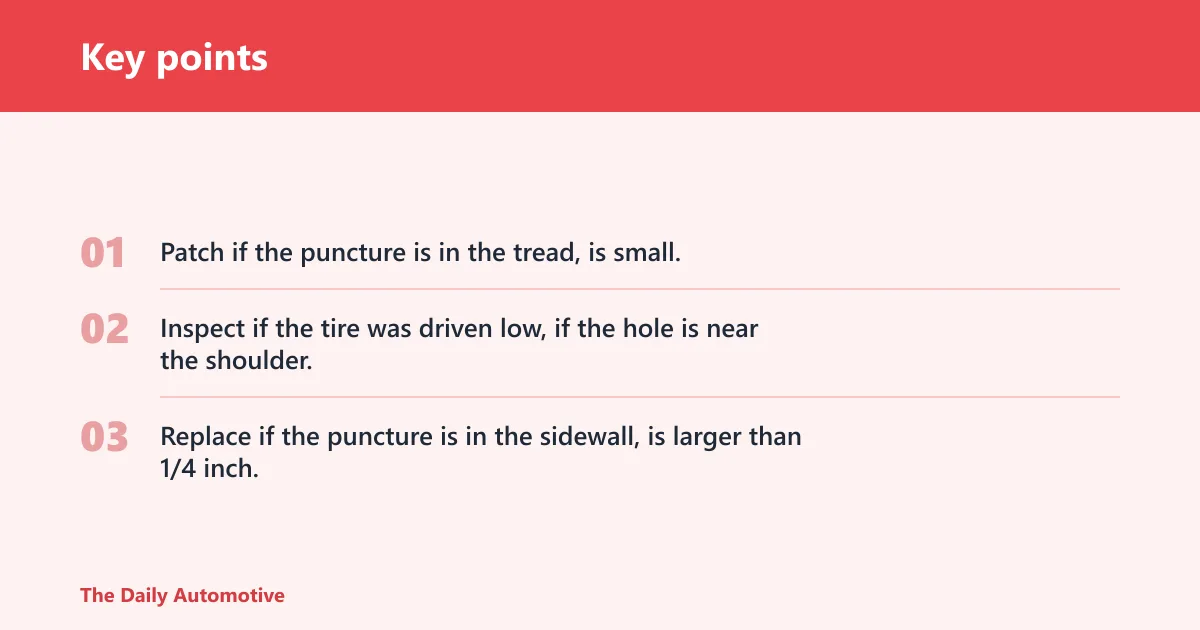
- Patch if the puncture is in the tread, is small, and the tire has no sidewall or shoulder damage.
- Inspect if the tire was driven low, if the hole is near the shoulder, or if you see more than one injury.
- Replace if the puncture is in the sidewall, is larger than 1/4 inch, or the shop finds internal damage, bead damage, or an unrepairable run-flat issue.
Picture a midsize SUV with a nail in the center tread and normal tire pressure still holding. That is usually a patch job. Now picture a compact hatchback with a puncture near the shoulder after a long drive on a soft tire. That belongs in the inspect or replace column, even if the outside hole looks small.
Frequently asked questions
How much does a tire patch cost at discount tire?
Discount Tire often repairs eligible punctures free if you bought the tire there, according to competitor-reported policy summaries. If the tire is not covered, the shop still follows the same safety rules: tread-area punctures are repairable, while sidewall or shoulder damage usually pushes you toward replacement.
How much does a tire patch cost at walmart?
Walmart repair pricing can vary by location and tire center policy, so there is no single national patch price to quote. Expect the same basic shop factors as anywhere else: tread-only damage, tire removal, possible balancing, and replacement if the tire fails inspection.
How much does a tire patch cost at firestone?
Firestone pricing depends on location, tire type, and whether the repair is covered under a store program or warranty. If the puncture is repairable, the quote usually centers on the repair plus any balancing or service kit charge, not on the patch material itself.
How much does a tire patch cost at costco?
Costco pricing depends on membership policy and local service rules, and it may be discounted for eligible members or tire purchases. If you are comparing quotes, ask whether balancing, TPMS service parts, and reinstallation are included, because those details can change the final bill more than the patch itself.
How much does a tire plug and patch cost?
A plug-patch combo typically costs $20 to $45 per tire, and that range is a good shorthand for a proper internal repair on a tread puncture. The total can climb if the tire is low-profile, run-flat, or needs balancing or TPMS service parts.
Is it better to patch or replace a tire?
Patch the tire when the injury is in the tread and the casing is otherwise healthy. Replace it when the puncture is in the sidewall or shoulder, when the hole is too large, or when the shop finds damage from driving while flat. Safety should decide this one, not the lower price.
Products related to this article
Sponsored / affiliate links. As an Amazon Associate I earn from qualifying purchases. I may earn additional commission from eligible campaigns.