Wheel Alignment vs Tire Balancing: Symptoms to Check
Vibration at moderate highway speeds often points to tire balancing; a steering pull, crooked wheel, or edge wear can point to wheel alignment, and both may be worth checking if symptoms overlap. Ignore the wrong fix and you can wear out tires early, chase the shake, and pay for repeat shop visits. This guide separates the symptoms, gives a quick driveway check, and tells you when both services make sense.
This guide is part of our Car maintenance and repair guide series.
Wheel alignment vs tire balancing: the real trade-off
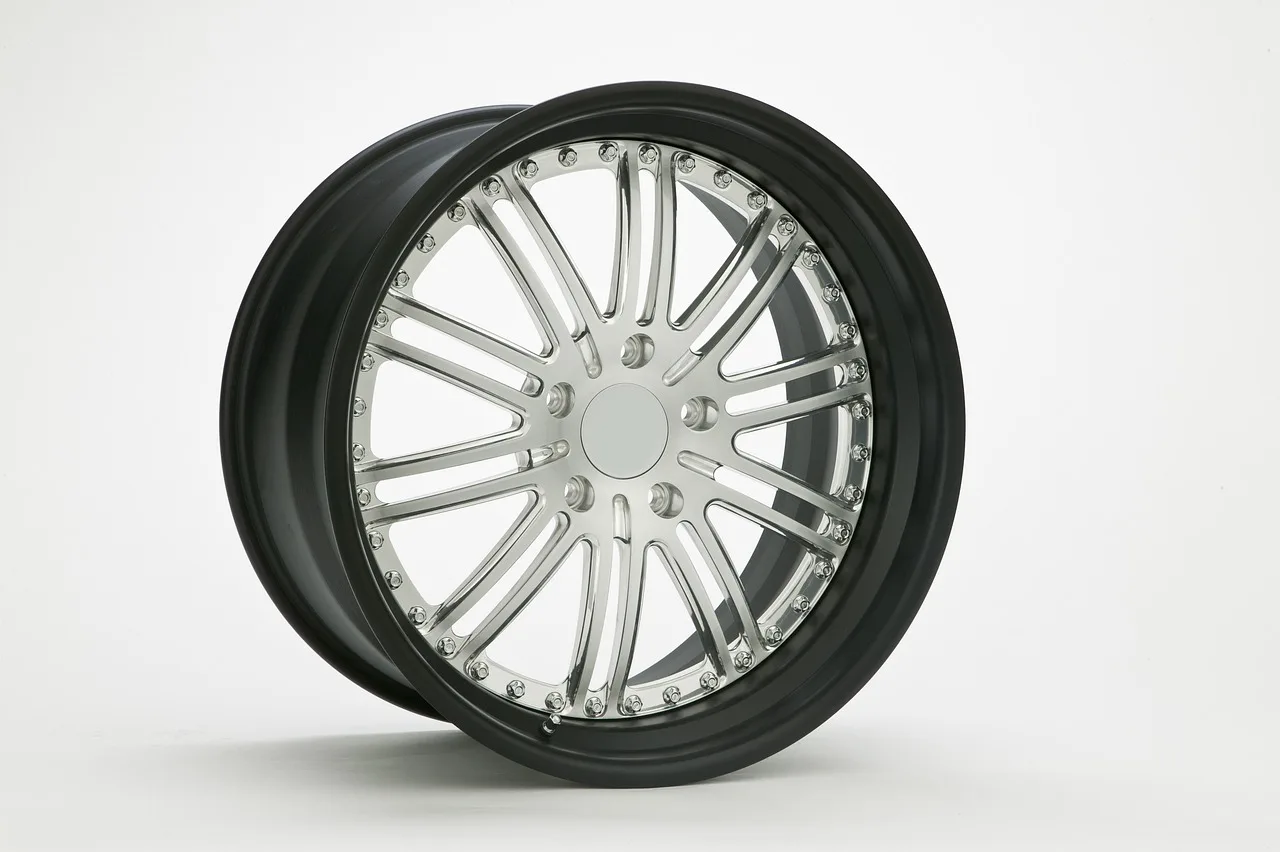
Wheel alignment changes where the tires point. Tire balancing changes how evenly the tire-and-wheel assembly spins. That is the core trade-off, and it matters because the wrong service fixes the wrong problem; a shake is usually not a tracking issue, while a pull is usually not a balance issue.
| Decision factor | Wheel Alignment | Tire Balancing | Winner |
|---|---|---|---|
| Main job | Adjusts camber, caster, and toe so the tires contact the road correctly | Corrects uneven weight distribution in the tire-and-wheel assembly | Tie |
| Primary symptoms it fixes | Pulling, off-center steering wheel, drift, edge wear | Steering wheel shake, seat vibration, floorboard vibration, highway-speed shake | Tie |
| Best first move after common service events | After suspension work, curb strikes, pothole hits, new tires | After new tire install, rotation, or flat repair | Tie |
| What it cannot fix by itself | Most pure vibration complaints | Pulling, crooked steering wheel, and angle-related wear | Tie |
Main job
Wheel alignment is about geometry. Tire balancing is about mass distribution. One sets the direction of travel, and the other smooths the spin. That is why a car can track straight yet shake, or ride smoothly yet drift left.
Primary symptoms it fixes
Alignment is the right lane when the car pulls, the steering wheel sits off-center on a straight road, or the tires wear on one shoulder. Balancing wins when the complaint is vibration, especially at highway speed or through the steering wheel.
Best first move after common service events
New tires, rotation, and flat repair are common balance triggers. Suspension work, a pothole hit, a curb strike, or collision damage are common alignment triggers. If both happened, both checks are reasonable; fix the hardware first, then set the angles and balance the assembly.
What it cannot fix by itself
Balancing will not correct a car that dog-tracks down the road. Alignment will not cure a bent wheel or a tire with a shifted belt. When the complaint is mixed, the first job is diagnosis, not guessing at the service ticket.
📊 Firestone recommends alignment checking every 6,000 miles or twice a year. Source: Tire Balance vs. Alignment: Which One Do You Need?.
How do the symptoms point to the right service?
Start where the car feels wrong. Steering-wheel shake, seat vibration, and floorboard vibration usually point to tire balancing. Pulling, a crooked steering wheel, or drift on a flat road points to wheel alignment, though bent wheels, tires, brakes, and worn suspension parts can fake both problems.
Steering wheel shake, seat vibration, and floorboard vibration
Firestone lists steering wheel vibration as a balance symptom, and Tire Reviews notes a speed-specific vibration around 60 mph. A shake through the wheel usually comes from the front assembly, while seat or floor vibration often points farther back or to a rear wheel issue.
Pulling, crooked steering wheel, and drift on a flat road
Firestone lists a car pulling to one side as an alignment symptom. A crooked wheel on a straight road is another strong clue, especially if the car still tracks that way after tire pressure is corrected. That is tracking, not wheel weight.
Uneven wear clues: feathering, cupping, and shoulder wear
Feathering often points to toe error. Inside or outside shoulder wear points to camber trouble. Cupping or scalloping can come from balance issues, but it can also come from worn shocks, struts, or other suspension parts, so wear pattern alone is not enough.
What balancing fixes and what it does not
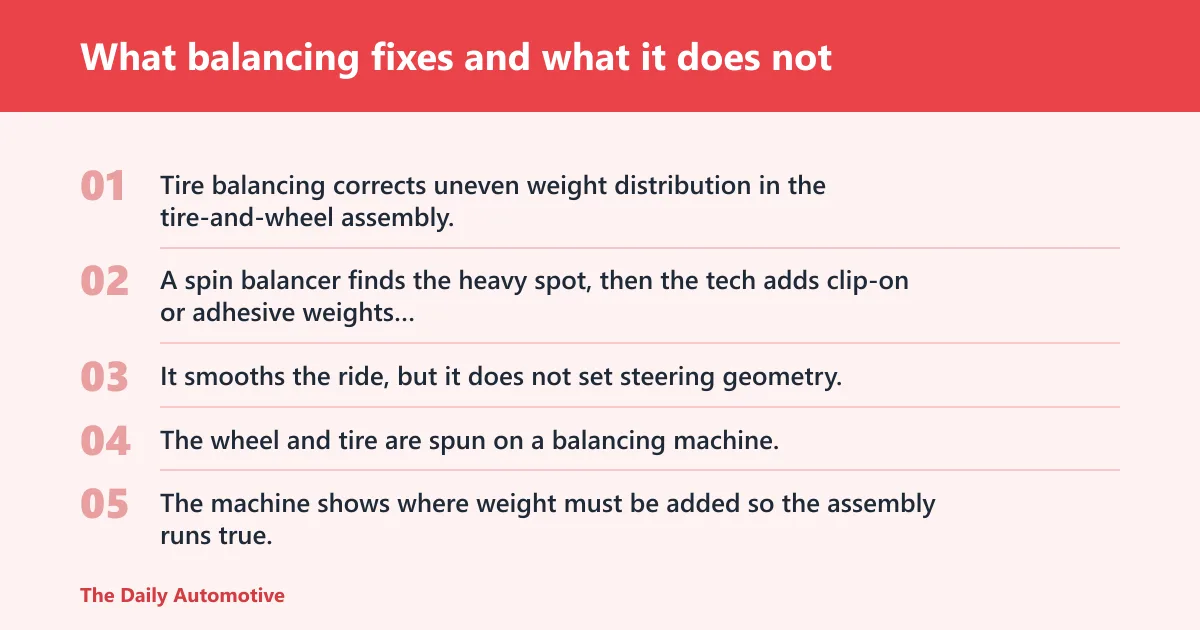
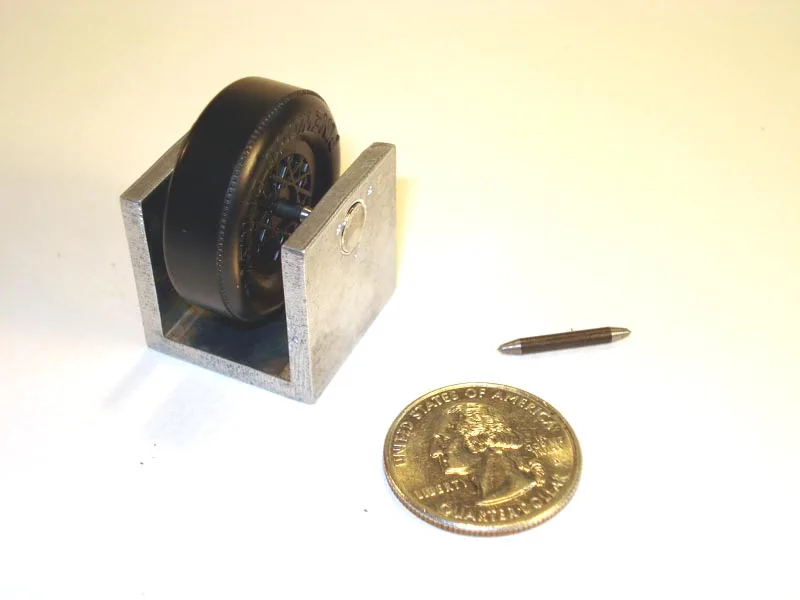
Tire balancing corrects uneven weight distribution in the tire-and-wheel assembly. A spin balancer finds the heavy spot, then the tech adds clip-on or adhesive weights until the assembly spins evenly. It smooths the ride, but it does not set steering geometry.
How a spin balancer finds heavy spots
The wheel and tire are spun on a balancing machine. The machine shows where weight must be added so the assembly runs true. That is why a vibration at highway speed often becomes the first balancing complaint, not an alignment complaint.
Clip-on weights vs adhesive weights
Tire Reviews notes that balancing can use clip-on weights or adhesive weights. Clip-on weights are common on many steel wheels. Adhesive weights are often used where the shop wants a cleaner outer face or where the wheel design leaves no easy clip point.
Why new tires, rotations, and flat repairs often call for balancing
Firestone says balance is recommended after new tire install, rotation, or flat repair. Firestone also says balance can be checked every 5,000 to 6,000 miles. That timing makes sense because tires and wheels change as they wear, move positions, or get dismounted.
What alignment fixes and what it does not
Wheel alignment adjusts steering and suspension geometry so the tires contact the road correctly. The key angles are camber, toe, and caster. Alignment solves pull, drift, off-center steering, and many forms of uneven wear, but it will not erase a spin-related shake.
Camber, toe, and caster in plain language
Camber is the front-view tilt of the tire. Too much positive or negative camber shows up as inside or outside shoulder wear. Toe is the inward or outward aim of the tires from above, and it is a major tire-wear driver. Caster affects straight-line stability.
How potholes, curb strikes, and worn parts throw angles off
Potholes and curb hits can knock alignment out. Worn control arm bushings, ball joints, tie-rod ends, or other steering parts can also let angles wander. If the hardware is loose, an alignment spec sheet is only a temporary answer.
How alignment affects tire wear and straight-line stability
Wheel alignment adjusts tire angles for road contact. That is what keeps the vehicle tracking straight and helps prevent premature wear. Firestone recommends alignment checking every 6,000 miles or twice a year, and after installing new tires.
Which false positives fool drivers most often?
Bent wheels, bad tires, brake rotor issues, and worn suspension parts can mimic both balance and alignment problems. The trick is to identify whether the car is shaking, pulling, or both, then isolate the wheel, tire, brake, or steering side before buying service.
Bent wheels and damaged tires
A bent wheel can behave like a balance problem because it changes how the assembly runs. A tire with a shifted belt, separated tread, or out-of-round shape can shake even after balancing. If a shop balances a wheel twice and the symptom remains, the wheel or tire deserves a closer look.
Brake rotor issues that feel like a balance problem
Brake rotor problems often show up most clearly under braking, not at steady speed. That distinction matters. If the steering wheel shakes only when the brakes are applied, balance is less likely to be the first answer.
Worn suspension or steering parts that mimic alignment trouble
Loose steering or suspension parts can let the car wander, chew tires, and refuse to hold alignment. Fix the worn part first, then align it. Otherwise the alignment is built on a moving target.
Use this diagnostic matrix before you buy service
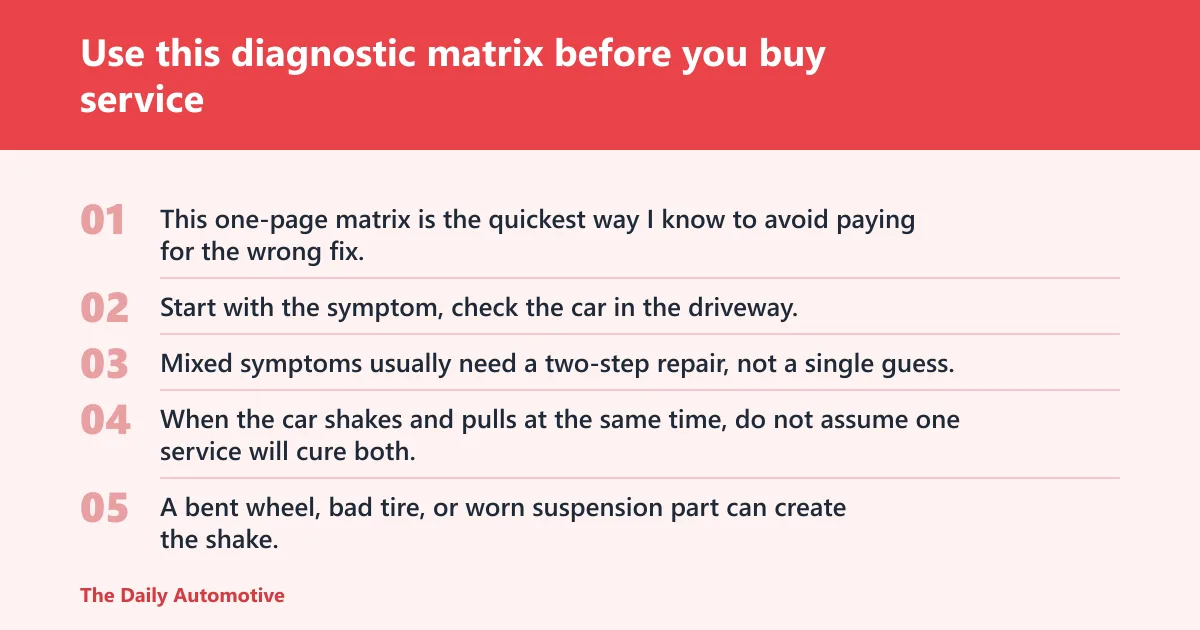
This one-page matrix is the quickest way I know to avoid paying for the wrong fix. Start with the symptom, check the car in the driveway, then buy the next service that matches the likely cause. Mixed symptoms usually need a two-step repair, not a single guess.
| Symptom | Likely cause | Quick driveway check | Next shop service |
|---|---|---|---|
| Steering wheel shakes at 55–70 mph | Balance issue or bent wheel | See whether the shake stays at speed and changes after tire rotation | Balance first; inspect wheel runout if it persists |
| Seat vibration on the highway | Rear balance issue, bent wheel, or damaged tire | Move attention to rear tires; inspect for visible tire damage | Balance and inspect tire/wheel condition |
| Car pulls left or right on a flat road | Alignment issue, tire pressure mismatch, brake drag | Check pressures and release the wheel lightly on a level road | Alignment after pressure and brake checks |
| Steering wheel sits off-center | Toe misalignment | Verify the car still drives straight despite the wheel angle | Alignment |
| Inside shoulder wear | Camber issue or aggressive toe | Compare inner tread depth side to side | Alignment, with suspension inspection if wear is severe |
| Outside shoulder wear | Camber issue, cornering abuse, or low pressure history | Check inflation history and measure tread across the width | Alignment plus tire condition review |
| Feathering across the tread | Toe error | Run a hand lightly across the tread blocks | Alignment |
| Cupping or scalloping | Out-of-balance tire, worn shocks/struts, or damaged tire | Look for dips that repeat around the tread | Balance plus suspension inspection |
| Shake under braking only | Brake rotor issue | Notice whether the shake disappears off the brake pedal | Brake inspection, not balance first |
| Vibration after a flat repair | Balance issue or tire damage from the puncture | Confirm the repaired tire has no bulge or wobble | Balance, then inspect the repaired tire |
| Pull plus shake after hitting a pothole | Alignment plus bent wheel or tire damage | Inspect the wheel lip and tread for impact marks | Alignment and wheel/tire inspection |
| Repeated vibration after balancing | Bent wheel, bad tire, or loose suspension | Swap the tire position if possible and recheck | Deeper inspection before paying for another balance |
Mixed-symptom cases with both shake and pull
When the car shakes and pulls at the same time, do not assume one service will cure both. A bent wheel, bad tire, or worn suspension part can create the shake, while alignment or brake drag creates the pull. In that case, diagnosis comes before checkout.
Vehicle-specific notes for AWD, trucks, lowered cars, and staggered fitment
AWD vehicles are less forgiving when tire diameters differ, so tire condition and rotation history matter more than on some other cars. Trucks often show load-related alignment changes, especially after suspension modifications. Lowered cars and staggered fitment setups can make alignment more sensitive and tire rotation less flexible, so service planning needs to match the hardware.
Choose tire balancing if… / choose wheel alignment if…
Choose tire balancing if the main complaint is vibration at speed, steering-wheel shake, seat buzz, or a symptom that started after new tires, a rotation, or a flat repair. Choose wheel alignment if the car pulls, the steering wheel sits crooked, or the tires wear on one edge. If both symptoms are present, inspect for bent wheels, bad tires, or worn parts before buying both services blindly.
When to do balancing first
Balance first when the complaint is speed-related shake and the car otherwise tracks straight. It is also the right first step after installing new tires or repairing a flat. If the vibration survives balancing, the next suspects are the wheel, tire, or suspension.
When alignment should come first
Alignment is often worth checking after suspension work, a curb hit, pothole damage, or a clear pull on a level road. If the steering wheel is off-center, balancing will not correct it. Fix the angles, then worry about spin smoothness if a shake remains.
When both services make sense after repairs or new tires
Both services make sense after collision damage, a hard pothole strike, or a suspension rebuild. New tires are another common time to do both checks if the old set showed wear and the car already felt off. That sequence protects the new tires instead of feeding them into the same problem.
Frequently asked questions
what is the difference between tire balancing and wheel alignment
Tire balancing corrects uneven weight distribution in the tire-and-wheel assembly so it spins smoothly. Wheel alignment adjusts camber, caster, and toe so the tires point and contact the road correctly. One addresses vibration; the other addresses tracking, steering wheel position, and wear pattern.
is tire balancing the same as alignment
No. Tire balancing is about spin smoothness, usually with a spin balancer and clip-on or adhesive weights. Alignment is about steering and suspension geometry. A car can need one, the other, or both, depending on whether the symptom is shake or drift.
wheel alignment vs tire rotation vs balancing
Rotation moves tires to different positions on the car so wear can even out. Balancing corrects weight imbalance in each tire-and-wheel assembly. Alignment changes the wheel angles themselves. They are related because each affects tire life, but they solve different problems.
front end alignment vs tire balance
Front-end alignment focuses on the front wheels’ angles and steering behavior, so it helps with pull, drift, and crooked steering wheel complaints. Tire balance helps with shake and vibration. If the front end feels loose and the wheel shakes, the car may need both inspection paths.
why is tire balancing necessary
Tire balancing is necessary because a tire and wheel rarely carry weight perfectly evenly all the way around. That imbalance can create steering wheel vibration, floor vibration, or a speed-specific shake around highway speed. Balancing restores smooth rotation and helps protect tire life.
how do I know if I need balancing or alignment
Use the symptom first. Shake at speed points to balancing. Pulling, off-center steering, or edge wear points to alignment. If the car does both, check for bent wheels, bad tires, brake issues, or worn suspension parts before assuming a single service will fix everything.
Products related to this article
Sponsored / affiliate links. As an Amazon Associate I earn from qualifying purchases. I may earn additional commission from eligible campaigns.