How to Bleed a Clutch on a 2011 Ford Ranger
Learning how to bleed a clutch on a 2011 Ford Ranger might seem a bit tricky at first, especially if you’re new to car maintenance. Sometimes, air can get trapped in the hydraulic clutch system, making the pedal feel soft or spongy. This makes shifting gears harder and can be a bit worrying.
But don’t fret! This guide is here to make the process of How to Bleed a Clutch on a 2011 Ford Ranger really easy. We’ll walk you through each step simply and clearly so you can get your Ranger back in top shape.
What Is Clutch Bleeding and Why Is It Necessary
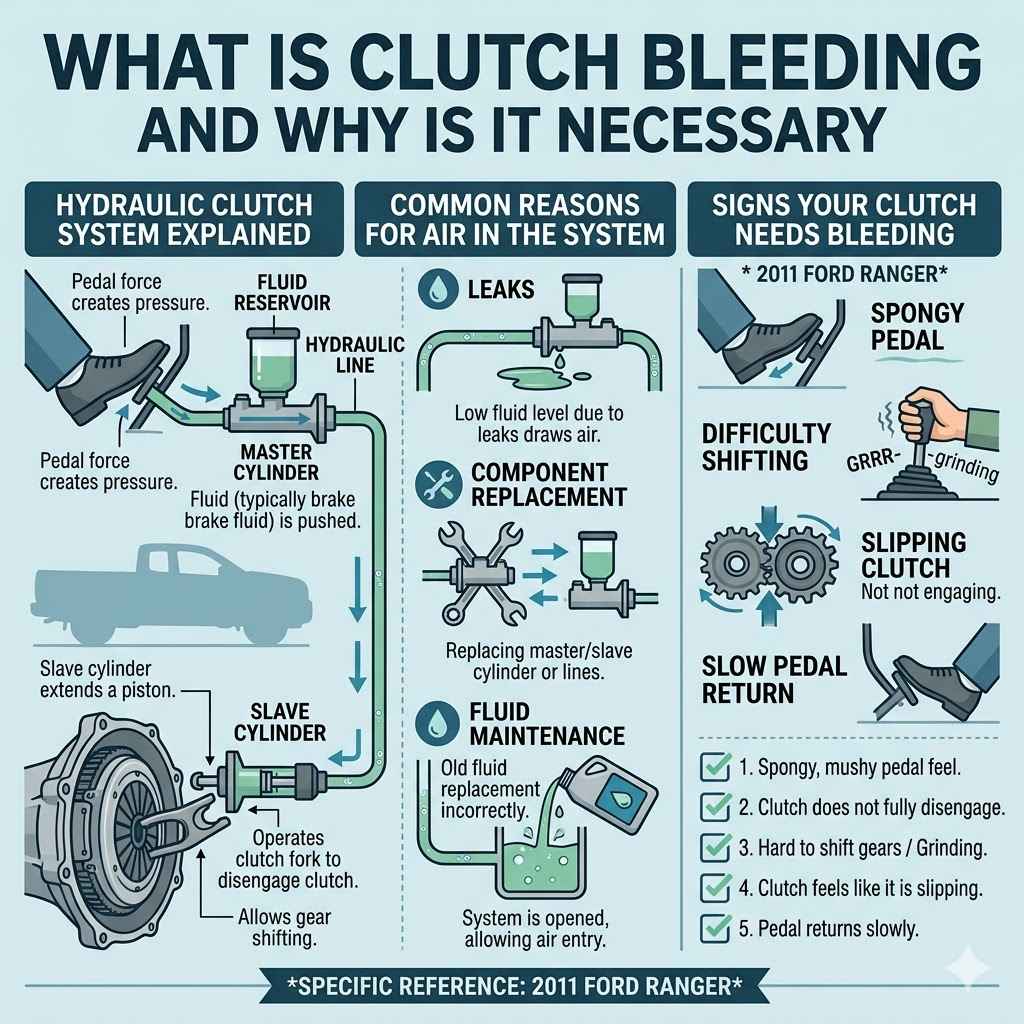
This section explains the fundamental concept of bleeding a clutch system. It covers what the clutch hydraulic system is, why air gets into it, and the common symptoms that indicate it needs to be bled. Understanding this basic “why” helps demystify the process. We will discuss the hydraulic clutch system, its components like the master cylinder and slave cylinder, and how hydraulic fluid transmits force from the pedal to the clutch. Air bubbles are the main culprit that need removal.
The Hydraulic Clutch System Explained
The hydraulic clutch system is how your foot’s pressure on the clutch pedal makes the clutch disengage. It uses a special fluid, typically brake fluid, to move parts. When you press the pedal, a piston inside the master cylinder pushes fluid through a line. This fluid then goes to the slave cylinder, which is attached to the clutch fork. The slave cylinder’s movement helps to release the clutch so you can shift gears.
The master cylinder is like the brake pedal’s counterpart. It has a reservoir to hold the clutch fluid. When you push the clutch pedal, you’re essentially pushing a rod into the master cylinder, forcing fluid out.
The slave cylinder is usually located near the transmission. It has a piston that extends when fluid pressure is applied. This piston then pushes on a lever or fork, which in turn operates the clutch mechanism.
Common Reasons for Air in the Clutch System
Air can sneak into the clutch hydraulic system for a few reasons. One common cause is a leak in the system. If the fluid level drops too low because of a leak, air can be drawn in. Another reason is when components are replaced, such as the master cylinder, slave cylinder, or clutch hose. During these replacements, the system is opened, and air can enter.
Also, simply maintaining the clutch fluid can sometimes introduce air if not done carefully. When the fluid is old and needs changing, the system is drained, and air will fill the empty lines.
Signs Your 2011 Ford Ranger Clutch Needs Bleeding
Several signs point to air in your 2011 Ford Ranger’s clutch system. The most noticeable is a “spongy” or “mushy” clutch pedal. This means the pedal feels soft and doesn’t have the usual firm resistance. You might also notice that the clutch doesn’t disengage fully. This can make it hard to shift into gear, or you might hear grinding noises when trying to change gears.
In some cases, the clutch might feel like it’s “slipping” or not engaging properly even when the pedal is released. The pedal might also return slowly after you press it.
Tools and Materials for Bleeding Your Ranger Clutch
Before you start the actual process of How to Bleed a Clutch on a 2011 Ford Ranger, it’s essential to have all the right tools and materials ready. This ensures the job goes smoothly and efficiently, without unnecessary stops to find a missing item. Having everything at hand minimizes potential frustration and makes the entire task much more manageable.
Essential Tools for the Job
Gathering the right tools is step one. You’ll need a wrench that fits the bleeder screw on the slave cylinder. Often, this is a 10mm or 11mm wrench, but it’s good to check your specific Ranger. You will also need a clear hose that fits snugly over the bleeder screw. A container, like a clean plastic bottle or jar, will be needed to catch the old fluid.
A turkey baster or a fluid extractor can be helpful to remove old fluid from the master cylinder reservoir before you begin. Gloves are important to keep your hands clean from brake fluid, which is corrosive. Safety glasses are also a good idea.
Brake Fluid Type and Quantity
The type of brake fluid required is usually DOT 3. Always check your 2011 Ford Ranger’s owner’s manual or the cap on the master cylinder reservoir for the exact specification. Using the wrong type of fluid can damage the clutch system. You will likely need about one quart (32 ounces) of new fluid to complete the bleeding process, as some fluid is expelled and some will be used to flush the system.
It is important to use fresh, unopened brake fluid. Old or contaminated fluid will not perform well and could cause issues.
Safety Precautions You Must Take
Safety is paramount when working on your vehicle. Brake fluid is corrosive and can damage paint and skin. Wear gloves and safety glasses. Work in a well-ventilated area. Make sure your Ranger is parked on a level surface and the parking brake is firmly engaged. If you need to lift the vehicle, use jack stands for support; never rely on a jack alone.
If you are unsure about any step, it is best to consult a qualified mechanic.
Step-by-Step Guide: How to Bleed a Clutch on a 2011 Ford Ranger
This is the core of the article, detailing the practical steps involved in bleeding the clutch. It breaks down the process into manageable actions, making it accessible to DIY enthusiasts. The goal is to provide clear, actionable instructions that lead to a successful clutch bleed. We will cover preparing the vehicle, the bleeding procedure itself, and what to do after the process is complete.
Preparation Steps Before Bleeding
First, locate the clutch master cylinder reservoir. It’s usually a small plastic container near the brake master cylinder under the hood. Clean the area around the cap to prevent dirt from entering the system. Open the cap and use a turkey baster or fluid extractor to remove as much of the old fluid as possible. Fill the reservoir with fresh DOT 3 brake fluid to the “MAX” line.
Next, find the slave cylinder. It’s typically mounted on the transmission housing. You’ll see a small bleeder screw on it.
Clean this area as well. Attach one end of your clear hose to the bleeder screw. Place the other end of the hose into your collection container, ensuring the end of the hose stays submerged in a small amount of fresh brake fluid in the container.
This prevents air from being sucked back into the system.
The Bleeding Procedure Using Assistance
This method requires two people. Have one person sit in the driver’s seat to operate the clutch pedal. The other person will be at the slave cylinder. Tell the driver to pump the clutch pedal slowly and steadily several times, then hold it down. While the pedal is held down, the person at the slave cylinder should carefully open the bleeder screw. You will see fluid and possibly air bubbles come out through the hose into the container.
Once fluid stops flowing, close the bleeder screw tightly before the driver releases the clutch pedal. It is vital that the bleeder screw is closed while the pedal is still pressed down.
Repeat this pumping and opening/closing sequence. Keep a close eye on the master cylinder reservoir and add fluid as needed to keep it from running dry. If the reservoir runs dry, you will introduce more air into the system, and you’ll have to start over.
Continue this process until no more air bubbles are seen in the fluid coming out of the hose, and the fluid looks clean. The clutch pedal should start to feel firmer.
Alternative Bleeding Methods for Solo Work
If you don’t have a helper, a vacuum bleeder or a pressure bleeder can be used. A vacuum bleeder attaches to the bleeder screw and sucks fluid out. A pressure bleeder attaches to the master cylinder reservoir and pushes fluid through the system. Both tools help bleed the clutch by yourself.
With a vacuum bleeder, you connect it to the bleeder screw. Then, you pump the bleeder to create suction and open the bleeder screw. Fluid and air will be drawn into the vacuum bleeder’s collection bottle.
With a pressure bleeder, you fill the master cylinder reservoir with fluid and connect the pressure bleeder. You then pressurize the system, which pushes fluid through the lines. Open the bleeder screw, and fluid will flow out.
Checking and Topping Off Fluid
After you believe you’ve finished bleeding, tightly close the bleeder screw on the slave cylinder. Have the driver pump the clutch pedal several times to build pressure. Check the clutch pedal feel. It should be firm and consistent.
Check the master cylinder reservoir fluid level one last time. Top it off to the “MAX” line with fresh DOT 3 fluid. Replace the reservoir cap securely.
Troubleshooting Common Clutch Bleeding Issues
Even with careful work, issues can arise when trying to bleed a clutch. Knowing how to handle common problems will save you time and frustration. These tips are designed to help you overcome obstacles and achieve a successful clutch bleed for your 2011 Ford Ranger.
Spongy Pedal Persists After Bleeding
If your clutch pedal still feels spongy after you’ve gone through the bleeding process, it likely means there is still air trapped in the system. Double-check that you didn’t introduce air by letting the master cylinder reservoir run dry. Also, inspect all connections for leaks. A small leak can allow air to enter.
Sometimes, a faulty master cylinder or slave cylinder can mimic air symptoms. If the cylinders are worn, they might not hold pressure properly, leading to a soft pedal.
Another possibility is a worn or damaged clutch hose. These can sometimes develop internal issues that prevent proper fluid flow or allow air ingress.
Fluid Leaks Around the Slave Cylinder
If you notice fluid leaking around the slave cylinder or its bleeder screw, it’s a clear sign of a problem. The bleeder screw might not be tight enough, or the seals within the slave cylinder could be compromised. Carefully tighten the bleeder screw. If the leak continues, the slave cylinder may need to be replaced.
A leaking slave cylinder means the hydraulic pressure is escaping before it can properly actuate the clutch. This will result in a poor clutch performance.
Difficulty Shifting Gears Remains
If you are still having trouble shifting gears after bleeding the clutch, the problem might be more serious than just air in the lines. It could indicate an issue with the clutch disc, pressure plate, or release bearing. The clutch might not be disengaging fully due to these mechanical problems.
Sometimes, the clutch fluid itself might be contaminated, or it’s the wrong type, causing the system to not work efficiently. Ensure you used the correct DOT 3 fluid.
When to Seek Professional Help
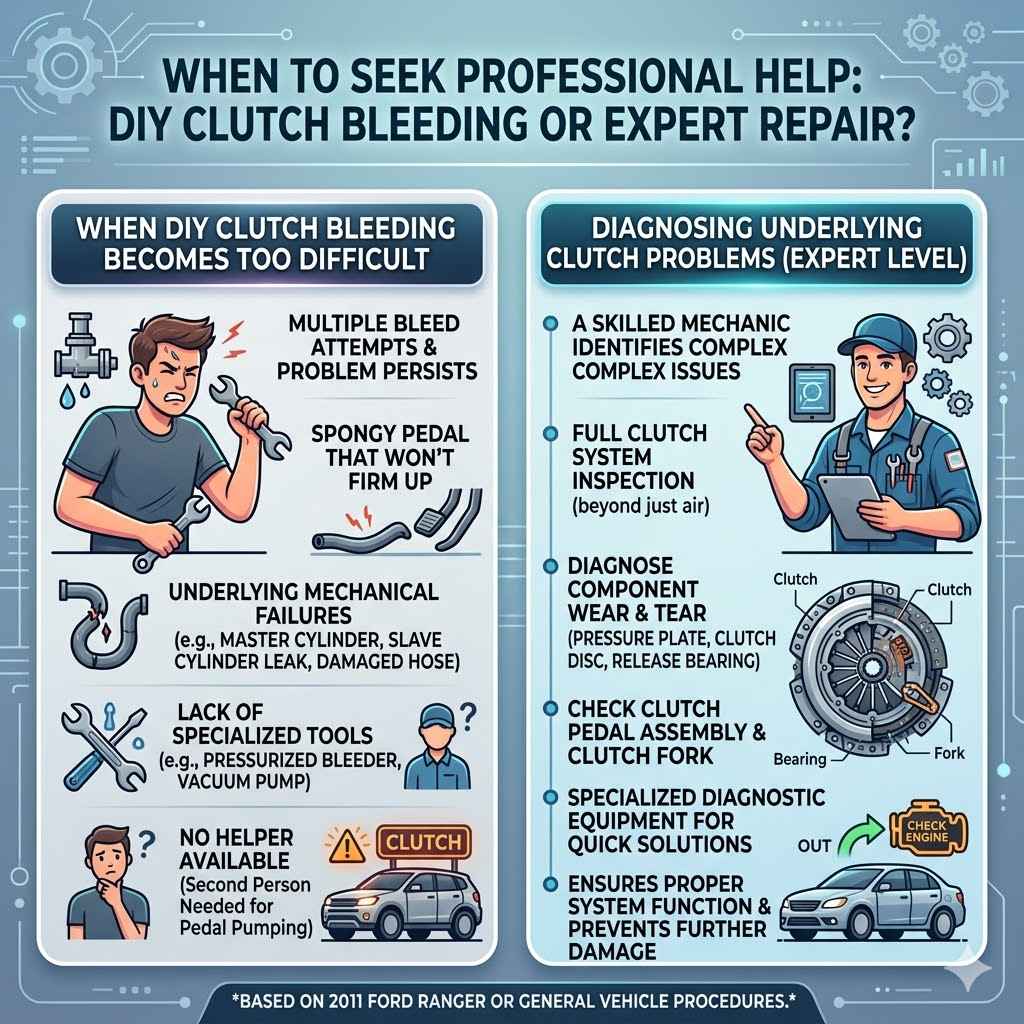
While learning How to Bleed a Clutch on a 2011 Ford Ranger is a great DIY skill, there are times when professional assistance is the best course of action. If you’re uncomfortable with any part of the process, or if the problem persists after your attempts, don’t hesitate to contact a mechanic. They have specialized tools and experience to diagnose and fix complex issues quickly.
When DIY Becomes Too Difficult
If you’ve tried bleeding your clutch multiple times and the issue remains, it might be time to call in a professional. Persistent air in the system or a spongy pedal that won’t firm up can point to underlying mechanical failures that require expert attention. These could include a failing master cylinder, a leaking slave cylinder, or a damaged clutch hose.
Also, if you lack the necessary tools, such as a second person or specialized bleeding equipment, and cannot acquire them, a professional shop can complete the task efficiently.
Diagnosing Underlying Clutch Problems
A skilled mechanic can perform a thorough diagnosis of your entire clutch system. They can identify not just air in the lines but also wear and tear on clutch components like the pressure plate, clutch disc, and release bearing. These parts can fail over time and require replacement.
They can also check for issues with the clutch pedal assembly or the clutch fork itself. A comprehensive inspection is key to ensuring your clutch system functions correctly.
Frequently Asked Questions
Question: How long does it take to bleed a clutch?
Answer: With a helper, bleeding a clutch typically takes about 30 minutes to an hour. If you’re working alone with special tools, it might take a bit longer, perhaps an hour to an hour and a half.
Question: Can I bleed my clutch with just brake fluid?
Answer: Yes, you use brake fluid to bleed a clutch because the clutch hydraulic system is essentially a smaller version of the brake system and uses the same type of fluid, usually DOT 3.
Question: What happens if I don’t bleed my clutch?
Answer: If you don’t bleed your clutch when it has air in it, you will likely experience a spongy pedal, difficulty shifting gears, and potentially damage to the clutch components over time.
Question: Can bleeding the clutch damage my 2011 Ford Ranger?
Answer: Bleeding the clutch itself is generally safe if done correctly. However, using the wrong type of fluid or allowing the master cylinder reservoir to run dry can cause damage to the clutch system.
Question: How often should I bleed my clutch?
Answer: You typically only need to bleed your clutch when you notice symptoms like a spongy pedal or difficulty shifting, or after replacing components like the master cylinder or slave cylinder. It’s not a routine maintenance item like changing oil.
Conclusion
Successfully bleeding the clutch on your 2011 Ford Ranger is achievable. By following these straightforward steps, you can remove trapped air. This will restore a firm pedal feel and ensure smooth gear changes. Remember to gather your tools and safety gear first. Take your time with each step. If you encounter persistent issues, professional help is available. Enjoy the satisfaction of a job well done.