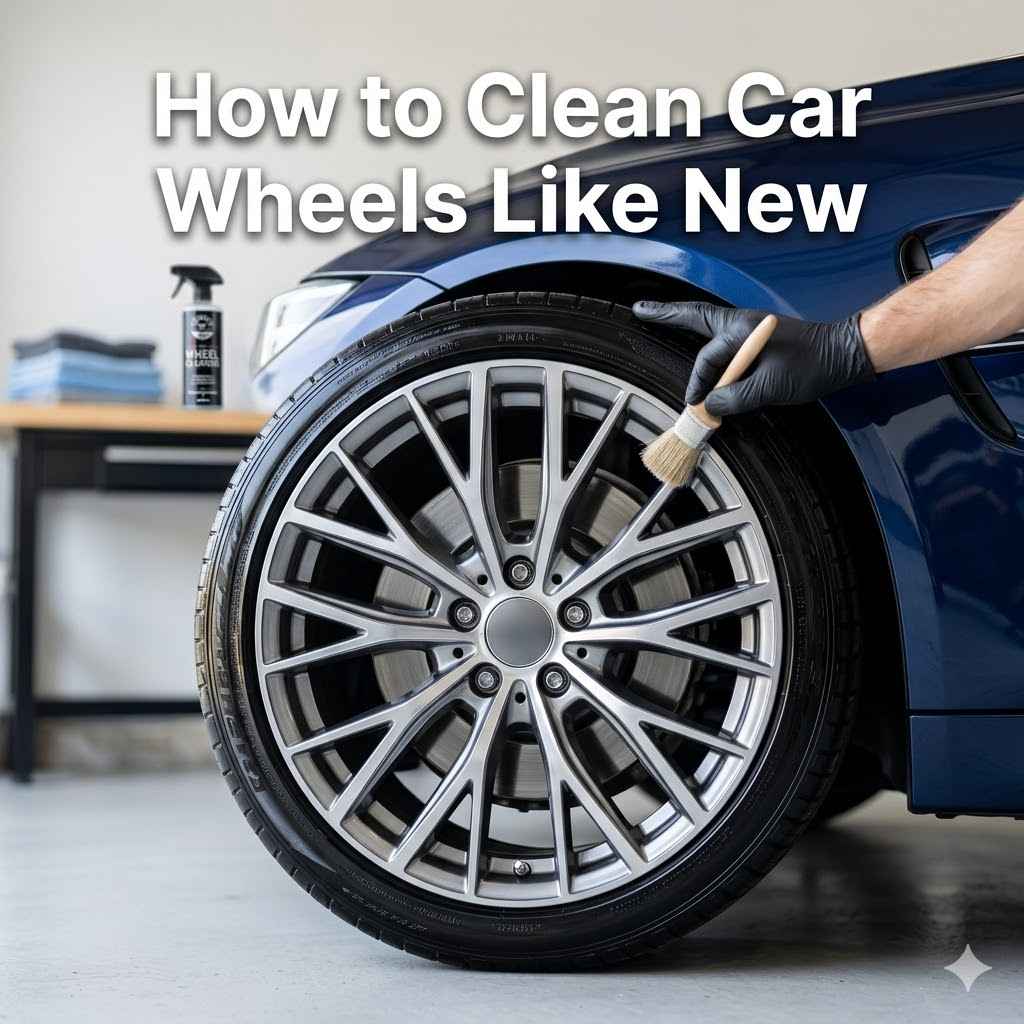
How to Clean Car Wheels Like New
Getting your car wheels to look their best can feel tricky, especially if you’re new to car care. You see those shiny, gleaming wheels on show cars and wonder how they get them that way. It often seems like a big job, and figuring out the right stuff to use can be confusing.
But don’t worry! It’s actually pretty simple once you know the easy steps. This guide will show you exactly how to make your car wheels sparkle.
We’ll go through everything you need to know, step by step, so your wheels look amazing.
How to Clean Car Wheels for a Brand New Look
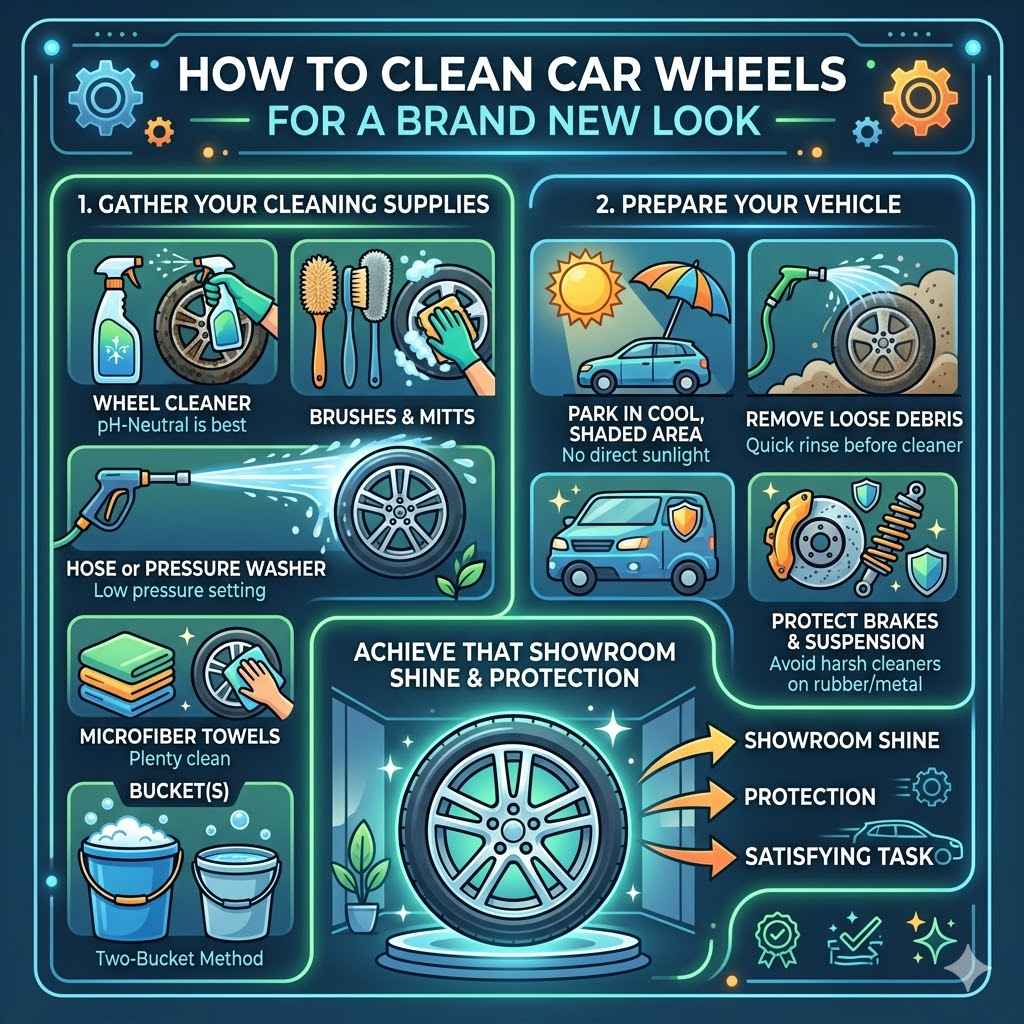
Making your car wheels shine like new is a satisfying task that really boosts your vehicle’s overall appearance. Dirty wheels can make even the cleanest car look neglected. This section covers the essential steps and tools you’ll need to tackle dirt, brake dust, and grime effectively.
We’ll discuss the importance of choosing the right cleaning products and how to apply them safely to avoid damage. Getting this right means your wheels won’t just look good, they’ll be protected too. Following these methods ensures you get that showroom shine without harming your wheels.
Gather Your Cleaning Supplies
Before you start cleaning, having all your tools ready makes the job go smoothly. You’ll want a few key items to get the best results. These are not complicated, and many are common household items or easily found at auto parts stores.
Having them handy means you can get straight to work without interruption, making the whole process faster and more enjoyable.
Wheel Cleaner: This is your main weapon against tough brake dust and road grime. Look for a pH-neutral cleaner if you have delicate or aftermarket wheels, as some strong cleaners can etch certain finishes. A good wheel cleaner is specially formulated to break down the sticky, baked-on dirt that regular soap can’t handle. It works by chemically loosening the bonds between the dirt and the wheel surface.
Brushes and Mitts: You’ll need different types of brushes. A soft-bristle brush is good for general cleaning and reaching into tight spots. A stiffer brush might be needed for really stubborn brake dust, but always test it first to ensure it won’t scratch. A wheel woolie, which is a long, flexible brush, is excellent for cleaning the barrels of the wheels. Using the right brush ensures you can agitate dirt without damaging the wheel’s finish.
Hose or Pressure Washer: A hose with a spray nozzle is usually sufficient for rinsing. If you use a pressure washer, be very careful. Use a low-pressure setting and keep the nozzle at a safe distance, as high pressure can damage wheel finishes or even knock off small weights. The goal is to rinse away loosened dirt, not blast it off aggressively.
Microfiber Towels: You’ll need plenty of clean microfiber towels for drying and buffing. These towels are super absorbent and gentle on your car’s paint and wheel finishes, preventing scratches. Always use separate towels for wheels than you use for your car’s body to avoid transferring brake dust to your paintwork.
Bucket(s): Use at least one bucket for your cleaner solution. Some people prefer a two-bucket method – one with soapy water and one with plain rinse water for your brushes. This keeps your cleaning solution cleaner for longer and reduces the risk of dragging dirt back onto the wheel.
Prepare Your Vehicle
Getting ready to clean your wheels is just as important as the cleaning itself. You want to make sure your car is in a good spot and safe to work on. Doing this prevents problems and makes the whole car cleaning process much smoother.
It’s all about setting yourself up for success before you even pick up a brush.
Park in a Cool, Shaded Area: Never clean your wheels in direct sunlight or when they are hot. Hot surfaces can cause cleaning products to dry too quickly, leaving spots and streaks. It also makes the products less effective. A cool, shaded spot allows the cleaner to work properly and gives you more time before it dries.
Remove Loose Debris: Before you spray any cleaner, give the wheels a quick rinse with water. This washes away loose dirt and grit that could scratch the wheels when you start scrubbing. It’s like a pre-wash that removes the easily removable stuff so your cleaner can focus on the tougher grime.
Protect Your Brakes and Suspension: While most modern wheel cleaners are safe, it’s a good idea to avoid spraying directly onto brake components if you can. Some cleaners can be harsh on rubber seals or metal parts if they aren’t designed for them. Also, be mindful of getting excessive cleaner into your suspension parts. A quick rinse beforehand helps remove loose particles that might otherwise be forced into these areas.
Best Ways to Clean Car Wheels for a Showroom Shine
Achieving a truly show-stopping shine on your car wheels involves more than just a quick wipe-down. It requires understanding the types of dirt you’re dealing with and using the right techniques to remove them. This section will explore different cleaning methods, from tackling everyday grime to dealing with baked-on brake dust, ensuring your wheels look their absolute best.
We’ll cover how to clean effectively without causing damage and how to maintain that fresh look.
Tackling Brake Dust Effectively
Brake dust is one of the toughest enemies of clean wheels. It’s made of metal particles from your brake pads and rotors that get heated up and stick to your wheels. Over time, this dust bakes on, becoming very hard to remove.
Special cleaners are designed to break down this material, but technique matters too.
Apply Wheel Cleaner Generously: Spray your chosen wheel cleaner directly onto the wheel surface. Make sure to cover the entire wheel, including the spokes and the rim lip. Allow the cleaner to dwell for the time recommended on the product label, usually 1-3 minutes. This gives the chemicals time to start working on loosening the brake dust and grime.
Agitate with Brushes: Use your wheel brushes to gently scrub all areas of the wheel. Start with the face of the wheel, then move to the spokes and the barrel (the inner part of the wheel). Don’t forget the brake caliper area if it’s visible. For stubborn spots, you might need a brush with slightly firmer bristles, but always be gentle. The agitation helps lift the dirt that the cleaner has loosened.
Rinse Thoroughly: Once you’ve scrubbed, rinse the wheel completely with water. Make sure all the cleaner and loosened dirt are washed away. You might need to rinse multiple times, especially if you see suds or residue. A good rinse is vital to prevent cleaner from drying on the wheel and causing spots.
Deep Cleaning Rims and Barrels
The barrel of your wheel, the inner part, often gets overlooked but collects a lot of brake dust and road grime. Getting this part clean is key to a truly complete clean and that like-new shine. It requires a bit more effort and the right tools, but the result is worth it.
Use a Wheel Barrel Brush: A long, flexible wheel woolie or barrel brush is perfect for reaching deep into the wheel barrel. Insert the brush and move it back and forth, scrubbing the entire inner surface. These brushes are designed to bend and fit into the curves, ensuring all grime is reached.
Focus on Hidden Areas: Pay attention to the areas behind the spokes and around the valve stem. These spots can hide a surprising amount of dirt. A smaller detail brush can be useful for getting into these tight corners. Work methodically around the entire wheel.
Reapply Cleaner If Needed: If you encounter very stubborn, caked-on grime in the barrel, don’t be afraid to reapply wheel cleaner to that specific area. Let it sit for a minute or two, then scrub again before rinsing. Some heavily soiled wheels might require a second pass with cleaner and brushes.
Dealing with Stubborn Stains and Discoloration
Sometimes, cleaning isn’t enough to get rid of all marks. Certain stains or discoloration might be present, especially on older or neglected wheels. These require specific treatments to restore the original look.
Iron Remover for Embedded Particles: If you notice small rust-colored spots that don’t come off with regular cleaning, you might have iron fallout. These are tiny metal particles from the road that have embedded themselves. An iron remover spray can be used. These products change color when they react with iron, indicating they are working. Follow product instructions carefully and rinse thoroughly.
Clay Bar Treatment for Smoothness: For wheels that feel rough or have embedded contaminants that don’t wash off, a clay bar can be very effective. Use a clay bar specifically designed for automotive use and a lubricant. Gently glide the clay bar over the wheel surface. It will pick up microscopic contaminants, leaving the wheel perfectly smooth. This step is often done after washing and before polishing or sealing.
Wheel Polishes for Minor Scratches: If your wheels have very light scratches or scuff marks, a dedicated wheel polish might help. Apply a small amount of polish to a microfiber applicator pad and rub gently in a circular motion. Follow up by buffing with a clean microfiber towel. For deeper scratches, professional repair might be necessary.
How to Clean Different Types of Car Wheels
Not all wheels are created the same, and different materials require different care. Using the wrong cleaner or method on certain wheel types can cause damage. Understanding the material of your wheels—whether they are alloy, chrome, or painted—is key to cleaning them safely and effectively.
This section guides you through the nuances of caring for various finishes to maintain their beauty and integrity.
Caring for Alloy Wheels
Most modern cars come with alloy wheels, which are made from a mix of aluminum and other metals. They are popular for their lightweight properties and attractive appearance. However, their protective clear coat can be sensitive to harsh chemicals.
It’s important to use products specifically designed for alloy wheels.
Use pH-Neutral Cleaners: For most standard painted or clear-coated alloy wheels, a pH-neutral wheel cleaner is the safest bet. These cleaners are formulated to break down grime without stripping the protective clear coat. Avoid acidic or alkaline cleaners unless specifically recommended for your wheel type and finish.
Avoid Harsh Brushes: Stick to soft-bristle brushes or microfiber mitts when cleaning alloy wheels. Stiffer brushes can scratch the clear coat, leading to dullness and potential corrosion over time. If you encounter tough brake dust, try a dedicated alloy wheel cleaner first before resorting to more aggressive scrubbing.
Dry Immediately and Thoroughly: After rinsing, dry alloy wheels immediately with a clean microfiber towel. Leaving water to air dry can lead to water spots, which are difficult to remove from clear coats. A quick drying prevents mineral deposits from forming on the surface.
Cleaning Chrome Wheels
Chrome wheels offer a brilliant, mirror-like shine that is highly desirable. However, chrome plating can be delicate and prone to pitting or corrosion if not cared for properly. Regular cleaning and protection are crucial for maintaining their gleam and preventing damage.
Mild Soap and Water First: For routine cleaning of chrome wheels, a simple wash with car soap and water is often sufficient. Use a soft microfiber mitt and rinse thoroughly. This is the least abrasive method and is effective for removing light dust and dirt.
Use a Chrome Polish for Shine: To restore and enhance the shine of chrome wheels, use a dedicated chrome polish. Apply a small amount of polish to a clean microfiber cloth and rub it onto the chrome surface in a back-and-forth motion. Buff off with a separate clean cloth. Chrome polishes contain mild abrasives and protective agents that enhance reflectivity.
Address Rust Spots Quickly: If you notice any rust spots on chrome wheels, act fast. Use a specialized chrome cleaner or a fine-grade steel wool (grade #0000) very gently. Be extremely careful, as aggressive scrubbing can scratch the chrome. Once the rust is removed, clean and polish the area to protect it.
Maintaining Painted Wheels
Many wheels have a painted finish, often black, gray, or other colors, sometimes with a clear coat over them. These wheels can be quite durable but still require careful cleaning to avoid damaging the paint.
Use Dedicated Painted Wheel Cleaners: Opt for wheel cleaners that are specifically labeled as safe for painted wheels. Some cleaners can be too aggressive and cause the paint to dull or peel over time. Always check the product label for compatibility with painted finishes.
Gentle Agitation is Key: When cleaning painted wheels, use soft brushes and microfiber towels. Avoid using abrasive pads or stiff brushes that can scratch the paint or clear coat. Even light scratching can dull the finish and make the wheels appear older.
Consider a Sealant or Wax: After cleaning and drying painted wheels, applying a wheel sealant or wax can offer protection. This creates a barrier against dirt, brake dust, and UV rays, making future cleaning easier and helping to preserve the paint’s finish.
Special Considerations for Polished or Machined Wheels
Polished and machined wheels feature a combination of polished metal surfaces and painted or coated sections. They have a dynamic, two-tone look that can be stunning but requires a careful approach to cleaning to avoid damage to either finish.
Identify the Finishes: Determine which parts of the wheel are polished metal and which are painted or coated. This is crucial because different cleaners will be needed for each. Polished metal can be sensitive to harsh chemicals that might dull its shine or cause corrosion.
Use Separate Cleaners for Each Finish: It’s often best to use a pH-neutral cleaner for the painted or coated areas and a specific metal polish or cleaner for the polished metal sections. Apply cleaners to one section at a time, rinse thoroughly, and dry immediately to prevent spotting or reactions between chemicals.
Test Cleaners in an Inconspicuous Area: Before applying any new cleaner or polish to the entire wheel, test it on a small, hidden area. This helps ensure that the product won’t cause discoloration or damage to either the polished metal or the painted sections. Wait for it to dry and check for any adverse effects.
How to Clean Car Wheels for a Long-Lasting Shine
Maintaining the shine on your car wheels goes beyond just washing them. It involves protecting the surface and performing regular upkeep to prevent dirt and grime from becoming permanently etched. This section focuses on the steps and products you can use to keep your wheels looking great between deep cleans, ensuring they maintain that like-new appearance for as long as possible.
Drying and Buffing Techniques
The final steps after washing are crucial for achieving a flawless shine and preventing water spots. Proper drying and buffing make a significant difference in the final appearance of your wheels.
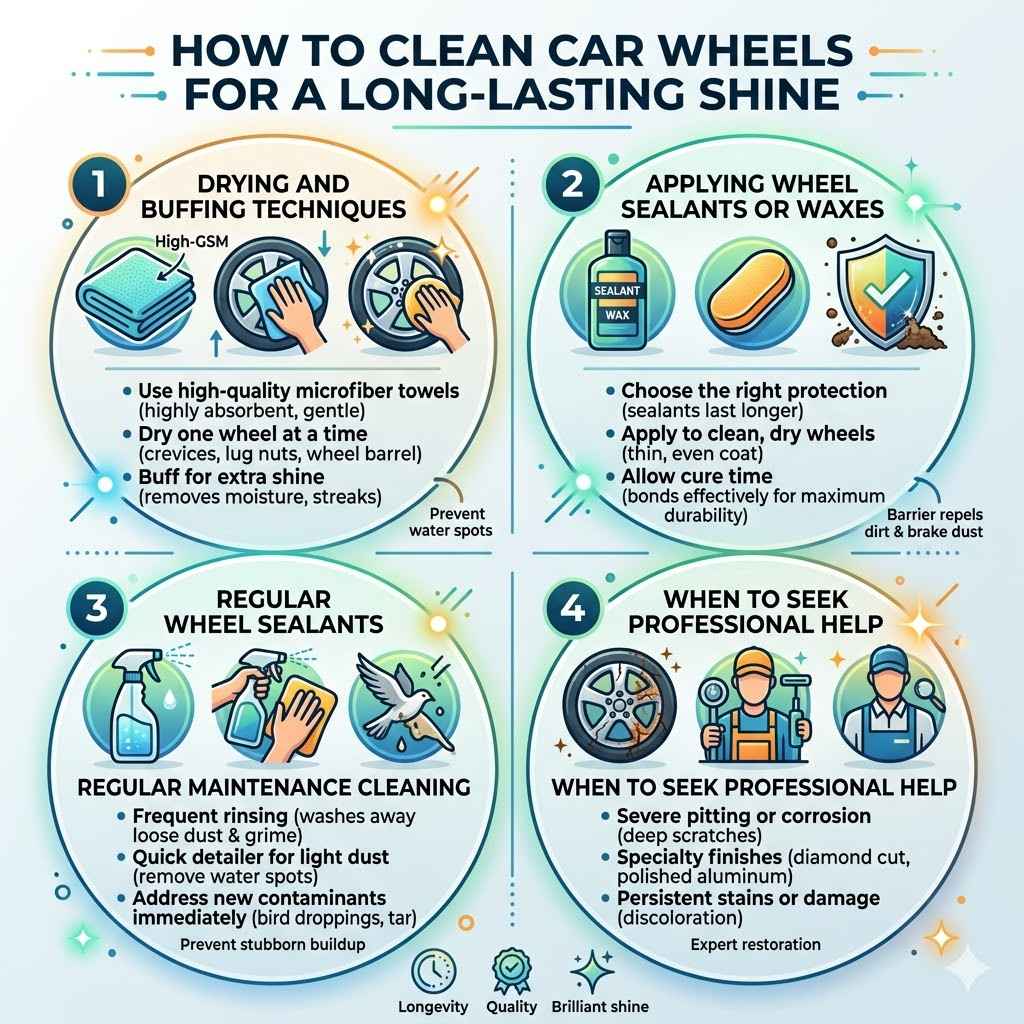
Use High-Quality Microfiber Towels: Invest in plush, high-GSM (grams per square meter) microfiber towels. These are highly absorbent and gentle on surfaces. Have several on hand to ensure you can dry the wheels completely without reusing a damp towel.
Dry in Sections: Dry one wheel at a time immediately after rinsing. Work from the top of the wheel down, ensuring all water is removed from crevices, lug nuts, and the wheel barrel. Don’t let water sit and air dry, as this is what causes water spots.
Buff for Extra Shine: Once dry, use a separate, clean microfiber towel to buff the wheels. This removes any remaining moisture or light streaks, bringing out a brilliant shine. For polished or chrome wheels, this step enhances their reflectivity significantly.
Applying Wheel Sealants or Waxes
Protecting your wheels after cleaning is key to making them easier to clean in the future and preserving their finish. Sealants and waxes create a barrier that repels dirt and brake dust.
Choose the Right Protection: Wheel sealants offer longer-lasting protection than waxes, often lasting several months. Waxes provide a beautiful shine but need more frequent reapplication. For most people, a durable wheel sealant is the best choice for sustained protection.
Apply to Clean, Dry Wheels: Ensure your wheels are perfectly clean and dry before applying any sealant or wax. Any dirt left on the wheel will be sealed in, making it harder to remove later. Apply a thin, even coat using an applicator pad.
Allow Cure Time: Follow the product’s instructions for cure time. Some sealants need to cure for a few hours before being exposed to water or heavy use. Proper curing ensures the protective layer bonds effectively to the wheel surface for maximum durability and protection against the elements.
Regular Maintenance Cleaning
Consistent, light cleaning is the secret to keeping your wheels looking amazing without needing frequent, heavy-duty scrubbing. This prevents the buildup of stubborn dirt and brake dust.
Frequent Rinsing: If your car is exposed to dirt or rain regularly, a quick rinse of the wheels every few days can make a big difference. This washes away loose dust and grime before it has a chance to stick and bake on.
Quick Detailer for Light Dust: A quick detailer spray designed for wheels can be used between washes. Spray it on a microfiber towel and wipe down the wheels. This is perfect for removing light dust and water spots and restoring a bit of shine.
Address New Contaminants Immediately: If you notice something sticky or unusual on your wheels, like bird droppings or tar spots, try to clean them off as soon as possible. Letting these contaminants sit can cause permanent damage to the wheel finish.
When to Seek Professional Help
While most wheel cleaning can be done at home, there are times when professional help is the best option to ensure your wheels are restored to their best without risk of damage.
Severe Pitting or Corrosion: If your wheels have significant pitting, corrosion, or deep scratches that you can’t address with DIY methods, a professional wheel refinisher can help. They have the tools and expertise to repair and restore damaged wheels.
Specialty Finishes: Wheels with highly specialized or delicate finishes, such as diamond cut or polished aluminum with intricate designs, might benefit from professional cleaning. Professionals understand the specific requirements and potential risks associated with these finishes.
Persistent Stains or Damage: If you’ve tried various cleaning methods and the stains, discoloration, or damage persist, it’s time to consult a professional detailer or wheel specialist. They can diagnose the issue and recommend the most effective solution.
Frequently Asked Questions
Question: How often should I clean my car wheels?
Answer: It’s a good idea to clean your car wheels at least once a month. If you drive frequently or in dusty/salty conditions, more frequent cleaning is recommended, perhaps every two weeks.
Question: Can I use dish soap to clean my car wheels?
Answer: While dish soap can remove some dirt, it’s often not strong enough for tough brake dust. It can also be too harsh for some wheel finishes, potentially stripping protective coatings. It’s better to use a dedicated wheel cleaner.
Question: What should I do if my wheels have curb rash?
Answer: Curb rash is damage from hitting a curb. For minor scuffs, you might try a wheel repair kit or light sanding followed by touch-up paint. For significant damage, professional repair is usually necessary.
Question: Are all wheel cleaners safe for all types of wheels?
Answer: No, not all wheel cleaners are safe for every type of wheel finish. Always check the product label to ensure it is safe for your specific wheel material (e.g., alloy, chrome, painted).
Question: How can I make my tires look good too?
Answer: After cleaning your wheels, you can clean your tires with a dedicated tire cleaner and a stiff brush. Then, apply a tire dressing for a clean, black finish or a glossy look, depending on your preference.
Summary
Cleaning your car wheels for a like-new shine is achievable with the right tools and steps. Start by gathering your supplies and preparing your car in a cool, shaded spot. Use appropriate cleaners and brushes for your wheel type, focusing on brake dust and barrel cleaning.
Proper drying and protection with sealants will maintain that shine longer. Regular, light cleaning prevents heavy buildup.