How to Tell If Your Battery Will Die This Winter
Byline: Reviewed for technical accuracy by a veteran automotive technician. Expert note: Winter battery symptoms overlap, so confirm any guess with a load or conductance test before replacing parts.
If your car cranks slowly only in the cold, starts with a jump, or drops below about 12.4 volts after sitting, the battery is likely weak; if charging voltage is under about 13.5 volts or cranking stays slow after a full charge, the alternator or starter is a more likely suspect. Ignore it and you may face a no-start morning when temperatures fall. Use this guide for a fast winter triage, charge, test, or replace.
Quick decision box: charge vs test vs replace now
- Charge now if the battery is simply low from short trips, the car still cranks, and a rest-voltage reading is below about 12.4 volts but the battery is not obviously failing under load. (Interstate Batteries/Clarios guidance on state of charge)
- Test now if the car shows slow crank, clicking, dim lights, or repeated winter starts that feel weaker; symptoms overlap, so confirm with a load or conductance test before deciding. (AAA battery testing guidance)
- Replace now if the battery is near 3 to 5 years old, fails a load test, cannot hold charge after a proper charge, or repeatedly needs a jump. (Interstate Batteries/Clarios; owner-manual style maintenance guidance)
Yes/No checklist
- Does it crank slowly mostly after cold overnight parking? Yes = test battery first.
- Does it click with dim lights? Yes = check battery and connections before blaming the starter.
- Did it start after a jump but fail again the next morning? Yes = split the diagnosis between battery charge retention and alternator recharge failure.
- Is the battery 3 to 5 years old or older? Yes = battery testing matters more.
- Is the battery warning light on or are headlights flickering? Yes = check the charging system.
Winter battery triage table


| Symptom pattern | Likely cause | Next step |
|---|---|---|
| Slow crank only, especially after an overnight cold soak | Weak battery losing cranking power in cold weather | Test battery |
| Clicking plus dim lights or weak dash backlights | Battery may be low, corroded, or poorly connected; starter or cabling can also be involved | Test battery and connections first, then starter if battery passes |
| Starts after a jump but dies again the next morning | Battery cannot hold charge, or the alternator is not recharging it | Split diagnosis: test battery holding charge, then check alternator recharge output |
| Battery is 3 to 5 years old and winter starts are getting slower | Age-related loss of reserve capacity and charge retention | Test battery; replace if it fails or is near end of life |
| Battery light with flickering headlights or changing brightness | Charging-system fault, often alternator, cabling, or a loose terminal | Inspect charging system and alternator output |
What a weak battery feels like
A weak 12V starting battery usually shows up as slower cranking, dimmer lights, or repeated low-voltage behavior after the car has sat. In winter, that same battery has less reserve capacity and less ability to deliver full power, so the first cold start of the morning often exposes the problem. AAA notes that cold weather can reduce available battery power and make marginal batteries fail sooner.
Slow crank and longer start time
Slow cranking is a common warning sign. Weak batteries often make the engine turn over slowly, and cold temperatures make that symptom more obvious. A slight delay is not the same as a dead battery, but repeated slow starts mean you should test before the first hard freeze. Resting voltage can look acceptable while cranking performance still fails under load, which is why battery testing matters. (AAA; Clarios/Interstate guidance)
Suppose the engine turns over normally after a 20-minute drive, then sounds sluggish the next morning. That pattern points to a battery losing charge retention or reserve capacity overnight, not a one-time fuel problem. If the crank gets slower over several days, move from suspicion to testing.
Dim headlights or weak accessories
Dim headlights, dome lights, and dashboard backlights can point to battery trouble. Weak power can also show up in windows moving slower than usual, a radio that resets, or a heater fan that sags at idle. Winter accessory use makes that easier to spot because lights, heaters, wipers, and washers all load the battery.
Repeated low-voltage behavior after sitting
If the car starts, sits overnight, and then acts weak again the next morning, treat that as repeated failure, not a random cold-start hiccup. A jump-start may get the engine running, but it is only a temporary restart. If the issue returns, the battery or charging system needs diagnosis.
Why cold weather exposes weak batteries
Cold weather reduces the battery electrolyte’s ability to move full power, so the battery has less strength when the starter asks for a high burst of current. AAA and battery manufacturers note that cold weather slows the chemical reaction inside the battery and increases engine oil drag, which together make winter starts harder. Extremely low temperatures are needed to actually freeze a car battery, but you do not need freezing conditions to feel the loss in cranking performance.
Cold Cranking Amps and winter starts
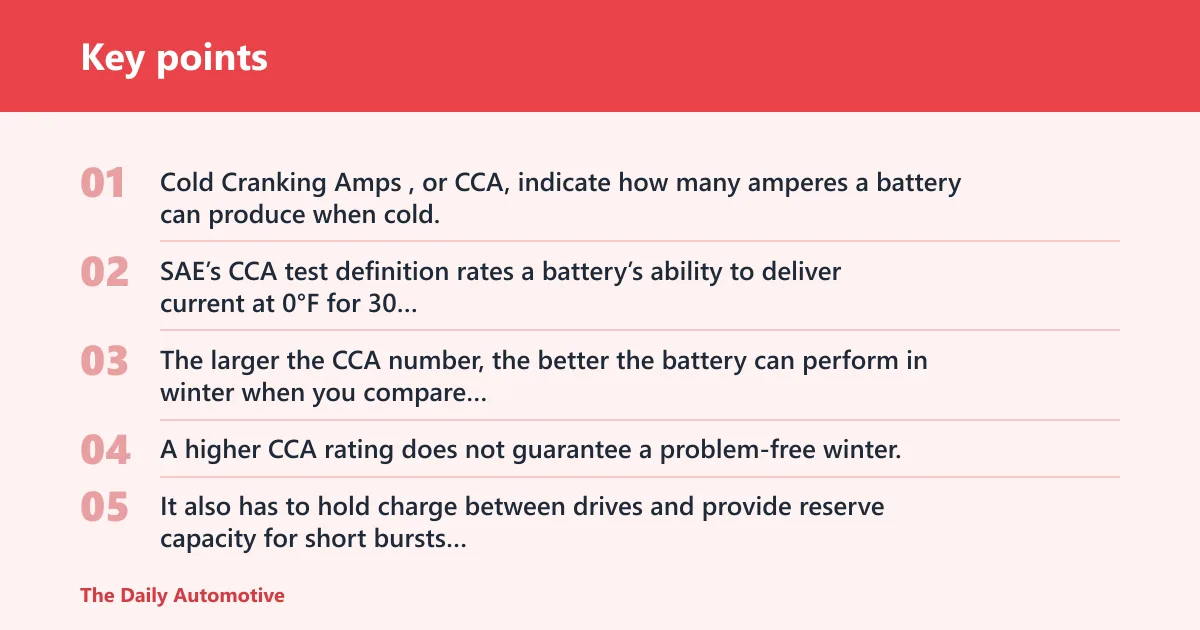
Cold Cranking Amps, or CCA, indicate how many amperes a battery can produce when cold. SAE’s CCA test definition rates a battery’s ability to deliver current at 0°F for 30 seconds while maintaining usable voltage, which is why CCA is the winter number to compare. The larger the CCA number, the better the battery can perform in winter when you compare batteries of the same type. A higher CCA rating does not guarantee a problem-free winter, but it matters when you are comparing replacement choices.
Reserve capacity and overnight cold soak
A battery does more than start the engine. It also has to hold charge between drives and provide reserve capacity for short bursts of electrical demand. After an overnight cold soak, the battery’s usable output can drop enough to expose wear that was easy to miss in mild weather.
Short trips and winter electrical loads
Short trips are hard on a starting battery because the alternator gets less time to refill what the starter used. Add winter electrical loads such as lights, heaters, wipers, washers, radio use, windows, and seat heaters, and a tired battery can fall behind fast. City drivers and low-mileage drivers feel that more often than highway commuters.
A common mistake is assuming a battery is fine because the car started after a 10-minute errand. That same battery may fail after two cold starts in a row, especially if the commute is short and the heater, defroster, and lights are all on.
Is your battery old enough to fail?
Car batteries are designed to last between 3 and 5 years, so age matters even before a battery gives up completely. AAA and battery makers commonly treat that range as the point where failure risk rises, especially in cold weather and in vehicles driven short distances. A battery in that range is not automatically bad, but it is in a common replacement range and may be more likely to fail in winter. Age plus winter symptoms deserves a test, not a guess.
Low-mileage and short-trip drivers
Low-mileage and short-trip driving can age a battery faster in practical terms because it never gets fully recharged between starts. A battery that would survive a longer highway commute may weaken sooner in a vehicle used for errands, school runs, or store trips. If that car is also parked outside, winter risk goes up again.
City use versus longer highway runs
City use exposes a battery to more starts, more idling, and less recovery time. Longer highway runs help the alternator restore charge, which can hide a marginal battery for a while. That is why two cars with the same battery age can behave very differently once cold weather arrives.
Could it be the starter or alternator?
Yes. A weak battery is common, but it is not the only reason a car will not start. Clicking can point to low battery power, yet a starter motor fault can create the same sound. Dim lights or flickering lights can point to an alternator or charging-system problem, not only a bad battery. Because symptoms overlap, confirm with a load or conductance test before replacing parts.
Clicking and starter motor clues
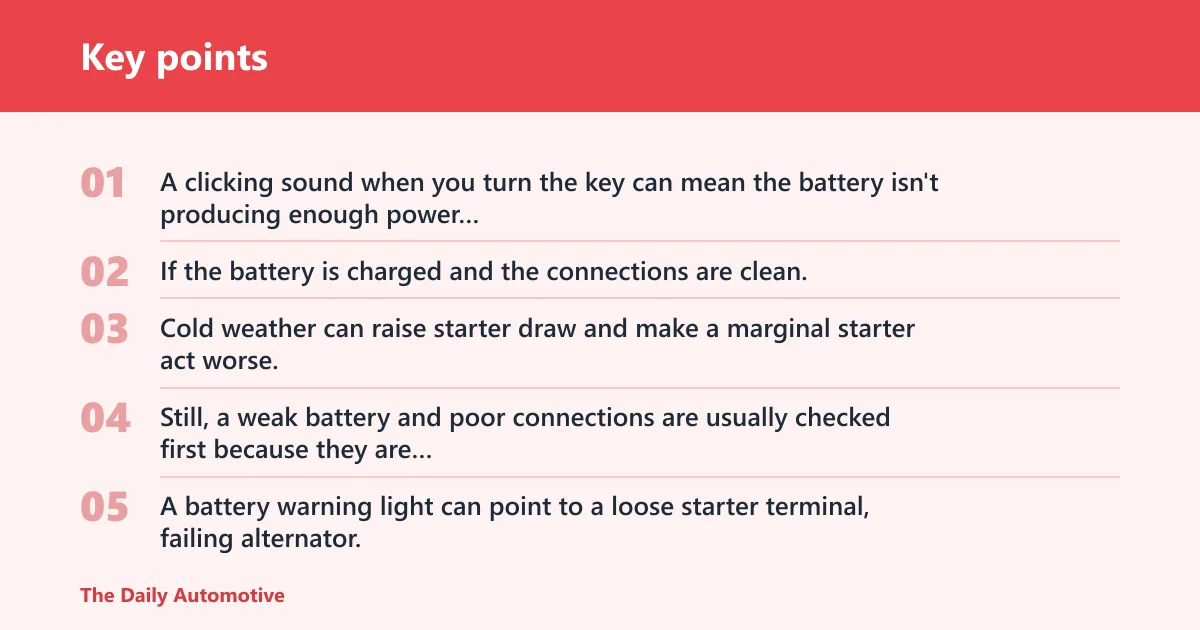
A clicking sound when you turn the key can mean the battery isn’t producing enough power to crank the engine. If the battery is charged and the connections are clean, but the engine still only clicks or cranks very slowly, the starter motor or its connections deserve attention. Cold weather can raise starter draw and make a marginal starter act worse. Still, a weak battery and poor connections are usually checked first because they are more common and easier to verify.
Battery light and charging-system clues
A battery warning light can point to a loose starter terminal, failing alternator, or damaged cabling. A battery light on the dashboard can mean the car’s electrical system isn’t working correctly. Do not treat that light as a battery-only message. It needs further diagnosis. Typical charging voltage with the engine running is often around 13.5 to 14.8 volts depending on the vehicle and temperature, but always confirm against owner-manual guidance and charging-system specs. (Owner manual guidance; Clarios/Interstate battery charging references)
Flickering headlights, a battery lamp, and repeated dead starts after driving are a stronger charging-system clue than a simple slow crank after one cold night.
Why a jump-start may not solve it
If the car starts after a jump but dies again after sitting overnight, the battery may no longer hold a useful charge. If it restarts but the battery light stays on, the alternator may not be recharging the system correctly. Either way, repeated failure means you need a real diagnosis, not another jump.
Five-minute prewinter check
This quick inspection can be done before the first deep cold snap. It will not replace a full battery load test, but it can tell you whether to test, inspect, or replace before the weather turns. Follow the vehicle and product manual.
- Check the battery age label. If it is 3 to 5 years old, treat it as winter-risky.
- Inspect the terminals for corrosion, looseness, or damaged cabling.
- Look for dim or flickering lights at idle and during startup.
- Note any slow crank, especially after the car has sat overnight.
- Think about winter accessory use: lights, wipers, heater fan, windows, and seat heaters all add load.
If you see corrosion or a loose connection, clean-up and tightening should follow the battery maker and vehicle manual. Jump-starting and battery work should follow the manual’s connection order.
Say your compact sedan is four years old, parks outside, and needs two extra seconds to fire on the first cold morning. That combination is enough to move from “watch it” to “test it,” because age, overnight cold soak, and slow crank are all in the risk pattern.
When should you test or replace it?
Test the battery if the symptoms are mild, inconsistent, or limited to cold starts. Replace it if it fails after a jump, is near the 3 to 5 year window, or cannot hold a charge after being fully charged. Book a charging-system check if the battery light stays on or the lights flicker. In practice, a battery should be tested under load or with conductance equipment before replacement is finalized.
Test if symptoms are mild or inconsistent
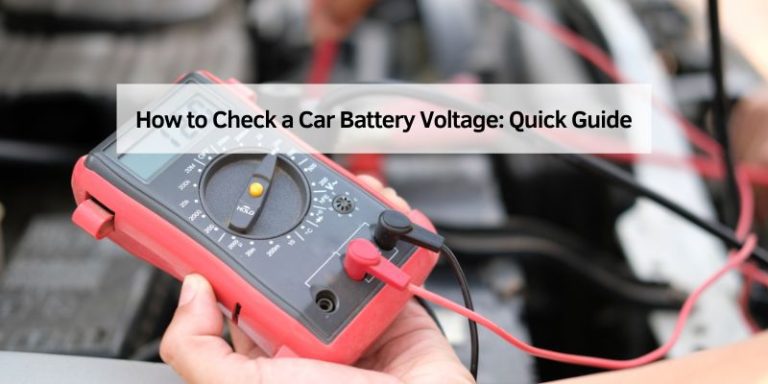
A car battery check can include charging and cranking capability. That matters because a battery can show enough voltage at rest and still fail under load. If the symptom appears only on the coldest mornings or only after short trips, a test gives you a clearer answer than guesswork. A resting reading near 12.6 volts is commonly considered fully charged, while readings around 12.4 volts or lower suggest partial discharge. (Interstate Batteries/Clarios; owner-manual style guidance)
Replace if it fails after a jump or is near end of life
Repeated failure after a jump-start is one of the clearest signs that replacement may be near. If the battery is already in the 3 to 5 year range and winter symptoms are growing, replacing it before the coldest stretch is often the safer call than waiting for a no-start morning. A good battery should also recover reasonable voltage after charging; if it will not, replacement is usually justified.
Book a charging-system check if the battery light stays
If the battery warning light stays on, the problem may be alternator-related rather than battery-related. Flickering lights, a lamp that stays lit, or repeated dead batteries after driving all point toward a charging-system check. A fresh battery will not fix a bad alternator.
Frequently asked questions
How to tell car battery is dying
A dying battery often shows slow crank, weaker lights, and trouble starting after the car has sat overnight. These symptoms usually get worse in cold weather because the battery loses some cranking performance. If the battery is 3 to 5 years old, treat those signs as a warning, not a coincidence.
Why does my car struggle to start in cold weather?
Cold weather reduces the battery electrolyte’s ability to move full power, and the starter and engine have to work harder. Winter loads such as lights, heaters, and wipers add more strain. If the battery is aging or has low CCA for the vehicle, cold starts become slower and less reliable. That is why batteries that seem fine in mild weather can struggle after an overnight freeze. (AAA; SAE CCA definition; battery maker guidance)
Products related to this article
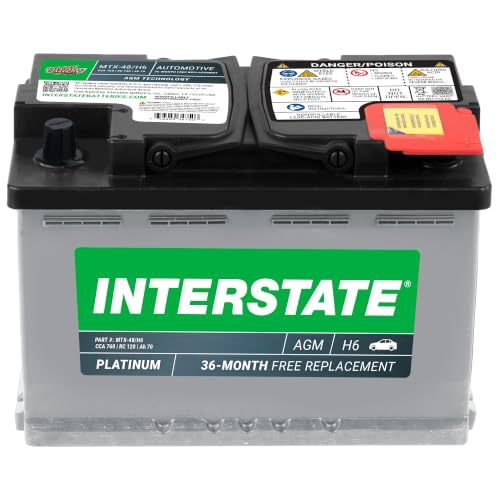
Sponsored / affiliate links. As an Amazon Associate I earn from qualifying purchases. I may earn additional commission from eligible campaigns.