Can You Drive with Frozen Coolant?
No, if the coolant is frozen solid, do not start the engine. Wait until it thaws, and tow it if the engine has already overheated or the coolant level is unknown. Forcing a frozen cooling system can crack the radiator, hose, water pump, or engine block, turning a cold-weather problem into a repair bill that runs from hundreds to thousands. This guide explains when you can safely wait, when you should leave the car off, and when towing is the only sensible move.
This guide is part of our Winter Car Care: The Complete Cold-Weather Guide series.
What frozen coolant means
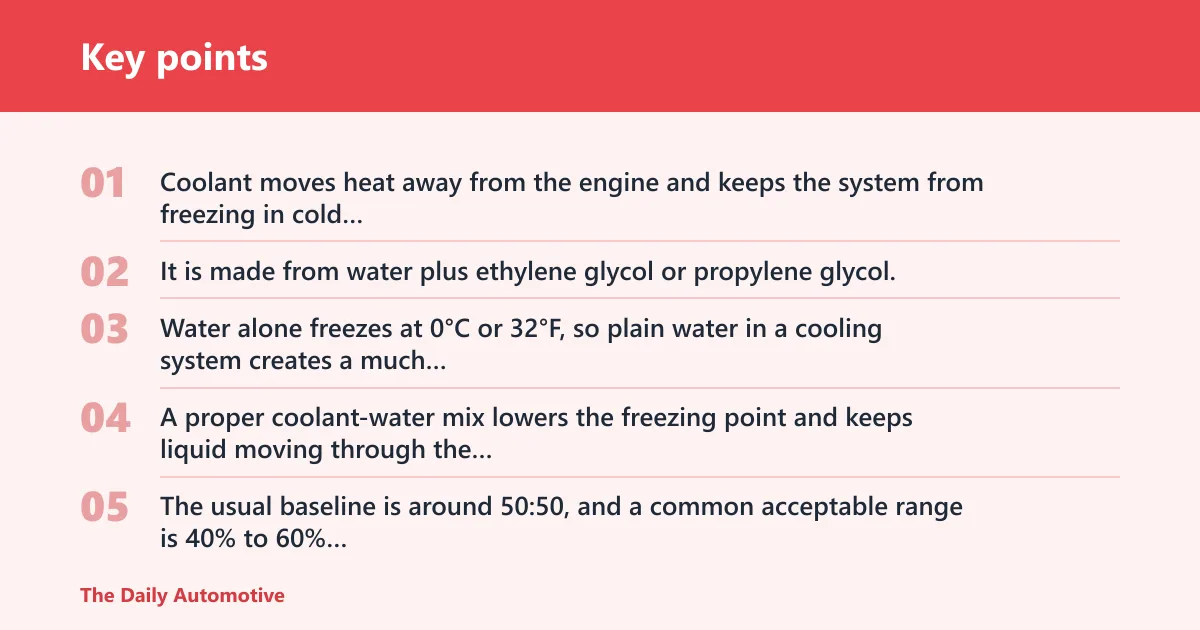
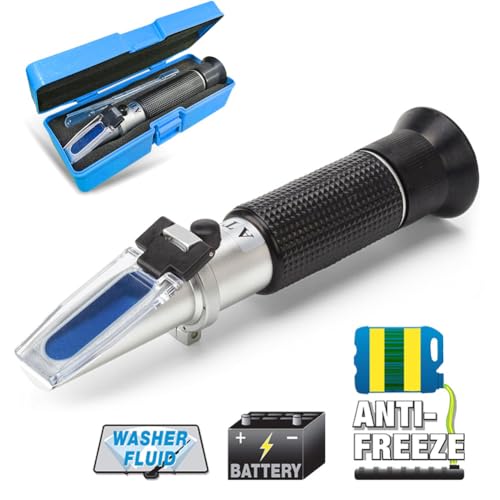
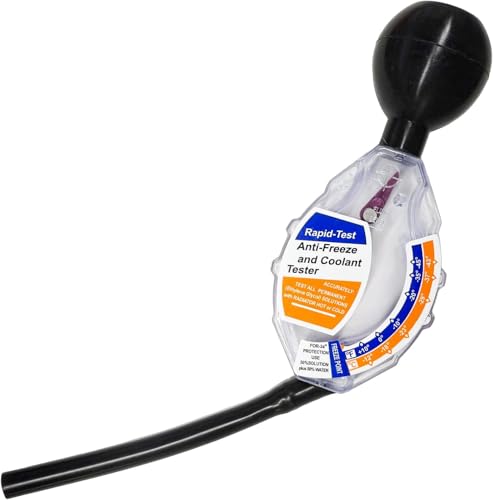
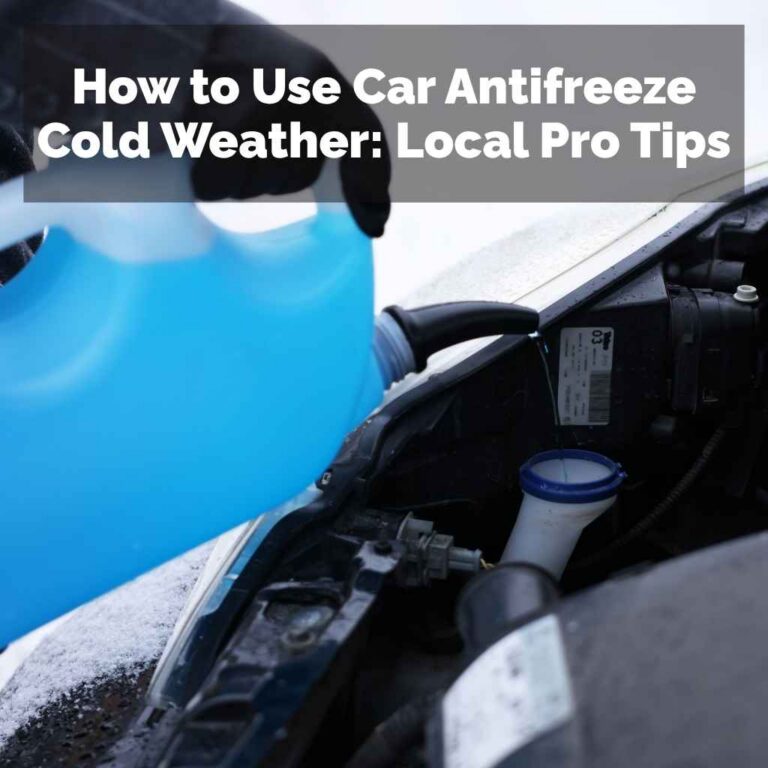
Coolant moves heat away from the engine and keeps the system from freezing in cold weather. It is made from water plus ethylene glycol or propylene glycol, and it must match the vehicle specification. Water alone freezes at 0°C or 32°F, so plain water in a cooling system creates a much higher freeze risk.
A proper coolant-water mix lowers the freezing point and keeps liquid moving through the system. The usual baseline is around 50:50, and a common acceptable range is 40% to 60% antifreeze if the vehicle manual allows it. That mix matters because a cooling system has to protect against both winter freeze-up and hot-running conditions.
Why the mix matters
Low antifreeze concentration makes freezing more likely. Too much antifreeze is not a fix for every vehicle, either, because the system still needs the right ratio and the right coolant chemistry. Use the coolant type listed for your vehicle, not a random universal jug.
Can you drive with frozen coolant?
Only in the narrowest sense: you can sometimes wait for a partially frozen system to thaw if the engine is off, the gauge is normal, and there are no signs of overheating or leakage. If the coolant is frozen solid, the engine should stay off. If the gauge starts climbing, steam appears, or cabin heat disappears, stop and arrange towing.
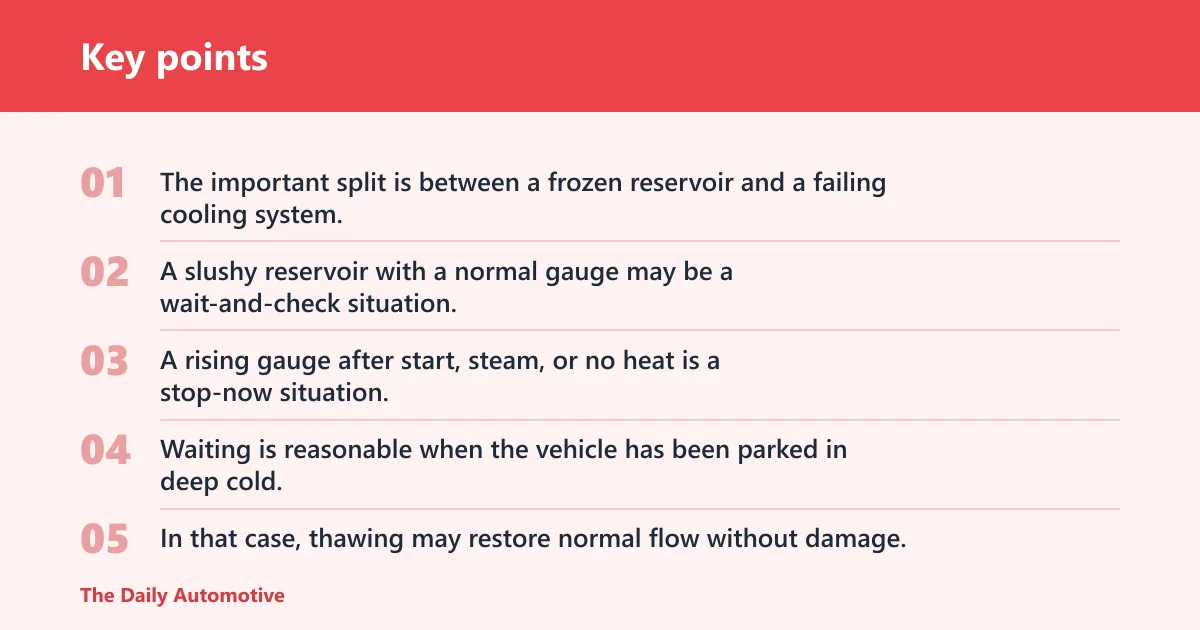
The important split is between a frozen reservoir and a failing cooling system. A slushy reservoir with a normal gauge may be a wait-and-check situation. A rising gauge after start, steam, or no heat is a stop-now situation.
When waiting for thawing is reasonable
Waiting is reasonable when the vehicle has been parked in deep cold, the reservoir shows slush, and the engine has not been run long enough to show heat or gauge trouble. In that case, thawing may restore normal flow without damage. Do not open the radiator cap.
When you should not start the engine
Do not start the engine if coolant is frozen solid and you already know the system is compromised, such as a reservoir that is fully frozen, empty, or accompanied by steam or overheating. Starting a cold engine against blocked coolant flow can create hot spots fast.
When towing is the safer call
Towing is the safer call when the coolant reservoir is empty, steam appears, the temperature gauge rises after start, or the driver has no way to confirm what froze. Roadside assistance is often cheaper than a cracked radiator or engine repair.
Coolant freeze warning signs
Look at the reservoir, the temperature gauge, the heater, and the exhaust area together. One clue alone can mislead. A frozen reservoir with a steady gauge is not the same as a frozen reservoir with rising temperature and no cabin heat.
Slush in the reservoir
A translucent reservoir with slush or visible ice is a warning that the coolant is near or below its freeze limit. Check only when the engine is cool. The level should normally sit between the MIN and MAX marks.
Normal gauge versus rising gauge
A normal gauge after a cold start does not prove the system is fine, but it is less urgent than a gauge moving toward hot. A rising gauge means the engine is not shedding heat properly. That is the clue that turns this from a wait-and-watch issue into a stop-immediately issue.
Weak heat and poor defrost
Weak heater output or cold cabin air can signal cooling-system trouble. In winter, that also reduces defrost performance, which affects visibility. If the vents stay cool while the gauge rises, do not keep driving farther.
Steam, leaks, and unusual smells
Steam from under the hood, a sweet odor, or visible leaking points to coolant loss. That can come from a hose, radiator, cap, or another failed part. A hot radiator cap should never be opened.
Winter coolant triage table
| Scenario | What it usually means | What to do next | Risk level | Tow, wait, or stop? |
|---|---|---|---|---|
| Slush in reservoir | Coolant may be starting to freeze, but the system may still thaw normally if the engine has stayed off | Leave the car off, check again after ambient thawing, and do not open the radiator cap | Moderate | Wait |
| Frozen reservoir but normal gauge | The reservoir may be frozen while the rest of the system is still circulating enough to avoid immediate overheating | Do not assume it is safe to drive far; monitor the gauge, heat, and any steam before moving | Moderate to high | Wait or tow if uncertain |
| Rising gauge after start | Coolant flow may be blocked or restricted, and the engine may be heating faster than the system can control | Shut the engine off right away and arrange roadside assistance | High | Stop immediately |
| Steam with no cabin heat | Coolant loss or severe flow failure may already be happening | Pull over safely, shut down, and do not continue driving | High | Tow |
For example, if a compact sedan sits overnight in very cold weather and the reservoir looks slushy at sunrise, but the gauge stays low after a short idle. That is a “wait, do not drive yet” case. Now change only one thing: if the gauge starts climbing within a few minutes, it becomes a “stop immediately” case.
Should you start the car?
If frozen coolant may be causing the issue, starting the car is only reasonable when there are no signs of overheating and the engine is being run only briefly to check whether the gauge stays normal. If the gauge rises, the heater stays cold, or steam appears, shut it down. The first few minutes are the most important.
That early window is when a blocked or partially blocked cooling system can go from harmless to damaging. A cold start can seem fine for a minute, then the temperature climbs quickly because frozen coolant cannot move heat away from the engine. Do not “see what happens” by driving farther.
What can happen in the first 5 to 10 minutes?
If flow is restricted, hot spots can form in the engine, even while part of the system stays cold. Hose pressure can rise. The radiator may not get enough circulation. A water pump can also be stressed if it is pushing against blocked coolant.
When to shut it down immediately
Shut it down the moment the gauge climbs toward hot, steam appears, or the heater output drops to cold while the engine is warming. Those are failure signals, not normal winter quirks.
What happens if coolant freezes?
Frozen coolant can block flow through the radiator, hoses, heater core, and passages in the engine. That restriction can keep heat trapped in the block and create overheating. In bad cases, pressure and ice expansion can damage hoses, the radiator, the water pump, or the engine itself.
Blocked flow and hot spots
Coolant that cannot move cannot carry heat away. That creates localized hot spots, which are more dangerous than a simple cold start. A temperature gauge may climb even while some parts of the system still feel cold to the touch after shutdown.
Hose, radiator, and water pump stress
Ice can stress rubber hoses and plastic tanks, and frozen passages can overload the pump. A partially frozen system is especially risky because the engine may run long enough to build heat while the flow path remains restricted.
How engine damage can happen
Continued driving after overheating can warp parts, crack components, or push the system into a failure cycle. That is why a frozen coolant problem should be treated as triage, not as a winter inconvenience.
How to check coolant safely
Check the coolant reservoir only when the engine is cool. Read the MIN and MAX marks on the translucent tank. Do not open the radiator cap when hot, because the system is pressurized and can spray scalding coolant.
- Park on level ground and shut the engine off.
- Let the engine cool fully before touching the coolant system.
- Look at the reservoir through the sidewall for slush, ice, or a low level.
- Check that the level sits between the MIN and MAX marks.
- Look for leaks, steam, or a sweet smell near the front of the car.
- Confirm the coolant type and specification in the vehicle manual before topping off.
Do not use the reservoir reading alone to decide the whole story if the temperature gauge is rising or the heater is failing. Those signs matter more than a single static level reading.
How to prevent freezing
Prevention starts with the right coolant type and the right mix. The standard baseline is 50:50 antifreeze and water, and many vehicles allow a 40% to 60% antifreeze range. Use the coolant type the vehicle specifies.
Check for low coolant or leaks before winter sets in. Drive Quip notes that low coolant can cause overheating and freezing of the cooling system, and a level below minimum can lead to engine overheating. That means winter prep is not only about freeze protection, but also about keeping enough fluid for heat transfer.
Seasonal maintenance habits
Before cold weather, inspect the reservoir level, check hoses for cracks, and confirm that the coolant is the correct type for the vehicle. Keep up with routine service intervals, and fix leaks before temperatures drop.
Picture a crossover with a reservoir just below the MIN mark in November. It may still drive normally on a mild day, but that low level leaves less margin for freezing and overheating once the temperature drops hard overnight.
Frequently asked questions
How do I know if my coolant is frozen?
Look for slush or ice in the reservoir when the engine is cool, then watch the gauge, heater output, and hood area after a short start. A frozen reservoir with a normal gauge is generally less urgent than a rising gauge, steam, or no cabin heat.
Can a frozen coolant system damage the engine?
Yes. If frozen coolant prevents coolant from circulating, the engine can overheat while heat remains trapped in the block. That can damage hoses, the radiator, the water pump, and engine internals. The risk rises quickly if you keep driving after the gauge starts climbing.
Should I start the car if I think the coolant is frozen?
Do not start it if the coolant is frozen solid or if you already see steam, an empty reservoir, or obvious overheating. If the reservoir is only slushy and the gauge has stayed normal, a brief idle check may be reasonable, but only with close monitoring.
What coolant mix helps prevent freezing?
A 50:50 antifreeze-water mix is the standard baseline, and a common acceptable range is 40% to 60% antifreeze if the vehicle manual allows it. Use the coolant type specified for the vehicle, because not all coolants are interchangeable.
Products related to this article
Sponsored / affiliate links. As an Amazon Associate I earn from qualifying purchases. I may earn additional commission from eligible campaigns.