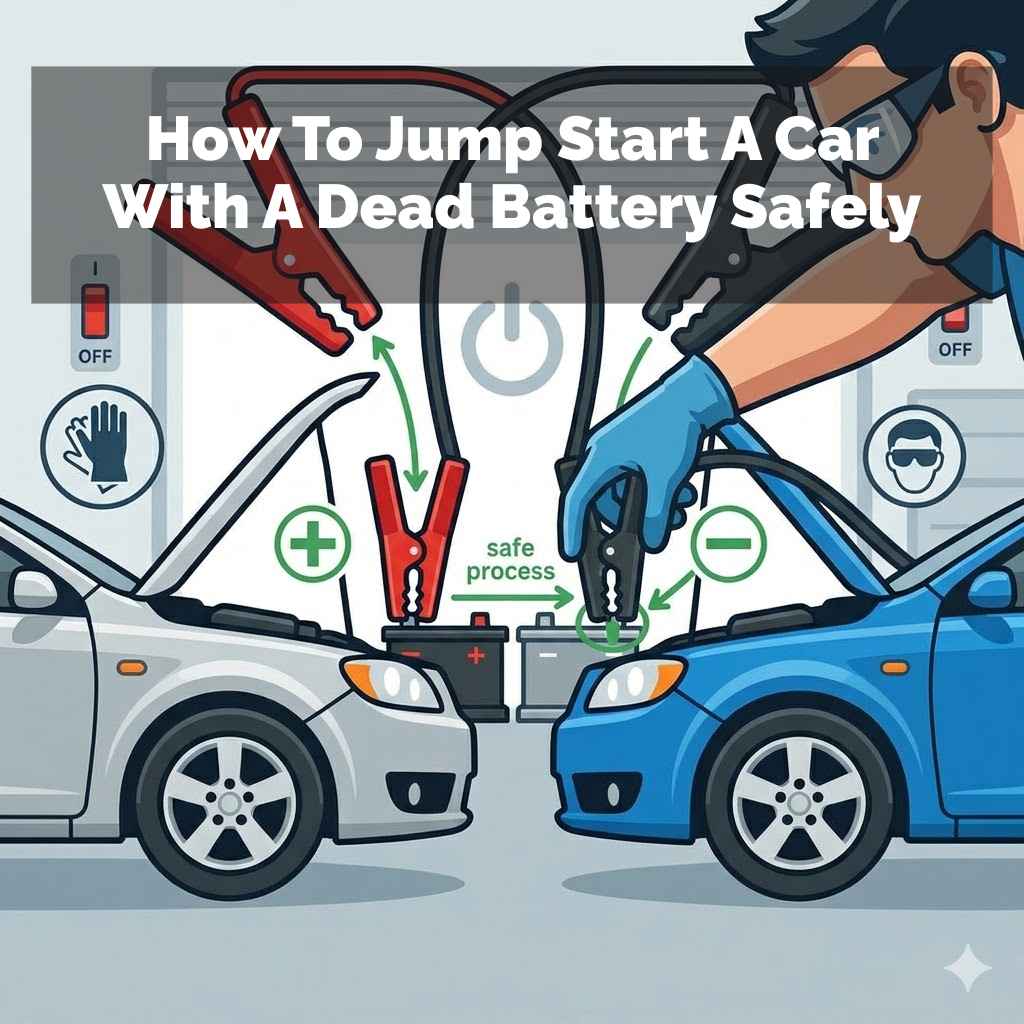
How To Jump Start A Car With A Dead Battery Safely
It’s a common problem. You turn the key, and all you hear is a click. Or worse, nothing.
Your car battery is dead. This can happen to anyone, at any time. It’s frustrating, especially when you’re in a hurry.
But don’t panic! Knowing how to jump start a car is a useful skill. It can get you back on the road quickly.
This guide will show you how to do it safely and correctly. We’ll cover what you need and the exact steps. You’ll also learn what to avoid.
Let’s get your car running again.
A dead car battery means your car won’t start. You can jump-start it using another car’s battery and jumper cables. This process requires careful steps to avoid damage or injury. It’s a temporary fix to get your car moving again. Proper battery maintenance, including checking for a loose battery terminal, can help prevent future dead batteries.
Understanding Your Car’s Battery
Your car’s battery is a small but mighty part. It stores electricity. This power is needed to start your engine.
It also runs your car’s lights, radio, and other electronics. Batteries have a limited lifespan. Over time, they lose their ability to hold a charge.
Factors like extreme temperatures, age, and short trips can weaken them.
A dead battery often makes a clicking sound when you try to start. Sometimes, there’s no sound at all. The dashboard lights might be dim or not come on.
Knowing these signs helps you spot a weak battery before it dies completely. Cars use a 12-volt lead-acid battery. This battery has two terminals: positive and negative.
The positive terminal is usually marked with a plus sign (+). The negative terminal has a minus sign (-).
Most batteries last about 3 to 5 years. However, this can change based on driving habits and climate. For example, very hot weather can shorten a battery’s life.
Cold weather can also make a weak battery fail. This is because it’s harder for the engine to turn over in the cold. The battery also loses some of its power in freezing temperatures.
What You Need to Jump Start a Car
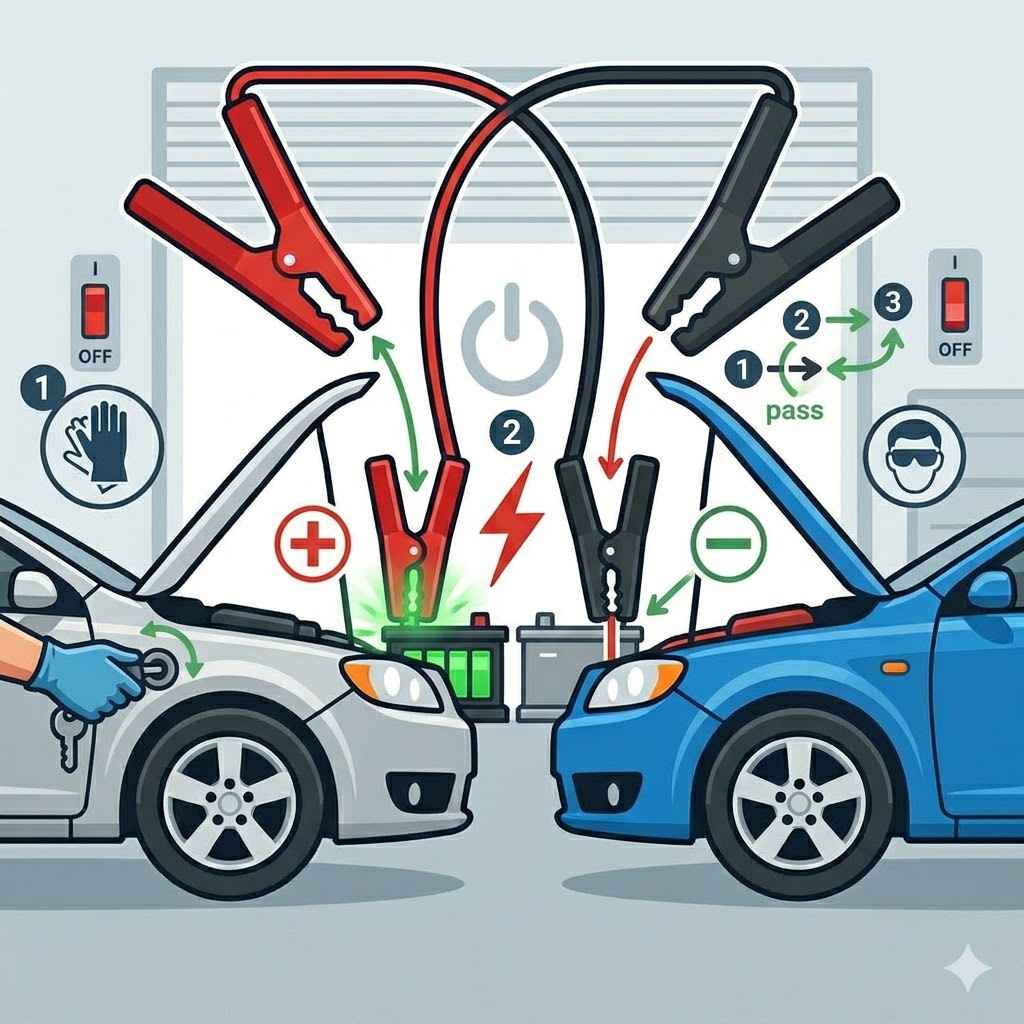
Before you can jump start a car, you need a few things. The most important is a set of jumper cables. These are thick, insulated wires.
They have clamps on each end. You’ll also need a working car to help. This car is called the “donor” car.
Make sure its battery is healthy and has the same voltage as yours (usually 12 volts).
It’s also good to have some basic safety gear. Gloves can protect your hands from dirt and grease. Safety glasses are a smart idea.
Batteries can sometimes leak acid. This acid can harm your eyes or skin. Make sure the donor car is parked close enough.
The cars should not touch each other. This is very important for safety.
If you don’t have jumper cables, you can buy them at auto parts stores or online. They come in different lengths and thicknesses. Thicker cables are generally better.
They allow more electricity to flow. Look for cables that are at least 12 feet long. This gives you enough room to position the cars correctly.
Always check the clamps to ensure they are clean and free of corrosion.
The Step-by-Step Guide to Jump Starting
Jump starting a car involves connecting the batteries of two cars. You use jumper cables for this. Follow these steps carefully.
Safety is the top priority. Mishandling the cables can cause sparks or electric shock. It can also damage the car’s electrical systems.
First, park the working car. Position it close to your car. Make sure the front of one car is near the front of the other.
Or, position them so the batteries can reach with the cables. Turn off both cars. Engage the parking brakes on both vehicles.
This prevents them from rolling.
Open the hoods of both cars. Locate the batteries. You might need to remove a plastic cover.
Identify the positive (+) and negative (-) terminals on each battery. Clean the terminals if they look dirty or corroded. A wire brush works well for this.
Remove any debris from around the batteries.
Connecting the Jumper Cables
This is the most critical part. Connect the cables in the correct order. This order prevents dangerous sparks.
Sparks can ignite battery gases. These gases are flammable.
Step 1: Connect Red to Dead. Attach one red clamp to the positive (+) terminal of your dead battery. Make sure it has a good connection.
Step 2: Connect Red to Good. Attach the other red clamp to the positive (+) terminal of the good battery in the donor car. Again, ensure a firm grip.
Step 3: Connect Black to Good. Attach one black clamp to the negative (-) terminal of the good battery in the donor car.
Step 4: Connect Black to Ground. Attach the other black clamp to an unpainted metal surface on the engine block of your car. This is called a ground point. Do NOT connect it to the negative terminal of your dead battery.
This is a safety measure to prevent sparks near the battery.
A good ground point could be a bolt on the engine. Or a sturdy metal bracket. Avoid any moving parts.
Ensure the clamp is secure. It should not touch any wires or fuel lines.
Starting the Cars
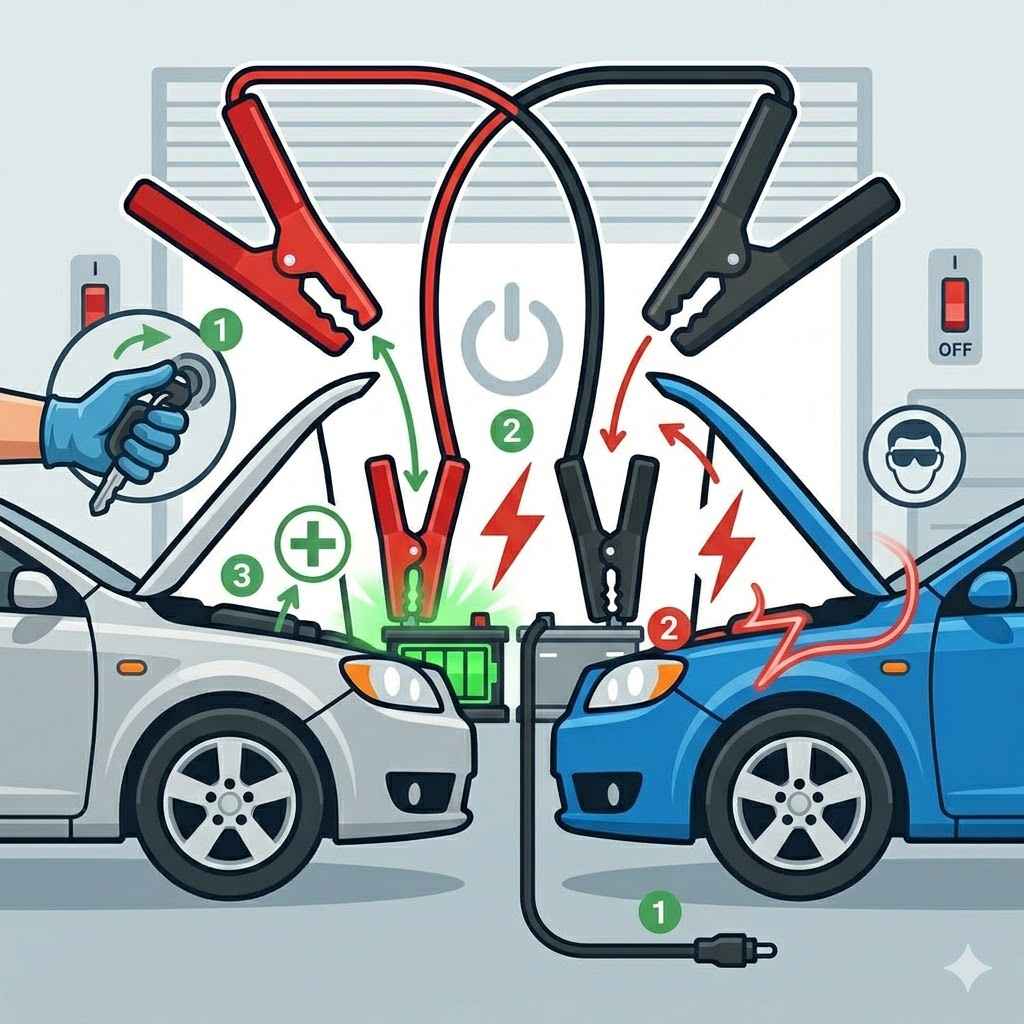
Once the cables are connected, start the donor car. Let it run for a few minutes. This allows its battery to send some power to yours.
You might see the dashboard lights in your car come on faintly.
After a few minutes, try to start your car. Turn the key as you normally would. If your car starts, great!
If not, wait another minute or two with the donor car running. Then try again. Don’t crank the engine for too long at once.
This can overheat the starter motor.
If your car starts, fantastic! Leave both cars running. This is important.
You need to let your battery charge a bit from the running engine. Now, you need to disconnect the cables. This must also be done in a specific order.
This prevents sparks.
Disconnecting the Jumper Cables
Disconnect the cables in the reverse order you connected them.
Step 1: Remove Black from Ground. Take off the black clamp from the unpainted metal ground point on your car.
Step 2: Remove Black from Good. Remove the black clamp from the negative (-) terminal of the donor car.
Step 3: Remove Red from Good. Take off the red clamp from the positive (+) terminal of the donor car.
Step 4: Remove Red from Dead. Finally, remove the red clamp from the positive (+) terminal of your car’s battery.
Be careful not to let the clamps touch each other or any metal parts of the cars as you disconnect them. Once all cables are removed, close the hoods. Your car should now be running on its own power.
After the Jump Start: What Next?
Your car started! That’s a relief. But the job isn’t entirely done.
A dead battery often means something is wrong. You need to address the root cause. Simply jump-starting is usually a temporary fix.
Drive your car for at least 20-30 minutes. A good drive helps recharge the battery. Highway driving is better than stop-and-go city traffic.
This ensures the alternator can work effectively. The alternator is what recharges your battery while the engine runs.
If your battery dies again soon, it’s likely a sign of a bad battery. It could also be a problem with your car’s charging system. This includes the alternator.
An alternator that isn’t working correctly won’t recharge the battery.
It’s wise to have your battery and charging system checked. Most auto parts stores offer this service for free. They can test your battery’s health and your alternator’s output.
This will tell you if you need a new battery or if there’s another issue.
Common Mistakes to Avoid
Many people make mistakes when jump-starting a car. These errors can be dangerous. They can also damage your car.
Being aware of these common pitfalls can help you avoid them.
Common Jump Start Mistakes
- Connecting cables in the wrong order: This can cause sparks and damage. Always follow the red-to-positive, black-to-ground sequence.
- Touching clamps together: Metal clamps touching can create a short circuit. This can be dangerous.
- Connecting directly to the dead battery’s negative terminal: This is a major spark risk. Always use a metal ground point on the engine block.
- Not letting the donor car run long enough: The donor car’s engine needs time to charge your dead battery a bit.
- Touching the cars together: The vehicles should never touch. This can cause a short circuit.
- Smoking or open flames nearby: Batteries release flammable hydrogen gas. Sparks can ignite this gas.
Another mistake is using cables that are too thin or too short. These can overheat. They might not transfer enough power.
Always inspect your jumper cables before use. Ensure they are in good condition. Look for any cracks in the insulation.
Some people also try to jump-start a battery that is frozen or leaking. Never do this. A frozen battery can explode.
A leaking battery contains corrosive acid. If you suspect either of these, call a tow truck instead.
Battery Maintenance Tips
Preventing a dead battery is easier than fixing one. Regular maintenance can extend your battery’s life. It can also ensure your car starts every time.
Battery Care Quick Guide
- Keep terminals clean: Corrosion on the terminals can prevent a good electrical connection. Clean them with a wire brush if you see white or blue powdery buildup.
- Check battery fluid levels: Some batteries are “maintenance-free.” Others have caps you can remove to check the fluid. If the plates aren’t covered, add distilled water.
- Secure the battery: Make sure the battery is held firmly in its place. A loose battery can be damaged by vibrations.
- Avoid short trips: Frequent short trips don’t give the alternator enough time to fully recharge the battery.
- Protect from extreme temperatures: Extreme heat and cold stress the battery. Park in a garage when possible.
- Test regularly: Have your battery tested annually, especially before winter.
If you live in an area with extreme weather, pay extra attention to your battery. Cold weather can significantly reduce a battery’s cranking power. Heat can accelerate the chemical reactions inside the battery, leading to faster degradation.
Consider using a battery tender or trickle charger if your car sits for long periods. This device keeps the battery charged. It prevents it from losing its power over time.
This is especially useful for classic cars or vehicles used only seasonally.
When a Jump Start Isn’t Enough
Sometimes, even a jump start won’t get your car going. This usually means the problem is more serious than a simple dead battery. As mentioned, it could be a faulty alternator.
The alternator is responsible for recharging the battery as you drive. If it’s not working, the battery will eventually die.
Other issues could be the starter motor. The starter motor is what actually cranks the engine to get it turning. If the starter is bad, the engine won’t turn over, even with a charged battery.
A clogged fuel filter or ignition system problem could also prevent the car from starting.
Signs Your Battery Might Be Beyond a Jump Start
- Multiple failed attempts: If trying to jump start multiple times doesn’t work.
- Damaged battery: Swollen case, cracks, or leaks.
- Battery is very old: If the battery is over 5 years old, it might be time for replacement.
- Car makes no noise: If you get absolutely nothing when turning the key, even after a jump.
- Electrical system issues: Dimming lights, strange noises, or warning lights on the dashboard might indicate a deeper problem.
In these situations, it’s best to call for professional help. A mechanic or roadside assistance service can diagnose the exact problem. They have the tools and expertise to fix it.
Trying to force a start when the issue is more complex can cause further damage.
Understanding Battery Age and Replacement
Car batteries don’t last forever. Most last between 3 to 5 years. If your battery is older than this, it’s living on borrowed time.
Even if it seems to be working fine, it might be weaker than you think.
When you need to
Replacing a battery yourself is possible. But it can be a bit messy. You’ll need to unhook the old one and hook up the new one.
Remember to disconnect the negative terminal first and connect it last. This is the reverse of jump-starting.
Proper disposal of old batteries is important. Car batteries contain lead and acid, which are hazardous. Most auto parts stores will take your old battery when you buy a new one.
They handle the recycling process correctly.
When is a Dead Battery Normal?
There are times when a dead battery is just a common occurrence. It’s not necessarily a sign of a big problem. Forgetting to turn off headlights or interior lights is a classic example.
This drains the battery over time.
Leaving a door slightly ajar can also turn on interior lights. This can drain the battery overnight. Extreme cold weather can also be a culprit.
It makes the battery work harder and reduces its efficiency.
Common Scenarios for a Dead Battery
- Lights left on: Headlights, dome lights, or reading lights left on overnight.
- Cold weather: Engine oil thickens, and battery power output decreases in freezing temperatures.
- Infrequent use: Cars that sit for extended periods can lose their charge.
- Old battery: Batteries naturally degrade over time and lose capacity.
- Accessory drain: Aftermarket electronics or a faulty component drawing power when the car is off.
If you find yourself frequently needing jump starts for no obvious reason, investigate further. It could be a parasitic drain. This is when a component draws power when it shouldn’t.
A mechanic can test for this.
What to Do If You Can’t Jump Start
If you follow the steps and your car still won’t start, don’t despair. Sometimes, the battery is just too far gone. Or, as discussed, there might be another issue at play.
Your best bet is to call for roadside assistance. Many car insurance policies include this. Or you can use services like AAA.
They can send a professional to help. They can jump-start your car if it’s a battery issue. They can also tow your car to a repair shop if needed.
If you are in a remote area or don’t have roadside assistance, you might need to call a local tow truck company. Be prepared to explain your situation. They will ask for your location and vehicle details.
Ask for an estimate of the cost before they come out.
Never try to push-start a modern car with an automatic transmission. It’s not possible. For manual transmissions, it can be done but is often difficult and potentially dangerous.
It requires specific conditions and coordination.
The Science Behind the Jump Start
A car battery is an electrochemical device. It stores electrical energy. It uses a chemical reaction between lead plates and sulfuric acid.
When you try to start your car, this reaction creates a large burst of electrical current. This current powers the starter motor. The starter motor turns the engine’s crankshaft.
When the battery is dead, the chemical reaction can no longer produce enough current. A jump start works by using a second, healthy battery. This battery provides the necessary electrical energy.
The jumper cables act as a temporary connection. They create a parallel circuit. This allows the good battery to supplement the dead one.
The process involves connecting the positive terminals to share positive charge. Then, connecting the negative terminals (indirectly via a ground) to complete the circuit. The donor battery’s power flows through the cables.
It helps the dead battery provide enough cranking power to start the engine. Once the engine is running, its alternator takes over. It recharges the now-moving battery and powers the car.
My Own Jump Start Story
I remember one particularly chilly morning. I was running late for an important meeting. I slid into my driver’s seat, turned the key, and heard that dreaded click.
Nothing. My heart sank. I knew immediately it was the battery.
It had been acting sluggish for a few days, but I’d ignored it. Now, here I was, stranded.
I tried jiggling the key. I tapped the dashboard. Nothing worked.
Panic started to set in. I pictured myself missing my meeting, disappointing my boss. Then I remembered I had jumper cables in my trunk.
I’d bought them years ago after a similar scare, but had never used them.
Thankfully, my neighbor, Mr. Henderson, was already outside. He’s a retired mechanic and always happy to help.
I explained my predicament. He didn’t miss a beat. “Got your cables?” he asked with a smile.
He offered his truck as the donor vehicle. We carefully parked his truck close. He guided me through the process, emphasizing each step.
I remember the slight tremor in my hands as I connected the red clamp to my dead battery’s positive terminal. Then, connecting the other red to his truck’s positive. The cold air bit at my cheeks.
The smell of exhaust from his running truck filled the air. Attaching the black clamp to his negative terminal felt solid. The final black clamp to a sturdy bolt on my engine block.
It felt important, like grounding the whole operation.
His truck’s engine rumbled. Then, the moment of truth. I turned my key.
The engine sputtered, coughed, and then roared to life. The sound was music to my ears! Relief washed over me.
Mr. Henderson chuckled. “See?
Not so bad,” he said. He reminded me to drive it for a good while to recharge. I thanked him profusely.
I learned a valuable lesson that day: don’t ignore warning signs. And always, always have good jumper cables.
Ensuring Safety Around Car Batteries
Car batteries contain sulfuric acid. This is a highly corrosive substance. It can cause severe burns.
Batteries also produce hydrogen gas. This gas is highly flammable. It can explode if exposed to a spark or open flame.
Always wear safety glasses and gloves when working with car batteries. If you get acid on your skin, wash it immediately with plenty of water. For eye contact, flush with water for at least 15 minutes and seek medical attention.
Keep sparks and flames away from batteries. No smoking!
Ensure the cars are not touching during the jump-start process. This can cause a short circuit. Also, make sure the area is well-ventilated.
Do not use a damaged battery for jump-starting. Check the cables for any signs of wear or damage.
Never attempt to jump-start a car if you are unsure about the process. It is better to call for professional help. Safety is always the number one priority.
Even with these precautions, there is always a small risk involved. So, proceed with caution and follow the instructions precisely.
When to Call a Professional
While jump-starting is a common DIY task, there are times when you should leave it to the pros. If you’ve tried jump-starting and it didn’t work, it’s time to call for help. This suggests a problem beyond a simple dead battery.
If your battery looks damaged, swollen, or is leaking acid, do not attempt to jump it. This can be dangerous. It’s better to have it towed to a mechanic.
If you are not comfortable with car maintenance or the jump-starting process, call roadside assistance.
Mechanics can also perform more advanced tests. They can check the battery’s capacity and health. They can diagnose issues with the alternator or starter.
These tools and knowledge are not typically available to the average car owner. Calling a professional ensures the job is done correctly and safely.
Frequently Asked Questions
How long does it take to jump start a car?
The actual connection and starting process takes about 5-10 minutes. However, you should let the donor car run for a few minutes after connecting the cables before trying to start your car. Then, after your car starts, it’s best to drive for at least 20-30 minutes to recharge the battery.
Can I jump start my car with a different type of vehicle?
Yes, generally you can. The most important factor is that both batteries are 12-volt. You can jump-start a small car with a large truck, or vice versa.
However, be cautious with very large trucks. Their batteries can sometimes have higher voltage. Always ensure both are 12-volt systems.
What happens if I connect the cables wrong?
Connecting the jumper cables incorrectly can cause sparks, damage the car’s electrical system (including the ECU), or even damage the batteries. It can also be dangerous to you. Always follow the red-to-positive, black-to-ground sequence precisely.
How do I know if my battery is bad or if it’s the alternator?
A dead battery will usually result in no power at all or just a clicking sound. If your car starts with a jump but then dies again shortly after, or if your headlights dim while driving, it suggests a problem with the alternator not recharging the battery. A mechanic can test both.
Can I leave jumper cables connected longer than 10 minutes?
It’s generally not recommended to leave them connected for an extended period. The goal is to transfer enough charge to start the car. Leaving them connected too long can potentially drain the donor battery or put unnecessary strain on both systems.
Once the car starts, disconnect them promptly.
Do I need to do anything after jump starting?
Yes. After your car starts, drive it for at least 20-30 minutes. This allows the alternator to recharge the battery.
If the battery dies again, it’s likely faulty or there’s another problem like the alternator or a parasitic drain, and you should get it checked by a mechanic.
Final Thoughts on Jump Starting
A dead car battery is a common inconvenience. But with the right knowledge and tools, it’s manageable. Jump starting your car safely is achievable.
It can save you time and stress. Always prioritize safety. Follow the steps carefully.
Understand why each step is important.
Remember that a jump start is often a temporary solution. Pay attention to your car’s battery health. Regular maintenance can prevent future problems.
If you’re ever unsure, don’t hesitate to seek professional help. Safe driving!
Products related to this article
Sponsored / affiliate links. As an Amazon Associate I earn from qualifying purchases. I may earn additional commission from eligible campaigns.