How to Wash a Car Windshield Streak-Free
To wash a car windshield without streaks, spray a dedicated glass cleaner onto a microfiber towel – never straight onto the glass – then wipe in one direction and buff dry with a second, clean towel.
Road grime, bug splatter, and hard water spots build up fast on the one panel that sits directly in your line of sight, so a five-minute clean here matters more for safety than almost any other surface on the car. This guide walks through the full process, from the first rinse to a hydrophobic coating that keeps rain beading off the glass instead of smearing across your view.
Preparation For Cleaning
BEST FOR A STREAK-FREE DRY-OFF
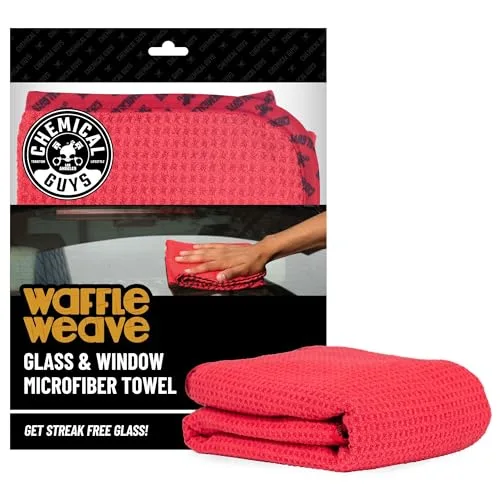 |
Chemical Guys Waffle Weave Glass & Window Microfiber Towel – $10.99 This is the dedicated second dry towel this guide keeps coming back to – the waffle-weave texture lifts water and residue instead of just pushing it around like a flat towel.
|
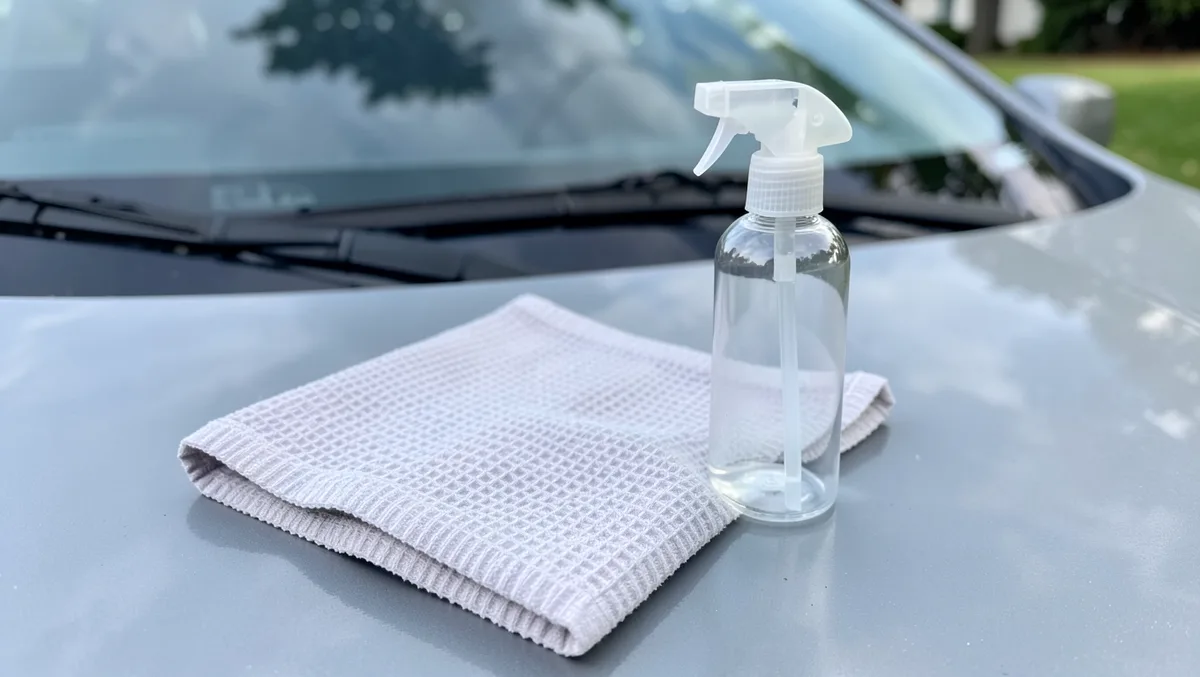
Gather everything before you start so you are not dripping cleaner across the paint hunting for a towel. You will want a dedicated automotive glass cleaner (skip the household all-purpose spray, since some leave an oily film that beads water unevenly), at least two clean microfiber towels – one for cleaning, one reserved just for drying – and a soft brush or an old toothpick for gunk stuck in the wiper channel.
Park in the shade if you can. Direct sun heats the glass enough that cleaner flash-dries into hazy streaks before you have even finished wiping, which is the single most common reason a DIY wash ends up looking worse than a professional one.
Initial Rinse Techniques
Rinse the glass with a gentle hose stream before any cleaner touches it – this floats away grit that would otherwise grind against the glass like sandpaper once you start wiping. Angle the hose so water sheets off rather than blasting straight on, and there is no need for a pressure washer here; it will not crack a properly sealed windshield, but it can force water past worn wiper-cowl seals.
Once the surface is rinsed, run a hand along the wiper blades and cowl to knock loose any trapped leaves or gravel before you scrub, since that narrow gap is exactly where debris likes to hide.
Applying Cleaning Solution
Pick a cleaner labeled safe for automotive glass, and check the label if your windshield has tint film or a heads-up-display coating anywhere on it – ammonia-based glass cleaners can degrade both over time. Here is the step a lot of quick washes skip: spray the cleaner onto the towel, not the glass. Cleaner that lands directly on the windshield runs down onto the wiper cowl, dash, and paint below, and it is exactly what causes the streaky halos you notice later when the sun hits the glass at an angle.
Wipe in slow, overlapping passes. Top to bottom works better than side to side, since gravity is already pulling any excess moisture in that direction anyway, and switch to a clean section of towel as soon as one side starts picking up visible grime.
Scrubbing The Windshield
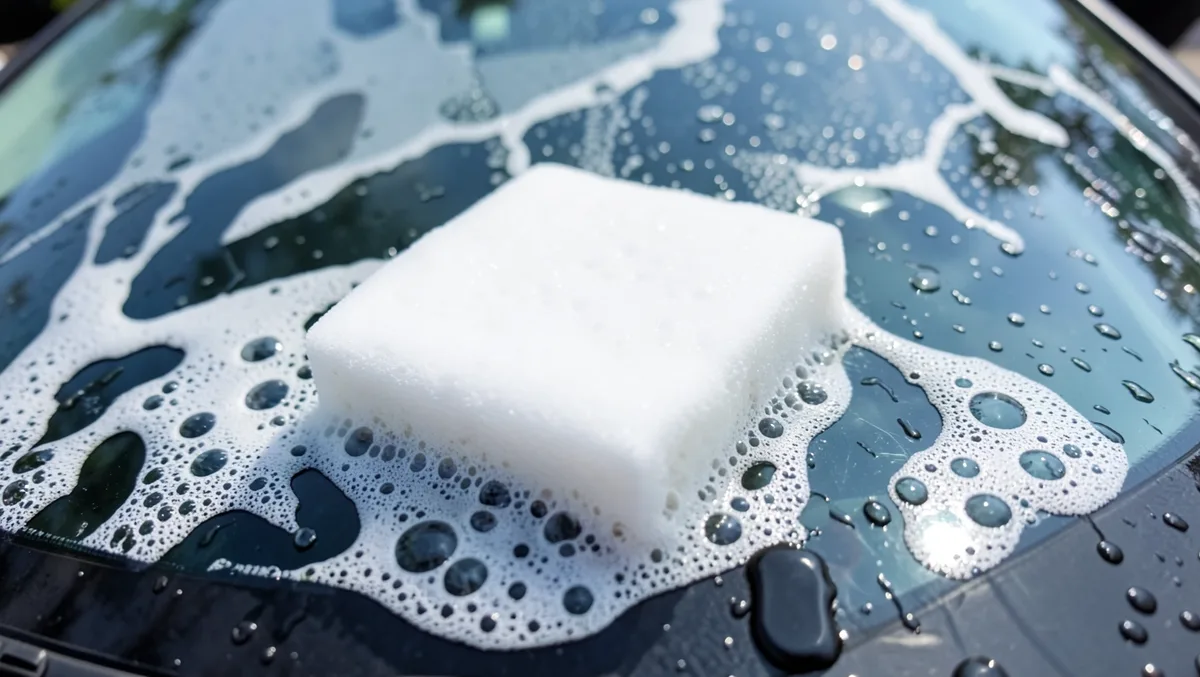
A full clean is really three passes in order: rinse away loose dirt, work in the glass cleaner with a microfiber towel or soft sponge, then buff dry with a separate towel for the streak-free finish. Skipping straight to the cleaner without rinsing first just means you are grinding whatever grit is already sitting on the glass into fresh micro-scratches.
Doing all three steps in order, every time, is what actually keeps visibility sharp over the long run – not any single product you buy.
Using The Right Tools
Reach for a soft microfiber towel over a sponge whenever you can. Sponges trap grit in their pores and drag it right back across the glass on the next pass. A waffle-weave microfiber towel in particular grabs more dirt per swipe than a flat terry towel, which is why detailers reach for one first. Whatever you use, stick with a dedicated glass cleaner rather than a general all-purpose spray, since multi-surface cleaners often leave a residue that beads water unevenly afterward.
Effective Scrubbing Patterns
Work from the top of the glass down, so any drips run onto sections you have not cleaned yet instead of back over ones you just finished. Circular motions lift dirt better than straight lines, since they work grime out of whatever direction it is ground in, and rinsing your towel every pass or two keeps you from just moving the same dirt around the glass. Break the windshield into a few overlapping sections instead of trying to wipe the whole thing in one continuous swipe – it makes a missed patch much easier to spot.
Rinsing And Drying
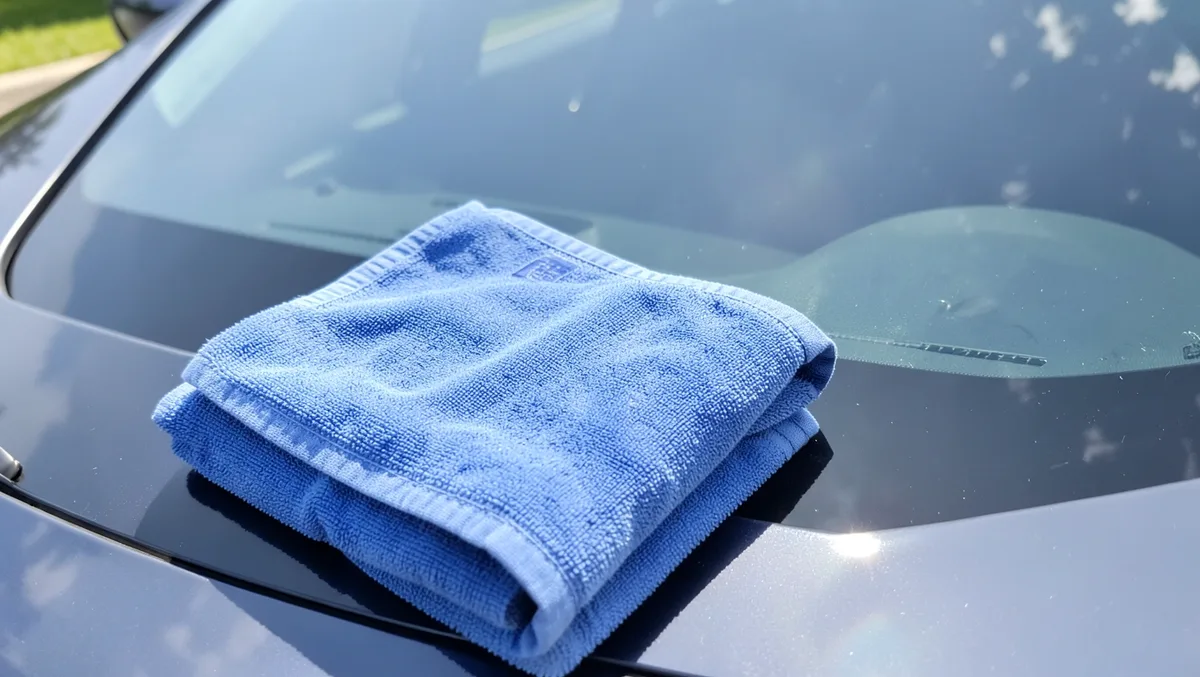
Hose the glass down again until the water runs completely clear – any soap left behind dries into a faint film that shows up as haze the next time the sun is low. For the dry, this is where the two-towel method pays off: use one towel to soak up the bulk of the water, then buff with a second, completely dry towel in straight top-to-bottom strokes. That second dry towel is what actually gives you the streak-free finish, not the cleaner itself.
Do not skip the edges where the glass meets the trim. Cleaner pools there and dries unevenly if you do not wipe it out by hand, and that is where a surprising number of leftover streaks come from.
Dealing With Stubborn Spots
Bug splatter, bird droppings, and tree sap will not come off with a plain wipe because they have had time to bond to the glass. Treat them before your regular wash, not during it.
Identifying Tough Stains
Tree sap and bird droppings do the most damage if you ignore them, since both are acidic enough to etch the glass surface the longer they sit. Bug splatter is less corrosive but dries rock-hard within a day or two in the sun. If plain water and a wipe will not move a spot, treat it as one of these instead of scrubbing harder – extra pressure on a dried stain is exactly how you put a fine scratch in the glass.
Spot Treatment Techniques
For tree sap or dried droppings, mix equal parts white vinegar and water, spray it directly on the spot, and let it sit for about five minutes before wiping – the mild acid softens the residue without needing to scrub. Baked-on bug splatter usually lifts with a paste of baking soda and a little water, worked in gently with a soft cloth. Whatever you use, rinse the spot thoroughly afterward so no residue is left behind to dry into a brand-new streak.
Finishing Touches
The finishing touches are what separate a windshield that looks clean from one that stays clear.
Polishing The Windshield
Fine polishing removes the light haze and micro-scratches that build up from wiper blades dragging grit across the glass over months of use – a plain wash will not touch these. Work a quality glass polish in with a clean microfiber applicator using light pressure and small circles, then buff it off before it fully dries. Pay extra attention to the edges near the wiper arms, since that is where scratching tends to concentrate.
Applying Protective Coating
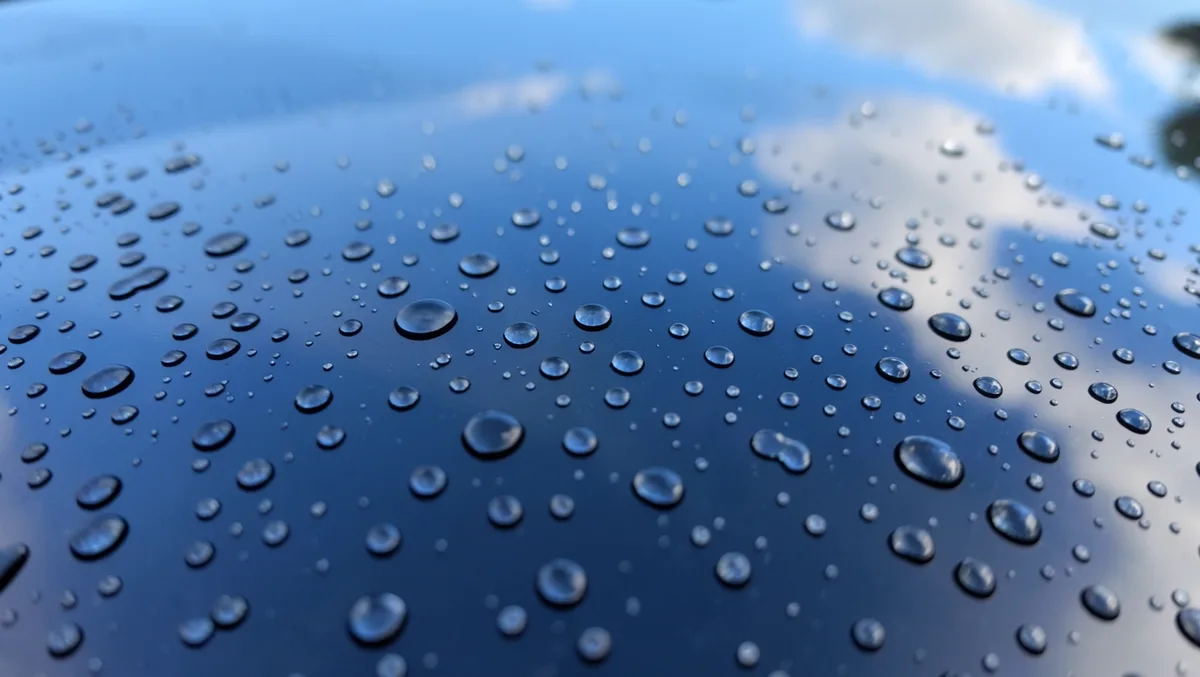
A hydrophobic glass coating does not clean anything – it changes how water behaves on the glass afterward, making rain bead up and roll off instead of sheeting into a blurry film. Apply it to clean, dry glass in thin, even coats with a microfiber applicator, let it cure for the time listed on the bottle, then buff off any residue. Pour a little water on the treated glass to check your work: if it beads into tight droplets instead of spreading out, the coating took.
Regular Maintenance Tips
Wash the windshield every week or two rather than waiting until visibility is noticeably bad – dust and road film left to sit longer than that start acting like fine sandpaper under your wiper blades. Top off your washer fluid reservoir on the same schedule, since a good fluid handles a lot of the day-to-day grime removal for you between washes. Worn wiper blades will undo a clean windshield fast, dragging grit in fresh streaks across glass you just cleaned, so replace them roughly every six to twelve months, sooner if you notice chattering or skipped spots.
Hard water spots are the one problem regular washing alone will not fix – mineral deposits from tap water leave a faint etched ring behind once the water evaporates, so rinse with distilled or filtered water on your final pass whenever you can. Check the glass once a month for new chips or cracks, since a chip the size of a grain of rice is a cheap windshield-repair-kit fix today and a full replacement in a few months if it is left to spread. Summer dust and winter road salt are both harder on the glass than an average dry day, so plan on cleaning a bit more often in those seasons.
This guide covers the exterior. If the inside of your glass is hazy too, the cleaning method is different, since you are dealing with cabin off-gassing film rather than road grime.
Frequently Asked Questions
What Is The Best Way To Clean A Car Windshield?
Spray a dedicated automotive glass cleaner onto a microfiber towel instead of the glass, then wipe in overlapping top-to-bottom passes. Buff dry immediately with a second, completely clean towel – that second dry towel, not the cleaner itself, is what actually prevents streaks. For dried-on grime like tree sap or bird droppings, treat the spot with a vinegar-and-water mix before your regular wipe.
How Do You Get A Crystal Clear Windshield?
Work in the shade so the cleaner does not flash-dry before you can wipe it off, spray the cleaner onto your towel rather than the glass, and finish with a completely dry second towel for the buff. As a final touch, rinse with distilled or filtered water instead of tap water – mineral deposits in hard tap water are what leave the faint spots and haze you still see on an otherwise crystal clear windshield.
Can I Use Windex On A Car Windshield?
Yes, standard Windex is safe for a bare, untinted windshield and cuts through road film effectively. Clean it in the shade rather than direct sun so the ammonia-based formula does not dry before you can wipe it away. Avoid using it on window glass with aftermarket tint or on a windshield with a heads-up-display coating, since ammonia can cloud or degrade both over time.
Can I Wash My Windshield With Dawn Dish Soap?
Yes – a few drops of Dawn mixed into a bucket of water cuts through grease and bug residue about as well as a dedicated car-wash soap, and it is gentle enough not to harm the glass itself. Rinse thoroughly afterward, since dish soap left to dry on the glass unrinsed leaves its own faint film. It is a fine occasional substitute, but skip it as your everyday wash soap on the paint around the glass, since repeated use strips wax faster than a pH-balanced car shampoo would.
Why Does My Windshield Still Have Spots After Washing It?
Those faint white or cloudy spots that show up after the glass has dried are almost always mineral deposits from hard tap water, not dirt you missed. The fix is rinsing your final pass with distilled or filtered water instead of straight from the hose, and buffing dry immediately rather than letting water air-dry on the glass. If the spots do not wipe off with a fresh cleaner-and-towel pass, a mild vinegar-and-water solution or a dedicated water-spot remover will usually clear mineral buildup that has already dried in place.
Conclusion
A clean windshield comes down to sequence more than products: rinse before you scrub, spray cleaner onto the towel rather than the glass, and always finish with a second dry towel for the buff. Do that every week or two, keep your wiper blades fresh, and switch to distilled water once hard water spots start showing up – and you will keep a genuinely clear view of the road instead of just a temporarily clean one.
Products related to this article
Sponsored / affiliate links. As an Amazon Associate I earn from qualifying purchases. I may earn additional commission from eligible campaigns.