How To Fix Your Car Air Conditioner At Home (Easy Steps)
Many common car air conditioner problems can be diagnosed and fixed with simple steps at home. Understanding basic AC functions and knowing when to check simple components like fuses, cabin air filters, and refrigerant levels can save you time and money. This guide covers typical issues and their potential solutions.
Understanding Your Car’s Air Conditioning System
Think of your car’s AC like a small, powerful refrigerator. It uses a special fluid called refrigerant to cool the air. This fluid moves through a loop.
It absorbs heat from your car’s cabin and then releases that heat outside. It’s a clever system. But like any system, parts can wear out or get clogged.
The main parts are the compressor, condenser, receiver/drier, expansion valve, and evaporator. The compressor is like the pump. It squeezes the refrigerant gas.
This makes it hot. The condenser is a radiator. It cools the hot gas, turning it into a liquid.
The receiver/drier cleans the refrigerant. It also stores some of it. The expansion valve or orifice tube controls flow.
It lets the liquid refrigerant into the evaporator. The evaporator is another radiator. It’s inside your car.
Here, the liquid refrigerant turns back into a gas. It absorbs heat from the air. A fan then blows this cooler air into your car.

Common Car AC Problems and Their Causes
Many things can go wrong. Sometimes, it’s just a small fix. Other times, it might be more serious.
Knowing the signs helps. If your AC makes strange noises, it could be the compressor. If it blows only a little air, the cabin filter might be dirty.
If it blows warm air, it could be a refrigerant leak or a faulty part. If both the AC and the heater stop blowing air entirely, the cause is different — see why your car AC and heater might both stop working at once for the shared-component causes.
The most common issue is a lack of cooling. This often points to low refrigerant. Refrigerant can leak out over time.
It’s not like gasoline that burns up. Leaks are the main reason for refrigerant loss. Another frequent problem is weak airflow.
This is usually the cabin air filter. It traps dust and debris. When it’s full, air can’t get through easily.
Sometimes, the clutch on the AC compressor fails. This means the compressor doesn’t engage. It won’t do its job of circulating the refrigerant.
The First Step: Check the Basics (Easy Wins!)
Before you panic, let’s check the easy stuff. These are things you can do right now. You don’t need special tools.
It’s amazing how often the fix is simple. This is where many people stop too soon.
Check Your Fuses and Relays
Your car’s AC system has fuses. These protect it from power surges. If a fuse blows, the system stops working.
It’s like a safety switch. Find your car’s fuse box. It’s usually under the dashboard or in the engine bay.
Look for the AC fuse. Check your car’s manual for its location. If it’s blown,
A blown fuse looks obvious. The metal wire inside will be broken. If you replace a fuse and it blows again right away, there’s a bigger electrical problem.
This means you should seek professional help. For now, just swap it out. It’s a quick and often effective fix.
Make sure the car is off before you touch any fuses.
Inspect the Cabin Air Filter
This is a big one for airflow. The cabin air filter cleans the air entering your car. It also protects the AC system.
When it gets dirty, it blocks air. You’ll notice weak airflow from the vents. Sometimes, it smells musty too.
Replacing it is usually very simple.
The filter is often behind the glove box. You might need to unclip the glove box to get to it. Pull out the old filter.
It will likely look very grimy. You’ll see trapped leaves, dust, and bugs. Slide in the new filter.
Make sure to line it up correctly. There’s usually an arrow showing airflow direction. This is a cheap part.
It makes a huge difference in how well your AC blows air. Most car owners can do this themselves in under 15 minutes.
Quick Filter Check
When to check: If AC airflow is weak or smells odd.
Difficulty: Easy.
Tools needed: Maybe a screwdriver, or just your hands.
Time: 5-15 minutes.
Result: Can dramatically improve airflow and air quality.
Troubleshooting Refrigerant Issues
Low refrigerant is the most common cause of poor cooling. Refrigerant doesn’t get “used up.” It leaks out. Finding and fixing leaks is key.
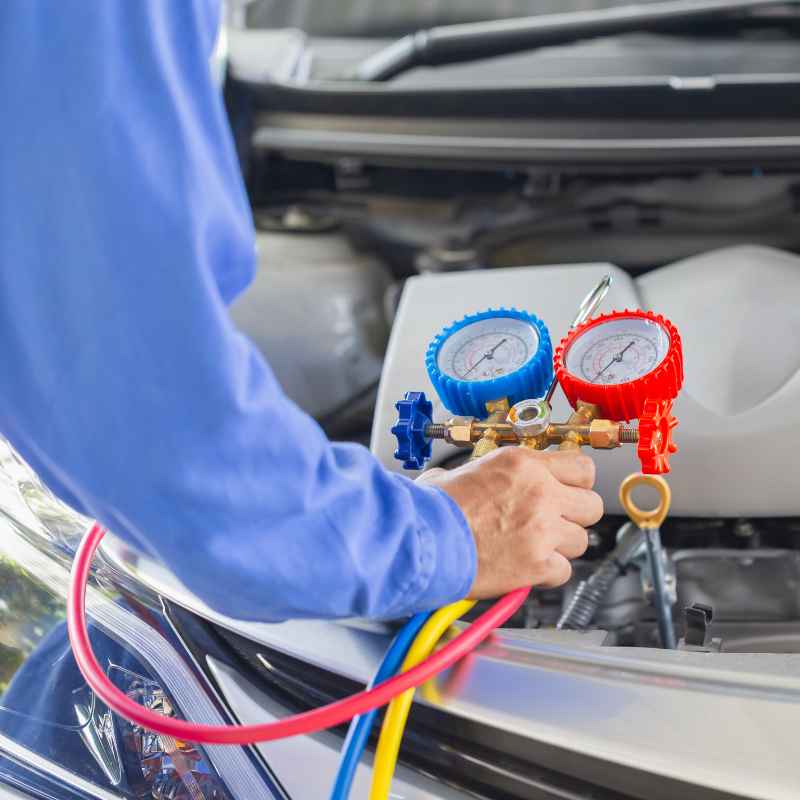
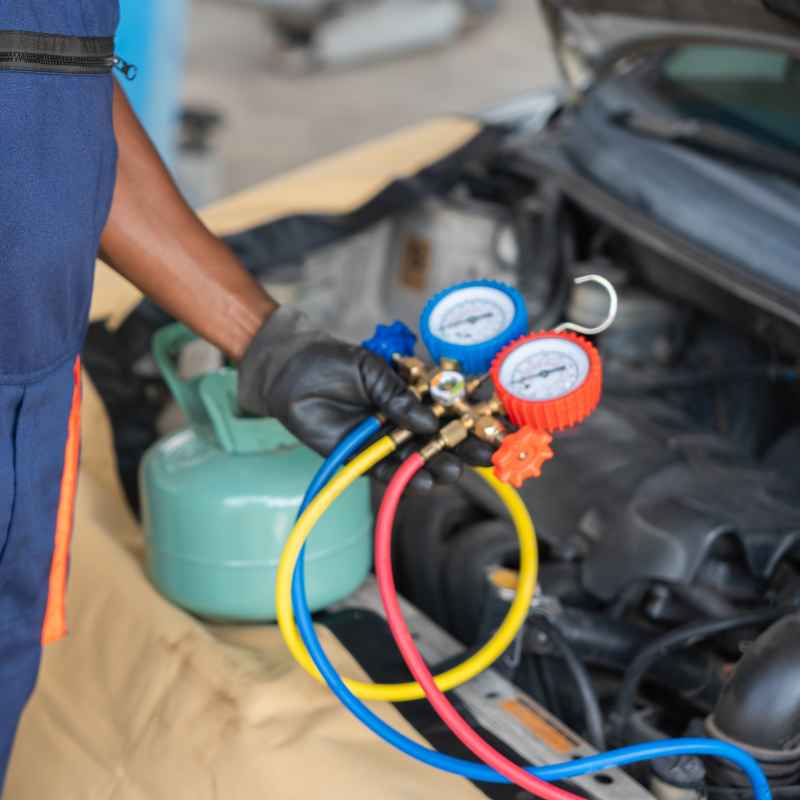
You can buy AC recharge kits at auto parts stores. These kits often come with a gauge. They help you check the pressure.
They also contain refrigerant and a sealer. Be careful when using these kits. Follow the instructions exactly.
Important Note: If your car uses R-134a refrigerant, be sure to buy the correct type. Newer cars might use R-1234yf. Mixing them can damage your system.
Always check your car’s manual or the label under the hood. You want the kit that matches your car’s refrigerant type. Overcharging the system can also cause damage.
It can make the AC work poorly or even break parts.
Checking Refrigerant Levels (DIY Kit)
These kits make it easier. You connect the gauge to a low-pressure AC port. Your car’s manual shows where this is.
Turn on the engine. Turn the AC to max. Read the gauge.
Most kits have a color-coded scale. It tells you if the level is too low, just right, or too high. If it’s low, you can add refrigerant.
Slowly add it, checking the gauge often.
The hiss you hear when connecting or disconnecting the can is normal. It’s just some gas escaping. Don’t overdo it.
If the gauge shows the correct level but the AC is still not cold, you likely have another problem. This could be a faulty compressor or a clogged expansion valve.
Refrigerant Recharge Kit Use
Step 1: Locate the low-pressure service port. (Check manual.)
Step 2: Start the car. Set AC to max cold, low fan speed.
Step 3: Connect the kit’s hose to the port. (Follow kit instructions for connection.)
Step 4: Read the pressure gauge. Add refrigerant slowly if needed.
Step 5: Disconnect the kit. Check AC performance.
Signs of a Refrigerant Leak
A slow leak is common. You might notice cooling performance drops over time. The AC might work fine when it’s cool outside but struggle when it’s very hot.
You might also see oily residue around AC lines or fittings. This is often where the refrigerant is escaping. The oil is part of the AC system lubricant.
A major leak is more obvious. The AC might stop cooling entirely. You might even hear a faint hissing sound when the engine is running.
If you suspect a leak, a DIY recharge kit with a sealer can sometimes help. But for bigger leaks, a professional with specialized tools is needed. They can find the leak and repair it properly.
When the Compressor Isn’t Engaging
The AC compressor is the heart of the system. It needs to spin to compress the refrigerant. If it’s not engaging, you won’t get cold air.
There’s usually a clutch on the front of the compressor. When the AC is turned on, this clutch should engage. It makes a distinct “click” sound.
You might also see the center part of the pulley spin with the outer part.
Several things can prevent the clutch from engaging. Low refrigerant pressure is one reason. The system has a safety switch.
It won’t let the compressor run if pressure is too low. A blown fuse or bad relay for the AC clutch can also be the cause. The clutch itself could be faulty.
Or, the wiring to the clutch might be damaged.
Compressor Clutch Check
What to listen for: A click when AC is turned on.
What to look for: Center of the pulley spinning with the outer pulley.
Common causes: Low refrigerant, electrical issues (fuse, relay, wiring), faulty clutch.
DIY Fixes: Check fuses/relays. Add refrigerant if low. (Be cautious.)
Professional Needed: If electrical system or clutch is suspect.
If you can’t hear the click, and you’ve checked fuses and refrigerant levels, it’s time to look deeper. You can visually inspect the clutch. Is it rusty or damaged?
Sometimes, the air gap between the clutch and the pulley is too large. This can be adjusted on some vehicles. But this often requires specific tools and knowledge.
Addressing Strange Noises from Your AC
Unusual sounds are a big clue. A squealing noise might come from a worn belt. Or it could be a bearing in a pulley.
A grinding or rattling sound often points to a failing compressor. If you hear a loud bang, it could mean a major component has failed. This needs immediate attention.
If the noise happens only when the AC is on, focus on the AC components. Listen closely. Try to pinpoint where the sound is coming from.
Is it under the hood, near the front of the engine? Or is it coming from inside the car, perhaps from the dashboard vents?
Belt Issues
The serpentine belt drives many engine accessories. This includes the AC compressor. If the belt is loose, cracked, or worn, it can slip.
This causes a squealing sound. You might also notice other symptoms. For example, your power steering might feel heavy.
Or your battery might not charge properly.
Checking the belt is usually easy. Look for visible cracks or fraying. Try to push on the belt.
It should feel tight. There shouldn’t be much slack. Replacing a serpentine belt is a common DIY task for many cars.
But if you’re not comfortable, a mechanic can do it quickly. A properly tensioned belt is crucial for all your engine’s accessories.
Internal AC Component Noises
If the noise is more of a grinding or clicking from the compressor area, it’s more serious. This suggests internal damage. The compressor might be failing.
In this case, the best course of action is usually replacement. Continuing to run a failing compressor can cause more damage to other parts of the AC system. This can lead to much higher repair costs.
Sometimes, you might hear a “buzzing” or “clicking” sound from behind the dashboard. This could be the blend door actuator. This small motor controls which vents the air comes from.
It also controls whether you get fresh air or recirculated air. If it’s stuck or broken, you might have issues with air direction or temperature control.
Checking the Condenser and Evaporator
These are radiators for your AC system. The condenser is outside, usually in front of your car’s main radiator. The evaporator is inside the car, behind the dashboard.
Both can get dirty or blocked.
Condenser Blockages
The condenser needs good airflow to work. Road debris, leaves, and bugs can clog its fins. This prevents heat from escaping.
If the condenser is blocked, your AC won’t cool well, especially at low speeds or when stopped. You can often see if it’s blocked just by looking at the front of your car.
Carefully clean the condenser. You can use a garden hose with a gentle spray. Or use compressed air.
Be very careful not to bend the delicate fins. If they get bent, airflow is reduced. Sometimes, a bent fin is unavoidable.
But try to be gentle. A clean condenser is vital for efficient cooling. This is a maintenance task that many people overlook.
Condenser Cleaning Tips
When: When AC cooling is weak, especially at idle.
What to look for: Dirt, leaves, bugs on the fins.
How: Gentle water spray or compressed air.
Caution: Avoid bending fins. Be careful around other engine components.
Evaporator Issues
The evaporator is harder to access. It’s located inside the dashboard. It can get clogged with dust and debris.
It can also develop mold or mildew. This causes musty odors. Sometimes, the drain for the evaporator gets blocked.
This can lead to water leaking inside your car. You might see puddles on the passenger floorboard. The evaporator itself can also freeze up if there’s an issue with airflow or refrigerant.
If you suspect your evaporator is the problem, it’s usually a job for a professional. Accessing it requires removing parts of your dashboard. This is a complex repair.
Musty smells from the vents can sometimes be treated with special AC cleaning sprays. These are available at auto parts stores. You spray them into the air intake vents.
When to Call a Professional
While many AC issues can be fixed at home, some require expert knowledge and tools. If you’ve tried the basic steps and your AC is still not working, it’s time to call a mechanic. Don’t be afraid to get a second opinion if you’re unsure.
Here are signs you should definitely seek professional help:
- You suspect a major refrigerant leak: They have tools to find and repair leaks.
- The AC compressor is making loud, grinding noises: It might be failing and needs replacement.
- Electrical problems persist: If fuses keep blowing or you see wiring damage.
- You’re not comfortable with the repair: AC systems are complex and contain high-pressure fluids.
- The problem is with the evaporator or other internal parts: These require specialized access and knowledge.
- Your car is newer and uses R-1234yf refrigerant: This gas is more expensive and requires specific handling.
A good mechanic will diagnose the problem accurately. They can explain the repair needed and give you an estimate. They also have the right equipment to handle refrigerants safely and legally.
Improper handling can harm the environment and yourself. Professional repair ensures the job is done right and the system is properly evacuated and recharged.
Personal Experience: The “Mystery” Warm Air Incident
I remember one sweltering July afternoon. I was driving from a client meeting. The sun was beating down.
I cranked up the AC, expecting that immediate chill. Instead, I got… lukewarm air. Not warm, not cool, just… meh.
My heart sank a little. I HATED dealing with car repairs. The thought of going to a mechanic filled me with dread.
I pictured a bill that would make my eyes water.
I pulled over to a quiet street. First, I checked the obvious. Was the AC button actually on?
Yes. Was the temperature set to cold? Yes.
Was the fan speed high? Yes. I took a deep breath.
Okay, step-by-step. I popped the hood. The engine seemed fine.
I remembered reading about fuses. I found the fuse box and located the AC fuse. I pulled it out.
Yep, the little wire inside was broken. A blown fuse! It was such a small thing.
I found a replacement in my emergency car kit. I swapped it out. Fired up the engine again.
Turned on the AC. And… cool air! Glorious, crisp, cold air.
I let out a huge sigh of relief. It saved me a huge headache and a lot of money. That day taught me to always check the simple things first.
It’s amazing what a tiny, cheap piece of metal can do.
Understanding the HVAC System Terms
Your car’s heating, ventilation, and air conditioning system is often called HVAC. It’s more than just the AC. It also includes your heater and the fan that moves air.
Knowing these terms helps when you’re talking to a mechanic or reading your car’s manual.
Common HVAC Terms
AC Compressor: The pump that circulates refrigerant.
Condenser: Radiator that releases heat outside the car.
Evaporator: Radiator inside the car that absorbs heat.
Refrigerant: The special fluid that cools the air.
Blower Motor: The fan that pushes air through the vents.
Blend Door Actuator: Controls air temperature and direction.
Cabin Air Filter: Cleans air entering the cabin.
Real-World Scenarios and When to Worry
Let’s look at some common situations. This helps you know what’s normal and what’s not.
Scenario 1: AC cools, but not as cold as it used to be.
Likely cause: Low refrigerant. This is very common. It usually means a slow leak somewhere.
When to worry: If it gets significantly worse very quickly. Or if you see oily residue around AC lines. What to do: Try a DIY recharge kit first.
If that doesn’t help, see a mechanic for a leak check.
Scenario 2: AC blows air, but it’s only slightly cool.
Likely cause: Could be low refrigerant, or a partially blocked condenser. When to worry: If the fan is blowing strong but the air isn’t getting cooler at all. What to do: Check the condenser for blockages.
If it’s clean, try a recharge kit.
Scenario 3: AC makes a loud grinding noise when it’s on.
Likely cause: The AC compressor is failing. This is a serious issue. When to worry: Immediately.
Stop using the AC if the noise is very loud or concerning. What to do: Do not try to fix this yourself. Get it to a mechanic right away.
Scenario 4: AC stopped working completely. No air, no cold.
Likely cause: Blown fuse, faulty relay, or a more complex electrical issue. Or, a major component failure. When to worry: If you’ve checked fuses and they are fine, but nothing happens.
What to do: Check fuses and relays first. If that doesn’t solve it, professional diagnosis is needed.
Normal AC Behaviors
Normal: Faint hissing sound when AC is first turned on.
Normal: Occasional clicking sound when compressor cycles on and off.
Normal: Some condensation dripping under the car when AC is running.
Normal: Airflow might be less strong in very humid or hot conditions.
Quick Tips for Maintaining Your Car’s AC
A little bit of regular care goes a long way. Keeping your AC system in good shape can prevent costly repairs. It also ensures you always have cool air when you need it.
- Run your AC regularly: Even in winter, run your AC for a few minutes once a month. This keeps the seals lubricated. It prevents refrigerant from leaking out.
- Change the cabin air filter: Do this according to your car’s maintenance schedule. Or sooner if you notice reduced airflow or musty smells.
- Keep the condenser clean: Gently wash it a couple of times a year. This ensures optimal heat transfer.
- Listen for unusual noises: Address any strange sounds promptly. They can be early warnings of bigger problems.
- Check for leaks: If you notice cooling performance dropping, inspect for oily residue.
These simple habits can extend the life of your AC system. They also keep it running efficiently. Remember, preventive maintenance is always cheaper than repairs.
Frequently Asked Questions About Car AC Repair
How much does it cost to fix a car AC?
The cost varies widely. A simple fuse or cabin filter replacement might be under $50. Recharging refrigerant can cost $50-$150 for a DIY kit or $100-$300 at a shop.
Compressor replacement can be $500-$1500 or more. It really depends on the problem.
Can I just add refrigerant if my AC isn’t cold?
You can try adding refrigerant using a DIY kit if the system is low. However, if your AC isn’t cold, it might be due to other issues like a faulty compressor or a leak. Simply adding refrigerant without finding the cause of the problem might be a temporary fix at best, or could even cause damage if overcharged.
Why does my car AC smell bad?
A bad smell, often musty or like mold, usually comes from the evaporator core inside your car’s dashboard. Moisture can get trapped there, leading to mold and bacteria growth. Sometimes, debris can also cause odors.
You can try AC cleaning sprays or replacing the cabin air filter.
Is it dangerous to work on my car’s AC system?
Yes, it can be dangerous if not done correctly. Refrigerant is under high pressure and can cause frostbite or eye damage if it sprays out. Also, some refrigerants are harmful if inhaled.
It’s important to wear protective gear and follow instructions carefully. If you’re unsure, it’s best to leave it to the professionals.
How often should I recharge my car’s AC?
You shouldn’t need to recharge your AC regularly. If your AC system is working correctly, it doesn’t lose refrigerant. If you find yourself needing to recharge it often, it means you have a leak that needs to be found and repaired.
Regular leaks are normal, but frequent recharging means a problem.
What’s the difference between R-134a and R-1234yf refrigerant?
R-134a is the older, more common refrigerant. R-1234yf is a newer, more environmentally friendly refrigerant used in most cars made after 2015. They are not interchangeable.
Using the wrong type can severely damage your AC system. Always check what type your car uses before buying any recharge kits.
Conclusion: Stay Cool and Drive Comfortably
Dealing with a broken car AC is never fun. But knowing the common causes and simple fixes can save you a lot of stress. You can often solve minor AC issues yourself.
This means getting back to enjoying your drive. Always check the easy things first. If the problem is beyond your comfort level, don’t hesitate to call an expert.
A little care ensures your car stays a cool, comfortable place to be.
Products related to this article
Sponsored / affiliate links. As an Amazon Associate I earn from qualifying purchases. I may earn additional commission from eligible campaigns.