How To Get Previous Owner Smell Out Of Car: Proven Solution
To get previous owner smell out of your car, combine thorough cleaning with odor-neutralizing treatments. Start by removing all trash and personal items, then deep clean all surfaces, fabrics, and vents. Finally, use an odor absorber or neutralizer to eliminate lingering smells. This multi-step approach tackles the root cause and ensures a fresh-smelling car.
Ever bought a used car only to be greeted not by that “new car smell,” but by something… less pleasant? That lingering scent of a previous owner’s habits – maybe stale smoke, strong air fresheners, old coffee, or even pet odors – can be a real bummer. It’s a common problem, and frankly, quite frustrating. You want to enjoy your car, not feel like you’re stuck in a time warp of someone else’s life. The good news is, you don’t need a magic wand, just a step-by-step plan and a little elbow grease. We’re going to walk through exactly how to tackle these stubborn smells, leaving your car smelling fresh and uniquely yours. Get ready to reclaim your ride!
Step 1: The Great Car Purge – Decluttering for a Fresh Start
Before we even think about scrubbing, the first crucial step is to empty your car completely. Think of it as a fresh start. Previous owners might have left behind more than just smells – think forgotten wrappers, old water bottles, receipts, and general clutter. These items can trap moisture and odors, making your job harder.
Here’s what to do:
- Remove Everything: Pull out floor mats, seat covers, anything in the glove compartment, door pockets, center console, under seats, and even the trunk.
- Check Hidden Spots: Get down and look under the seats and in every nook and cranny. You might be surprised what you find!
- Dispose of Trash: Immediately throw away all trash and unwanted items.
- Separate Items: Keep any items that belong to you and decide what to do with them later.
This might seem obvious, but it’s a foundational step that ensures you’re not cleaning around hidden odor culprits. A truly empty car is much easier to deep clean.
Step 2: Deep Clean Everything – The Foundation of Odor Removal
Now that your car is empty, it’s time to get serious about cleaning. This isn’t a quick wipe-down; it’s a full interior deep clean. Odors love to cling to surfaces, especially fabrics and plastics, so we need to be thorough. You’ll be surprised how much of the smell disappears just by removing what’s been left behind and cleaning the surfaces.
Essential Cleaning Tools and Supplies:
- Vacuum cleaner with various attachments (crevice tool, brush attachment)
- Microfiber cloths (several are essential for different tasks)
- All-purpose automotive interior cleaner
- Upholstery and carpet cleaner (specifically for automotive use)
- Leather cleaner and conditioner (if applicable)
- Glass cleaner
- Bucket
- Water
- Gloves (optional, but recommended for protecting your hands)
- Small detailing brushes or old toothbrushes
Cleaning All Surfaces:
Start from the top and work your way down. This way, any dirt or debris you dislodge will fall onto areas you haven’t cleaned yet, so you can vacuum it up later easily.
- Headliner: This is a major odor absorber. Lightly spray your interior cleaner onto a microfiber cloth (never directly onto the headliner, as it can get oversaturated and detach) and gently wipe the surface. Work in small sections. For tough stains or smells, you might need to use a dedicated fabric cleaner, but always test in an inconspicuous spot first.
- Dashboard, Doors, and Center Console: Use your all-purpose interior cleaner and a microfiber cloth. Get into all the vents, seams, cup holders, and storage compartments. Pay close attention to the areas around the gear shifter and steering wheel. For tight spots, use your detailing brushes.
-
Seats:
- Fabric Seats: Spray your upholstery cleaner onto the seat, working in sections. Use a brush to gently agitate the fabric, helping to lift dirt and odors from the fibers. Wipe clean with a damp microfiber cloth, then dry with a clean, dry cloth.
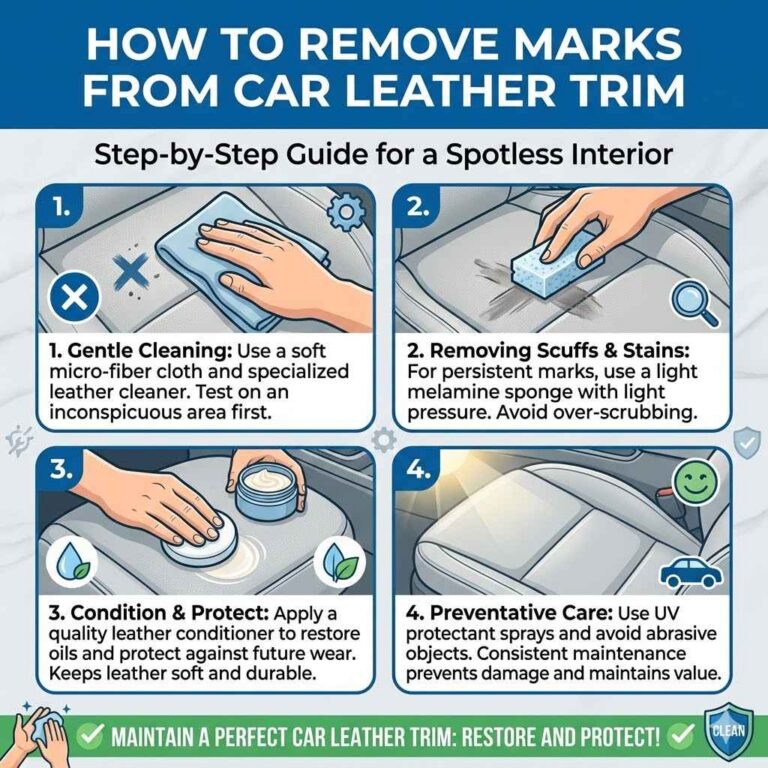
- Leather Seats: Use a dedicated leather cleaner and a soft microfiber cloth. Gently wipe the leather. Follow up with a leather conditioner to keep it supple and prevent cracking.
- Vinyl/Plastic Seats: Wipe down with your all-purpose interior cleaner and a microfiber cloth.
-
Carpets and Floor Mats:
- Vacuum Thoroughly: Use your vacuum with the crevice tool to get into all the seams and edges.
- Treat Stains and Odors: Spray carpet cleaner onto heavily soiled areas or where odors are strongest. Let it sit for a few minutes as per product instructions, then scrub gently with a brush. Blot up excess moisture with a clean microfiber cloth.
- Floor Mats: If they are removable rubber or plastic mats, take them out, wash them with soap and water, rinse, and let them dry completely in the sun before putting them back. For carpeted mats, treat them like the car’s carpet.
- Windows and Mirrors: Spray glass cleaner onto a clean microfiber cloth and wipe all interior glass surfaces for a streak-free finish. Don’t forget the rearview mirror!
Pro Tip: For very stubborn smells embedded in fabric, once you’ve cleaned them with upholstery cleaner, you can also try sprinkling baking soda liberally over the fabric, letting it sit for several hours or overnight, and then vacuuming it up thoroughly. Baking soda is a natural odor absorber.
Step 3: Don’t Forget the Air Vents – Where Smells Hide in Plain Sight
The air conditioning and heating system in your car – the vents – is a prime hiding spot for odors. When you turn on the fan, old, stale air and trapped smells get blown directly into the cabin, making it seem like your cleaning efforts are in vain. This system circulates air, and if there’s mold, mildew, or just stale air trapped in the ducts, it will continuously reintroduce that unpleasant smell.
How to Clean Air Vents and Ducts:
This process requires a bit of targeted effort:
- Clean the Vent Grilles: Use your detailing brush or a toothbrush dipped in a mild cleaner or a mixture of water and vinegar to scrub the actual vent grilles. Wipe them clean with a microfiber cloth.
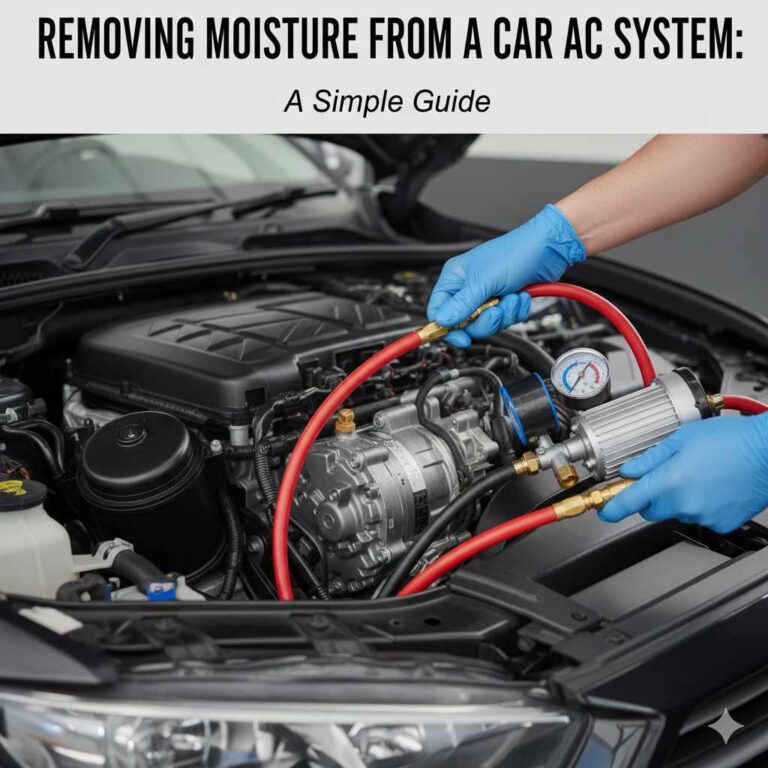
- Use an AC System Cleaner: The most effective way to tackle odors within the ductwork is to use a specialized automotive AC system cleaner. These products are designed to be sprayed into the system and often come with a long hose to reach deep into the vents or intake areas.
- Follow Product Instructions Carefully: Typically, you’ll spray the product into the external air intake vents (usually located at the base of the windshield under the hood) and/or into the interior vents themselves. You’ll then need to run the car’s fan system for a specified duration to circulate the cleaner and allow it to break down odor-causing elements.
External Resource: For a deeper understanding of automotive HVAC systems and maintenance, consulting resources like the National Highway Traffic Safety Administration (NHTSA) can provide general guidance on car care, though specific product instructions will be paramount here.
Important Note: Always ensure you run the system as directed and ventilate the car afterward, as some cleaners can have a strong residual scent. Never spray excessive amounts of liquid directly into electrical components.
Step 4: Odor Neutralization – Banishing Lingering Smells
After a thorough cleaning, you’ve removed the source of many odors. However, some stubborn scents might still linger. This is where odor neutralizers and absorbers come into play. Unlike air fresheners that just mask smells, these products work to break down or trap odor molecules.
Odor Absorbers:
These are passive solutions that absorb smells from the air. They are great for continuous odor control.
- Baking Soda: As mentioned, it’s a fantastic natural odor absorber. Place open boxes or bowls of baking soda around your car, especially in areas like the trunk and under seats. Replace it every few days for best results.
- Activated Charcoal: Similar to baking soda but often more potent, activated charcoal has a porous structure that traps odor molecules. You can buy charcoal bags specifically designed for cars or home use. Place them in strategic locations.
- Coffee Grounds (Dry): Dry, unused coffee grounds can also help absorb odors. Place them in open containers but be aware they can leave a coffee scent, which some prefer over the original smell.
Odor Neutralizers:
These products actively break down odor molecules. Some are sprays, while others are more advanced treatments.
- Enzyme Cleaners: These are especially effective for organic odors like pet accidents or spilled food. Enzymes break down the biological matter causing the smell. Ensure you’re using an automotive-specific product.
- Vinegar: A bowl of white vinegar left in the car overnight can help neutralize strong odors. The vinegar smell will dissipate once removed.
- Commercial Odor Eliminator Sprays: Look for products advertised as “odor eliminators” or “odor neutralizers” rather than just “air fresheners.” Many use advanced chemical reactions to break down odor molecules. Follow product instructions carefully.
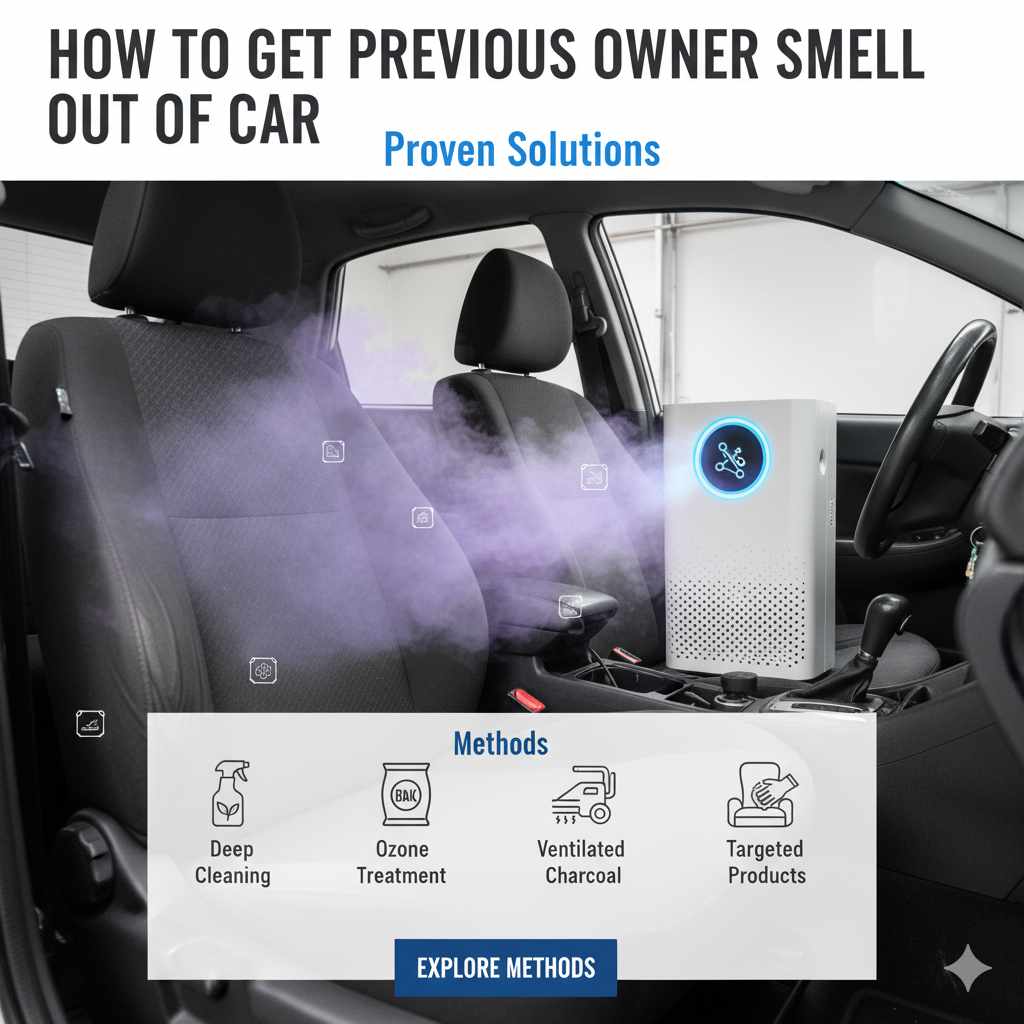
- Ozone Generators (Use with Caution): For the most persistent and deeply ingrained odors (like cigarette smoke), an ozone generator is often the most effective solution. These machines produce ozone gas (O3), which oxidizes and neutralizes odor molecules. However, ozone is harmful to breathe and can damage certain materials if used incorrectly. The car must be completely empty of people and pets, and run according to strict manufacturer instructions. After treatment, the car MUST be thoroughly aired out for several hours before it’s safe to enter for an extended period. Many people opt for professional detailing services that offer ozone treatments to ensure safety and effectiveness.
Here’s a quick comparison of common odor treatment methods:
| Method | How it Works | Best For | Pros | Cons |
|---|---|---|---|---|
| Baking Soda | Absorbs odors | General stale smells, mild odors | Safe, cheap, readily available | Can be messy, slow-acting, less effective on strong odors |
| Activated Charcoal | Traps odor molecules in porous structure | Persistent odors, general freshness | Highly effective, long-lasting, no strong scent | Requires purchase, can be less effective if saturated |
| Vinegar | Neutralizes alkaline odors | Mildew, general mustiness | Cheap, natural | Vinegar smell needs to air out, can be slow |
| Enzyme Cleaners | Breaks down organic matter causing odor | Pet odors, food spills, bodily fluids | Targets source, very effective for organic smells | Requires specific application, can take time to work |
| Ozone Generator | Oxidizes odor molecules | Severe odors (smoke, mold, mildew) | Ext |
Frequently Asked Questions
What are the most common previous owner smells?
The most frequent odors include cigarette smoke, strong or cloying air fresheners, pet odors, spilled food or drink (especially dairy or coffee), and general mustiness from lack of ventilation. Sometimes, even certain occupational smells can linger.
How quickly can I expect results?
Smaller odors might lessen significantly after a deep clean. For tougher smells like smoke, it might take a few treatments over a couple of days or even weeks, depending on the severity and the methods you use. Patience is key!
Are pet odors harder to remove than smoke?
Both can be challenging. Pet odors often involve dander and urine that can soak into fabrics and carpets, requiring specific enzyme cleaners. Smoke particles penetrate deeply into porous surfaces, including headliners and upholstery, making it notoriously persistent. Both require a dedicated approach.
Can I use strong cleaning chemicals to get rid of smells?
While strong cleaners can mask smells temporarily, they often don’t eliminate the source and can leave behind their own chemical scent or even damage your car’s interior. It’s better to use specialized odor neutralizers and cleaners designed for automotive interiors. Always test in an inconspicuous area first.
How often should I deep clean my car to prevent odors?
For a car that’s often used, a thorough cleaning every 3-6 months is usually sufficient. However, if you have pets, or if odors are a recurring issue, more frequent cleanings, especially focusing on carpets and upholstery, might be necessary. Regular vacuuming and wiping down surfaces weekly will also help prevent buildup.
Will professional detailing get rid of old smells?
Yes, professional detailing services often have access to more powerful equipment (like ozone generators or steam cleaners) and specialized products that can tackle deep-seated odors more effectively than most DIY methods. It’s a great option if you are struggling with persistent smells.
Is an ozone generator safe to use in my car?
Ozone generators are very effective at eliminating odors by oxidizing odor-causing molecules. However, ozone (O3) is a powerful oxidant and can be harmful to breathe. The car must be completely unoccupied, and thoroughly aired out afterward. Commercial ozone treatments often involve professionals ensuring safe usage and airing times. For DIY, follow manufacturer instructions precisely and ensure ample ventilation.