How to Pair Android Phone to Car Bluetooth: Local Expert
Connecting your Android phone to your car’s Bluetooth might seem tricky, especially if you’re new to it. You want to play music or make calls hands-free, but the steps can feel confusing. Don’t worry!
This guide makes How to Pair Android Phone to Car Bluetooth: Local Expert super simple. We’ll walk you through it, step by step, so you can enjoy wireless convenience in no time. Get ready for an easy ride.
Connecting Your Android to Car Bluetooth Simplified
This section breaks down the basic steps for pairing your Android phone with your car’s Bluetooth system. It’s designed for anyone who finds technology a bit puzzling and wants a clear, easy-to-follow method. We’ll cover what Bluetooth is in simple terms and why connecting your phone is so useful for your driving experience.
You’ll learn how to start the process on both your phone and your car.
What Is Bluetooth and Why Use It in Your Car
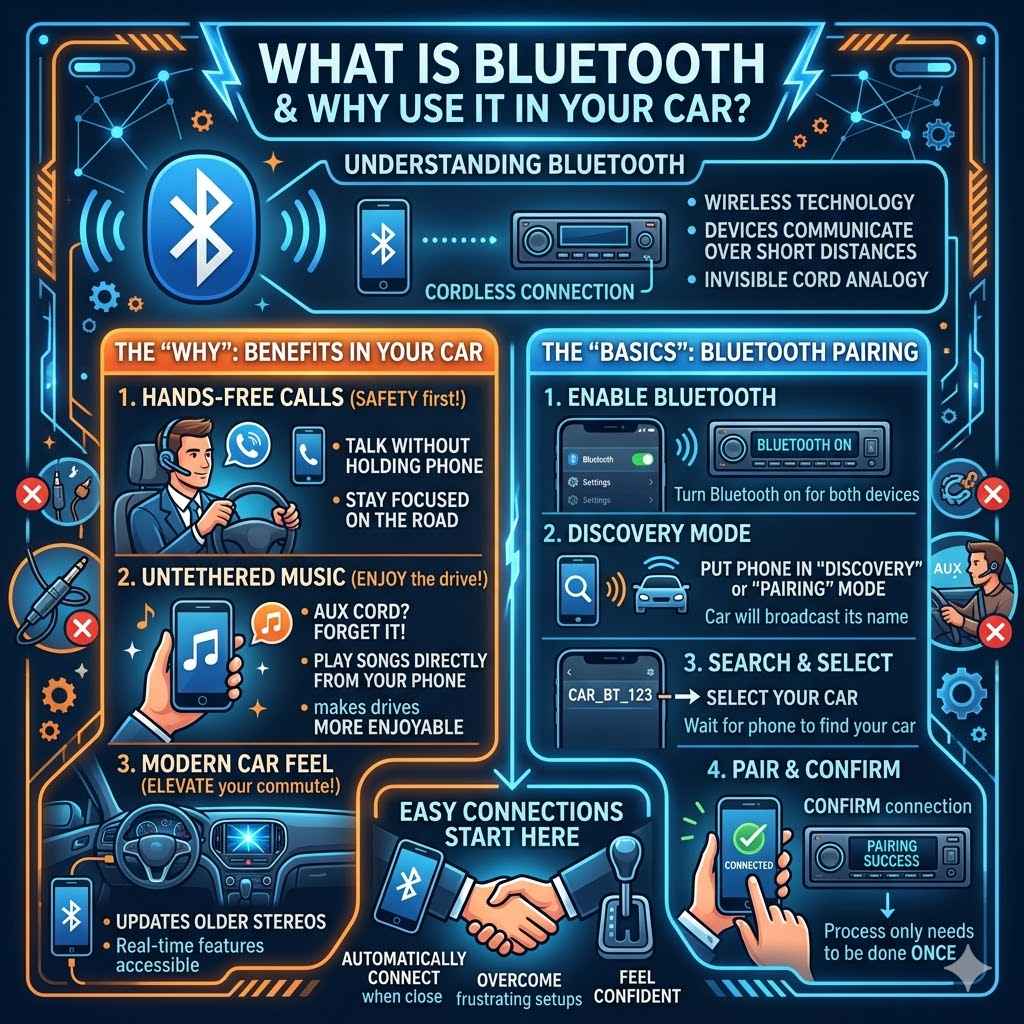
Bluetooth is a wireless technology that lets devices talk to each other over short distances. Think of it like an invisible cord connecting your phone to your car’s stereo system. This connection is really handy.
It means you can play songs from your phone without plugging in any wires. You can also take phone calls without holding your phone, which is safer while driving. It makes your car feel more modern and your drives more enjoyable.
Many people struggle with the initial setup because they aren’t sure where to find the Bluetooth settings on their phone or car. Sometimes, the names of the settings are different between devices. This can lead to frustration.
Our goal here is to remove that confusion. We want you to feel confident that you can get your phone connected easily.
The Basics of Bluetooth Pairing
Pairing is like introducing two devices so they recognize each other. For your Android phone and car, this usually involves putting both devices into a “discovery” or “pairing” mode. Your phone will then search for available Bluetooth devices nearby.
When it finds your car, you’ll select it and confirm that you want to connect. This process only needs to be done once. After that, your phone and car should automatically connect whenever they are close enough and Bluetooth is turned on.
The benefits are huge for everyday driving. Imagine never fumbling for aux cords again. Or taking an important call safely while your phone is in your pocket.
Bluetooth makes these things possible. It enhances your commute, makes road trips more fun, and keeps you connected without distraction.
Getting Started Preparing Your Devices
Before you start the actual pairing process, there are a few things you should do to make sure everything goes smoothly. It’s like getting ready for a simple task. You want everything in place so you don’t have to stop and search for something later.
These small steps will save you time and prevent any minor headaches.
First, make sure your car’s engine is running or the ignition is on. Many car Bluetooth systems only work when the car is powered on. Second, check that Bluetooth is turned on for your Android phone.
You can usually find this setting in the Quick Settings menu by swiping down from the top of your screen, or in the main Settings app under “Connections” or “Connected devices.”
Ensure Sufficient Battery Life
It’s a good idea to make sure both your phone and your car’s infotainment system have enough power. A phone battery that’s about to die can interrupt the pairing process. If your car battery is low, some electronic features might not work correctly.
While pairing itself doesn’t use much power, it’s better to be safe than sorry. This ensures the connection process isn’t cut short.
This simple check prevents common issues. Imagine your phone shutting off mid-pairing! That would be annoying.
Having enough battery also means you can keep your phone plugged in to charge while you drive, which is always a good practice.
Locate Your Car’s Bluetooth Settings
Every car is a little different, but most have a dedicated menu for Bluetooth. Look on your car’s touchscreen display for options like “Phone,” “Settings,” “Connectivity,” or “Bluetooth.” Sometimes, you might need to press a physical button on your dashboard or steering wheel to access these menus. If you’re unsure, consult your car’s owner’s manual.
It will have specific instructions for your model.
Finding this setting is key. It’s the gateway to connecting your phone. Don’t get discouraged if it’s not immediately obvious.
Take a moment to explore your car’s display. Most modern cars make it pretty easy to find once you know where to look.
Step-by-Step Guide: How to Pair Android Phone to Car Bluetooth Local Expert
Now, let’s get to the main event: actually pairing your Android phone to your car. This is where we put all the preparation to good use. Follow these steps carefully, and you’ll be connected in no time.
We’re going to go through it as if you’re doing it for the first time, keeping everything very clear and simple.
Initiating Pairing on Your Android Phone
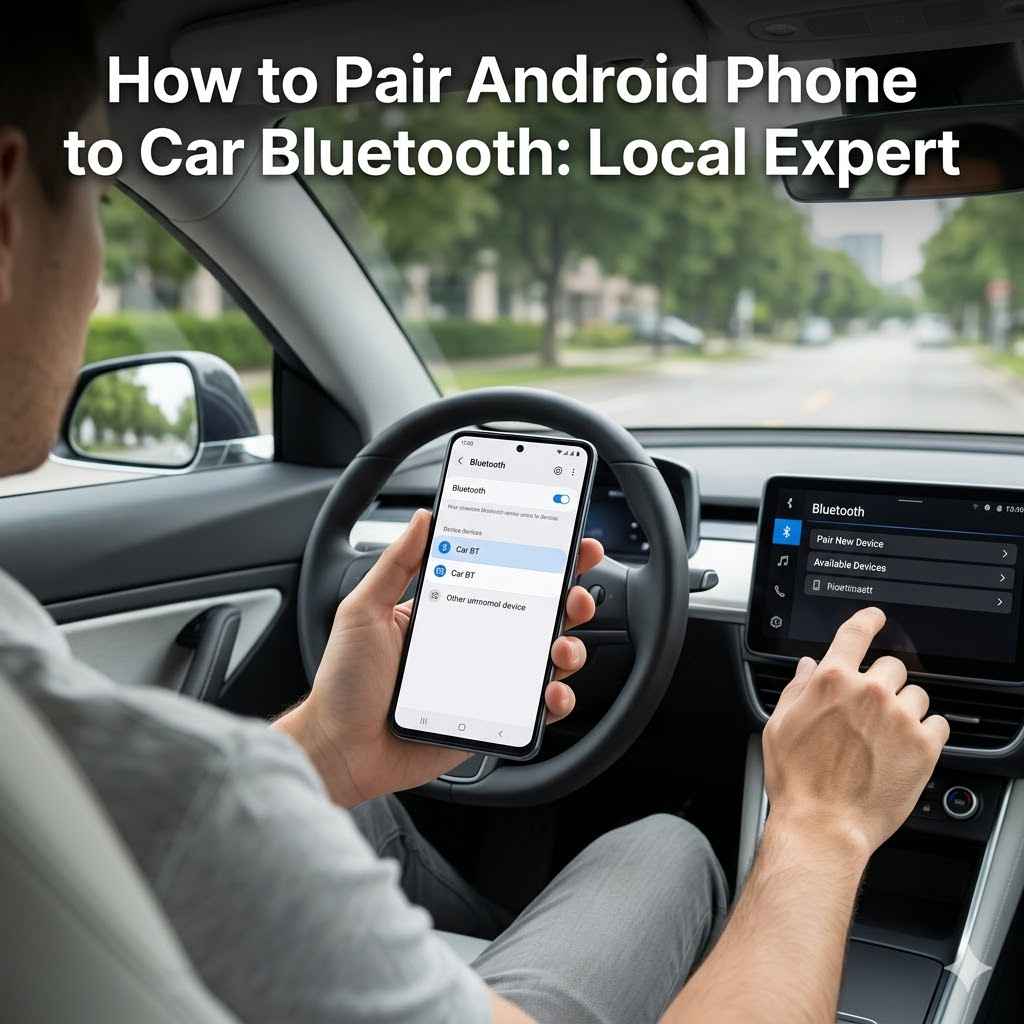
On your Android phone, open the Settings app. Look for a section named “Connected devices,” “Connections,” or “Bluetooth.” Tap on “Bluetooth.” Make sure the Bluetooth switch is turned on. Your phone will then start scanning for available devices nearby.
You might see a list of devices that have been paired before, and a section for “Available devices” or “Pair new device.”
This is where your car’s name should appear once it’s in pairing mode. If you don’t see your car’s name right away, don’t worry. Sometimes it takes a moment for the phone to find it.
You can usually tap a “Refresh” or “Scan” button if your phone offers one.
Putting Your Car Into Pairing Mode
This step is done on your car’s infotainment system. Go to the Bluetooth or Phone settings menu on your car’s display. Look for an option like “Add Device,” “Pair Phone,” “New Pairing,” or “Make Device Discoverable.” Select this option.
Your car will then broadcast its Bluetooth signal, making it visible to your phone.
The exact wording can vary widely depending on your car’s make and model. Some cars might give you a PIN code to enter on your phone, while others will show a confirmation code on both screens. If your car asks for a PIN, it’s usually “0000” or “1234” if you don’t have a specific one.
Always check your car’s manual if you’re unsure.
Selecting Your Car on Your Phone
Once your car is in pairing mode and your phone is scanning, you should see your car’s name appear in the list of available devices on your Android phone. Tap on your car’s name. Your phone will then try to establish a connection.
If your car displayed a PIN code, you’ll be prompted to enter it on your phone. If your phone displayed a PIN code, you’ll be asked to confirm that the codes match on your car’s screen. This is a security measure to ensure you’re connecting to the correct device.
Confirming the Connection
After entering any necessary codes or confirming the match, you’ll likely see a confirmation message on both your phone and your car’s screen. This message usually asks if you want to allow access to contacts and call history. It’s generally recommended to allow this for full functionality, such as seeing caller ID and using your car’s controls to dial numbers.
Once you confirm, the pairing is complete! You should see a Bluetooth icon on your phone’s status bar, and your car’s screen should indicate that your phone is connected. You’re now ready to stream audio and make calls wirelessly.
Troubleshooting Common Pairing Issues
Even with the clearest instructions, sometimes things don’t go exactly as planned. It’s normal to run into small hiccups when connecting new devices. This section is here to help you sort out any problems you might face.
We’ll look at the most frequent reasons why pairing might fail and how to fix them.
The most common problems happen when devices can’t “see” each other, or when they can’t agree on how to connect. Sometimes, older software can cause issues. We’ll address these one by one so you can get back to enjoying your drive.
Device Visibility Problems
If your phone doesn’t see your car, or your car doesn’t see your phone, the most likely cause is that one or both devices aren’t in discoverable/pairing mode. Double-check that both your phone’s Bluetooth is on and your car has been put into its “Add Device” or “Pair New Device” mode. Also, ensure that your phone isn’t already connected to another Bluetooth device nearby, like headphones or a smartwatch, as some phones can only connect to one device at a time for audio streaming.
Another reason could be distance. While Bluetooth works over short ranges, it’s best to be quite close. Make sure your phone is inside the car and within a few feet of the car’s infotainment system.
Sometimes, interference from other electronic devices can also cause issues, though this is less common.
Incorrect PIN or Confirmation Codes
If you are asked for a PIN and it doesn’t work, try the common defaults like “0000” or “1234.” If your car provides a PIN on its screen and your phone asks for it, ensure you are typing it exactly as shown. Likewise, if your phone shows a PIN and your car asks for confirmation, make sure the numbers match before you accept. Typos are easy to make, especially when typing on a car’s touchscreen.
If you continue to have trouble with PIN codes, sometimes restarting both devices and trying the pairing process again can resolve the issue. This is because a temporary glitch might have occurred during the initial attempt.
Clearing Old Pairings and Re-pairing
Cars and phones can sometimes get confused if they have too many previous pairings stored. If you’ve paired many devices to your car or your phone in the past, it might be beneficial to “forget” or delete old connections. On your Android phone, go to Bluetooth settings, tap the gear icon next to your car’s name (if it appears in the list of previously paired devices), and select “Forget” or “Unpair.”
Similarly, on your car’s infotainment system, navigate to the Bluetooth settings and find the list of paired phones. Select your phone’s name and choose the option to delete or remove it. Once you’ve cleared these old connections, restart both your phone and your car, and then attempt the pairing process from scratch.
Software Updates and Compatibility
Occasionally, pairing issues can arise from outdated software on either your phone or your car’s infotainment system. Check for any available software updates for your Android phone through its Settings app. For your car, software updates are usually performed by a dealership or through a specific update process outlined in your car’s manual.
If your car is older, it might not support newer Bluetooth protocols that your phone uses, which could cause compatibility problems.
Most modern cars and phones are designed to work together seamlessly. However, if you have a very old car or a brand-new phone, there’s a slim chance of a compatibility gap. If other troubleshooting steps fail, this is something to consider.
Advanced Bluetooth Features and Tips
Once you’ve successfully paired your phone, you might wonder what else you can do with your car’s Bluetooth connection. Beyond just calls and music, there are a few other useful features and tips that can enhance your driving experience. These are often overlooked but can make a big difference.
These advanced features can make your connection more useful. They range from how your car handles calls and media to how you can customize the experience. Let’s explore what else is possible after the basic pairing is done.
Managing Multiple Devices
Most cars can store pairings for multiple phones. This is very convenient if you share a car with a partner or family members. When multiple paired phones are in the car, the car’s system will typically connect to the last phone that was connected or prioritize a specific phone based on settings.
You can usually manage this list in your car’s Bluetooth menu. You can set a primary phone or choose which phone connects automatically.
If you’re in a situation where two people’s phones are in the car and connected, you might need to manually switch which device is playing music or handling calls if it doesn’t select the one you want. This is done through the car’s media or phone selection menu.
Media Streaming and Audio Quality
When you stream music or podcasts via Bluetooth, the audio quality can sometimes be a concern. Bluetooth uses compression to send audio data, which can slightly reduce the fidelity compared to a wired connection. However, modern Bluetooth codecs (like aptX or LDAC, if supported by both your phone and car) offer much better quality than older ones.
Ensure your phone and car’s system support these advanced codecs for the best possible sound.
If you notice persistent poor audio quality, it’s worth checking your phone’s Bluetooth settings to see if there are any audio codec options you can adjust. Also, make sure no other Bluetooth devices are causing interference that might affect the audio stream.
Voice Commands and Hands-Free Operation
A major benefit of Bluetooth pairing is the ability to use voice commands. Once connected, you can often activate your phone’s voice assistant (like Google Assistant or Bixby on Android) by pressing a button on your steering wheel or car’s dashboard. This allows you to make calls, send texts, get directions, or even control music playback using only your voice.
For example, you could say, “Hey Google, call Mom,” or “Hey Google, navigate to the nearest gas station.” This hands-free control is a significant safety feature, allowing you to keep your hands on the wheel and your eyes on the road.
Automatic Reconnection
Once your phone is paired with your car, the next time you get into your car and turn it on, your phone should automatically reconnect to the car’s Bluetooth system. This usually happens within a few seconds. You’ll typically see a notification on your car’s screen and possibly on your phone indicating that the connection has been established.
This automatic reconnection is a key convenience feature. It means you don’t have to manually initiate the pairing process every single time you get into your car. Just turn on your car, and your phone should connect seamlessly.
Real-Life Scenarios and Examples
To really see the value of connecting your Android phone to your car’s Bluetooth, let’s look at some common situations where this technology shines. These examples show how simple pairing makes everyday driving much easier and safer.
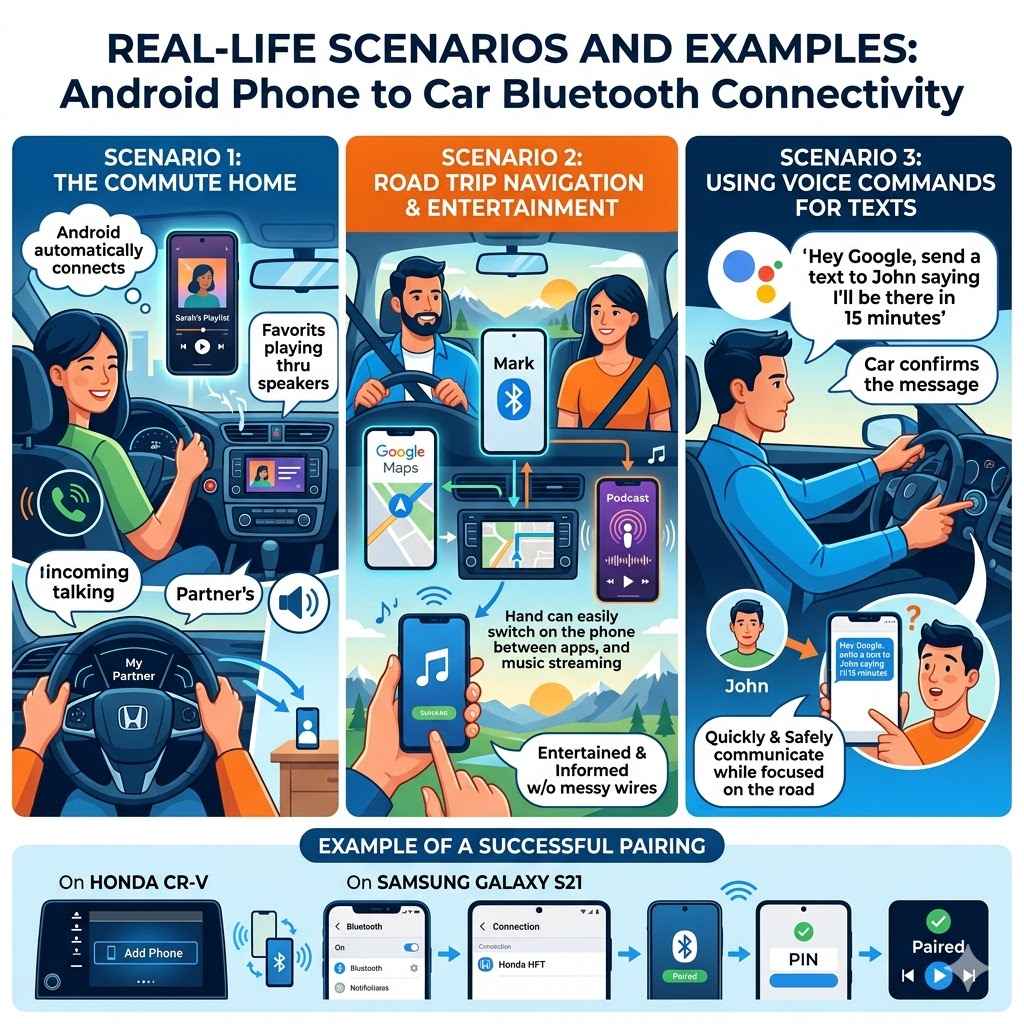
Scenario 1: The Commute Home
Sarah is leaving work. She gets into her car, and her Android phone automatically connects to the car’s Bluetooth. She has a playlist of relaxing music ready.
As soon as she starts driving, her favorite songs begin playing through the car’s speakers. A few minutes into her drive, her partner calls. Instead of fumbling for her phone, she sees the incoming call on her car’s display and presses a button on the steering wheel to answer it.
She can talk to her partner clearly while keeping both hands on the wheel.
Scenario 2: Road Trip Navigation and Entertainment
Mark and Lisa are going on a road trip. Mark pairs his Android phone to their rental car’s Bluetooth. He uses Google Maps for navigation, and the turn-by-turn directions are played through the car’s speakers, mixed with their favorite podcast.
When they want to listen to music, they can easily switch from the podcast to a music streaming app on Mark’s phone. This keeps them entertained and informed without any messy wires.
Scenario 3: Using Voice Commands for Texts
David is on his way to a meeting and needs to let his colleague know he’s running a little late. His Android phone is paired via Bluetooth to his car. He presses the voice command button on his steering wheel and says, “Hey Google, send a text to John saying I’ll be there in 15 minutes.” The car confirms the message and sends it automatically.
This allows him to communicate important information quickly and safely while staying focused on the road.
Example of a Successful Pairing
A user with a Samsung Galaxy S21 and a Honda CR-V successfully paired their devices by following these steps. On the Honda’s infotainment screen, they selected “Phone” then “Add Phone.” On the Samsung phone, they went to Settings > Connections > Bluetooth, ensuring Bluetooth was on. The Honda’s name, “Honda HFT,” appeared on the phone’s screen.
They tapped it, and a PIN code matched on both devices. After confirming, the phone was listed as “Paired” on the car’s screen, and music playback started automatically.
Frequently Asked Questions
Question: How do I know if my car has Bluetooth?
Answer: Most cars made in the last 10-15 years have Bluetooth. Look for a Bluetooth symbol on your car’s radio or dashboard, or check the settings menu on your car’s display for a “Bluetooth” or “Phone” option. Your car’s owner’s manual is also a reliable source to confirm if it has this feature.
Question: Can I pair more than one phone to my car?
Answer: Yes, most car systems can store multiple phone pairings. However, usually, only one phone can be actively connected for calls and audio streaming at a time. You can manage which phone connects automatically in your car’s Bluetooth settings.
Question: Why does my phone disconnect from the car Bluetooth randomly?
Answer: Random disconnections can happen due to low battery on either device, interference from other wireless signals, or outdated software. Try clearing old pairings and re-pairing, ensuring both devices are updated, and checking for interference.
Question: Is it safe to use Bluetooth for calls while driving?
Answer: Using Bluetooth for calls is much safer than holding your phone. However, the safest option is to avoid calls altogether while driving, or to use voice commands when possible. Even with Bluetooth, distractions can still occur.
Question: What should I do if my car doesn’t find my phone’s Bluetooth?
Answer: Make sure Bluetooth is enabled on your phone and that your car is in pairing mode. Try restarting both devices and placing your phone closer to the car’s infotainment system. Also, ensure your phone isn’t actively connected to another Bluetooth audio device.
Summary
Connecting your Android phone to your car’s Bluetooth is a straightforward process. By following these simple steps, you can easily pair your devices for hands-free calls and seamless music streaming. Don’t let confusion stop you; you’ve learned how to find settings, initiate pairing, and troubleshoot common issues.
Enjoy your connected drive.