How to Price Car Detailing: The Cost-Plus Formula
Price car detailing by adding your labor hours times your hourly rate to your materials and overhead costs, then dividing that total by (1 minus your target profit margin) instead of just tacking a flat markup onto your cost. A basic wash-and-vacuum package typically runs $50-$100, a full interior-exterior detail $150-$300, and specialty add-ons like paint correction or ceramic coating well above that — but the number only works if the formula behind it is right.
This guide walks through that formula step by step, including the markup-versus-margin mix-up that quietly shrinks a lot of new detailers’ profit, then covers how to turn the number into a real service menu customers can choose from.
What Car Detailing Really Involves
Car detailing goes well beyond a drive-through car wash. It is a deep clean of the whole vehicle, inside and out, aimed at getting it as close to showroom condition as the paint and materials allow. A full job covers washing and decontaminating the paint, polishing and protecting it, shampooing carpets and upholstery, conditioning leather or vinyl, and cleaning glass, trim, wheels, and door jambs that a regular wash skips entirely.
Because that work varies so much from car to car, pricing it correctly starts with understanding what you are actually charging for: labor time, consumable products, the equipment that does the job, and the business overhead that keeps you running. Skip any one of those and the price you land on will not cover the real cost of the job.
BEST STARTER POLISHER FOR PRICING PAINT CORRECTION JOBS
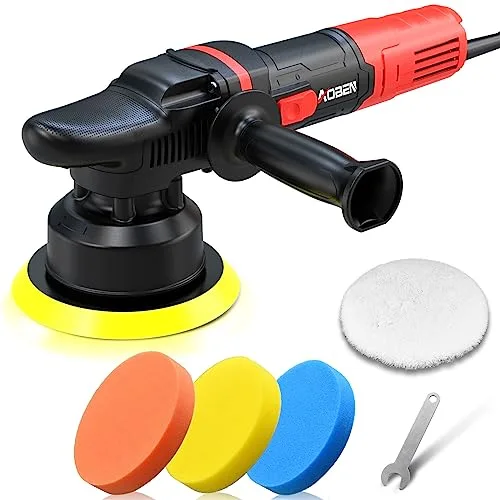 |
AOBEN 6-Inch Dual Action Polisher Kit – $49.99 A machine like this is exactly the kind of equipment cost that belongs in your paint-correction and full-detail pricing, not just your basic wash package.
|
What Affects How Much You Should Charge
Detailing pricing is not one-size-fits-all. Several factors change how long a job takes and what it costs you to do it, and each one should move your price up or down:
- Vehicle size: A compact sedan usually takes 2-3 hours for a full detail, while a three-row SUV or minivan can run 4-5 hours because of the extra seating, carpet, and glass.
- Condition of the car: Pet hair, ground-in mud, and months of neglected stains add real time that a light monthly-maintenance customer will never generate. Quote the car in front of you, not the average car.
- Type of service: A basic wash-and-vacuum takes a fraction of the time and materials of a full interior-exterior detail or a specialty service like ceramic coating.
- Location: Detailers in major metro areas can generally charge more than those in smaller towns, simply because their overhead (rent, insurance, cost of living) is higher too.
- Your experience and certifications: A detailer with ceramic-coating certification or years of documented before-and-after work can charge more than someone just starting out, because customers are paying for a lower risk of a bad result.
- Mobile vs. shop-based: Mobile detailing usually costs more because you are bringing water, power, and your own travel time to the customer instead of the other way around.
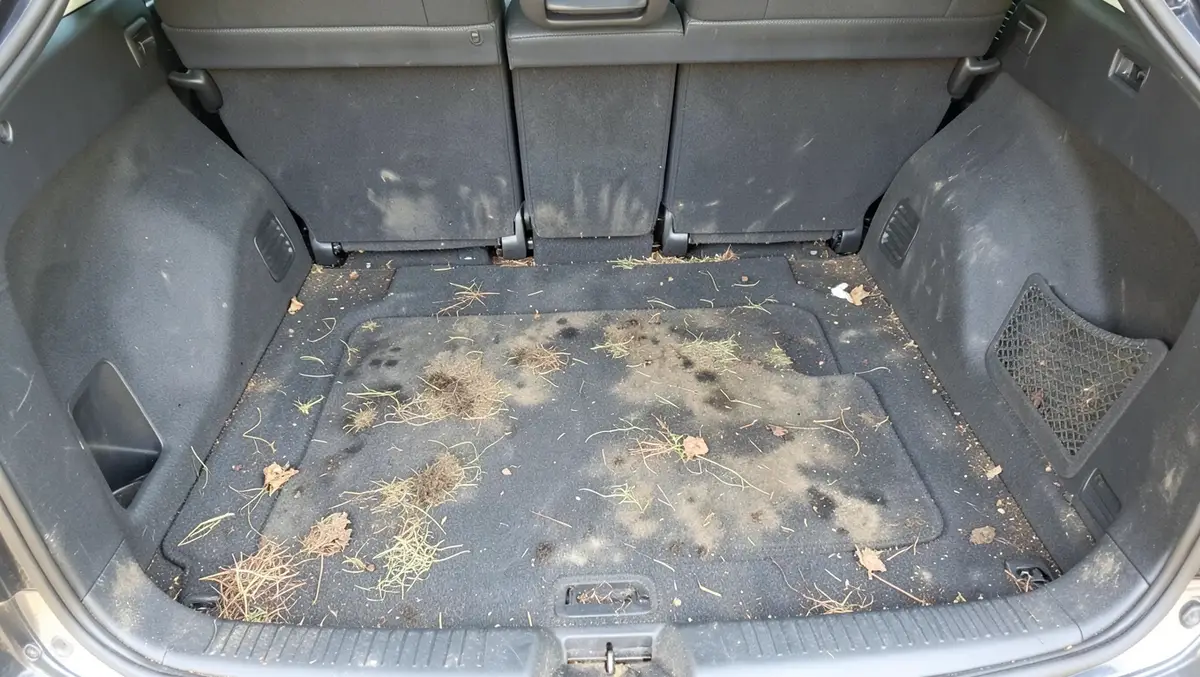
Treat these factors like inputs to a formula, not a gut feeling. Mix them together correctly and you land on a price that covers your time and still looks fair to the customer standing in front of you.
The Services You Need to Price
Before you can price anything, you need a defined list of what you actually sell. Trying to quote “whatever the customer wants” on the fly is how new detailers underprice messy jobs. Here is the standard lineup most detailing businesses build a menu around:
- Basic detailing: An exterior wash, wax, and interior vacuum. Quick and budget-friendly, aimed at customers who want a simple refresh.
- Interior detailing: Vacuuming, shampooing carpets, cleaning upholstery, and wiping down every hard surface. Stubborn stains or pet hair can turn this into a two-hour job on its own.
- Exterior detailing: Washing, clay bar decontamination, polishing, and waxing to bring the paint’s shine back.
- Full detailing: Interior and exterior combined into one complete job. It takes the longest but delivers the most dramatic before-and-after result.
- Specialty services: Ceramic coating, paint correction, and headlight restoration. These command higher prices because they require specific training and products.
- Engine bay cleaning: Removing grease and dirt from under the hood for a cleaner appearance and easier visual inspection. It is a niche add-on that most customers do not think to ask for until you mention it.
- Add-ons: Odor removal, pet hair removal, and fabric protection all work well as separate upsells rather than being bundled into a base price.
Think of this list as a printed menu rather than an open-ended conversation. Clear packages with defined inclusions make it far easier for a customer to say yes on the phone.
How to Research What Detailers Near You Charge
You cannot set a price in a vacuum. Once you know your own costs (covered in the next section), check what other detailers in your market are actually charging so your number is grounded in reality, not just guesswork:
- Check competitors directly: Look at websites, social media, and call a few local shops for quotes on the same packages you plan to offer.
- Understand your audience: A market full of family minivans wants an affordable, efficient package; a market with enthusiast and luxury cars will pay more for paint-focused specialty work.
- Factor in location: A basic detail in a major city commonly costs more than the identical job in a small town, simply because rent and demand are both higher.
- Read reviews: If local reviews consistently praise attention to detail over low price, that market rewards quality positioning more than discount pricing.
Most successful independent detailers land slightly under the established local shops on price while offering noticeably better service or communication — that combination is what actually wins repeat business, rather than being the cheapest option in town. For the specific 2026 national averages by package, see our companion breakdown on how much to charge for car detailing; this guide focuses on the calculation method behind whatever number you land on.
The Cost-Plus Formula: How to Calculate Your Price
Charging what the market will bear only works if that number also covers your costs. The standard formula professional service businesses use is: (labor hours × your hourly rate) + material costs + overhead costs, and then a profit margin applied on top. Here is what goes into each part:
- Materials: Soap, wax, polish, microfiber towels, and other consumables. A quality car wash soap runs around $10 a gallon and you will use only a few ounces per vehicle.
- Equipment: Pressure washers, steam cleaners, vacuums, and polishers are not cheap up front, but a few hundred dollars in equipment pays for itself over dozens of jobs, so spread its cost across the jobs it will realistically complete rather than charging it all to job one.
- Labor: Decide what your time is actually worth per hour, then multiply by the realistic hours the job takes — not the hours it takes an expert, if you are still building speed.
- Overhead: Rent if you run a shop, insurance, marketing, and for mobile detailers, gas and vehicle wear.
- Profit margin: A healthy target for a service business is 20-35% margin on top of your total cost, not just a flat dollar amount tacked on at the end.
Here is a worked example for a basic detailing job that takes three hours:
| Expense | Cost |
|---|---|
| Materials (soap, wax, towels) | $18 |
| Equipment (depreciation share) | $12 |
| Labor (3 hours at $50/hour) | $150 |
| Overhead (gas, insurance) | $20 |
| Total cost | $200 |
Markup vs. Margin: The Mistake That Quietly Shrinks Your Profit
Most pricing guides stop at “add a 20% markup,” but markup and margin are not the same calculation, and mixing them up leaves real money on the table. A markup adds a percentage of cost on top of the cost; a margin is the percentage of the final price that is actually profit. On a $200 cost job, the two methods produce different answers:
| Method | Formula | Price Charged | Actual Profit Margin |
|---|---|---|---|
| 20% markup on cost | $200 × 1.20 | $240 | 16.7% (only $40 profit on a $240 sale) |
| 20% margin on price | $200 ÷ (1 – 0.20) | $250 | 20% (exactly $50 profit on a $250 sale) |
That $10 gap does not sound like much on one job, but multiply it across a full year of bookings and it becomes real revenue you quietly gave away. If your goal is a specific profit margin rather than a specific markup percentage, use the division formula, not the multiplication one.
Choosing a Pricing Strategy: Flat Rate, Tiered, or Hourly
Once you know your costs and your market, you need a structure to present the price in. A few approaches work well for detailing specifically:
- Flat rates: Set prices for defined packages, such as a fixed rate for basic and a higher fixed rate for full detail. Easiest for customers to understand and compare.
- Tiered pricing: Offer Basic, Deluxe, and Premium tiers. Customers tend to gravitate toward the middle option, so make sure it is genuinely the best value of the three.
- Starting-at pricing: List packages as “starting at” a base price, which protects you when a car needs meaningfully more work than average without confusing the customer up front.
- Hourly rates: Reserve this for specialty work like paint correction, where the time required genuinely varies too much for a flat rate to make sense.
- Package deals: Bundle interior, exterior, and wax into one discounted package versus buying each piece separately, which increases average order value while still feeling like a deal to the customer.
A “starting at” flat rate is the most common approach for new detailing businesses, since it keeps pricing clear while still leaving room to adjust for a car that turns out dirtier than expected.
Pricing Mobile Detailing vs. a Fixed Shop
Whether you operate mobile or from a fixed shop changes your cost structure and therefore your price:
- Mobile detailing: You travel to the customer, which adds gas, vehicle wear, and drive time to every job. A common approach is charging 10-20% more than the equivalent shop price to cover it, or adding a flat travel fee for jobs outside a set radius.
- Shop-based detailing: You avoid travel costs but take on rent and utilities instead, so your overhead line in the formula above needs to reflect that fixed monthly cost divided across your typical job volume.
Mobile service is a genuine convenience most customers are willing to pay extra for, since it saves them a trip. See the mobile pricing section of our 2026 car detailing pricing guide for the current market range on that premium.
How to Present Your Prices to Customers
How you present a price matters almost as much as the number itself. A customer who does not understand what they are paying for is far more likely to walk away, even from a fair quote. A few practices help:
- Be transparent: Publish your services and starting prices on your website or a printed menu, with a short description of what each package actually includes.
- Explain the value: Tell customers why a step matters. A full detail that includes a clay bar treatment removes bonded contaminants a regular wash cannot touch, which protects the paint underneath.
- Offer consultations for big jobs: Inspect the vehicle in person before quoting anything beyond a basic package, so your price reflects the actual condition instead of an average guess.
- Upsell without being pushy: Mention relevant add-ons, like a ceramic sealant for a few extra dollars that extends the shine for months, as a suggestion rather than a hard sell.
Customers who understand the value behind a price are far more likely to trust it and book the job.
When and How to Raise Your Prices
Your prices should not stay frozen once you set them. Revisit them on a set schedule, such as every six months, and adjust for these signals:
- Rising costs: If your suppliers raise prices on materials or fuel goes up, your price needs to move with it or your margin quietly shrinks.
- Growing experience: New certifications, such as a ceramic coating training course, justify a real price increase on that specific service.
- Demand: A consistent waiting list is a clear signal you can raise prices without losing meaningful volume.
- Seasonal changes: Spring and summer are typically the busiest months for detailing, which is why many detailers run winter discounts to keep bookings steady in the slow season.
Keep an eye on both your competitors and your own booking calendar to know when it is time to adjust.
Marketing Your Prices So They Feel Like a Great Deal
A good marketing approach can make an accurate, fairly-calculated price feel like an obvious choice rather than an expense. A few tactics work particularly well for detailing:
- Showcase before-and-after photos: A dramatic transformation photo, like a heavily neglected vehicle restored to a clean, glossy finish, is one of the strongest conversion tools a detailer has.
- Highlight what sets you apart: Eco-friendly products, same-day availability, or a specific certification all give customers a reason to pick you over a cheaper competitor.
- Run introductory promotions: A modest discount on a first booking, such as a flat dollar amount off, is an effective way to build an initial client base.
- Use local search terms: Include phrases like “car detailing prices near me” on your website so local searches actually find your business.
- Leverage reviews: Encourage satisfied customers to leave a review on Google, since social proof does a lot of the work of justifying your price for you.
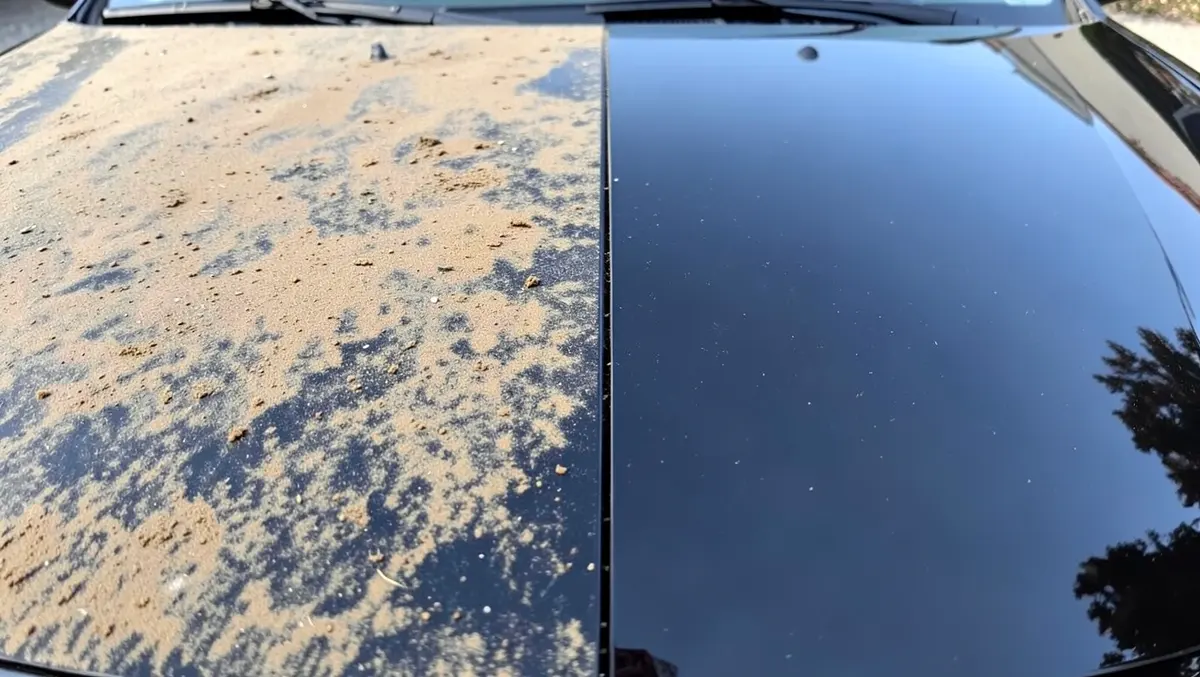
Marketing is ultimately about showing customers why the service is worth what you are charging for it, which is a much easier case to make once your price is grounded in the real formula above.
Pricing Mistakes That Cost New Detailers Money
Most pricing mistakes are avoidable once you know to look for them:
- Undercharging: A price that does not cover a five-hour job’s real labor cost is a fast route to burnout, even if the booking calendar looks full.
- Overpromising: Be honest about what a basic package can and cannot achieve on a heavily neglected vehicle rather than promising showroom results at a bargain price.
- Ignoring real costs: Forgetting to factor gas, insurance, or equipment depreciation into your overhead line is one of the most common ways a “profitable” price turns out to barely break even.
- Skipping local research: Pricing without knowing what competitors charge risks setting yourself too high to compete or too low to be sustainable.
- Sticking to fixed prices no matter what: A car that is genuinely in worse condition than average needs a higher quote than your standard rate, not the same flat price regardless of the work involved.
Avoiding these mistakes is what separates a detailing business that survives its first year from one that quietly burns out its owner.
Conclusion
Pricing car detailing correctly comes down to three things: knowing your real costs, knowing your local market, and communicating the value behind the number you land on. Calculate labor, materials, and overhead honestly, apply a real profit margin using the division formula rather than a flat markup, and check that number against what detailers around you are actually charging.
Whether you run a mobile operation or a fixed shop, the price that works long-term is the one that covers your true costs and still looks fair to the customer standing next to their car.
Frequently Asked Questions
How much should I charge for a basic car detail?
A basic detail, covering an exterior wash, wax, and interior vacuum, typically runs $50 to $100 depending on the car’s size and your local market. Smaller towns tend to sit near the low end of that range, while major metro areas commonly land at $75-$100. Check what local competitors charge before you finalize your number.
Should I offer discounts for first-time customers?
A modest first-visit discount, such as a flat dollar amount off, is a common and effective way to build an initial client base. Make sure the discount does not cut below your break-even cost — covering your real cost should always come before growing your client list.
How do I know if my prices are too high or too low?
Compare your prices to local competitors and watch your booking pattern. Losing customers to cheaper detailers is a sign your price may be too high for your market; being booked solid while barely profiting is a sign your price is too low relative to your real costs. Review this at least twice a year.
Is mobile detailing more expensive to price than shop-based?
Yes. Mobile detailing typically costs more because it adds travel time, fuel, and vehicle wear that a fixed shop does not have. A common approach is a flat travel fee for jobs outside a set radius, or a 10-20% premium built into the mobile price itself.
How can I justify higher prices to customers?
Show the value directly: explain what premium products or extra steps, like a clay bar treatment, are included, and share before-and-after photos or relevant certifications. Customers who understand what a higher price actually buys them are generally willing to pay for it.
What is the difference between markup and profit margin in a detailing quote?
Markup is a percentage added on top of your cost (cost × 1.20 for a 20% markup), while margin is the percentage of your final price that is actual profit (cost ÷ 0.80 for a 20% margin). The two produce different prices from the same cost, and using markup when you actually want a specific profit margin quietly under-prices the job.
Products related to this article
Sponsored / affiliate links. As an Amazon Associate I earn from qualifying purchases. I may earn additional commission from eligible campaigns.